Redness around the nose is a common dermatological concern that perplexes many due to its varied causes and presentations. For those experiencing persistent flushing or visible redness localized to the nasal area and adjacent cheeks, understanding the underlying cause is key to effective management. This redness could stem from conditions as diverse as dilated capillaries (often known as couperose), inflammatory skin disorders like dermatitis, or a chronic disease such as rosacea. Each condition demands a distinct approach, and accurate differentiation is fundamental for both patients and healthcare providers to achieve the best possible outcomes.
This article delves into these conditions, explaining what redness around the nose represents, who is most likely to experience it, why it matters to identify the precise cause, and how treatment options—particularly vascular laser interventions—may fit into a comprehensive care strategy. Emphasizing realism in expectations and informed decision-making, the discussion leverages current dermatological insights to equip readers with a thorough understanding of their skin concerns.
Whether you are someone struggling with frustrating facial redness, a clinician seeking to deepen comprehension of vascular and inflammatory facial conditions, or simply interested in the nuances of dermatological care, this exploration offers clarity on redness around the nose and guides through the intricate differential diagnosis and treatment landscape.
What Does Redness Around the Nose Indicate? Understanding the Common Causes
Redness localized around the nose typically manifests as a change in skin coloration—often persistent or intermittent—that may include visible blood vessels, skin flaking, or inflammatory signs. The three primary culprits are dilated capillaries (couperose), dermatitis, and rosacea, each with distinctive yet sometimes overlapping features.
Capillaries, the tiny blood vessels in the skin, when persistently or episodically dilated, create a reddish hue commonly seen as fine thread-like vessels. This vascular dilation, medically called couperose, mainly affects superficial layers and is often triggered by factors such as temperature extremes, alcohol consumption, and genetic predisposition.
Dermatitis—a collective term for skin inflammation—appears around the nose most commonly as seborrheic or contact dermatitis. These conditions cause redness alongside symptoms like flaking, itching, or irritation, pointing to an inflammatory or allergic response of the skin.
Rosacea represents a chronic inflammatory disorder characterized by persistent redness, flushing, visible telangiectasia (dilated vessels), and sometimes acneiform papules around the nose and cheeks. Unlike couperose and dermatitis, rosacea involves a complex interplay of vascular and immune system components, making it more challenging to treat.
How Do Dilated Capillaries and Couperose Cause Facial Redness?
Capillaries perform the vital role of nutrient and gas exchange at the skin level. When these vessels lose elasticity or are influenced by various triggers, they expand or become visibly prominent, leading to localized redness. Couperose, while often benign and painless, can cause cosmetic concern due to its appearance.
Several contributors promote capillary dilation and persistent redness: genetic factors, harsh weather exposure (especially cold or wind), lifestyle choices such as alcohol intake or consumption of hot beverages, emotional stress, and the use of aggressive skincare products. In some individuals, couperose can precede or coincide with rosacea, complicating diagnosis and management.
One of the most effective aesthetic interventions for couperose involves the targeted use of vascular lasers. These devices emit specific wavelengths absorbed by hemoglobin in the blood, facilitating controlled damage to the dilated vessels leading to their closure and eventual absorption. While laser treatment can markedly diminish visible redness and improve skin tone uniformity, maintenance and gentle skincare are essential to prolong results and prevent recurrence.
What Causes Dermatitis Around the Nose and How Does It Present?
Dermatitis is an umbrella term for inflammatory skin conditions with multiple causes ranging from microbial imbalance to allergic reactions. The nose area is especially susceptible to seborrheic dermatitis and irritant or allergic contact dermatitis.
Seborrheic dermatitis results from an overgrowth of commensal yeast and increased sebum production, which triggers inflammation. It often presents as red, scaly, greasy patches with mild itching. Conversely, contact dermatitis arises when skin encounters irritants or allergens, such as harsh soaps, skincare ingredients, or prolonged mask use—factors that can provoke redness and discomfort localized around the nasal folds.
Unlike vascular dilation, the redness in dermatitis is part of a broader inflammatory process that may also include swelling, scaling, and itching. The management revolves around identifying and avoiding triggers, employing soothing topical agents that restore the skin barrier, and using anti-inflammatory medications prescribed by dermatologists when needed.
What Is Rosacea and Why Is It Different from Other Causes of Redness?
Rosacea is a multifaceted, chronic skin disorder predominantly affecting the central face. It differs from simple vascular dilation or dermatitis by combining persistent redness with inflammatory lesions and sometimes even structural changes in skin texture.
The pathophysiology of rosacea involves abnormal vascular responses, altered immune mechanisms, and neurogenic inflammation. Patients experience episodic flushing and persistent erythema, punctuated by papulopustular eruptions and telangiectasia, primarily on the nose and cheeks. The involvement of multiple pathways explains why rosacea is resistant to simple topical remedies and requires a comprehensive approach.
Patients with rosacea must understand that treatments aim to control symptoms and reduce flare-ups rather than cure outright. Approaches include trigger avoidance, gentle skincare, topical and systemic medications, and sometimes procedural treatments such as laser therapy to target visible blood vessels.
Why Might Redness Recur After Treatment and What Can Be Done?
One common frustration following treatments for redness, especially laser therapies, is the return of redness and vascular prominence. This recurrence arises from the natural biology of skin and blood vessels, genetic predisposition, ongoing exposure to triggers, and the chronicity of underlying conditions such as rosacea.
Lasers act by targeting existing dilated vessels but cannot prevent new vessels from forming under continuous or future stimulus. Additionally, inflammation related to rosacea or dermatitis can reignite symptoms even after vascular components have been addressed.
Thus, treatment strategies must include regular maintenance therapies and diligent skin care regimes. Avoiding known triggers such as extreme temperatures, irritants, certain foods, and stress is imperative. Patients should also schedule periodic dermatologist consultations to monitor and adjust therapy as needed, acknowledging that managing facial redness is often a lifelong endeavor.
How Can Patients and Clinicians Distinguish Between Rosacea, Dermatitis, and Sensitive Skin?
Accurately identifying the cause of redness around the nose is a critical step toward effective treatment. While some features overlap, subtle clinical distinctions assist in diagnosis.
Sensitive skin often reacts quickly to environmental factors and cosmetics with transient redness and discomfort but lacks persistent inflammation or structural changes. Dermatitis typically presents with visible scaling, itching, and well-demarcated inflammation, sometimes triggered by contact with specific agents. Rosacea reveals itself in patterns of persistent flushing, visible vessels, inflammatory papules, and thickening skin over time.
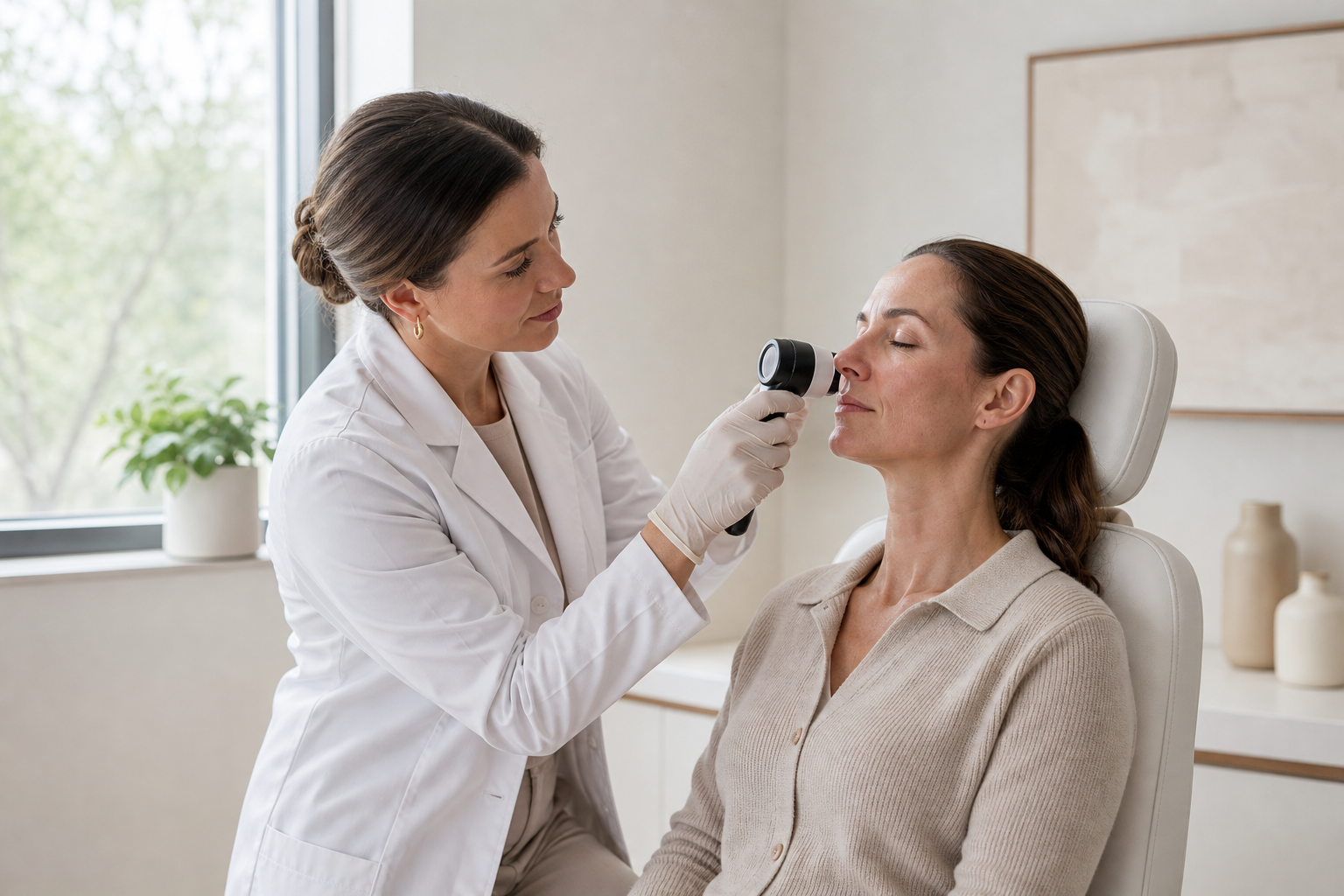
Dermatological examination, potentially including dermoscopy, helps visualize vascular patterns and inflammatory changes, differentiating these conditions. A precise diagnosis enables tailored therapy guiding patients away from inappropriate treatments that may worsen their condition.
What Role Does Laser Treatment Play in Managing Redness Around the Nose?
Laser treatment stands as a prominent tool for addressing facial redness, specifically targeting vascular components responsible for visible capillaries and erythema. Unlike ablative lasers used for skin resurfacing, vascular lasers emit wavelengths absorbed by hemoglobin, gently heating and collapsing abnormal vessels.
For individuals with couperose or the vascular dimension of rosacea, laser therapy can produce significant cosmetic improvements, diminishing redness and improving skin uniformity. Results often become apparent after a series of sessions, but maintenance treatments may be necessary to sustain effects.
It is important to emphasize that laser therapy addresses rather one dimension of rosacea—the vascular dilation—and does not eradicate the underlying inflammatory processes. Consequently, lasers should be integrated into a multimodal treatment plan rather than viewed as a standalone cure.
How Should Skincare Be Adapted for Redness Near the Nose?
Appropriate skincare is pivotal to control redness and support the skin’s health around the nose, especially in individuals dealing with couperose, dermatitis, or rosacea. The focus is on minimizing irritation, enhancing barrier function, and protecting against environmental triggers.
Gentle, fragrance-free, hypoallergenic cleansers are preferred over harsh soaps to avoid stripping natural oils. Moisturizers rich in emollients and anti-inflammatory ingredients help soothe and hydrate the skin. Sun protection with physical blockers like zinc oxide or titanium dioxide is critical, as ultraviolet exposure exacerbates redness and inflammation.
Patients should avoid products containing alcohol, strong exfoliants, or known irritants. Introducing new products gradually and under dermatological guidance can prevent flare-ups. Consistent skincare fosters an environment where treatments like lasers can have more lasting benefits.


