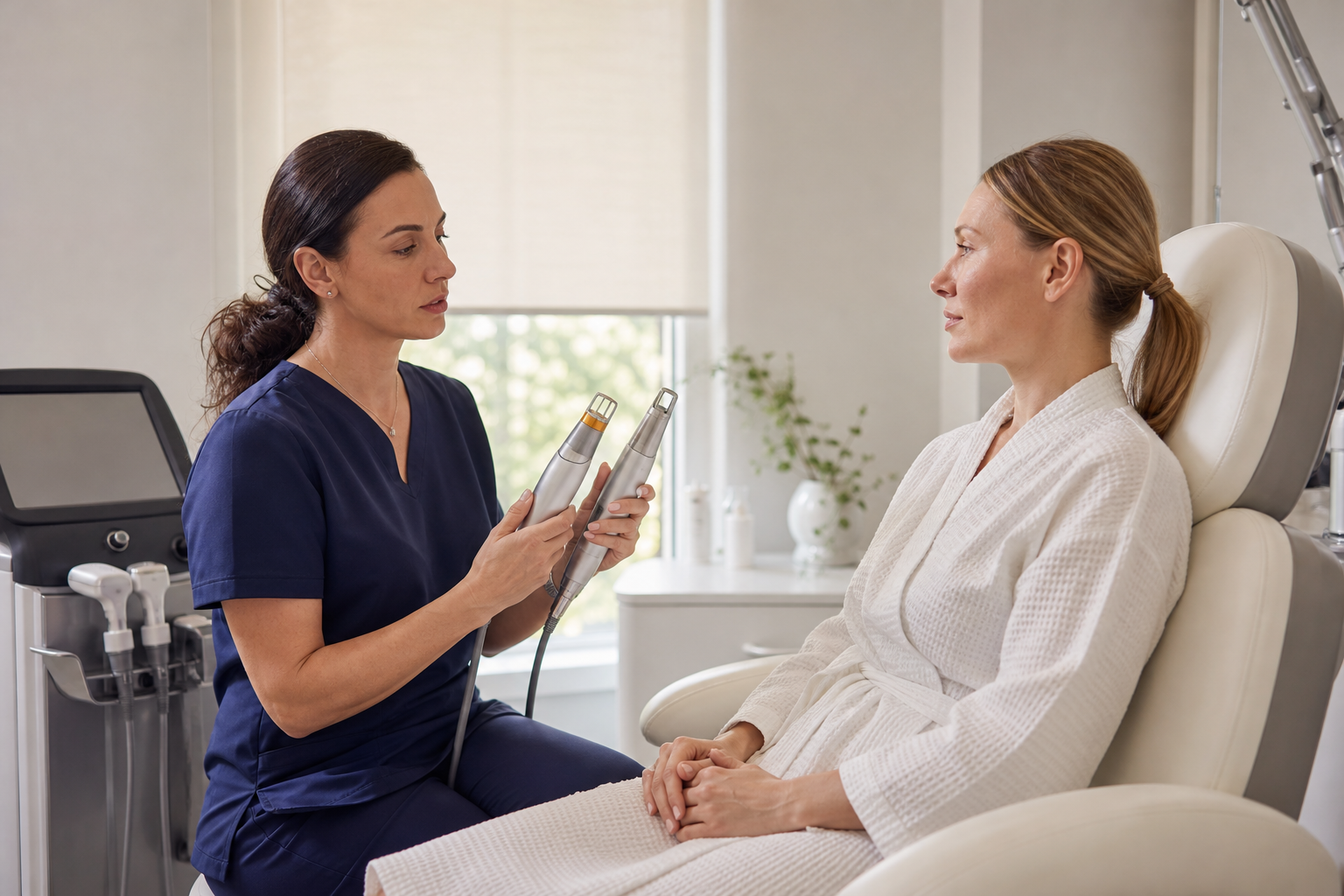
Rosacea, a chronic skin condition characterized primarily by facial redness, is a source of significant discomfort and self-consciousness for many individuals. This redness, often accompanied by visible blood vessels, bumps, and inflammation, can fluctuate in intensity and, at times, profoundly affect a person’s quality of life. For those living with rosacea, understanding the available treatment options to manage the persistent redness is critical. Among these options, laser therapy has garnered considerable attention as a potential method for reducing rosacea-related redness and improving skin appearance.
This comprehensive editorial explores whether laser therapy can effectively reduce the redness caused by rosacea. It is intended for individuals affected by rosacea seeking clarity on therapeutic choices, as well as professionals in dermatology and skincare who want to understand the nuanced role of laser treatments in managing this common vascular skin condition. Through a detailed examination of the science behind rosacea, the principles of laser therapy, and evidence from reputable dermatological sources, this article sheds light on what patients and practitioners can realistically expect from such interventions.
Understanding the limitations and benefits of laser therapy in the context of rosacea is essential. This knowledge helps set appropriate expectations and guides patients toward informed decisions without the misconception that laser treatment offers a cure. By distinguishing rosacea from other conditions with similar redness presentations — such as dermatitis, sensitive skin reactions, and post-acne erythema — we ensure this discussion remains precise and relevant to those directly impacted by rosacea-related facial redness.
What Is Rosacea and How Does It Cause Facial Redness?
Rosacea is a chronic inflammatory skin disorder predominantly affecting the central face, including the cheeks, nose, forehead, and chin. Its hallmark sign is persistent redness due to abnormal blood vessel behavior beneath the skin’s surface. The condition often evolves through several stages, starting with intermittent flushing and progressing to more permanent erythema with visible telangiectasia (tiny blood vessels) and inflammatory papules or pustules.
Unlike ordinary facial redness caused by sun exposure or temporary irritation, rosacea involves a complex interplay of skin vascular changes, immune response irregularities, and potentially microbial factors. The small blood vessels expand excessively — a process called vasodilation — resulting in the characteristic redness and flushing episodes. Over time, these vascular changes may give rise to visible, dilated capillaries known as telangiectasia, contributing to an uneven complexion and persistent facial redness even during remission periods.
Recognizing rosacea’s vascular basis is fundamental when considering treatment modalities aimed at reducing redness. Addressing the dilated blood vessels and heightened blood flow in affected areas is a key therapeutic strategy, especially for patients whose primary concern is the redness and visible veins rather than inflammatory breakouts.
Why Is Laser Therapy Considered for Rosacea-Related Redness?
Laser therapy is frequently proposed as a treatment for rosacea-related redness due to its ability to target and diminish visible blood vessels and pigmentation irregularities. The principle of laser treatment for vascular conditions hinges on selective photothermolysis — the process whereby laser light is absorbed preferentially by blood-containing chromophores (mainly hemoglobin) in the skin’s targeted vessels, converting light energy to heat that damages and occludes these vessels without harming surrounding tissue.
Because rosacea redness largely arises from dilated and chronically inflamed blood vessels, vascular laser treatments can potentially reduce both the diffuse redness and the appearance of discrete blood vessels. This targeted approach contrasts with systemic or topical medications that modulate inflammation or immune responses but do not directly resolve visible telangiectasia or permanent vascular changes.
Various types of lasers, including pulsed dye lasers (PDL), intense pulsed light (IPL) devices, and Nd:YAG lasers, have been utilized to address rosacea redness with varying degrees of clinical support. Their capacity to improve skin clarity and uniformity makes laser therapy an attractive option in the armamentarium against rosacea’s vascular manifestations.
What Are the Different Laser Technologies Used in Treating Rosacea?
Several laser and light-based technologies have been developed to treat facial redness associated with rosacea, each with specific characteristics suited to target abnormal blood vessels. Understanding these options is essential for tailoring treatments to patient-specific needs and skin types.
Pulsed Dye Laser (PDL): The PDL emits a yellow light (typically around 585–595 nm) absorbed primarily by oxyhemoglobin in superficial blood vessels. It has long been considered a gold standard for targeting vascular lesions due to its precision. The PDL can reduce erythema and telangiectasia by coagulating dilated capillaries, often resulting in noticeable improvement in redness intensity.
Intense Pulsed Light (IPL): Although not a laser per se, IPL devices produce broad-spectrum light filtered to specific wavelengths that can target blood vessels and pigmented lesions. IPL is valued for its versatility and tends to have milder side effects with shorter recovery times than some laser treatments. It can improve overall skin tone, reduce redness, and diminish visible blood vessels with multiple sessions.
Nd:YAG Laser: This laser emits light at a longer wavelength (1064 nm), enabling penetration into deeper dermal layers targeting larger or deeper vessels. Nd:YAG is particularly useful for treating larger telangiectasia and thicker blood vessels that may be less responsive to shorter-wavelength lasers.
Each technology offers unique advantages and limitations. Dermatologists often select treatment based on the patient’s skin type, rosacea subtype, severity and depth of vascular lesions, and tolerance for downtime and side effects.
Can Laser Therapy Cure Rosacea or Just Manage Its Symptoms?
It is essential to clarify that laser therapy is not a cure for rosacea. Rosacea is a chronic condition with multifactorial origins, including vascular dysregulation, immune abnormalities, and environmental triggers, which laser treatments do not address in their entirety. Laser therapy primarily manages the visible vascular components — reducing redness and blood vessel visibility — but it does not eradicate the underlying disease process.
Patients considering laser treatment should understand that while it can significantly improve cosmetic concerns associated with persistent redness, ongoing skin care, trigger avoidance, and medical therapies may still be necessary to control flare-ups and inflammation. The improvements in redness from laser therapy can enhance self-esteem and social comfort, but rosacea often requires a comprehensive, multimodal management strategy.
Realistic expectations about the results and the necessity for maintenance sessions are crucial. Some patients may experience long-lasting improvement after a few treatments, while others may require periodic touch-ups to sustain benefits. Furthermore, laser therapy does not prevent new vascular changes from developing over time.
How Effective Is Laser Therapy in Reducing Rosacea-Related Redness?
Clinical studies and dermatological assessments commonly report that vascular laser treatments can significantly reduce the intensity of rosacea-related facial redness and visible blood vessels. Most patients observe a noticeable decrease in persistent erythema, improved skin texture, and better overall complexion clarity following a series of laser sessions.
For example, pulsed dye laser treatments have demonstrated efficacy in diminishing persistent redness and telangiectasia, offering improvement in both subjective appearance and objective clinical measurement of vascularity. Similarly, IPL treatments have been shown to improve diffuse redness and skin tone uniformity with repeat applications, often favored by patients who prioritize minimal downtime.
However, outcomes can vary based on individual factors such as skin type, severity of vascular lesions, rosacea subtype, and adherence to pre- and post-treatment care. Side effects, although generally mild, can include temporary redness, swelling, and, rarely, pigmentary changes or blistering, emphasizing the need for experienced practitioners performing these procedures.
Laser treatments are particularly effective for patients whose primary concern is persistent redness and visible blood vessels without significant inflammatory papules or pustules. In those with predominant inflammatory lesions, laser therapy might be combined with medical therapies for optimal results.
Who Is a Good Candidate for Laser Treatment to Manage Rosacea Redness?
Identifying suitable candidates for laser therapy involves a careful clinical evaluation by a dermatologist specializing in vascular skin conditions. Ideal candidates typically present with persistent facial redness characterized by diffuse erythema and discrete telangiectasia without active, inflamed rosacea lesions that could worsen with laser exposure.
Patients with light to intermediate skin types (Fitzpatrick types I to III) are generally preferred candidates because of lower risks of pigmentary side effects. Those with darker skin tones may receive modified laser parameters or alternative treatments due to melanin’s absorption of laser energy potentially leading to complications.
It is also important that candidates have realistic expectations, understand that laser therapy is a management tool rather than a cure, and commit to maintaining protective measures such as sun avoidance and gentle skincare regimens. People with other skin conditions affecting facial redness — including dermatitis, sensitive skin reactions, or post-inflammatory erythema from acne — may require differential diagnosis and tailored approaches, as these conditions do not always respond similarly to vascular laser treatments.
What Should Patients Expect During and After Laser Treatments for Rosacea?
A typical laser treatment session for rosacea-related redness involves the application of cooling to protect the skin surface and minimize discomfort. During the procedure, patients may feel a series of brief, warm to slightly snapping sensations as the laser targets blood vessels. The duration of each session varies depending on the area treated but often ranges between 15 to 30 minutes.
Post-treatment effects commonly include transient redness and mild swelling in the treated areas, which usually subside within a few hours to days. Some patients might experience temporary bruising or darkening of treated vessels before gradual fading as the body clears the damaged vessels. Proper post-care, including sun protection and avoidance of skin irritants, is essential to optimize healing and prevent complications.
Multiple treatments spaced several weeks apart are often necessary to achieve significant redness reduction. These repeat sessions allow gradual improvement while minimizing risks. Over time, patients may notice smoother skin texture, diminished vascular prominence, and a more even skin tone.
How Does Laser Therapy for Rosacea Compare to Other Treatment Options?
While laser therapy primarily targets the vascular abnormalities causing visible redness, other rosacea treatments focus on controlling inflammation, microbial contributors, or barrier dysfunction. Topical medications such as metronidazole, azelaic acid, or brimonidine gel can reduce redness but often provide temporary relief and do not address telangiectasia directly.
Oral antibiotics may lessen inflammatory lesions but have limited effect on persistent redness and blood vessel dilation. In contrast, laser therapy is unique in its ability to specifically damage abnormal vessels, producing a more sustained improvement in facial redness. However, it is best viewed as complementary to, rather than a replacement for, medical management.
Advanced treatments continue evolving, including novel light-based devices and combination therapies that may offer enhanced safety and efficacy profiles. Integrating laser treatments into a comprehensive care plan involving trigger avoidance, skincare, and medical therapy usually yields the most optimal rosacea management outcomes.
What Are the Key Differences Between Rosacea-Related Redness and Other Similar Conditions?
Differentiating rosacea from other causes of facial redness is critical for selecting appropriate therapy. Conditions such as dermatitis, sensitive skin reactions, and post-acne erythema can also manifest with persistent or intermittent redness but differ fundamentally in pathophysiology and treatment responsiveness.
For example, dermatitis may feature redness coupled with scaling, itching, or crusting and responds better to anti-inflammatory and barrier-restoring treatments than vascular lasers. Sensitive skin redness is often triggered by irritants and lacks the telangiectatic vessels seen in rosacea. Post-acne erythema follows inflammatory acne lesions and typically resolves over time but may benefit from light-based therapies designed for pigmentation and redness.
Proper clinical assessment ensures accurate diagnosis and guides whether laser therapy is appropriate. Misuse of vascular lasers in conditions dominated by inflammation or barrier disruption rather than vascular dilation can lead to worsening symptoms or ineffective outcomes.
How Does Laser Therapy Fit into the Long-Term Management of Rosacea?
Laser therapy occupies an important role in the long-term management of rosacea, particularly for patients with persistent redness and telangiectasia refractory to topical treatments. It offers an option to restore a clearer complexion and improve patient confidence. However, it is not a standalone solution.
Integrating laser treatments with daily skincare routines tailored to sensitive and rosacea-prone skin, lifestyle modifications to avoid known triggers (such as sun exposure, heat, and certain foods), and pharmacologic therapies for inflammatory symptoms constitutes a comprehensive approach. Regular dermatologic follow-up ensures treatment efficacy is monitored and adjustments made in response to the disease course.
Moreover, maintenance laser sessions might be necessary to sustain improvements in redness due to the chronic nature of rosacea. Educating patients on the realistic goals and limitations of laser therapy prevents disappointment and facilitates a collaborative therapeutic relationship.


