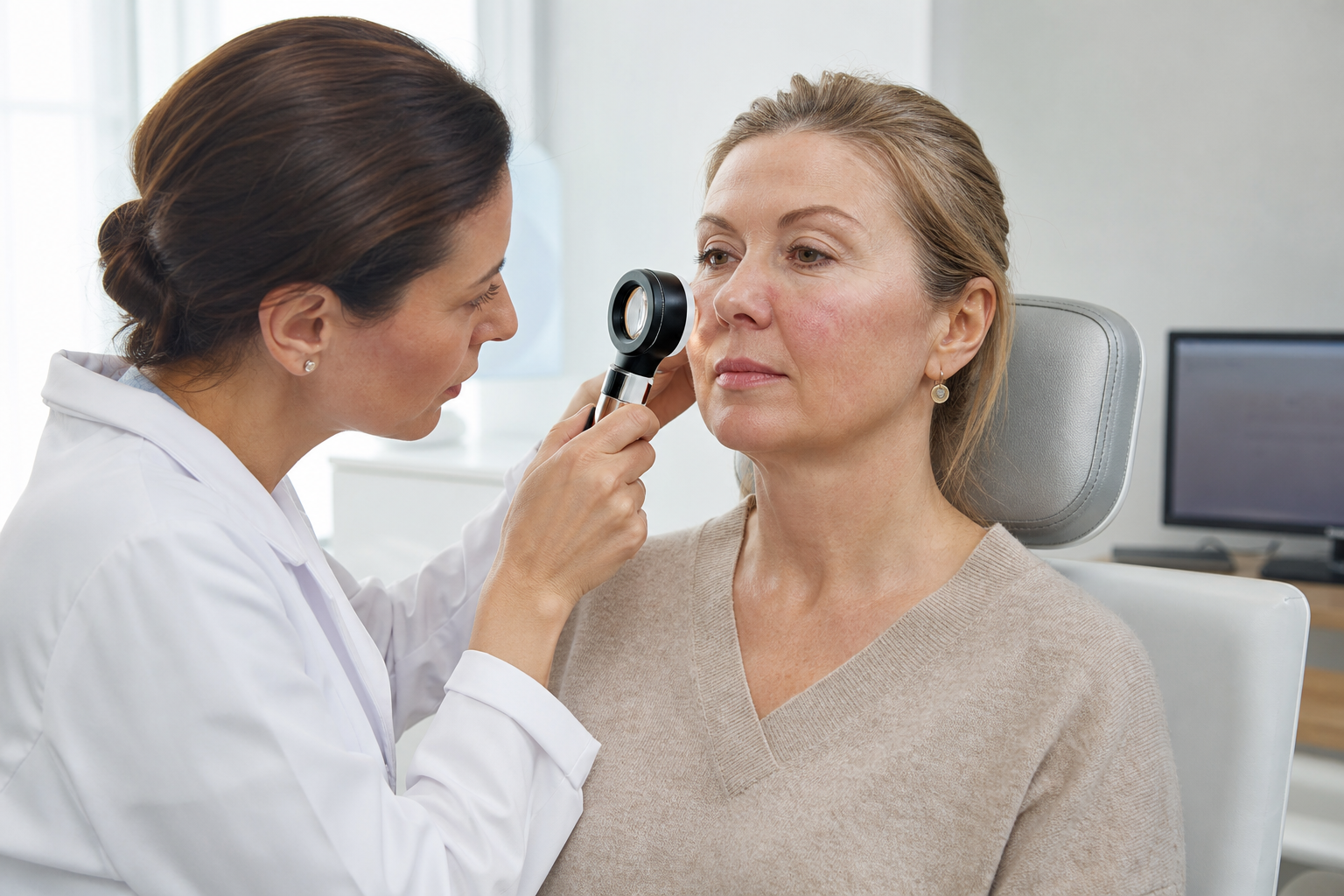
Visible facial capillaries and similar vascular concerns represent a common aesthetic issue that prompts numerous individuals to seek effective treatment solutions. Among the available options, laser treatment for visible vessels and redness has gained widespread attention for its targeted approach and potential to enhance skin appearance dramatically. This editorial examines the intricate question: can capillaries reappear after laser treatment? Understanding this matter is essential not only for patients considering or undergoing therapy but also for dermatologists and aesthetic specialists tasked with delivering realistic, evidence-based counsel.
Capillaries, the tiny blood vessels visible as fine red or purplish lines under the skin, frequently emerge around delicate areas such as the nose and cheeks, manifesting as teleangiectasias or spider veins. These vessels can also present on the legs, where leg capillaries often signal circulatory strain or hereditary predisposition. The persistence or recurrence of these vascular features after laser intervention fuels clients’ questions regarding the permanence and efficacy of such procedures. Since a clear understanding helps set expectations and informs post-treatment care, it is paramount to explore the mechanisms of capillary formation, the laser modality’s impact, and factors influencing the long-term outcomes of vascular laser therapy.
The audience for this article includes those troubled by visible capillaries seeking clarity on therapeutic options, clinicians desiring a synthesized, practical resource on laser treatment dynamics, and informed readers interested in reliable dermatologic perspectives. By addressing the biology of capillaries, causes behind their appearance, the laser treatment process, and the likelihood of vessel re-emergence, this editorial offers a comprehensive view vital for achieving satisfactory aesthetic outcomes.
Understanding Visible Capillaries and Their Formation
To appreciate the challenges of treating visible vessels, one must first comprehend what capillaries are and why they become noticeable on the skin. Capillaries are the smallest blood vessels in the body, part of the microcirculatory network responsible for nutrient and gas exchange between blood and tissues. Under certain circumstances, they dilate or become damaged, causing them to appear as thin red or purple lines under the skin’s surface.
Visible facial capillaries often manifest as fine red branching lines predominantly around the nose, cheeks, and areas susceptible to environmental stressors. Their appearance can be categorized as telangiectasias, characterized by permanent dilation of these small vessels. On the legs, capillaries—sometimes referred to as spider veins—may result from increased venous pressure due to lifestyle factors or inherited weaknesses in vein walls.
The causes behind visible capillaries are multifactorial. Sun damage is a leading contributor, inducing fragile blood vessels through chronic ultraviolet radiation exposure. Hormonal fluctuations, particularly in women, can precipitate vessel dilation. Genetic predispositions, aging-related skin thinning, repeated trauma or irritation, and systemic circulatory conditions further compound the risk of capillary formation. These underlying factors underscore the importance of considering personal medical history and environmental influences when approaching laser vascular treatment.
How Laser Treatment Works to Address Visible Vessels and Redness
Laser treatment targets visible capillaries by employing selective photothermolysis, a process in which laser energy is absorbed preferentially by hemoglobin in the blood vessels, leading to controlled thermal injury that collapses the affected vessel. This collapse prompts the vessel’s gradual resorption by the body, resulting in reduced visibility or complete clearance of the capillary from the skin’s surface.
Different lasers cater to varying vessel sizes and locations. The pulsed dye laser (PDL) and the Nd:YAG laser are among the most commonly used devices for vascular issues. The PDL emits a wavelength well absorbed by oxyhemoglobin, making it effective for superficial and moderate-depth capillaries. Nd:YAG, with a longer wavelength, penetrates deeper and is particularly useful for leg capillaries and thicker vessels.
Laser sessions are typically brief, ranging from minutes to half an hour depending on the extent of the treated area. Multiple sessions are often necessary, spaced weeks apart, to achieve optimal results while minimizing discomfort and adverse effects. The treatment is generally well-tolerated, with transient redness and mild swelling possible immediately post-procedure.
Factors Influencing the Recurrence of Capillaries After Laser Treatment
One of the central concerns surrounding laser-assisted capillary removal is whether treated vessels can reappear. The simple answer is that it is possible for new capillaries to form or, less commonly, for previously treated vessels to recanalize or become visible again over time. This outcome arises because laser treatment effectively removes the visible damaged vessels but does not permanently alter the fundamental conditions that prompted their development.
Genetic predisposition remains a significant factor; a family history of vascular fragility or varicose veins predisposes patients to emerging new capillaries despite intervention. Environmental exposures like continuous sun damage, extreme temperature fluctuations, or mechanical irritation perpetuate vessel fragility and formation.
Hormonal changes, such as those occurring during pregnancy or hormonal therapies, also facilitate the emergence of new vascular structures. Additionally, lifestyle components—including prolonged standing or sedentary behavior—can contribute to increased venous pressure in the legs, fostering the appearance of leg capillaries post-treatment.
Thus, while laser therapy is proficient at eradicating visible capillaries at the time of treatment, ongoing factors and individual susceptibility dictate whether new vessels become apparent in the future. Continuous care and preventive strategies are critical components of long-term success.
Distinguishing Between Laser Treatment and Other Vascular Therapies
It is important to clarify that not all light-based treatments utilize lasers, and different modalities bear distinctive mechanisms and efficacy profiles. For example, Intense Pulsed Light (IPL) therapy, although frequently employed for vascular lesions, is not a laser but a broadband light source. IPL emits multiple wavelengths simultaneously, absorbed by hemoglobin, and can effectively reduce redness and capillary visibility, yet it differs in precision and depth penetration compared to laser systems.
Sklerotherapy, an entirely different approach, involves injecting a sclerosant solution directly into the vein, prompting vessel closure from within. This method is generally more suitable for larger leg veins and less so for facial capillaries.
Choosing the correct therapy hinges on vessel size, location, skin type, and patient preferences. Dermatologists and vascular specialists weigh these factors, often combining treatments for comprehensive management.
Maintaining and Enhancing Results Post-Laser Treatment
Post-treatment care significantly affects both immediate results and the durability of capillary reduction. Protecting treated areas from sun exposure by using broad-spectrum sunscreens minimizes UV radiation damage that can incite vessel formation. Avoiding extremes of temperature and mechanical irritation also safeguards fragile capillaries.
In addition, lifestyle modifications, including regular exercise to enhance circulation and elevating legs when possible to reduce venous pressure, support vascular health. Moisturizing products formulated to strengthen blood vessel walls and reduce inflammation can also contribute positively.
Regular dermatologic assessments provide the opportunity for early detection of new vascular changes and timely intervention, whether by laser touch-up sessions or alternative therapies. Patients should anticipate that multiple treatments and ongoing maintenance may be necessary to optimize skin appearance over the long term.
Realistic Expectations When Considering Laser Treatment for Capillaries
Understanding the capabilities and limitations of laser treatment is crucial to forming realistic expectations. While laser therapy offers a high success rate for visibly diminishing unwanted capillaries and improving redness, it does not guarantee permanent eradication of all vascular concerns. Capillaries are part of a dynamic circulatory system influenced by numerous factors beyond treatment control.
Success depends on individualized patient factors, appropriateness of laser type chosen, and adherence to post-treatment recommendations. Some patients may observe remarkable clearance after just a few sessions, while others require prolonged treatment courses. Furthermore, the appearance of new or residual small capillaries is a known possibility due to ongoing biological and environmental stimuli.
Informed discussion with a qualified dermatologist or vascular specialist prior to embarking on laser therapy ensures that patients have clear insights into potential outcomes, possible side effects, and maintenance requirements. This dialogue mitigates dissatisfaction and empowers patients to engage actively in their skin health journey.


