Visible facial capillaries, particularly those around the nose, are a common concern for many individuals seeking a clearer, more uniform complexion. These tiny, dilated blood vessels near the skin's surface, known medically as telangiectasias, manifest as fine red, purple, or blue lines that can disrupt the skin's even tone and affect self-confidence. Understanding the nature of these capillaries, their causes, and effective treatment options is critical for anyone considering intervention to improve their skin’s appearance.
This discussion is especially relevant for people who have noticed persistent redness or visible blood vessels around the nose and cheeks and are exploring solutions ranging from laser therapies to Intense Pulsed Light (IPL) and other medical or cosmetic treatments. Selecting the right treatment requires a thorough grasp of the underlying mechanisms of capillary appearance, various technologies designed to address them, and realistic expectations for outcomes.
Beyond cosmetic concerns, visible capillaries around the nose indicate changes in skin microcirculation and potentially underlying dermatological conditions, making this topic significant not only aesthetically but also medically. This editorial aims to clarify what capillaries around the nose are, why they appear, how they differ from other vascular issues like spider veins and leg veins, and the comparative benefits and limitations of laser, IPL, and alternative treatment modalities.
What Are Capillaries Around the Nose and Why Do They Form?
Capillaries are the smallest blood vessels within the circulatory system, facilitating essential exchanges of oxygen, nutrients, and waste between blood and tissues. When capillaries under the skin dilate or become fragile, they emerge visibly as fine red or purple lines known as telangiectasias, especially noticeable on the delicate facial skin.
The region around the nose is particularly vulnerable to capillary visibility due to its thin skin and rich vascular network. A combination of intrinsic and extrinsic factors contributes to their development.
Intrinsic factors include genetic predispositions that influence vascular fragility, hormonal changes (such as those experienced during puberty, pregnancy, or menopause), and natural aging processes that diminish skin thickness and resilience. Extrinsic factors cover chronic sun exposure, which damages collagen and elastic fibers supporting blood vessels, as well as lifestyle habits like excessive alcohol consumption and smoking that exacerbate vascular inflammation and fragility.
Medical conditions such as rosacea, characterized by facial redness and enlarged blood vessels, often cause or worsen capillary visibility around the nose, complicating treatment choices further. Environmental factors, like exposure to extreme temperatures or harsh skincare products, can also provoke skin irritation, fostering capillary dilation.
How Do Facial Capillaries Differ From Spider Veins and Leg Veins?
It's important to distinguish between various vascular phenomena on the skin to appropriately tailor treatment approaches. Facial capillaries or telangiectasias are superficial, small-caliber vessels primarily on the face, especially around the nose, cheeks, and chin. They generally represent localized dilation without underlying venous insufficiency.
Spider veins, by contrast, typically appear as branching, web-like clusters of dilated veins and are most commonly found on the legs. These veins are often linked to venous valve failure and can be a symptom of underlying chronic venous disease requiring a vascular specialist's assessment.
Deeper leg veins are larger and involved in significant blood return; their dysfunction may cause varicose veins, swelling, and discomfort. Treatment for these veins demands specific medical intervention distinct from cosmetic therapies used for facial capillaries.
Recognition of these differences influences not only treatment selection but also patient counseling and safety considerations, ensuring that interventions target the correct type of vascular lesion.
How Does Laser Treatment Work for Visible Capillaries Around the Nose?
Laser therapy is widely regarded as a leading option for treating visible facial capillaries due to its precision and effectiveness. The fundamental mechanism involves selective photothermolysis: lasers emit concentrated beams of light at specific wavelengths absorbed by hemoglobin within the capillaries. This absorption leads to localized heating, causing thermal damage to the targeted vessels, which subsequently collapse and are reabsorbed by the body, reducing their visibility.
Lasers used for vascular treatments vary; common types include pulsed dye lasers (PDL), neodymium-doped yttrium aluminum garnet (Nd:YAG) lasers, and potassium titanyl phosphate (KTP) lasers, each with different penetration depths and absorption profiles tailored to vessel size and skin type.
Patients with visible capillaries around the nose are often suitable candidates for laser treatment, especially when the vessels are persistent, extensive, or causing significant cosmetic concern. However, treatment efficacy depends on factors such as vessel size, depth, skin color, and patient skin sensitivity.
The procedure usually involves several sessions spaced weeks apart to maximize clearance and minimize side effects. While generally well tolerated, patients may experience transient redness, swelling, or mild discomfort during and after treatment, often managed with cooling and topical care.
The precise targeting of lasers allows for effective reduction of redness and vessel visibility with minimal impact on surrounding tissues, making them a preferred choice among dermatologists for telangiectasias on the face.
What Is IPL and How Does It Compare to Laser Treatment for Capillary Removal?
Intense Pulsed Light (IPL) therapy, though often conflated with lasers, is fundamentally different. IPL emits a broad spectrum of light wavelengths rather than a single wavelength; filters adapt these wavelengths according to treatment needs. This polychromatic light targets melanin, hemoglobin, and other chromophores, allowing IPL to address multiple skin concerns such as redness, pigmentation, and fine vessels simultaneously.
IPL can be effective for reducing superficial redness and smaller vascular lesions around the nose, making it suitable for patients with diffuse erythema or early-stage capillary dilation. It offers the advantage of treating larger skin surface areas in less time and is considered versatile for combined facial rejuvenation and vascular improvements.
However, IPL may be less effective on deeper, larger, or more robustly dilated vessels compared to lasers, which deliver more concentrated energy at selective wavelengths precisely absorbed by blood vessels. Additionally, IPL treatments require strict adherence to post-procedure sun protection due to increased photosensitivity.
Repeated IPL sessions are often necessary to maintain results, and its variable parameters necessitate careful customization by experienced practitioners to optimize outcomes and minimize risks.
Are There Other Treatments Beyond Laser and IPL for Capillaries Around the Nose?
Several alternative or adjunctive treatments exist, but their applicability and effectiveness vary. Topical agents containing ingredients like vitamin K, retinoids, or anti-inflammatory compounds may support vessel wall strength and reduce redness but do not eliminate established capillaries. Such creams serve predominantly as maintenance or preventive options rather than curative.
Sklerotherapy, the injection of sclerosing agents to collapse veins, is effective for spider veins and larger leg veins but is generally inappropriate for facial capillaries due to the delicate anatomy and risk of adverse effects.
Emerging technologies like pulsed light vascular therapy or radiofrequency devices offer additional options, though clinical evidence and long-term data are still developing.
Natural skincare strategies—such as diligent sun protection, avoidance of triggers like extreme temperatures or irritating cosmetics, moderation of alcohol intake, and smoking cessation—are essential complementary measures. They help prevent the formation of new capillaries and preserve treatment outcomes.
What Are Realistic Expectations and Long-Term Outcomes for These Treatments?
Patients need to approach treatment for facial capillaries with measured expectations. Total and permanent removal of all visible capillaries is challenging because of genetic predispositions and continuous exposure to triggering factors.
Treatments typically aim to minimize visibility and improve skin appearance, achieving long-lasting but not always permanent results. New capillaries may develop over time, necessitating maintenance sessions and ongoing care.
Post-treatment skin may require avoidance of sun exposure, use of gentle skincare, and lifestyle modifications to prolong results. Consultation with a dermatologist or laser specialist ensures personalized treatment planning and realistic prognostic communication.
How Should One Choose Between Laser, IPL, or Other Treatments for Capillaries Around the Nose?
The decision between laser, IPL, and alternative therapies hinges on individual skin characteristics, extent of vascular changes, patient preferences, and available technology.
For well-defined, deeper, or more prominent capillaries, laser treatments generally provide superior precision and efficacy. For more diffuse redness or multiple skin concerns, IPL offers versatile benefits but may require multiple sessions to achieve comparable improvement.
Other treatments, including topicals and lifestyle management, supplement procedural options but are not standalone cures.
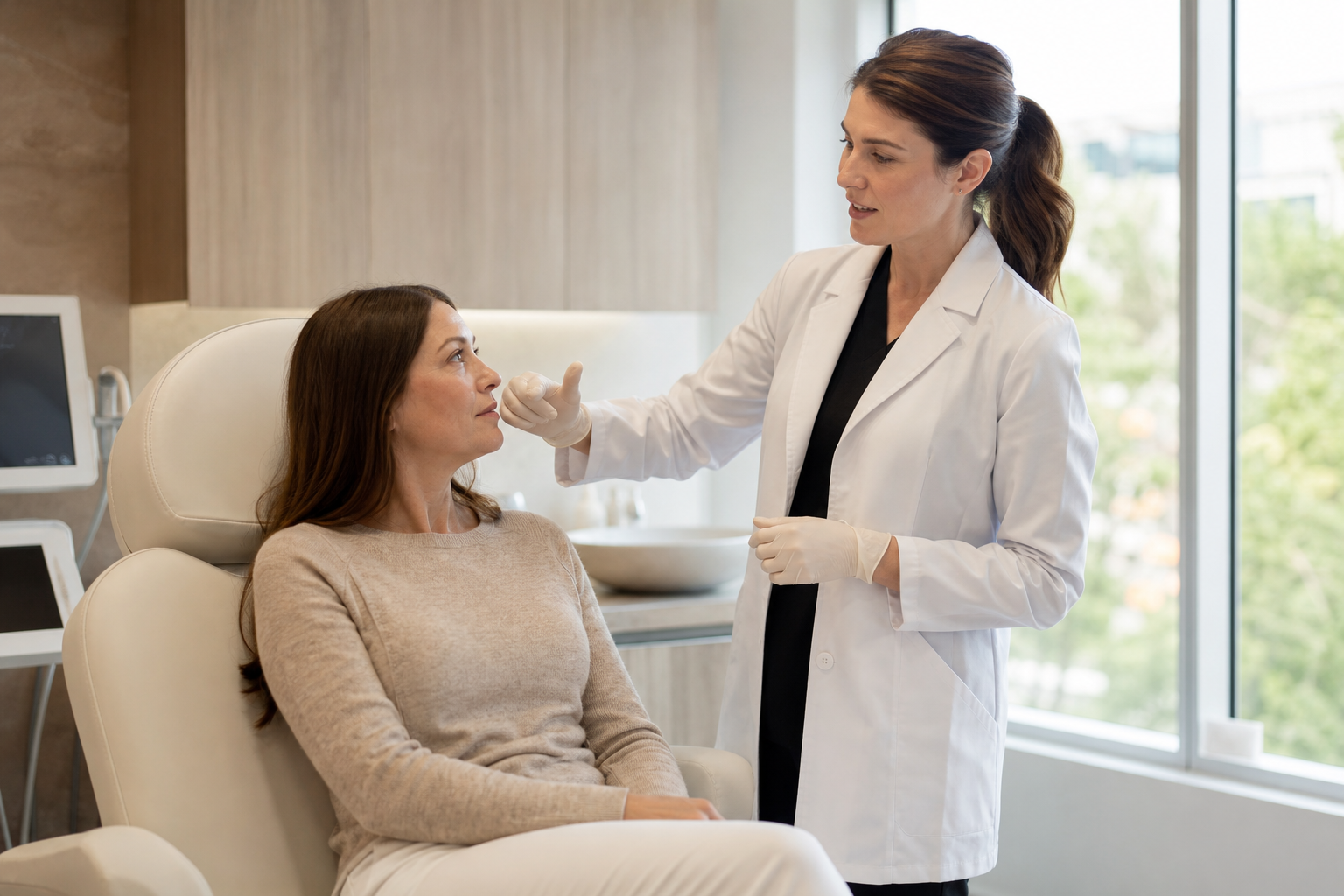
A comprehensive skin assessment by a qualified professional incorporating medical history, skin type, and treatment goals is indispensable to determine the optimal approach tailored for each individual.


