In today's quest for that enviable sun-kissed glow, many individuals face a common dilemma: should they opt for a professional spray tan or rely on at-home mousse products? This decision is important for a diverse range of people—from first-timers exploring safe, UV-free tanning options to seasoned users aiming to elevate the appearance and longevity of their tan. Understanding the fundamental differences between professional spray tan treatments and at-home mousse applications is crucial for making an informed choice that aligns with one’s unique skin type, lifestyle, and aesthetic goals.
Both professional spray tans and self-application mousses represent accessible, UV-free methods to achieve a bronzed complexion without the risks associated with sun exposure or tanning beds. However, the distinctions in application techniques, ingredient formulations, durability of results, and safety protocols are often unclear to many consumers. This editorial aims to provide a thorough, impartial exploration of the two approaches, detailing how they work, who they are best suited for, what benefits each offers, and what practical considerations users should bear in mind.
By delving into the science behind the active ingredients, the nuances of application, and realistic outcome expectations, we will clarify the advantages and challenges inherent to professional spray tans versus at-home mousses. Additionally, we present expert recommendations for maximizing safety and efficacy. Equipped with this knowledge, readers can confidently navigate their tanning options, enjoying a radiant, natural-looking glow with minimized risk and enhanced satisfaction.
What Defines Professional Spray Tanning Compared to At-Home Mousse?
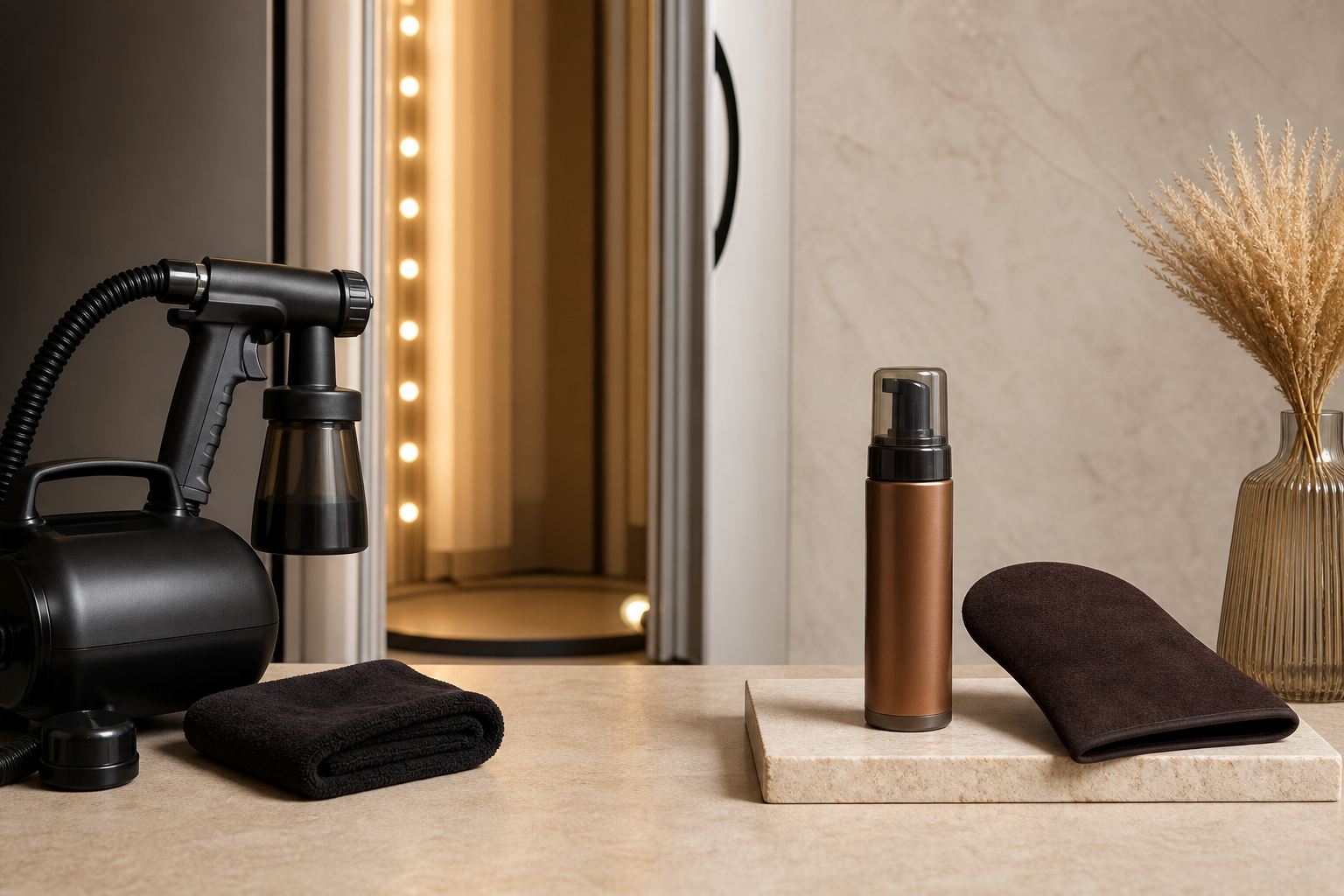
Professional spray tanning involves the application of a specialized tanning solution onto the skin using sophisticated spray equipment operated by trained technicians. This mist contains dihydroxyacetone (DHA), a colorless sugar that interacts with keratin proteins in the skin’s surface layer to produce a temporary browning effect simulating a natural tan. The treatment is usually performed in dedicated salons or spas offering tailored services designed to ensure even coverage and an authentic finish.
Conversely, at-home mousses are self-applied tanning products that come in a foam or mousse formulation. They also rely primarily on DHA to create a bronzed appearance but often contain differing concentrations and supplementary ingredients aimed at moisturizing or facilitating application at home. The user applies these mousses manually, which introduces variability in coverage uniformity and color intensity depending on individual skill and technique.
The essential distinction lies in the professional environment and equipment guaranteeing precise, uniform spray coverage in salons versus the convenience and autonomy of DIY mousse application. Professional treatments adhere to stringent quality and safety standards for product formulation and application accuracy, whereas at-home mousses present a broader spectrum of quality and user outcomes.
Who Benefits Most from Professional Spray Tans Versus At-Home Mousses?
Professional spray tanning is ideally suited for individuals seeking a fast, high-quality tan with proven longevity and minimal application fuss. This option is especially appealing to those preparing for significant events—weddings, photoshoots, or vacations—where flawless and predictable results are paramount. It is also recommended for people with sensitive skin or those new to sunless tanning who may benefit from expert consultation and oversight to avoid common pitfalls.
On the other hand, at-home mousse products cater well to users who value flexibility, cost savings, and control over their tanning routine. These products enable self-paced application without salon appointments, making them suitable for regular maintenance of a tan or experimenting with gradual color building. Individuals comfortable with personal grooming and willing to invest effort in learning application techniques can achieve satisfactory results with mousses, though outcomes may vary.
It is important to consider lifestyle, skin sensitivity, budget, and desired tan intensity when deciding between these methods. Professional spray tanning offers consistency and expertise, while at-home mousses provide autonomy and convenience.
Advantages and Limitations of Professional Spray Tan Treatments
One of the primary advantages of professional spray tans is the unparalleled precision of application. Technicians utilize advanced equipment that atomizes the tanning solution into a fine mist, ensuring a thin, even layer coats the skin. This controlled technique minimizes the risks of streaks, blotches, or overly dark areas that can compromise the natural look of the tan.
The formulations used in salons often contain optimally balanced DHA concentrations, combined with skin conditioners chosen to enhance color development and durability. These professional-grade solutions are typically dermatologically tested for safety and compatibility, yielding results that last approximately seven to ten days when proper aftercare routines are followed. Additionally, salons prep the skin by recommending exfoliation and cleansing prior to the session, further improving the quality and longevity of the tan.
Despite these benefits, professional spray tans require scheduling appointments and traveling to a service location, which might not suit everyone’s timetable or budget. The initial and maintenance costs of regular professional treatments are higher compared to purchasing an at-home product. Furthermore, strict adherence to post-application guidelines—such as avoiding water, sweating, or tight clothing for several hours—is necessary to secure the best outcome.
Characteristics and Challenges of Using At-Home Self-Tanning Mousses
At-home mousses offer remarkable accessibility; users can apply tanning products in their own homes at convenient times. These formulations often include moisturizers and skin-nourishing additives, helping to counteract the potential dryness associated with DHA use and improving overall skin feel. The mousse texture can provide a fun, lightweight feel and typically dries quickly, enhancing user experience.
However, the major challenge lies in mastering the application technique. Inexperience can lead to uneven areas, splotches, or missed spots, detracting from an otherwise appealing glow. Achieving symmetrical coverage requires practice, use of application mitts, and careful attention to blending. To develop deeper color, repeated applications may be necessary, demanding ongoing commitment.
Quality variance in at-home mousses is greater, and consumers must scrutinize ingredient labels to ensure safe DHA levels and absence of irritants. Selecting reputable brands and performing patch tests can mitigate risks of adverse skin reactions. Moreover, because at-home mousses generally lack the precise formulation of professional solutions, their effects may fade faster, necessitating more frequent reapplication.
How Does DHA Work on the Skin Surface in Spray Tanning and Mousses?
The core ingredient in both professional spray tans and at-home mousses is DHA, a sugar compound that reacts chemically with free amino acids in the skin’s uppermost layer—primarily the keratin-rich stratum corneum. This reaction produces melanoidins, pigments that temporarily darken the skin’s appearance mimicking a natural tan without UV exposure.
This process is purely superficial and does not penetrate deeper skin layers, meaning the tan created is temporary and fades as the skin naturally exfoliates over days. DHA begins to develop color within a few hours after application, reaching its peak between 24 and 48 hours. Users should anticipate this delayed color development when planning their tan for specific occasions.
Importantly, DHA-based tans do not provide any protection against ultraviolet radiation. Users must continue applying broad-spectrum sunscreen with an SPF of 30 or higher to safeguard skin health during sun exposure, regardless of their spray tan or self-tan status.
What Should Users Expect After a Spray Tan or Mousse Application, and How Can They Maintain the Tan?
Following a professional spray tan, it is advisable to avoid bathing, sweating, or any water contact for at least six to eight hours to allow full color development and fixation. Gentle showering with mild cleansers is recommended thereafter, avoiding abrasive scrubs or exfoliants. Hydrating the skin regularly prolongs the tan by slowing the natural shedding process that removes the pigmented skin cells.
Users applying at-home mousses should wash hands immediately after application to prevent unwanted staining and avoid water for several hours to secure color adhesion. Building up color through multiple light coats might enhance the final result. Maintaining skin moisture through lotions helps preserve the tan's vibrancy and smooth fade-out.
Both methods require mindful post-care. Factors such as swimming, heavy sweating, or using harsh soaps accelerate tan fading. Planning for touch-ups or routine reapplication is a practical way to enjoy a continuous bronzed look.