In the world of skin care and aesthetic enhancement, achieving a radiant, sun-kissed glow has long been a sought-after beauty ideal. Traditionally, sunbathing has been the primary method to obtain a tanned complexion, involving intentional exposure to natural sunlight or the use of tanning beds. However, concerns about the harmful effects of ultraviolet (UV) radiation on the skin have led to the growing popularity of alternative methods, notably the spray tan. But what exactly is a spray tan, and how does it differ from sunbathing? Understanding these differences is crucial for anyone considering a safe and effective way to enhance their skin’s natural tone without compromising health.
A spray tan is a cosmetic procedure designed to impart a temporary tanned appearance to the skin without exposure to UV radiation. It involves the application of a specialized tanning solution that interacts chemically with the surface of the skin to create a bronzed effect. This contrasts markedly with sunbathing, where tanning results from increased melanin production sparked by UV exposure. For individuals who wish to achieve a glowing complexion but are cautious about the risks associated with sun exposure—including premature skin aging, sunburn, and skin cancer—the spray tan offers an appealing alternative.
This article thoroughly explores what a spray tan entails, who it benefits most, and how it functions differently from sunbathing. We will delve into the scientific basis behind spray tanning, practical considerations for its use, safety aspects, and how to maintain optimal results. Readers seeking a comprehensive understanding of spray tanning—from its mechanisms to its advantages and limitations—will find a careful, informed perspective here to guide their choices in skincare and tanning methods.
What Is a Spray Tan and How Does It Work?
A spray tan is fundamentally a topical application of a tanning agent onto the skin, most commonly using the active ingredient dihydroxyacetone (DHA). DHA is a colorless sugar that reacts with amino acids present in the dead skin cells of the stratum corneum, which is the outermost layer of the epidermis. This reaction, known as the Maillard reaction, leads to the formation of brown pigments called melanoidins that mimic the appearance of a natural tan.
Unlike sunbathing, where ultraviolet A (UVA) and ultraviolet B (UVB) rays penetrate deeper skin layers to stimulate melanocytes to produce melanin as a protective response, the spray tan affects only the superficial skin layers. The coloration achieved through DHA application is therefore purely cosmetic and temporary, lasting typically five to ten days as the pigmented dead skin cells naturally exfoliate.
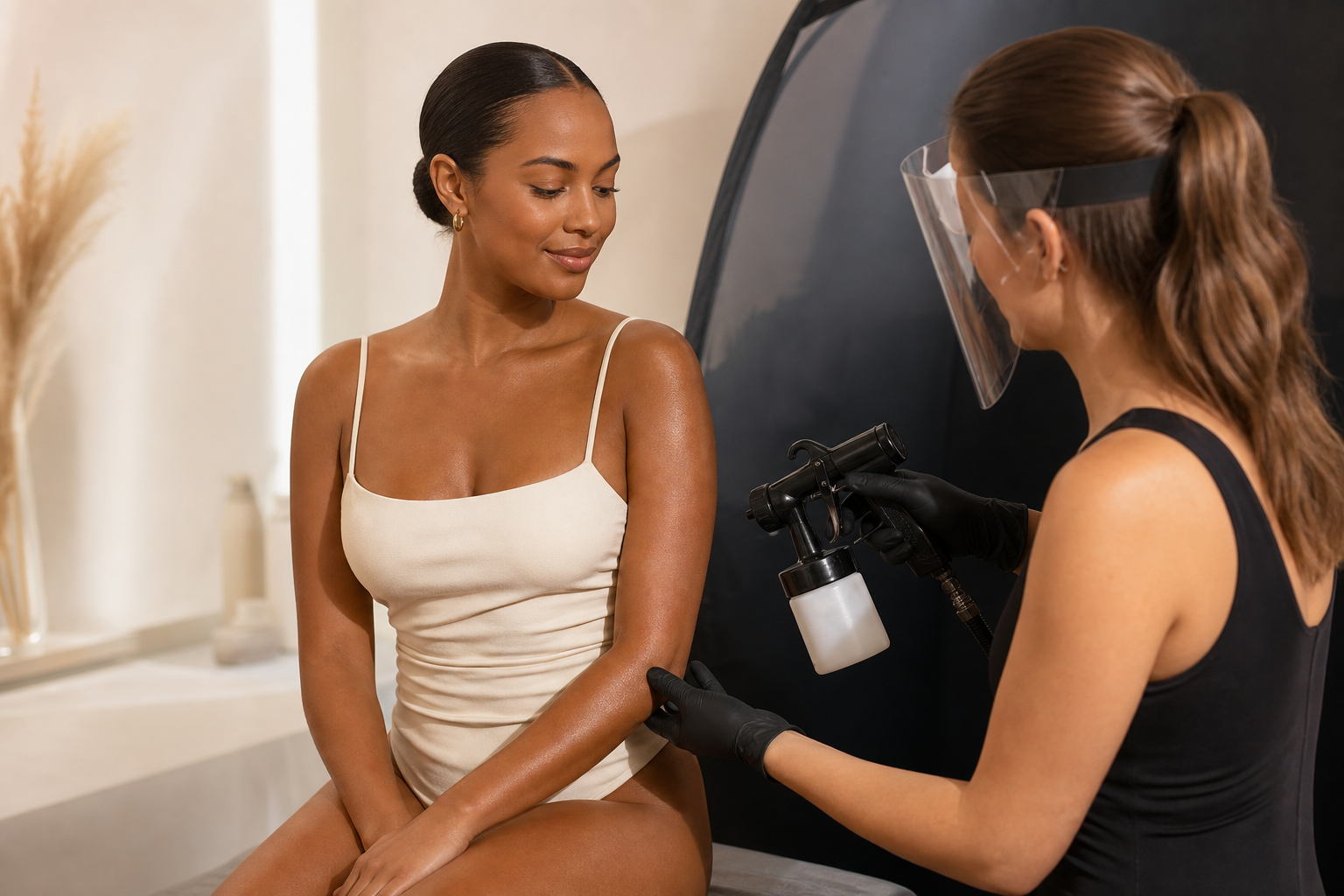
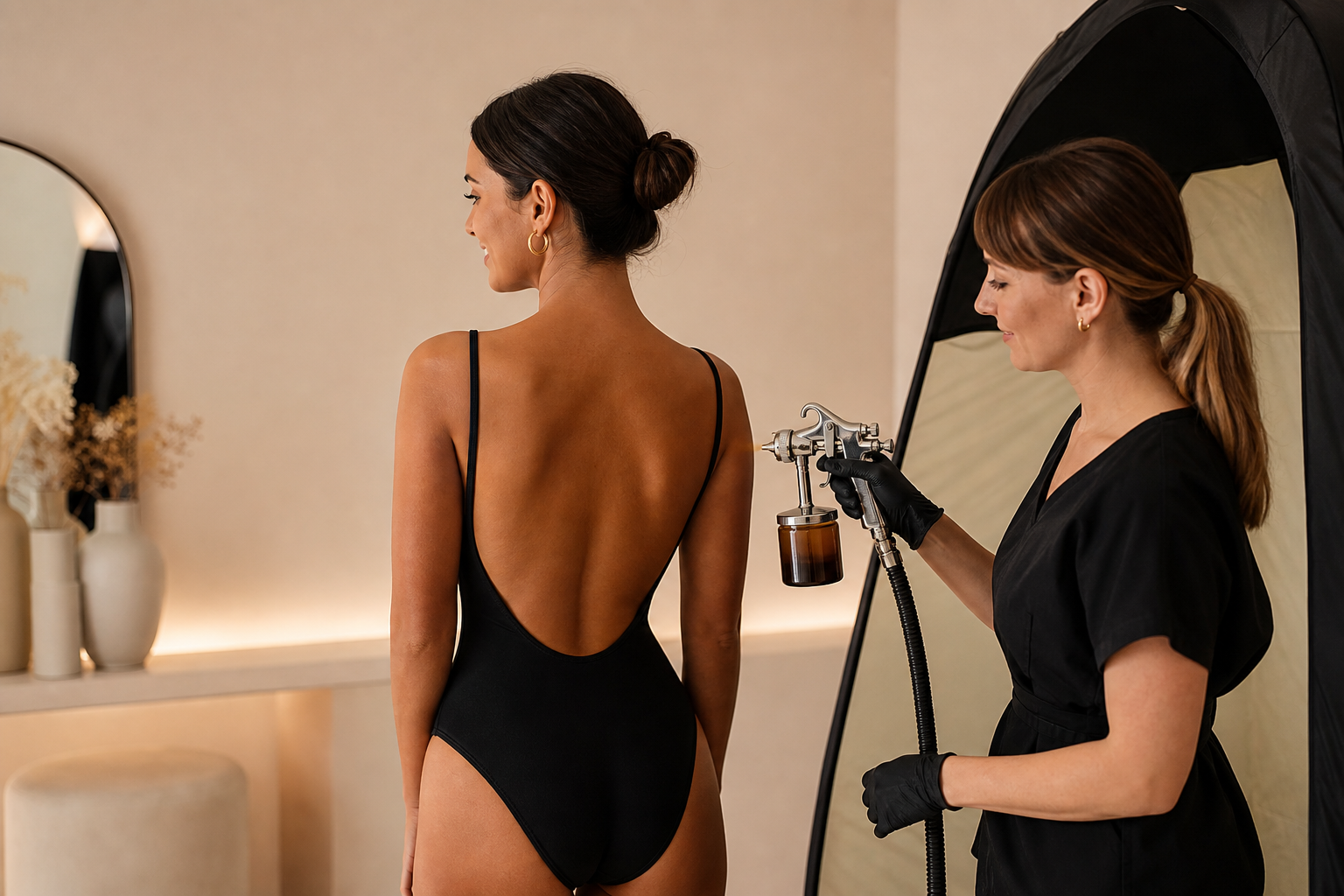
Spray tans are administered via an airbrush or spray booth at beauty salons, where the solution is evenly misted over the body. At-home options also exist, using lotions, mousses, or sprays that individuals can apply themselves. Regardless of the method, the key distinction is that spray tanning induces a pigment change chemically on the skin's surface without UV exposure, thus avoiding DNA damage and the accompanying risks.
Who Benefits Most from Choosing a Spray Tan Over Sunbathing?
Spray tanning is particularly advantageous for people who seek a bronzed complexion but either cannot or prefer not to expose their skin to UV radiation. This includes individuals with sensitive skin, those prone to sunburn, people with fair or light skin tones that sunburn easily, and anyone with a personal or family history of skin cancer.
Moreover, spray tans are well suited for those who desire quick results. Natural tanning through sun exposure requires repeated sessions over days or even weeks to develop a visible tan, and outcomes can be unpredictable due to factors like skin type, time spent under the sun, and geographical location. A professional spray tan, in contrast, delivers an immediate and evenly distributed tan in as little as 15 to 30 minutes.
Additionally, individuals preparing for special events, such as weddings, photo shoots, or vacations, often favor spray tans for their controllability and precision. The ability to customize the depth of color and avoid undesirable tan lines makes this method highly appealing to a broad demographic seeking aesthetic refinement without health compromises.
How Is Spray Tanning Different from Traditional Sunbathing Physically and Biologically?
Traditional sunbathing involves direct exposure to the sun’s UV rays, which initiate a complex biological process within the skin. UVB rays induce damage to the DNA of keratinocytes and stimulate melanocytes to ramp up melanin synthesis—a pigment that absorbs UV radiation, providing some protection to deeper skin tissues. The visible tan manifests as melanin accumulates primarily in the basal layer of the epidermis and upper dermis.
However, this natural tanning mechanism is a sign of cellular injury and attempts to protect the skin from further harm. Prolonged or intense UV exposure can lead to photoaging, DNA mutations, and immunosuppression, significantly increasing the risk of skin cancers.
In contrast, a spray tan works without UV exposure and does not affect melanin production or deeper skin processes. The DHA-mediated Maillard reaction acts solely on the dead outer skin layer and does not penetrate living cells or cause DNA damage. Thus, spray tanning is a purely cosmetic, extrinsic process that changes skin color through chemical pigmentation rather than biological pigmentation.
What Are the Practical Benefits of Spray Tanning Compared to Sunbathing?
One of the most significant benefits of spray tanning is the elimination of harmful UV exposure. Users can achieve an attractive tan without the risk of sunburn, skin dehydration, or photoaging. This makes spray tans a compelling choice for long-term skin health preservation.
Speed and convenience also set spray tanning apart. A spray tan session typically takes 15 to 30 minutes, with color developing fully within a few hours. This allows for immediate gratification compared to the gradual tanning process from sunshine. Furthermore, spray tans can be applied year-round regardless of weather or season, providing a consistent aesthetic opportunity.
Another advantage is the degree of control over the tan's intensity and uniformity. Professional spray tans are customized to individual skin tones and preferences, minimizing the risks of streaking, patchiness, or overly dark results often encountered in natural sunbathing or home tanning devices.
How Should One Prepare for and Care for a Spray Tan Treatment?
Preparation is essential for achieving an even, natural-looking spray tan. Prior to treatment, exfoliating the skin to remove dead cells ensures the DHA solution adheres uniformly and reduces the chances of uneven fading. It is also recommended to avoid applying lotions, deodorants, perfumes, or oils on the day of treatment, as these can create barriers affecting color absorption.
During the spray tan application, wearing loose, dark clothing afterward helps prevent staining and allows the tan to develop without disruption. Individuals should avoid showering, sweating excessively, or swimming for at least six to eight hours post-treatment to maximize color development.
For maintenance, moisturizing daily is crucial to prolong the lifespan of the tan and prevent premature peeling. Gentle cleansers and lukewarm water are advised to avoid stripping the DHA pigmentation prematurely. With proper care, spray tans can maintain their fresh, natural appearance for up to ten days.
Does a Spray Tan Offer Any Protection Against UV Rays?
It is vital to clarify that spray tans do not provide any meaningful protection from UV radiation. The melanoidins formed by DHA do not absorb UV rays or act as a sunscreen. Therefore, spray-tanned skin remains susceptible to sunburn and other UV-induced damage.
Users must continue to apply broad-spectrum sunscreens with SPF 30 or higher whenever exposed to sunlight, regardless of their spray tan status. Neglecting sun protection after spray tanning can lead to significant skin damage and nullify the health benefits gained by avoiding direct tanning.
Are There Any Risks or Side Effects Associated with Spray Tanning?
While generally considered safe, spray tanning carries minor risks primarily related to skin irritation or allergic reactions. Some individuals may experience sensitivity to DHA or other components in spray tan formulations, which can manifest as redness or itching.
Performing a patch test prior to full application is recommended, especially for those with sensitive skin or pre-existing dermatologic conditions. Moreover, care should be taken to avoid inhaling the spray during application, as DHA’s safety when inhaled is not fully established.
Can Spray Tan Be Applied Equally to the Face and Body?
Yes, spray tans can be applied to both the face and body. However, because facial skin tends to be more delicate and prone to sensitivity, specialized formulations designed specifically for facial use are preferred. These formulations often have a lighter texture and are less likely to clog pores or cause breakouts.
Many salons offer facial spray tan options, and numerous at-home products also exist marketed for this purpose. Caution is warranted to avoid contact with the eyes and mucous membranes during facial application. With appropriate techniques and products, spray tanning can provide a uniform, natural glow across all exposed skin areas.