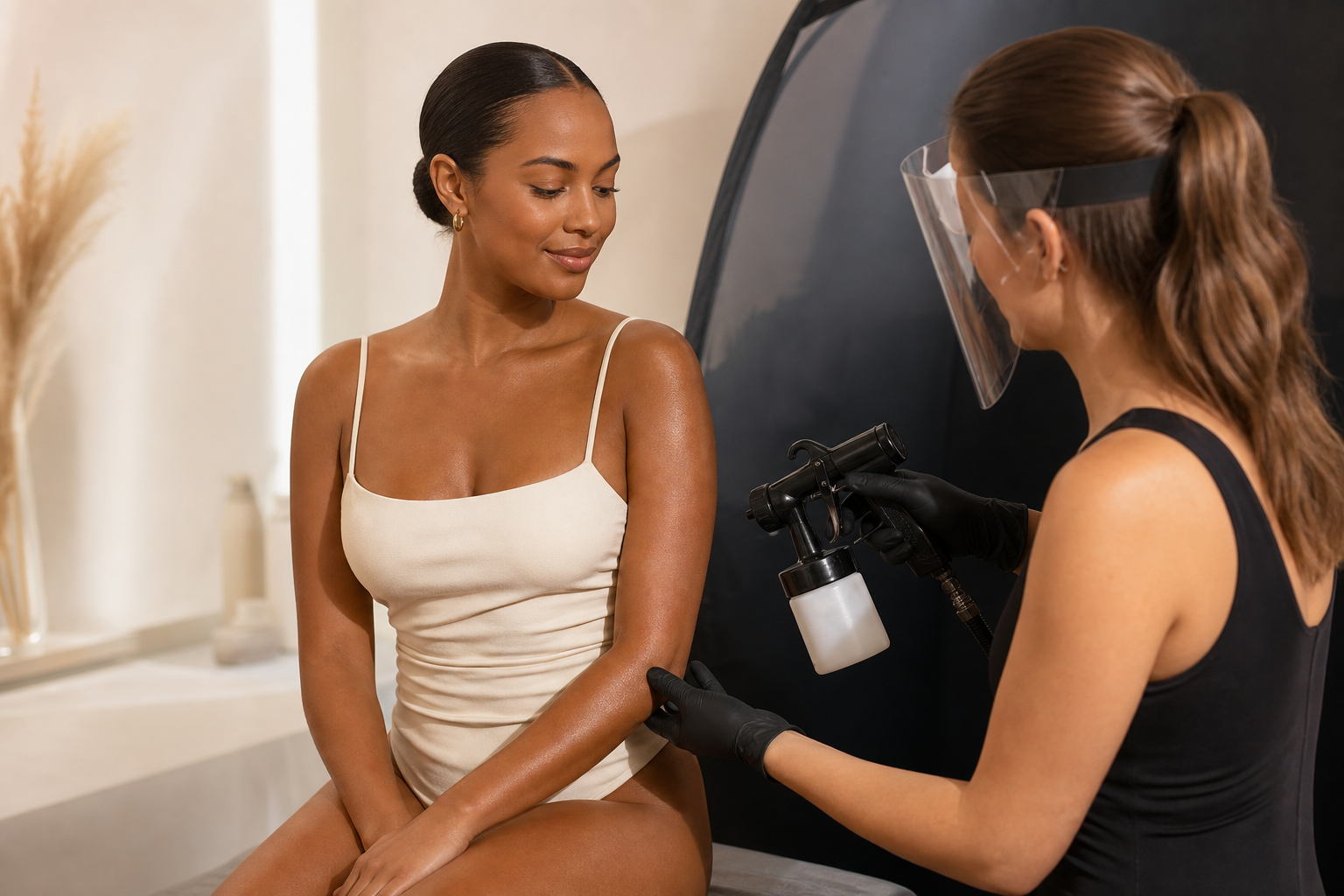
In recent years, self-tanning has emerged as a popular alternative to sunbathing and tanning beds, offering an appealing way to achieve a sun-kissed glow without exposure to harmful ultraviolet (UV) rays. Among the various self-tanning methods, spray tanning, which involves the application of formulas containing active ingredients such as dihydroxyacetone (DHA), has gained widespread adoption due to its convenience and immediacy of effect. However, as with any topical cosmetic product, concerns about skin safety, irritation, and allergic reactions are valid and warrant thoughtful consideration. This is particularly true for individuals with sensitive skin or a history of allergies.
Patch testing before self-tanning—the practice of applying a small amount of product to a limited skin area to monitor for adverse reactions—is a prudent precaution that can significantly enhance both safety and satisfaction. This article addresses the critical question: When can patch testing help before self-tanning, particularly spray tanning? It provides practical guidance on who should consider patch testing, how to perform it properly, what to expect during and after testing, and realistic safety considerations pertaining to self-tanning products. Understanding this process is essential not only for those new to self-tanning but also for professionals in salon settings and experienced users seeking safer routines.
The significance of patch testing extends beyond individual skin safety. Since self-tanning products do not offer UV protection, users must also maintain diligent sun care practices, including the use of broad-spectrum sunscreen with SPF 30 or higher. Balancing a beautiful tan with comprehensive skin health means integrating patch testing into a broader framework of mindful skin care and sun protection. In the following sections, we will explore the role patch testing plays in this framework and its vital function in safeguarding against unwanted skin reactions.
What Is Patch Testing in the Context of Self-Tanning?
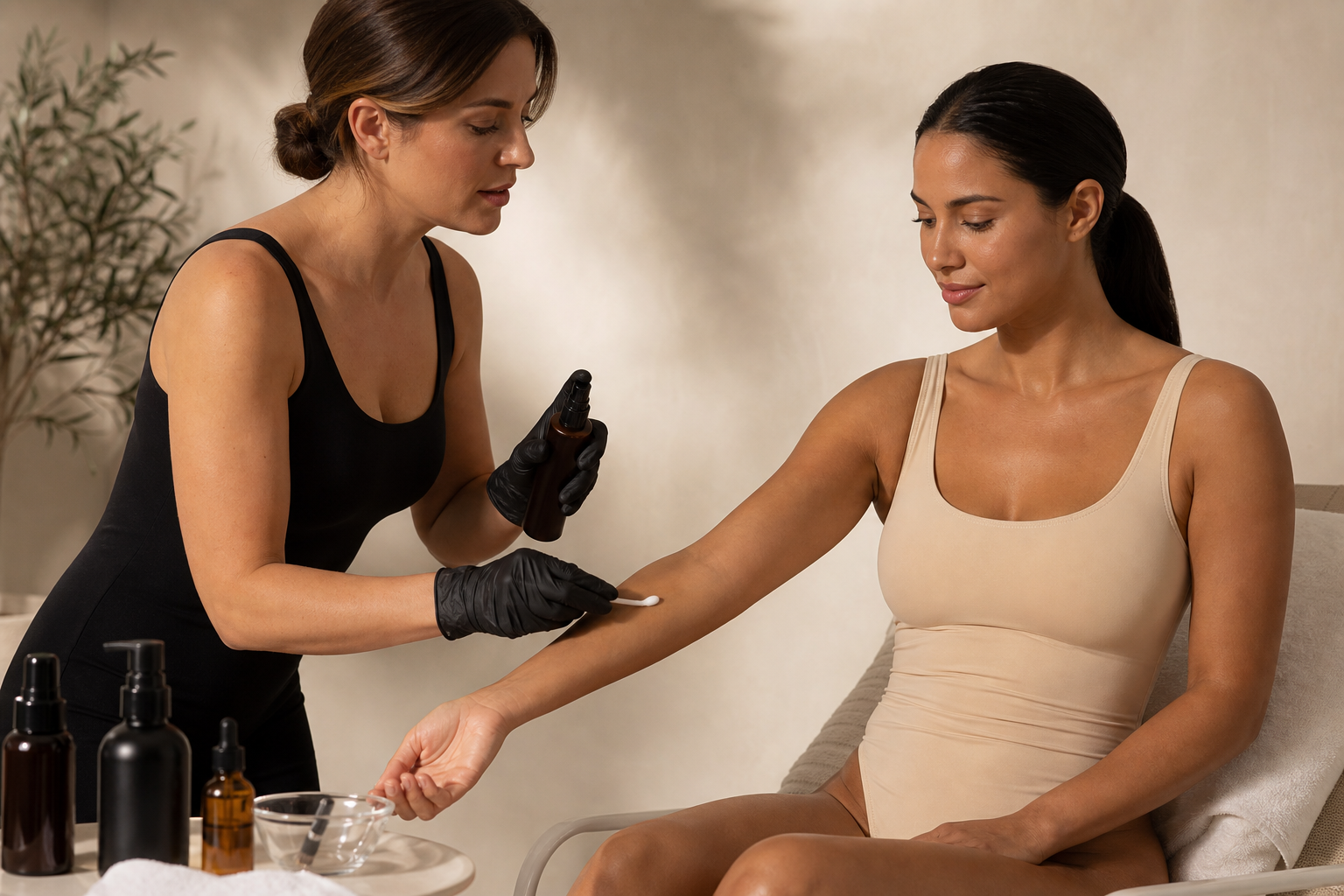
Patch testing is a recognized dermatological technique used to detect potential allergic or irritant reactions caused by topical products. When applied to self-tanning, patch testing involves applying a small amount of the tanning product—most often a solution or spray containing DHA and other ingredients—to a limited and discreet area of skin, such as the inner forearm or wrist. The purpose is to observe the skin’s response over 24 to 48 hours before applying the product more extensively.
This test helps identify whether any ingredient in the product, such as DHA, fragrance components, preservatives, or solvents, triggers inflammation, redness, itching, swelling, or other signs of hypersensitivity. The skin’s reaction is monitored carefully during this period to detect even subtle changes that might indicate incompatibility.
Such preemptive detection is crucial because symptoms of allergic contact dermatitis or irritant dermatitis can range from mild redness and itching to more severe swelling or blistering, all of which could compromise not only skin comfort but also the uniformity of the tan. Therefore, patch testing serves as both a protective measure for the skin's health and a quality control step for the aesthetic outcome of the self-tanning process.
Who Should Consider Patch Testing Before Self-Tanning?
While patch testing can be beneficial for all individuals contemplating self-tanning, it is especially advisable for certain groups who are at higher risk of adverse skin reactions. The first group includes individuals with a known history of allergies to cosmetics, perfumes, or skincare products. These users may be sensitive to some of the complex ingredients found in self-tanning formulas beyond the active DHA component.
Secondly, people with sensitive, reactive, or medically diagnosed conditions such as atopic dermatitis, eczema, or rosacea should exercise particular caution. These skin conditions can lower tolerance to topical products and heighten the risk of exacerbated irritation. Patch testing provides a way to gauge personal suitability without committing to full-body application.
Additionally, first-time users of self-tanning products stand to benefit markedly from patch testing. Since proprietary formulations differ among brands and products, individual skin reactions are unpredictable. A test patch helps establish individual compatibility and reduces the possibility of unpleasant surprises during or after application.
Finally, professional spray tans in salons require awareness that clients have varying skin types and histories of sensitivities. Salons dedicated to client safety often perform patch tests or recommend that first-time clients do so, ensuring personalized and secure service. Even experienced self-tanners who switch to new brands or formulations should consider repeat patch testing to account for potential changes in product ingredients.
How Is Patch Testing Properly Conducted Before Self-Tanning?
Performing a patch test for self-tanning is straightforward but requires attention to detail to yield reliable information. Ideally, the test should be carried out one to two days before the planned full application to allow enough time for observation.
To conduct the patch test, cleanse and dry a small area of skin, generally on the inner forearm or behind the ear, chosen for its sensitivity and ease of monitoring. Apply a small, measured amount of the self-tanning product to this area, avoiding rubbing in too deeply or applying excessive amounts to maintain authenticity of reaction.
Leave the area uncovered to closely mimic normal use conditions. Avoid exposing it to water, expansive sweating, or friction for at least the next 24 hours. Observe the site regularly for any changes such as redness, bumps, swelling, or discomfort. Extending observation up to 48 hours can capture delayed reactions which sometimes manifest beyond the initial day.
If any signs of irritation or allergy appear—be it redness, itchiness, swelling, dryness, or blistering—the product should be discontinued immediately, and further use avoided. Consulting with a dermatologist in such cases may be appropriate, especially if reactions are severe or persistent. If no adverse effects are noted within the observation period, one can proceed with confidence to full application.
What Skin Reactions Indicate a Problem During Patch Testing?
Recognizing the skin’s response during patch testing is essential to evaluate compatibility accurately. The most common adverse skin reactions to watch for include:
Redness and Rash: Indicative of an inflammatory response, redness can range from mild localized erythema to widespread rash and suggests sensitive or allergic skin reaction.
Itching or Pruritus: Intense itching often accompanies allergic or irritant contact dermatitis and signals that the skin’s barrier or immunologic defense is being challenged.
Swelling or Edema: Localized puffiness or swelling reflects a more significant immunologic response and should prompt immediate discontinuation of the product.
Blistering or Vesicles: The presence of blisters is an alarm symptom suggesting a substantial allergic reaction requiring professional medical evaluation.
Dryness and Peeling: Though less acute than the other symptoms, excessive dryness or flaking can indicate irritant dermatitis caused by the product’s ingredients, recommending avoidance or careful selection of gentler formulas.
It is important not to ignore even minor symptoms, as persistence or progression of irritation can lead to more severe skin damage or unwanted discoloration that spoils tanning results. Conversely, the absence of any adverse signs allows safe progression.
What Precautions and Best Practices Should Be Followed After Patch Testing?
Following a successful patch test with no adverse reaction, users should still observe several practical measures before and during the full self-tanning process to maximize safety and outcome quality.
Start by thoroughly cleansing and exfoliating the skin to remove oils, dirt, and dead cells that might hamper even product absorption. Ensure the skin is fully dry and free from moisturizers or oils that could interfere with tanning.
During application, especially in spray tanning, protect sensitive areas such as the eyes, lips, and airway passages to avoid irritation, following guidance from dermatological and cosmetic authorities.
Maintain realistic expectations regarding the tan’s appearance. Self-tanning products provide a pigmentary effect but do not enhance melanin production or provide any protective barrier against UV rays. Users must apply broad-spectrum sunscreen with SPF 30 or higher regularly after tanning to protect against photoaging, sunburn, and skin cancer risks.
Monitor the skin for any delayed signs of irritation or allergy arising even after the initial patch test. If any suspect symptoms develop post-application, cease use immediately and seek professional consultation.
How Does Patch Testing Integrate with Comprehensive Spray Tanning Safety and Skin Health?
Patch testing is one integral component of a holistic approach to safe self-tanning, a practice that extends beyond merely the aesthetic goal to prioritize the long-term health and integrity of the skin. Products containing DHA and other tanning agents represent a chemical interaction with the skin’s surface proteins and lipids, which can occasionally provoke undesirable immune or irritant responses.
By incorporating patch testing, users gain a proactive tool to customize their choice of products based on personal tolerance, thereby limiting adverse events. This testing reduces unexpected outcomes that could impact not only skin appearance but also comfort and health, reinforcing responsible beauty practices.
Furthermore, since spray tan products do not impart sunscreen properties, patch testing fits within the broader stewardship of skin care routines that encourage ongoing UV protection. Understanding the limitations of self-tanning products with regard to sun exposure safeguards users from complacency.
Finally, patch testing aligns with current dermatological best practices and consumer safety recommendations advocated in resources such as "Is Spray Tanning Safe? DHA, Protection and Precautions" and "Spray Tan: The Complete Guide to a Sun-Kissed Look Without UV Exposure". These authoritative guidelines emphasize that thorough preparation, including allergy testing, plays a crucial role in mitigating risk and enhancing outcomes.
Common Questions About Patch Testing and Self-Tanning
Does a patch test guarantee I won’t have any reaction to the self-tanner? While patch testing greatly reduces the likelihood of an adverse reaction, it is not an absolute guarantee. Skin can occasionally develop sensitivity over time or with repeated exposure. Ongoing vigilance is advisable.
Can I patch test with any self-tanning product? For reliable results, use the exact product you intend to apply widely, as different formulations can elicit different reactions.
How does patch testing relate to sensitive skin and spray tanning irritation? Patch testing is especially valuable for sensitive skin types because it highlights potential irritants or allergens before full exposure. Refer also to "Spray Tanning and Sensitive Skin: What Should You Check?" for detailed considerations.
Does spray tanning offer UV protection? No. Products like DHA-based self-tanners do not provide sunscreen benefits. You must apply broad-spectrum SPF 30+ protection daily as recommended in "Does Spray Tan Protect Your Skin from the Sun?"
What steps should be taken if a reaction occurs post-patch test or full application? Immediately discontinue use and consult a dermatologist. Some reactions may require topical treatments or other medical interventions.