Spray tanning has become a popular choice for those seeking a sun-kissed glow without the risks associated with ultraviolet (UV) exposure. But a common question arises among both newcomers and seasoned users of this cosmetic technique: can spray tan be applied to both the face and body safely and effectively? Understanding the distinctions between facial and body spray tan application, as well as the implications for skin health and aesthetic outcomes, is essential for anyone considering this treatment.
This article addresses the question directly and provides an in-depth exploration of spray tan application on facial and body skin. It is designed for individuals curious about how spray tanning works, the safety and compatibility of treating different skin areas, and practical guidance for achieving the best results while protecting their skin's health.
Given that the face and body have varying skin characteristics, knowing how spray tan formulas and application techniques differ is crucial. Moreover, users should be aware that although spray tans impart a beautiful bronze hue, they do not offer UV protection, making the use of broad-spectrum sunscreens indispensable. This article sets out informed expectations and recommendations to enable readers to enjoy the benefits of spray tanning responsibly.
What Is Spray Tan and How Does It Function on the Face and Body?
Spray tan is a cosmetic treatment involving the application of a solution containing dihydroxyacetone (DHA) onto the skin's surface. DHA reacts chemically with the amino acids in the stratum corneum, the outermost layer of dead skin cells, to produce a temporary browning effect that mimics a natural tan. This process offers an appealing alternative to sunbathing or tanning beds, which expose the skin to potentially harmful UV radiation.
The fundamental mechanism of DHA interaction is consistent whether applied to the face or body. However, the skin's qualities differ markedly in these regions. Facial skin is generally thinner, more delicate, and often subject to greater exposure to environmental factors and cosmetic products. It presents unique challenges such as increased sensitivity, visible pores, and a higher likelihood of irritation or allergic reactions.
Therefore, spray tan solutions intended for facial application are often formulated to be gentler, with lower concentrations of DHA or additional beneficial ingredients that help soothe the skin. Application methods tend to be more precise and cautious to avoid sensitive areas around the eyes, nostrils, and lips. Conversely, body treatments typically use stronger formulations and broader, quicker spray techniques, as body skin is usually thicker and less prone to irritation.
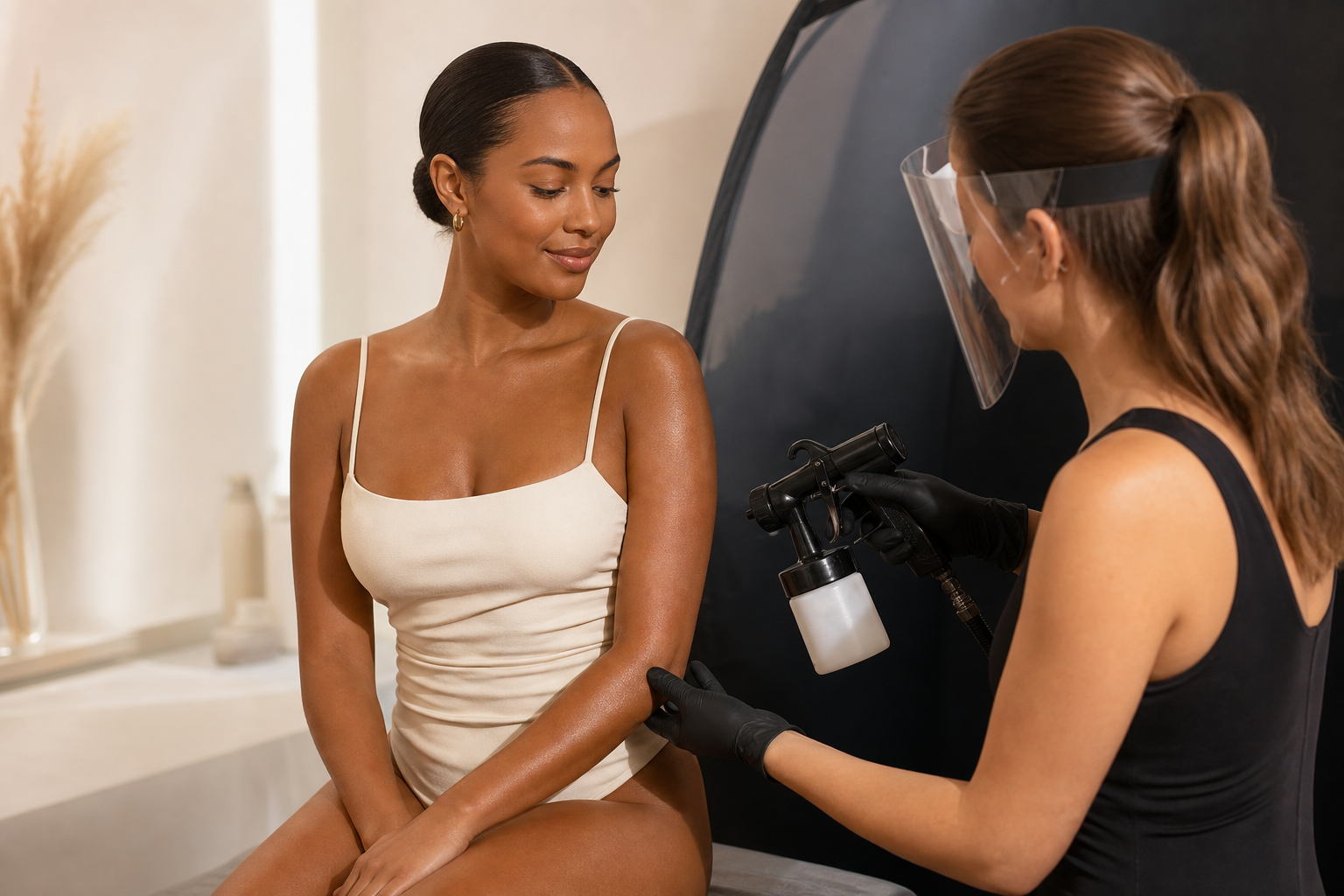
Professional spray tan systems use specially designed equipment to deliver an even and controlled application, vastly superior to manual self-tanners in reducing streaks or patchiness. This uniformity is particularly critical on the face, where uneven coloration is more noticeable.
Who Can Benefit from Spray Tan on Both the Face and Body?
Spray tan is suitable for a broad demographic interested in achieving a tanned appearance without incurring the risks related to UV exposure. This includes individuals with sensitive or fair skin, those prone to sunburn, people seeking even skin tone, and anyone preparing for special events or simply enhancing their everyday aesthetic.
For facial use, spray tan is generally recommended for adults of all skin types who desire a natural-looking glow that complements their body tone. However, individuals with certain dermatological conditions such as acne, rosacea, eczema, or those on medication that increases photosensitivity (like retinoids) should exercise caution. Consulting a dermatologist or experienced practitioner before treatment is advisable to select appropriate products and procedures tailored to individual skin needs.
Those who have discolorations or uneven pigmentation on the face may find that professional spray tan helps camouflage imperfections better than many self-tanning products, owing to the precise application and formula variations available for facial skin. For the body, spray tanning serves people who wish to avoid sun damage while maintaining a bronzed appearance year-round.
What Are the Safety Considerations When Applying Spray Tan to the Face and Body?
The safety of spray tanning depends largely on product quality, professional expertise, and adherence to recommended protocols. Both the face and body benefit from thorough pre-treatment preparation, including exfoliation to remove dead skin cells, which promotes even color development.
Specific precautions for the face include protecting sensitive features such as eyes and lips. During professional treatments, clients often wear protective eyewear, and moisturizers or balms are applied to lips to prevent staining or irritation. Areas surrounding the nostrils require cautious application to avoid inhaling aerosolized product, which could potentially cause respiratory discomfort.
Post-treatment, individuals should avoid washing or sweating excessively for at least 8 to 12 hours to allow the tan to fully develop and stabilize. Saunas, swimming pools, and vigorous activities might accelerate the fading process and cause uneven pigmentation, especially on the face, where washing and cosmetic product use are more frequent.
Crucially, spray tan does not offer any protection against UVA or UVB radiation. Users must apply a broad-spectrum sunscreen with SPF 30 or higher daily, particularly on the face, to prevent skin damage and premature aging. Relying on a spray tan as a substitute for sun protection would be a grave misconception.
How Should One Manage Expectations Regarding Spray Tan on Facial and Body Skin?
Understanding what spray tanning realistically achieves is crucial for satisfaction with the results. Upon application, the tan usually becomes fully visible within 6 to 12 hours, gradually developing into a bronze hue that lasts approximately 5 to 10 days, depending on skin type, lifestyle, and aftercare.
Body skin, being thicker and less exposed to cleansing routines, tends to retain the tan longer with less fading. Facial skin, however, is subject to frequent washing, makeup removal, and environmental pollutants, which can reduce tan longevity and may result in more rapid fading or patchiness if not properly cared for.
Hydration is key to preserving both facial and body tans. Employing moisturizers suited to one's skin type helps maintain the tan's vibrancy and the skin's health. Additionally, using gentle cleansers and avoiding abrasive scrubbing, especially on the face, extends the tan's lifespan.
It is important to note that spray tan does not alter natural pigmentation permanently, nor does it provide therapeutic benefits like anti-aging or treatment for skin conditions. Its purpose is primarily cosmetic—to enhance appearance safely and temporarily.
Can Spray Tan Be Integrated with Regular Facial Skincare and Makeup?
Yes, spray tan can be incorporated into everyday skincare routines with mindful product choices. Non-alcoholic, gentle cleansers and hydrating, non-comedogenic moisturizers are recommended to avoid stripping the spray tan prematurely, particularly on the face. Avoiding harsh chemicals and exfoliants immediately after treatment helps prolong the tan.
Makeup use is compatible but should be applied and removed with care. Lightweight foundations and mineral-based powders blend well with spray tan and minimize mask-like appearances. At day's end, makeup removal should be gentle to protect the tan and skin integrity.
Additionally, regular use of broad-spectrum sunscreen on all exposed areas, regardless of makeup or spray tan color, is essential to maintain skin health and prevent damage from UV exposure.
What Common Concerns Surround the Application of Spray Tan on Face and Body?
One frequent worry is achieving even coloration, especially on the face, where uneven spray tan can be noticeable. Professional application and choosing quality products reduce this risk significantly. Self-application attempts often result in streakiness or patchiness.
Another concern is whether spray tan can worsen acne or skin sensitivity. Selecting formulas designed for sensitive or acne-prone skin and conducting patch tests before full treatment mitigate these issues.
People also often inquire about differences between spray tan and at-home self-tanning methods. Spray tan tends to produce a more uniform, natural-looking result due to the controlled equipment and professional expertise involved. However, both methods share the limitation of lacking sun protection.