The pursuit of a radiant, sun-kissed complexion is a beauty goal shared by many, but the risks of ultraviolet (UV) exposure have driven countless individuals to seek safer alternatives to traditional sunbathing or tanning beds. One such alternative, increasingly prominent in the skincare and beauty industry, involves self-tanning products leveraging a key ingredient known as DHA. But what exactly is DHA, and why has it become the cornerstone of modern sunless tanning methods? Understanding this compound is crucial not only for consumers intent on achieving a bronzed glow but also for professionals guiding safe and effective use.
DHA, or dihydroxyacetone, is the active component in most self-tanning formulations, including sprays, lotions, and mousses. It interacts chemically with the outermost layer of the skin to produce a temporary tan without the involvement of UV rays, thereby bypassing the risks associated with sun exposure. For anyone looking to enhance their skin tone year-round in a safe and controlled manner, DHA-based self-tanning presents a compelling option.
This article delivers a comprehensive examination of DHA within self-tanning products. It highlights the ingredient's biochemical properties, how it creates the desired color change, safety parameters, realistic expectations, and the vital importance of supplemental sun protection—even when using these products. By identifying the nuances and providing practical guidance, this editorial aims to empower users with the knowledge necessary to enjoy self-tanning safely and elegantly.
What Is DHA and How Does It Function in Self-Tanning Products?
Dihydroxyacetone is a simple sugar derivative naturally sourced from plant materials like sugarcane and corn. In the context of self-tanning, its role is pivotal. When applied topically, DHA does not penetrate living layers of the skin but reacts specifically with amino acids and proteins in the stratum corneum—the outermost skin layer composed mainly of dead skin cells.
This chemical interaction is known as the Maillard reaction, similar to the browning reaction in cooking. The reaction forms pigmented compounds called melanoidins that impart a visually darker, tanned appearance to the skin’s surface. This color effect develops over several hours post-application, reaching its peak typically within 24 hours.
Importantly, DHA’s action contrasts sharply with natural tanning induced by UV rays, which stimulate melanocytes to produce melanin pigment deep within the skin. Since DHA operates solely on the dead skin layer, it does not affect DNA or living cells, thereby avoiding the mutagenic risks posed by UV exposure that can lead to premature aging or skin cancers.
The intensity and duration of the tan depend heavily on the DHA concentration within the product and individual skin characteristics. Usually, the tint persists for about five to ten days, fading gradually as the dead skin naturally exfoliates.
Who Should Consider Using DHA-Containing Self-Tanning Products?
DHA-based self-tanners are particularly suited for people seeking a safe, convenient way to bolster their complexion without sun damage. This includes individuals with fair or sensitive skin who are prone to sunburn or those who must avoid significant sun exposure due to health reasons.
Those wishing to achieve a more even skin tone or maintain a bronzed look throughout the year also find DHA products appealing. Athletes, busy professionals, and anyone who desires the aesthetic boost of a tan without the time commitment or risk of outdoor tanning can benefit.
While generally safe, those with sensitive skin or allergic predispositions are advised to conduct a patch test before widespread application to minimize the chance of irritation, as highlighted in resources like "Can Spray Tan Cause Irritation or an Allergic Reaction?" Similarly, users concerned about sensitive skin can consult expert advice to identify suitable formulations with mild or hypoallergenic constituents.
What Advantages Does DHA Offer in Self-Tanning?
DHA's primary advantage lies in its ability to darken skin safely without UV radiation exposure. Traditional tanning's known hazards—such as skin cancer risk and photoaging—are effectively circumvented by self-tanning, making DHA a valuable option for health-conscious consumers.
The versatility of DHA formulations also enables users to customize their tan depth, with products offering varying concentrations to achieve subtle or pronounced color changes. Moreover, the application process is generally straightforward and results appear relatively quickly compared to natural tanning.
Another significant benefit is the control and predictability of DHA tans. Unlike natural sunbathing, which can vary due to weather, time of exposure, and individual skin response, DHA allows users to achieve consistent results with repeat applications and proper technique.
How Should DHA Self-Tanning Products Be Applied for Optimal Results?
Preparation is critical to obtaining an even and natural-looking tan with DHA self-tanners. Users should exfoliate beforehand to remove dead skin cells, smoothing the surface and allowing the product to apply uniformly. Moisturizing dry areas such as elbows, knees, and ankles can prevent over-absorption and blotchy spots, as these areas tend to be naturally drier.
During application, avoiding clothing contact until the product is thoroughly dry is essential to prevent staining or uneven color patches. Proper hand washing after application also helps avoid unwanted coloration of palms and fingers.
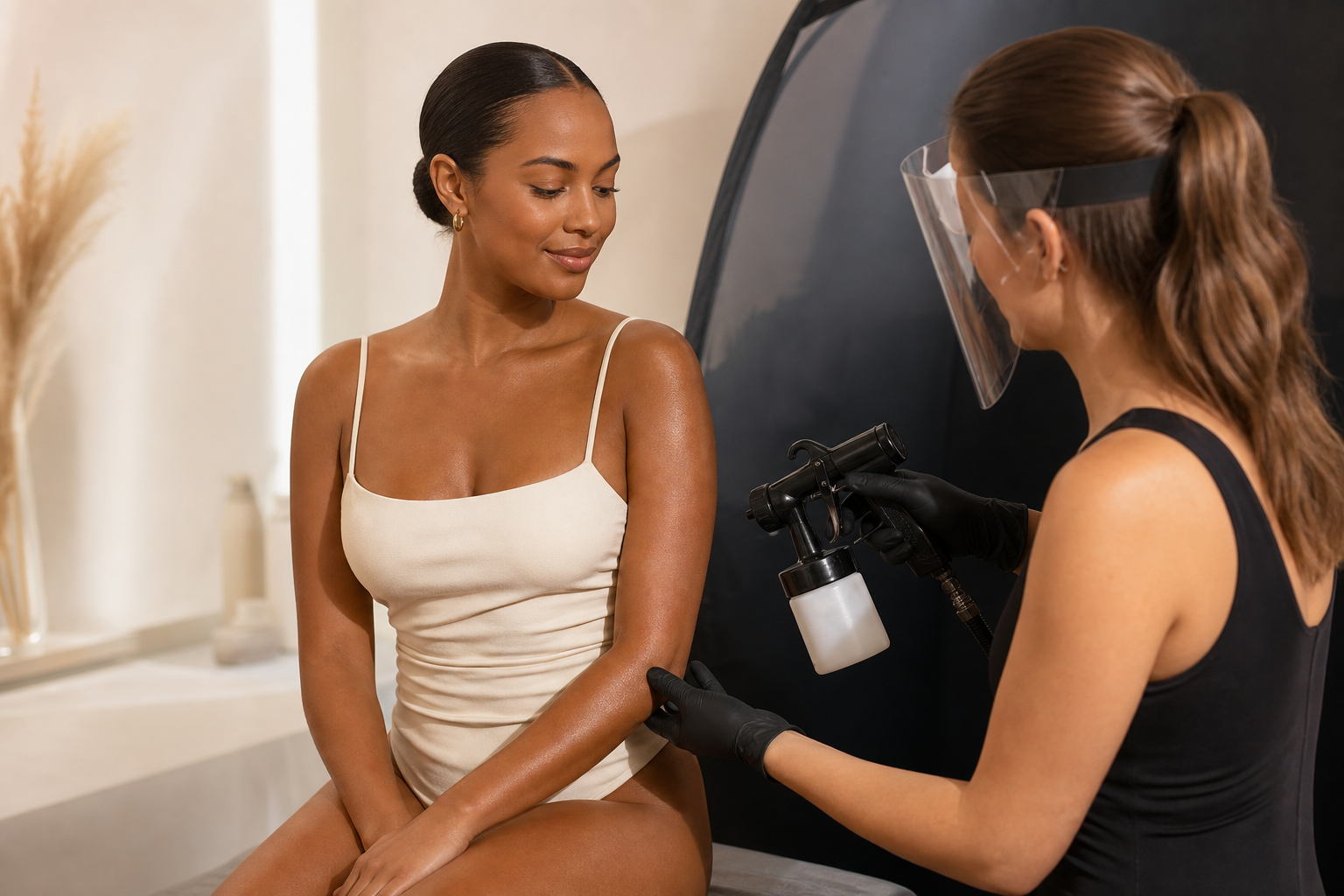
When utilizing spray tanning, protecting sensitive areas like the eyes, lips, and respiratory tract is recommended. Wearing protective eyewear and avoiding inhalation of the product during aerosol application are prudent safety measures, reinforced in guides such as "Why Protect the Eyes, Lips and Airways During Spray Tanning?"
How Long Does the DHA Tan Last and How Can It Be Maintained?
A DHA-induced tan typically lasts between five and ten days, fading progressively as the outer skin layer naturally peels away. Several factors influence the duration, including skin type, the concentration of DHA, and the individual's skincare routine.
To prolong the tan’s appearance, frequent moisturization is advised to maintain skin hydration and prevent dryness that accelerates skin shedding. Avoiding harsh scrubbing, hot showers, or exfoliation immediately after application preserves the tan for a longer time.
Periodic reapplication is the best way to maintain a vibrant glow. Users should adhere to manufacturer recommendations regarding waiting times between applications to avoid a build-up that can appear unnatural or spotty.
Do DHA Self-Tanning Products Offer Sun Protection?
A critical point often misunderstood by consumers is that DHA-based tans provide no protection against UV radiation. Since DHA darkens only the surface dead skin, the underlying skin remains vulnerable to UV damage.
Therefore, it is imperative to apply a broad-spectrum sunscreen with a minimum SPF of 30 whenever exposed to sunlight, regardless of the skin’s tanned appearance. This precaution is vital to prevent sunburn, photoaging, and long-term skin health risks. Insightful details on this topic can be found in pieces like "Does a Spray Tan Protect Your Skin from the Sun?" and "Spray Tan ne pruža UV zaštitu; preporučiti širokospektralni SPF 30+ bez medicinskih obećanja."
Common Concerns and Questions about DHA in Self-Tanning
Consumers frequently inquire whether DHA can cause skin irritation or allergic reactions. While generally rare, some individuals may experience sensitivity. Performing a patch test prior to initial use, as described in "Patch Testing Before Self-Tanning: When Can It Help?" helps identify potential adverse reactions.
Questions regarding staining of clothes or uneven fading are also common. Proper application technique and allowing the product to dry fully before dressing can mitigate these issues.
Another concern is the safety of inhaling sprayed DHA products. Ensuring adequate ventilation and protecting breathing passages during application addresses this safety aspect.