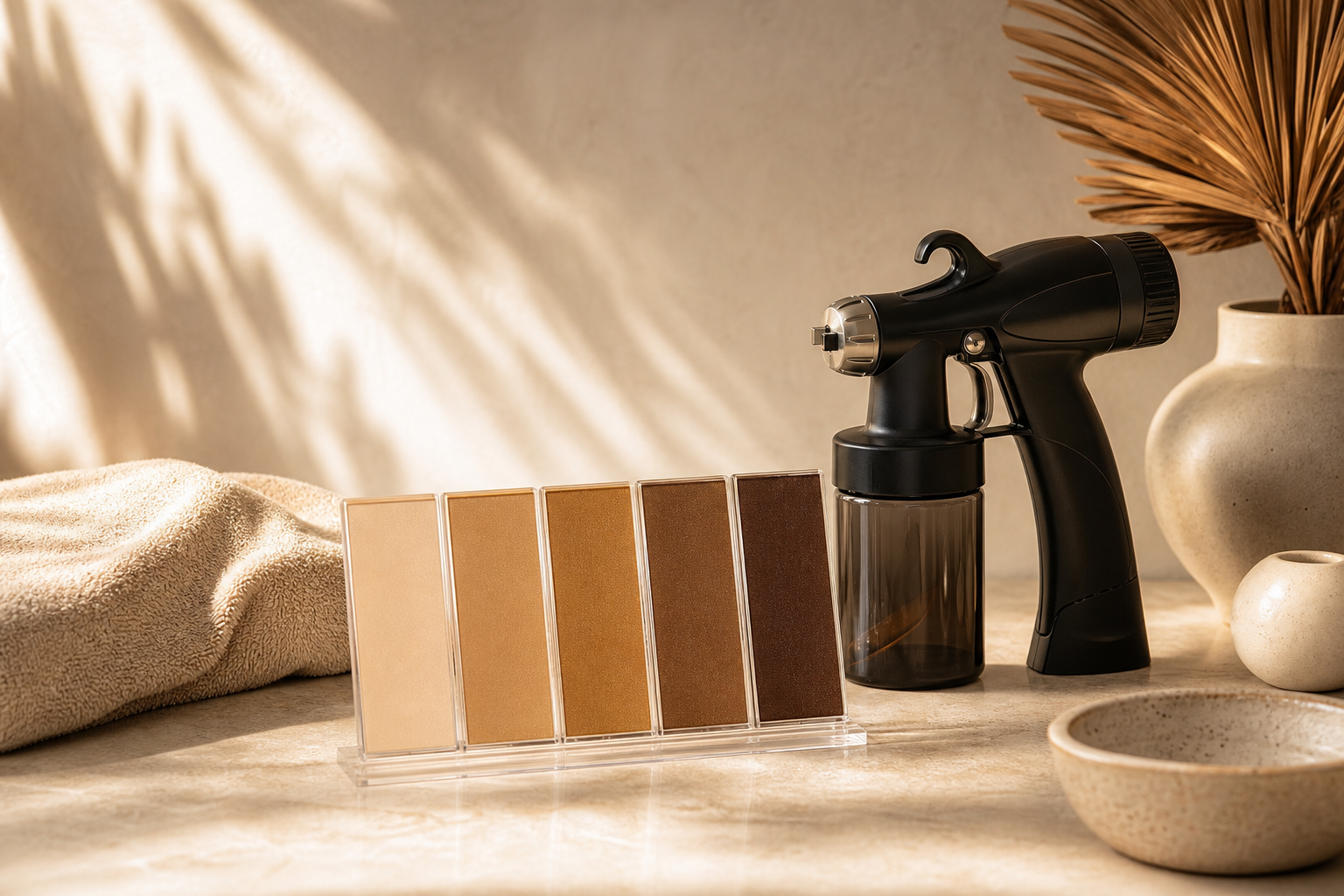
Choosing the perfect spray tan shade is a sophisticated art that balances science with aesthetics, a decision that can dramatically influence your appearance and confidence. Spray tanning has surged in popularity as a safe and convenient alternative to sunbathing, allowing individuals to achieve a radiant bronze glow without exposure to harmful ultraviolet (UV) rays. Yet, the crux of attaining a natural, flattering tan lies in selecting the spray tan shade that harmonizes seamlessly with your unique skin tone and desired look.
This guide is crafted for anyone considering spray tanning—whether you are a first-timer curious about the process or someone seeking to refine your knowledge to enhance your tan’s naturalness and longevity. It is especially relevant for those who find the simple light, medium, or dark labels inadequate and wish to dive deeper into understanding skin undertones, the subtle nuances of spray tan shades such as golden, olive, bronze, and neutral results, and how each choice influences the finished effect.
Moreover, the significance of these choices cannot be overstated. A mismatched spray tan shade can create unnatural hues such as unwanted orange tones or uneven patches, detracting from your appearance and potentially causing frustration. Understanding the interaction between your skin’s characteristics and the spray tan formula is essential to avoid these pitfalls. Additionally, it is vital to remember that spray tanning does not protect your skin from UV radiation, and daily sun protection remains indispensable.
What Are Spray Tan Shades and Why Do They Matter?
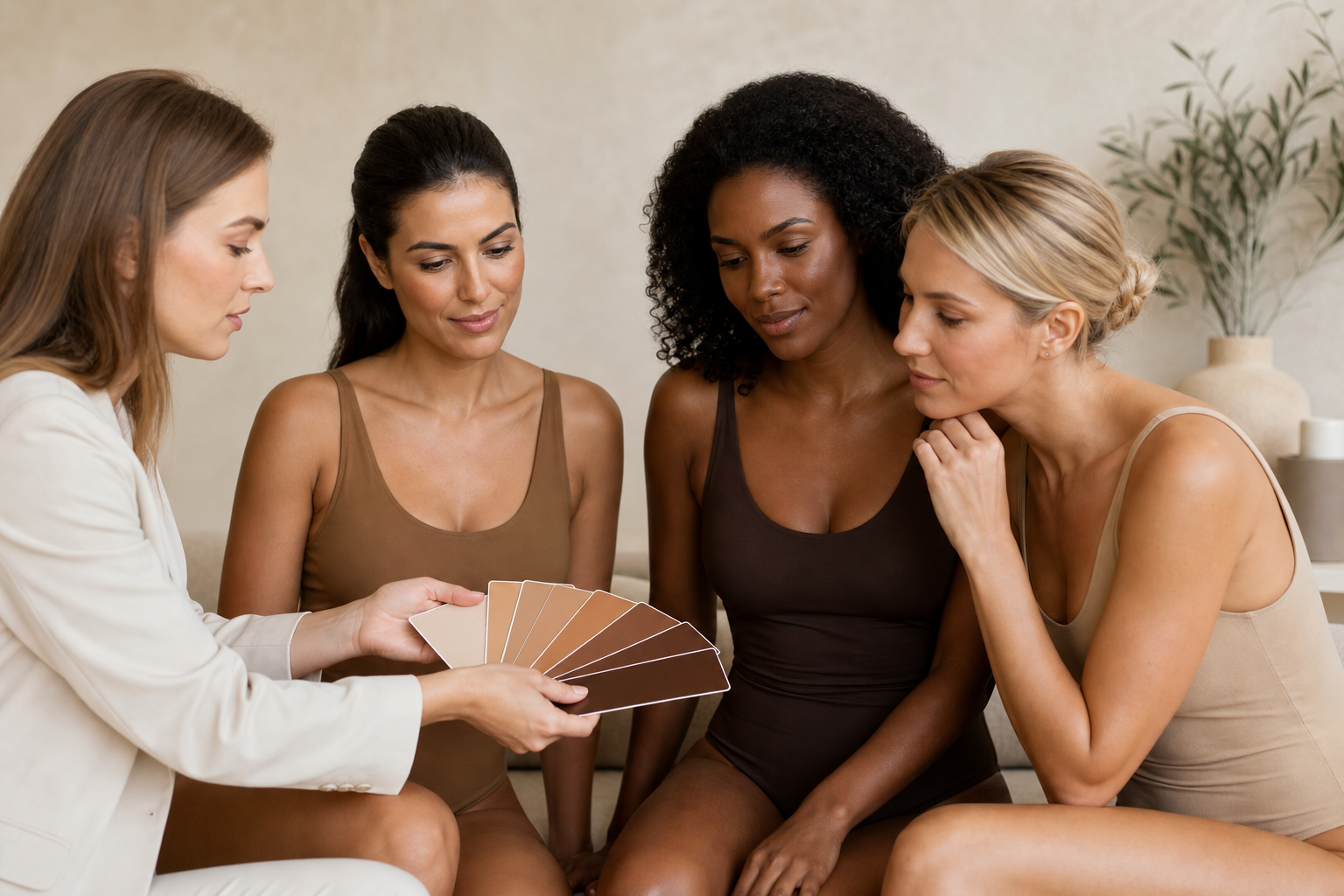
Spray tan shades traditionally categorize into three broad groups: light, medium, and dark. These labels convey the depth and intensity of the color that the tanning agent is designed to impart. However, choosing a spray tan shade involves more than picking a label based on how golden or deep you wish to appear; it requires an understanding of your natural skin tone and undertone to achieve harmony and avoid an artificial effect.
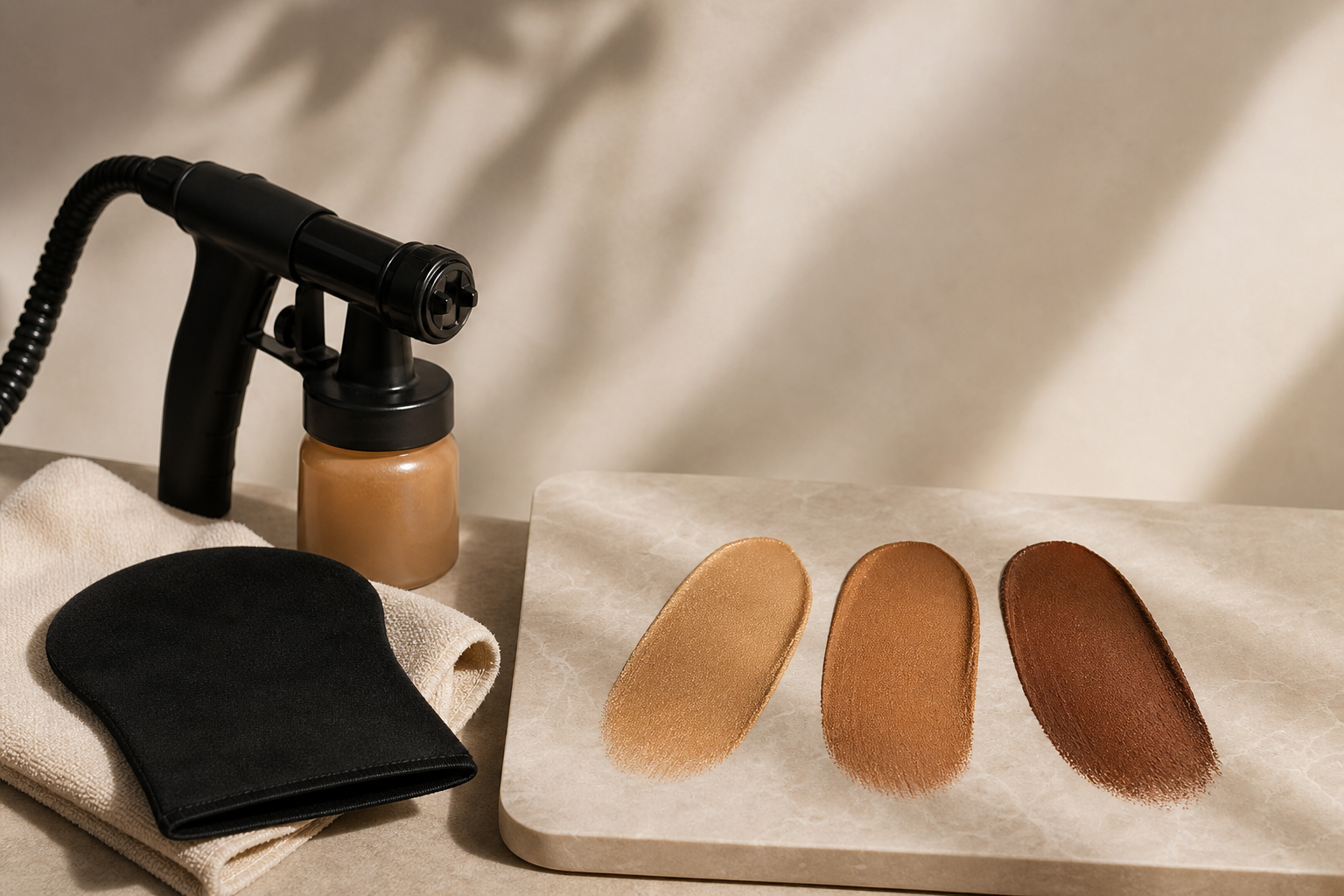
Light sprays typically cater to those with fair skin, offering a subtle warmth that enhances complexion without overwhelming it. Medium shades are tailored to medium skin tones, designed to impart an even bronzed glow that complements natural hues. Dark shades are intended for deeper skin tones or those seeking a pronounced bronzed look. However, even within these categories, nuances exist—formulations might lean towards golden, olive, bronze, or neutral undertones, each interacting differently with various complexions.
The choice of spray tan shade is critical because an ill-fitting shade risks producing patchy results or unnatural orange hues that are rarely flattering. Moreover, the pigments and dihydroxyacetone (DHA) concentration in the formula directly influence how the color develops and lasts on the skin.
How Do Skin Undertones Influence Spray Tan Shade Selection?
Skin undertones are the subtle hues beneath your skin’s surface tone, generally categorized as warm (golden, bronze, or olive), cool (pink, red, or blue), or neutral. Decoding your undertone dramatically aids in selecting a spray tan shade that integrates effortlessly with your natural complexion.
Those with warm undertones benefit from spray tan formulas containing golden or bronze pigments, as these replicate and amplify natural skin warmth for a cohesive, sun-kissed appearance. Conversely, individuals with cool undertones find that neutral or subtle olive hues in spray tans prevent the exaggeration of pinkness or redness, promoting a more balanced look.
This understanding is invaluable in circumventing the common issue of orangey tan results, which often arise when the spray tan’s pigment conflicts with the skin’s undertone or when the DHA concentration is excessively strong.
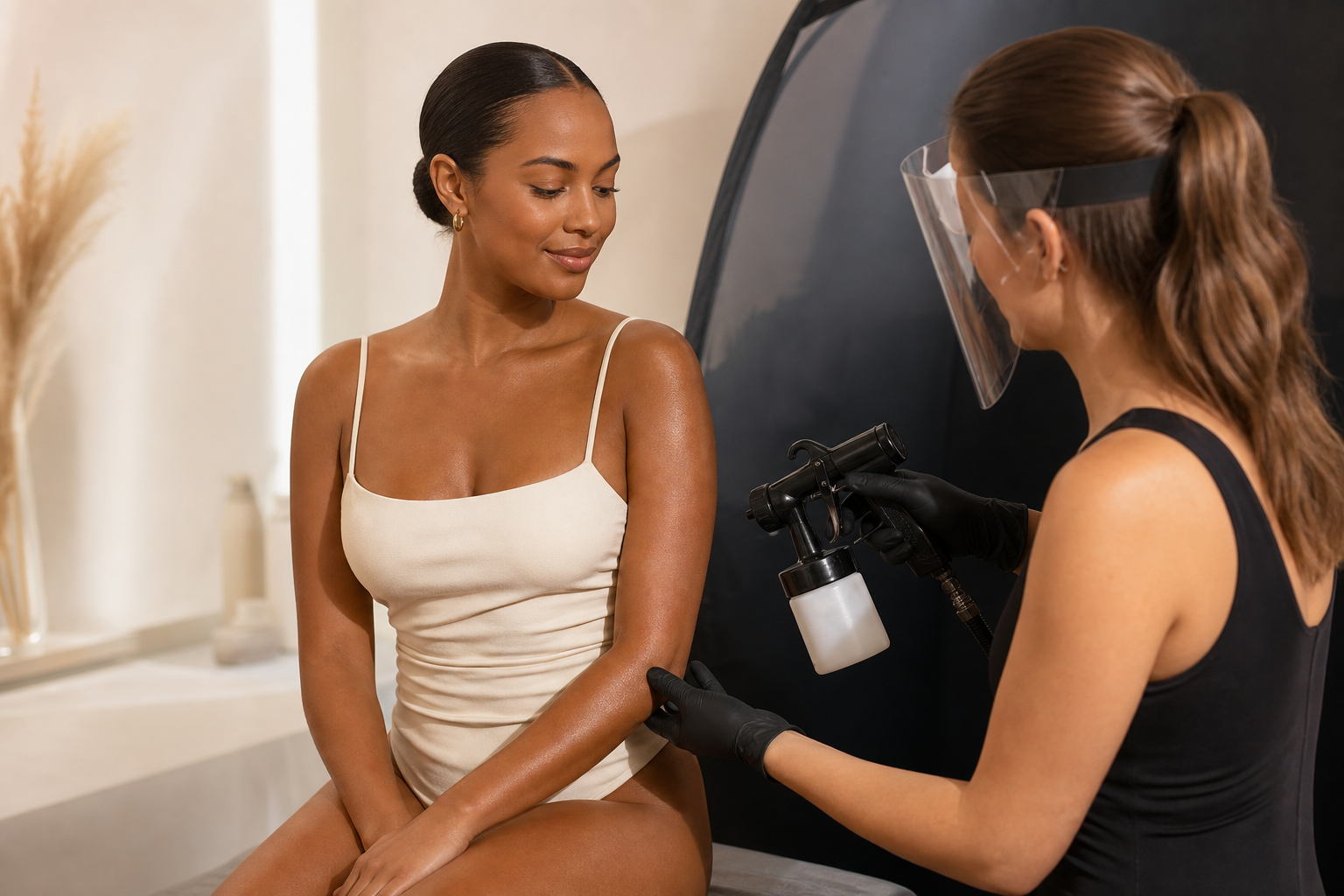
Professional advice from an esthetician or spray tan specialist can be instrumental in identifying undertones and selecting an ideal shade, ensuring a tailored, flattering outcome.
What Are the Benefits of Choosing the Right Spray Tan Shade?
Choosing a spray tan shade that corresponds to your skin tone and undertone offers multiple benefits, foremost among them a natural, radiant finish that elevates your appearance without raising suspicion of artificiality. A shade too dark can accentuate skin imperfections and produce an unnatural effect, whereas a shade that's too light might fail to deliver the visible bronzing you desire.
Beyond aesthetics, the correct spray tan shade can enhance your self-esteem by providing a confident, polished look that aligns authentically with your natural coloring. Additionally, many contemporary spray tan formulations contain hydrating agents and skin-nourishing ingredients that can improve skin texture and maintain a healthy glow.
Another practical advantage concerns longevity; the correct shade typically ensures even fading and a longer-lasting tan, reducing the need for frequent reapplications and maintaining color stability.
How Can You Avoid the Unwanted Orange Tone After Spray Tanning?
The dreaded orange hue is a common complaint among spray tan users, often resulting from an incompatibility between the product’s DHA concentration and the individual's skin chemistry, or from choosing an ill-suited shade with inappropriate undertones.
DHA is the active tanning agent in spray formulas, reacting with amino acids in the skin to create color. An excessively high DHA percentage can cause overly intense pigmentation that leans towards orange. Selecting a formula with balanced DHA levels appropriate to your skin type mitigates this risk.
Moreover, aligning your spray tan shade’s undertone—golden for warm skin tones, neutral or olive for cooler tones—helps prevent the orange cast. Proper skin preparation, such as thorough exfoliation, and following expert application protocols further promote even, natural-looking results.
How to Tailor Spray Tan Shade Selection for Different Skin Tones?
The path to a flawless spray tan diverges depending on one’s baseline skin tone. For individuals with fair skin, light to medium shades with neutral or golden undertones generally yield the most authentic results, enhancing complexion gently while avoiding stark contrasts. Dark colors are usually best avoided as they may appear patchy or exaggerated against pale skin.
Those with medium skin tones can explore medium to darker spray tan shades, choosing between deeper bronze or olive undertones according to personal preference and desired intensity. These shades enhance skin glow while preserving natural warmth.
For deeper or olive skin tones, darker spray tan shades with neutral or ash undertones often provide an even, radiant finish, avoiding red or orange overtones that can disrupt natural complexion balance. This approach focuses on harmonizing with existing pigmentation for a sophisticated tan effect.
Why Might Darker Spray Tan Shades Not Always Be the Optimal Choice?
While darker spray tan options may seem appealing for rich bronzing, they are not universally suitable. For lighter or cool skin tones, dark formulations risk uneven tanning, emphasizing skin dryness, imperfections, or causing patchiness. These issues stem from the skin’s differential absorption and reaction to concentrated DHA and pigments.
Additionally, dark shades usually require meticulous skin care post-application to maintain uniformity and prevent peeling which accentuates uneven coloration. Novices are advised to begin with medium shades to build their tan gradually and achieve controlled results.
What Is the Proper Preparation for Spray Tanning?
Effective preparation is fundamental to achieving a smooth and enduring spray tan. Exfoliation prior to the session removes dead skin cells, smoothing the surface to allow uniform DHA absorption. Any residual oils, lotions, or deodorants should be thoroughly cleansed to prevent interference with the tanning formula’s adherence.
Shaving or waxing ahead of the tanning process also promotes even application, reducing the risk of uneven patches or missed areas. Skin must be completely dry and free of contaminants for optimal color development.
Why Does Spray Tan Not Replace Sun Protection?
While spray tanning offers an appealing bronze hue, it offers no protection against UV radiation. Unlike melanin triggered by sun exposure, DHA-induced tan sits on the skin’s surface and does not provide a barrier against ultraviolet rays. This fact is crucial to avoid misconceptions that spray tanning equals sun safety.
Daily application of broad-spectrum sunscreen with SPF 30 or higher remains essential for skin health, helping prevent premature aging, sunburn, and skin cancers. Integrating sun protection into your routine complements your tan's aesthetics with vital defense.
What Can You Expect After Receiving a Spray Tan?
Post-application, it is common for the initial color to appear faint; the full tan typically develops within 6 to 8 hours as DHA reacts with the skin’s surface proteins. Maintaining skin hydration accelerates uniform fading and prevents patchiness.
During the first few days, avoid harsh soaps, excessive scrubbing, or prolonged water exposure, which can cause premature color loss. Wearing loose, dark clothing helps prevent frictional marks that may mar the tan.
When properly cared for, a spray tan can last between five and ten days, depending on your skin type and exposure to cleansing elements.
Common Questions Answered About Choosing Spray Tan Shades
How do I determine my skin undertone?
Check the veins on your wrist: blue or purple veins indicate a cool undertone; green veins suggest warm undertones; a mix may denote neutral. Jewelry cues can also help—gold suits warm undertones, silver flatters cool.
Can I achieve an intense tan with fair skin?
Gradually building color starting with lighter shades is safer and more natural-looking than applying a dark shade outright. Consulting a specialist can help create a personalized approach.
Is it safe to mix spray tan shades?
Professional salons sometimes blend shades to customize looks. However, uncoordinated mixing at home risks uneven color and should be approached cautiously.