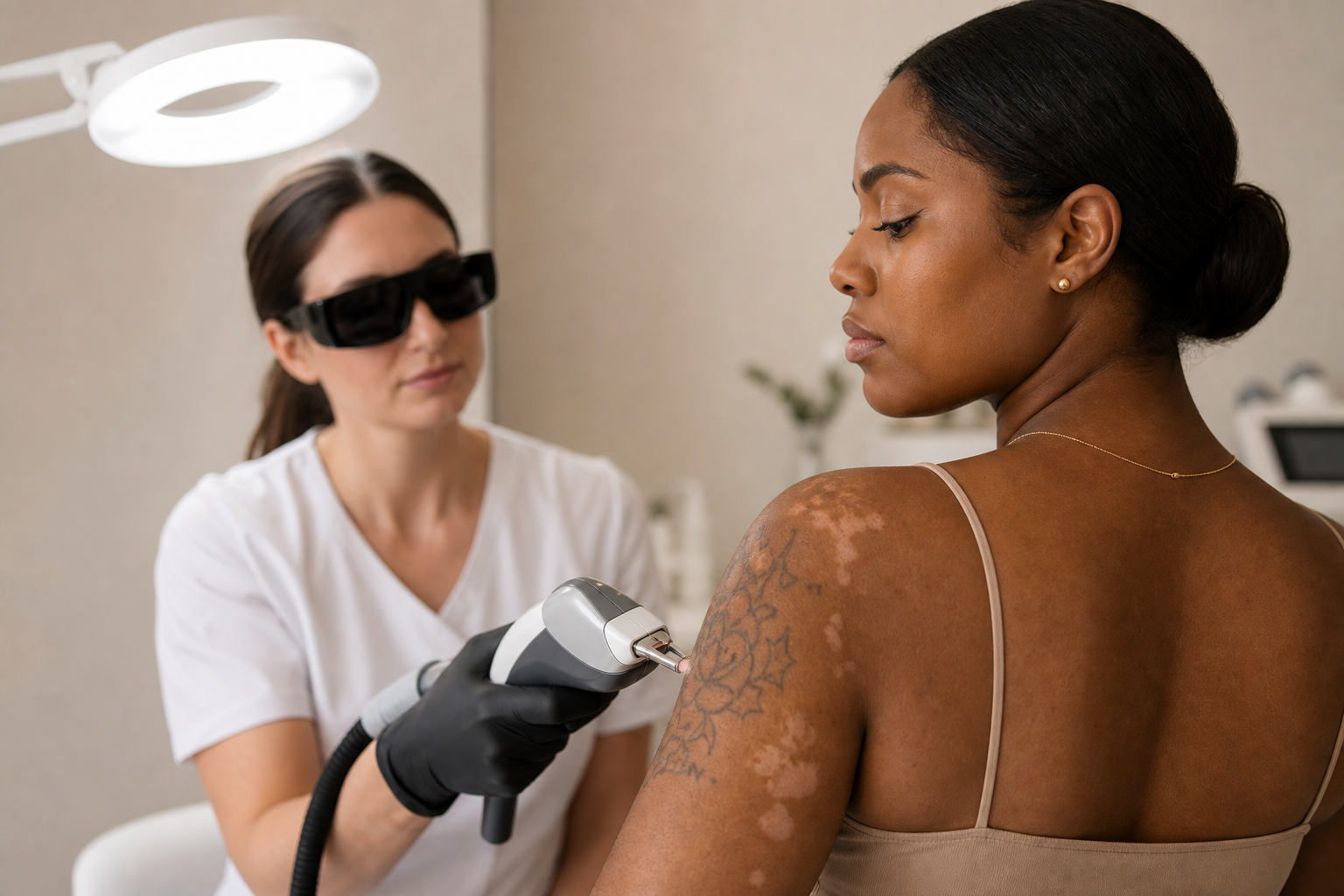
In the realm of advanced dermatological and cosmetic procedures, the concept of a test spot—or patch test—holds a crucial place, especially concerning permanent makeup application and various laser treatments. A test spot is a preliminary, controlled application of pigment or treatment on a small area of skin to evaluate potential reactions before committing to a full, extensive procedure. This precautionary step is essential in minimizing adverse effects and optimizing outcomes for individuals undergoing these treatments.
This article explores when a test spot is indispensable, particularly focusing on permanent makeup and laser removal treatments. It targets patients considering such procedures, as well as clinicians seeking a thorough understanding of individualized protocols to ensure patient safety. The discussion is framed within medical prudence, emphasizing variable responses to pigments, potential color changes, allergic reactions, and how these insights inform treatment planning.
Understanding the significance and timing of a test spot can prevent complications, enhance recovery experiences, and contribute to the overall success of cosmetic interventions. We will examine the rationale behind test spots, the risks they mitigate, who should undergo them, and the procedural aspects underpinning their use.
What Exactly Is a Test Spot in Permanent Makeup and Laser Treatments?
A test spot, also known as a patch test, involves the application of a minimal amount of pigment or therapeutic agent to a small, discreet skin area. This controlled exposure allows clinicians and patients to monitor skin response over a period ranging typically from 24 to 72 hours. Key observations include whether the skin exhibits allergic reactions, irritation, inflammation, or undesirable pigment changes.
In permanent makeup, pigments are deposited into the epidermis; hence, verifying the skin's compatibility with the pigment beforehand is essential to avoid chronic discoloration, pigment migration, or inflammatory complications. Likewise, in laser removal procedures, especially when targeting tattoos or permanent makeup, a test spot helps ascertain the skin’s reaction to laser energy and pigment breakdown, which can vary widely depending on pigment color, skin type, and laser settings.
The test spot essentially functions as a diagnostic tool to tailor treatment parameters and prevent unexpected outcomes, including hypersensitivity reactions, paradoxical pigment darkening, or scarring.
Who Should Undergo a Test Spot? Identifying the Candidates
While many cosmetic procedures proceed without prior testing for low-risk individuals, there are clear circumstances when a test spot becomes essential. Firstly, anyone receiving permanent makeup or laser treatment for the first time should have a test spot to establish baseline skin tolerance.
Additionally, individuals with a history of allergies, especially contact dermatitis, or pre-existing skin conditions such as atopic dermatitis, eczema, or psoriasis, represent high-risk groups. Their skin barrier integrity and immune responses may predispose them to exaggerated reactions. Patients with autoimmune diseases may also exhibit unpredictable immune responses, warranting cautious preliminary testing.
A further important group includes those introducing new pigments, materials, or novel laser protocols. As pigment formulations and laser technologies evolve, previously untested combinations may carry uncertain risks that only empirical testing on a small skin area can reveal.
Why Is a Test Spot Medically Necessary in Some Cases? Assessing the Risk Factors
The obligation to perform a test spot arises from the need to minimize patient risk. The skin’s response to pigments and laser treatment isn’t uniform; individual sensitivity, pigment composition, and treatment intensity dictate outcomes. Adverse reactions can range from temporary irritation to persistent discoloration or allergic contact dermatitis.
Specifically, some pigments used in permanent makeup can provoke allergic reactions or shift in hue due to interaction with laser energy or skin biochemistry. For instance, red and orange eyebrow pigments have been documented to respond unpredictably under laser removal, necessitating test spots before full treatment application. Similarly, paradoxical darkening of pigments can occur, complicating correction and requiring preemptive assessment.
Failure to conduct a test spot in such scenarios risks exacerbating skin damage, prolonging recovery, or creating aesthetic dissatisfaction. Thus, medically responsible practice mandates test spots when treatment-specific or patient-specific risk factors are present.
How Is the Test Spot Procedure Conducted?
The process begins with a comprehensive patient history and skin assessment to identify any contraindications. The clinician selects a small, inconspicuous site—often inside the forearm, behind the ear, or near the intended treatment area.
A minimal amount of pigment or the relevant treatment is then applied with precise technique to the test zone. Following application, the site is monitored over several days, observing for signs of redness, swelling, itchiness, blistering, or any pigment alteration.
In laser treatments, test spots may involve a low-energy laser pass over a small pigmented area to evaluate tissue response and pigment clearance without extensive skin trauma. Notes on erythema, edema, pigment lightening, or undesired darkening guide subsequent treatment planning.
If the test spot outcome is favorable with no adverse reactions, clinicians can proceed with the main treatment while tailoring parameters based on test findings. In cases of negative reactions, treatment plans are adjusted—sometimes involving alternative pigments, laser settings, or delaying treatment pending dermatological consultation.
What Risks Does a Test Spot Help Prevent?
One of the primary roles of a test spot is to uncover allergic reactions, which might not be apparent from history alone. Allergic contact dermatitis from pigments can lead to persistent itching, swelling, and even scarring if unrecognized.
Test spots also identify paradoxical pigment darkening, a phenomenon where laser treatment intended to lighten pigment instead causes a darkening or change to an undesirable hue, complicating removal or requiring extensive correction procedures.
Permanent color changes—such as fading towards undesired shades or pigment migration—may become evident in the test zone, allowing adjustments before extensive application.
Furthermore, irritations and inflammatory responses, especially in sensitive or compromised skin, can be detected and managed early, preventing prolonged recovery times and potential infections.
When Is a Test Spot Particularly Critical in Laser Removal Procedures?
In laser removal of permanent makeup and tattoos, the pigment composition deeply influences treatment success and safety. Red and orange pigments, often used in eyebrows and lips, can react unpredictably to certain laser wavelengths and energy levels, making test spots crucial.
Similarly, black and dark pigments, while seemingly straightforward to remove, may sometimes trigger excessive inflammation or scarring, especially in delicate areas such as the eyelids or lips.
When considering laser removal of permanent eyebrows or eyeliners, where skin is thin and functional sensitivity is high, test spots not only safeguard aesthetic outcomes but also protect skin integrity and function.
Laser settings cannot be uniformly applied; test spots help calibrate parameters specific to patient skin type, pigment depth, and color, enhancing both safety and efficacy.
What Should Patients Expect After a Test Spot, and How Should They Proceed?
After undergoing a test spot procedure, patients should observe the site for any skin changes over the prescribed monitoring period. Mild redness or transient irritation may be normal, but persistent discomfort or worsening symptoms should be promptly reported.
Clinicians typically advise on specific care measures, such as keeping the area clean, avoiding sun exposure, and refraining from applying other products unless directed. Documentation of the test spot’s appearance aids in informed decision-making for the main treatment.
Based on test outcomes, a personalized treatment plan is formulated. Successful tolerance allows proceeding with appropriate safety measures, whereas adverse responses necessitate reconsideration of materials, techniques, or postponement for further evaluation.
Frequently Asked Questions About Test Spots
Does a negative test spot guarantee no adverse reaction during full treatment?
While a test spot greatly reduces the risk, it cannot absolutely guarantee the absence of reactions. Systemic immune responses, changes in skin condition, and cumulative exposure effects can still occur, emphasizing the importance of ongoing monitoring.
How long is the test spot monitoring period?
The duration varies but typically spans from 24 to 72 hours, depending on clinical protocols and the agents used. Some delayed hypersensitivity reactions might take longer to manifest, requiring clinicians to tailor observation times accordingly.
Is the test spot procedure different between permanent makeup application and laser removal?
Yes, the procedures differ in that permanent makeup testing involves pigment application only, while laser removal test spots involve low-level laser exposure on existing pigmentation. Both require tailored assessment strategies to address their specific risk profiles.