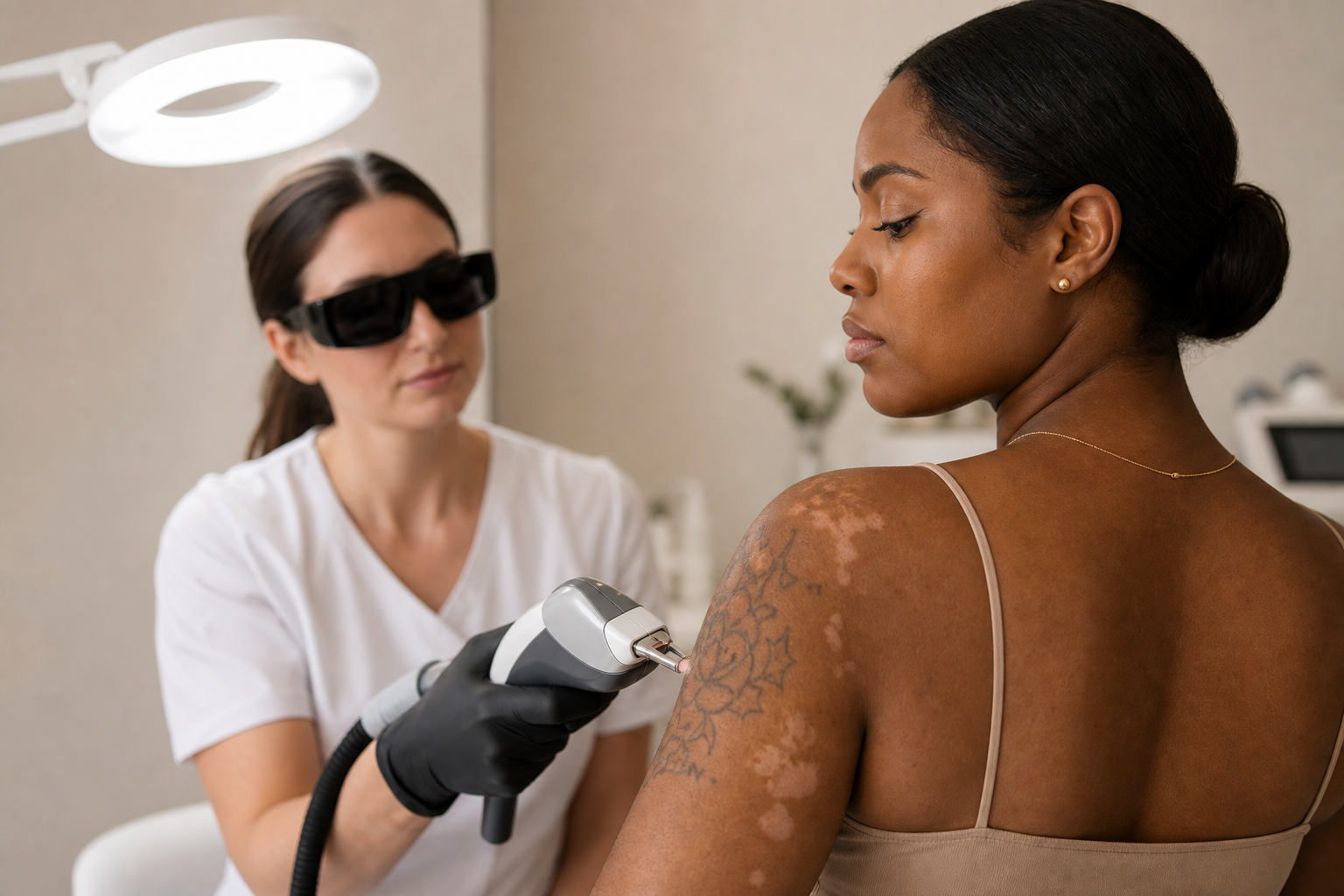
When considering the removal of tattoos, an often overlooked but crucial element is the quality and composition of the ink used in the original tattoo. The intricate relationship between tattoo ink characteristics and the effectiveness of laser removal treatments demands a thorough understanding—especially for individuals contemplating tattoo removal, practitioners in dermatology and aesthetic medicine, and anyone keen on comprehending the complexities behind treatment outcomes. The substances that constitute tattoo inks vary widely, influencing not only the aesthetics of the tattoo but also the feasibility and duration of removal procedures.
This article explores how ink quality and composition significantly affect the results of laser tattoo removal. It elaborates on the variability among inks, realistic expectations for outcomes, and safe timelines for treatment sessions. We deliberately avoid universal promises or do-it-yourself advice, focusing instead on educating readers about the underlying science and clinical considerations essential for effective and safe tattoo removal.
Understanding the impact of ink characteristics is vital. Laser tattoo removal functions by targeting and fragmenting ink particles within the skin, facilitating their natural clearance by the immune system. Not all inks respond uniformly; the chemical makeup, particle size, and depth of ink deposition influence how laser energy interacts with the pigment. A comprehensive grasp of these factors mitigates unrealistic expectations, ensures informed consent, and contributes to the customization of treatment plans tailored to individual tattoo compositions.
What Role Does Ink Quality and Composition Play in Laser Tattoo Removal?
Ink quality refers to the purity, chemical composition, and particle consistency of the pigments used in tattoo inks. Composition involves the specific ingredients—organic or inorganic pigments, solvents, and additives—that define the ink's physical and chemical properties. These attributes together dictate not only the tattoo's longevity and appearance but also how it reacts to laser therapies.
High-quality inks generally contain pigments that are uniform in particle size and free from toxic contaminants. They tend to yield more predictable laser absorption and fragmentation patterns. Conversely, inks with impurities, inconsistent pigment sizes, or hazardous additives may cause uneven laser response, leading to prolonged treatment durations or adverse skin reactions.
During laser removal, different wavelengths of light target specific pigment colors. The composition influences which wavelengths are absorbed effectively. For instance, inks composed of carbon-based black pigments absorb a broad spectrum of laser wavelengths, allowing easier fragmentation. In contrast, some pigments contain metals or dyes absorbing light less efficiently, complicating removal.
Which Ink Colors Are Most and Least Responsive to Laser Removal?
Color significantly impacts the ease or difficulty of tattoo removal. Black ink is universally acknowledged as the most responsive to laser treatment, primarily because it contains carbon-based pigments capable of absorbing a wide range of laser wavelengths. As a result, black tattoos often require fewer sessions and yield more consistent fading.
On the other end of the spectrum, yellow and very light-colored inks such as white and beige present considerable challenges. These colors absorb less laser energy, necessitating more treatment sessions. Moreover, they carry risks such as paradoxical darkening, where the pigment unintentionally turns darker instead of fading, complicating removal efforts.
Intermediate colors such as green and blue exhibit variable responsiveness. Their removal often demands specialized lasers with tailored wavelengths or combined treatment strategies. Multi-colored tattoos further increase complexity, as each pigment may require individual attention to optimize fading without damaging adjacent skin tissue.
How Does Ink Quality Influence Treatment Frequency and Result Consistency?
The quality of tattoo ink influences not only the speed at which a tattoo fades under laser treatment but also the uniformity and safety of the results. Tattoos inked with consistently sized, high-purity pigments typically respond more efficiently to laser fragmentation, reducing the total number of sessions needed and minimizing risks such as scarring.
Conversely, low-grade ink might contain irregular pigment sizes, inert or harmful substances, and unpredictable chemical formulations. Such variability can lead to inconsistent laser energy absorption, prolonging the treatment process and exacerbating the likelihood of side effects. The irregular breakdown of pigments can leave residual discolorations or shadowing, hindering complete removal.
Patients and clinicians alike must recognize that ink quality is a pivotal factor in achieving balanced and safe outcomes. Open communication about the tattoo's original ink type helps devise realistic treatment plans and manage expectations accordingly.
What Are Realistic Expectations and Safe Timelines for Removal Based on Ink Characteristics?
Realistic expectations are fundamental to the tattoo removal process. Laser treatments generally require spacing of approximately 6 to 8 weeks between sessions to allow the skin ample time to heal and the immune system to clear fragmented pigment particles. This schedule helps prevent adverse skin reactions such as hyperpigmentation, blistering, or scarring.
The type and quality of ink heavily influence the total treatment timeline. Black and dark inks of high quality might clear within 4 to 6 sessions over a period of several months. In contrast, tattoos featuring light, challenging pigments like yellow or white, or those composed of lower-quality inks can demand 10 or more sessions, sometimes extending well over a year.
Additionally, repetitive sessions executed too closely can harm the skin's integrity. Patience and adherence to professionally recommended intervals are essential for safe and effective removal.
What Common Misconceptions Surround Ink Quality and Tattoo Removal Outcomes?
A widespread misconception is that all laser removals and tattoo inks are alike. This fallacy leads to unrealistic assumptions that any tattoo can be removed quickly and easily regardless of ink type. Such misunderstandings contribute to disappointment, unnecessary treatments, or even unsafe attempts at self-removal.
Another error lies in underestimating the role of ink composition in determining treatment protocols. Not all lasers are suitable for every pigment, and ignorance of ink chemistry may result in ineffective treatment plans that fail to appreciate color-specific challenges.
Finally, some believe that the same number of sessions guarantees complete ink removal. However, factors including ink depth, skin type, immune response, and ink quality render outcomes highly individual. A nuanced understanding protects patients from disillusionment and fosters informed decision-making.
How Do Specialists Assess Ink Composition to Optimize Laser Treatment?
Experts utilize multiple approaches to evaluate tattoo ink before initiating removal. Clinical examination and medical history help identify tattoo age, location, and prior treatments. Visual inspection provides clues regarding pigment colors and suspected ink quality.
Advanced diagnostic technologies, including spectroscopic analysis or dermoscopy, may supplement assessments by characterizing pigment types and skin conditions. This information guides the choice of laser wavelength, pulse duration, and energy—parameters crucial for pigment-specific targeting without collateral tissue damage.
Personalized treatment regimens, informed by detailed ink assessments, enhance safety profiles and improve the likelihood of satisfactory fading. In the case of multi-colored tattoos, combined or sequential laser applications may be employed to address each pigment effectively.