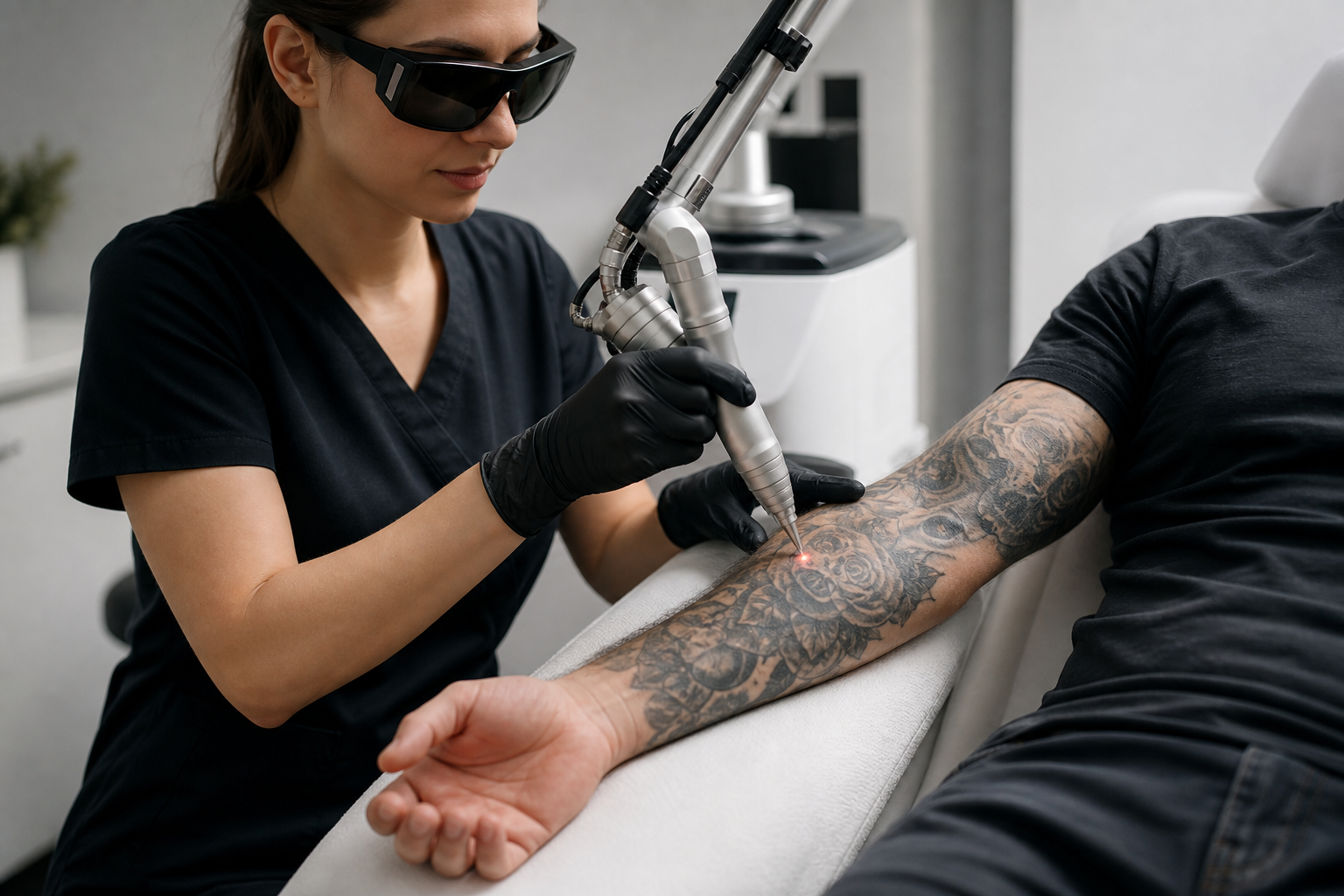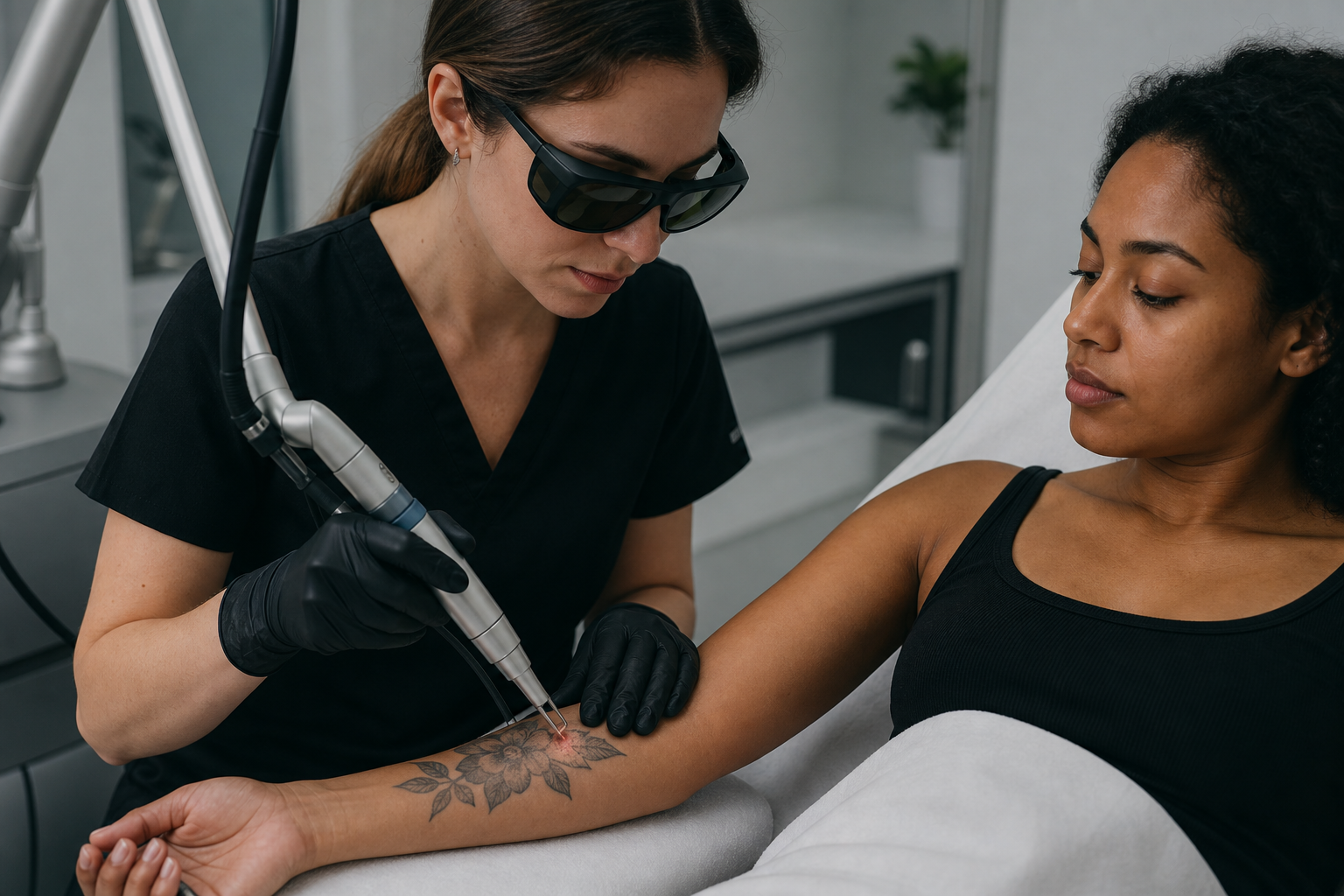
White and beige tattoos have carved out a distinct niche within modern body art, becoming a favored choice for individuals seeking subtlety, elegance, and understated symbolism. Unlike traditional dark-hued tattoos, these lighter shades offer a delicate aesthetic that can be almost imperceptible at first glance, appealing to those desiring a discreet form of self-expression. However, while their visual appeal is clear, these tattoos introduce unique challenges, especially when it comes to their removal.
The phenomenon of paradoxical darkening, wherein white or beige tattoo pigments unexpectedly darken following laser treatment, raises crucial concerns for anyone considering such tattoos or their removal. Understanding the science behind these pigments, the mechanisms of laser interaction, and the risk factors involved is essential for setting realistic expectations and ensuring safe, informed decisions.
This exposé is intended for prospective and current tattoo bearers contemplating white or beige inks, as well as for dermatologists, tattoo removal specialists, and laser practitioners. It aims to illuminate the complex interplay between ink composition, laser technology, skin characteristics, and treatment protocols that contribute to paradoxical darkening. Armed with this knowledge, readers can better navigate the intricate landscape of light-colored tattoo perception, maintenance, and removal.
Defining White and Beige Tattoos: Composition and Unique Qualities
White and beige tattoos generally utilize pigments distinct from those in traditional tattoo inks. The primary pigment in most white inks is titanium dioxide, a compound known for its high opacity and light-reflecting qualities. Beige shades are frequently a blend of white pigment with tints of yellow ochre, pink, or brown, yielding a warmer, skin-toned appearance.
This composition renders white and beige tattoos particularly subtle and more difficult to detect, often blending harmoniously with the wearer’s natural skin tone. Such tattoos are used for delicate decorations like accents, veining effects, or minimalist designs that prioritize nuance over bold contrast. Their subtlety is part of their allure but also the source of challenges when it comes to both application and removal.
Unlike darker pigments, these light inks interact differently with both visible light and laser wavelengths, stemming from their reflective rather than absorptive nature. Consequently, laser treatment strategies tailored for darker pigments cannot be directly applied without adjustment. This uniqueness necessitates specialized expertise and partly explains why paradoxical darkening emerges particularly in these cases.
Laser Tattoo Removal Mechanisms and Challenges with Light-Colored Pigments
Laser tattoo removal operates on the principle of selective photothermolysis, where short bursts of laser light target specific pigments, breaking the ink into smaller fragments that the lymphatic system gradually clears. Lasers like Q-switched Nd:YAG are typically effective against darker inks such as black and deep blue, whose molecules absorb laser light readily.
White and beige pigments, dominated by titanium dioxide, reflect much of the laser light instead of absorbing it. This reflection reduces the laser's ability to fragment the pigment, diminishing the effectiveness of removal treatments. This difference accounts for the greater number of sessions typically required and the overall unpredictability of fading in these tattoos.
Moreover, certain laser wavelengths might induce photo-oxidative chemical changes in titanium dioxide, modifying its structure and resulting in a darkened appearance rather than fading. This outcome, known as paradoxical darkening, complicates removal and can sometimes be mistaken for incomplete elimination or worsening of the tattoo.
Understanding the Phenomenon of Paradoxical Darkening: Causes and Implications
Paradoxical darkening is a counterintuitive process where light-colored tattoos appear darker following laser exposure. Rather than breaking down pigment particles, laser energy can trigger oxidative reactions or alter pigment chemistry, particularly with white titanium-based inks. This chemical shift produces a darker, often grayish or brownish hue that can be more prominent than the original tattoo.
Several factors contribute to this effect, including the specific ink formulation, laser type and parameters, and individual skin responses. Titanium dioxide is photoactive; its exposure to high-energy photons can stimulate reduction reactions or particle agglomeration, both leading to color changes.
Paradoxical darkening is not purely a cosmetic inconvenience. It can lead to lasting pigmentary alterations in the skin, including post-inflammatory hyperpigmentation or even potential hyposensitivity to further laser treatment, thereby complicating subsequent sessions. Understanding this risk is critical for patients and practitioners alike in managing expectations and selecting appropriate protocols.
What Influences the Likelihood and Severity of Paradoxical Darkening?
The propensity for paradoxical darkening varies with several interrelated factors, making each case highly individual. A principal element is ink quality and composition. Veterinary inks with purified and stable pigments tend to respond better, whereas low-quality inks with contaminants or mixed pigments increase unpredictability.
Skin type notably influences outcomes. Individuals with higher Fitzpatrick skin types, characterized by greater melanin content, are intrinsically more susceptible to pigmentary shifts post-laser treatment. Melanin’s own light absorption properties intersect with laser effects, sometimes exacerbating hyperpigmentation.
Intricacies of tattoo placement and pigment depth also matter; tattoos in areas with thinner epidermis or more vascularity might respond differently to laser stimulation, altering risks. The laser itself—its wavelength, pulse duration, energy fluence, and beam profile—dictates the degree to which pigment molecules break down or chemically change. Misapplication or aggressive settings may exacerbate darkening.
Finally, treatment scheduling impacts risk. Inadequate intervals between sessions can provoke cumulative skin stress and inflammatory responses, increasing the chance of paradoxical pigmentation changes.
Safe Timelines Between Sessions: Why Patience is Paramount
Allowing sufficient time for skin recovery between laser treatments is fundamental in mitigating adverse effects such as paradoxical darkening. Standard recommendation for tattoo removal involves intervals of 6 to 8 weeks. However, when addressing white or beige inks with higher risk profiles, longer intervals may be prudent.
This duration permits complete resolution of inflammation, rebalancing of pigment distribution, and natural clearance of smaller ink fragments. It also enables accurate assessment of treatment response without confounding effects of residual skin irritation.
Practitioners emphasize individualized scheduling, adapting session timing based on observed healing, skin reaction, and pigment behavior. Aggressive or hurried treatment regimens do not guarantee faster removal and may instead intensify pigmentation issues or scarring. Patient cooperation in adhering to prescribed timelines is therefore an essential component of effective management.
Realistic Expectations for Removing White and Beige Tattoos
Prospective patients must approach the removal of light-colored tattoos with tempered expectations. Complete eradication is often challenging due to the chemical and optical properties of white and beige inks. While fading is achievable, it often requires multiple sessions and may leave residual discoloration or textural changes.
Additionally, paradoxical darkening can necessitate further treatments or alternative interventions. Some clinicians explore adjunctive methods such as fractional laser resurfacing or topical agents to improve outcomes, but these are case-dependent and carry their own risks.
When candid removal is not feasible, aesthetic alternatives like cover-up tattoos using complementary colors or cosmetic camouflage can be considered. Open dialogue with a qualified specialist is vital to tailor an approach aligned with the patient’s skin type, tattoo characteristics, and personal goals.
Strategies Employed by Professionals to Mitigate Paradoxical Darkening
Experienced laser practitioners deploy a combination of strategies to minimize paradoxical darkening. Initial assessment involves thorough examination with advanced imaging tools to discern pigment type and depth. Laser selection is deliberate: choosing wavelengths that minimize photo-oxidative reactions while maximizing pigment disruption, such as longer wavelengths like 1064nm Nd:YAG lasers.
Low fluence, gradual energy escalation, and pulse duration optimization reduce thermal load and prevent pigment aggregation. Test spots are commonly used to predict response. Between sessions, adjunctive skincare including anti-inflammatory topical agents and rigorous sun protection supports skin health.
Education about the nature and limits of treatment prepares patients psychologically, fostering realistic acceptance of outcomes and adherence to guidelines. Multidisciplinary collaboration, incorporating dermatology and cosmetic specialists, enhances overall safety and efficacy.
Incorporating Knowledge of Ink Chemistry and Laser Technology in Treatment Planning
Advances in understanding tattoo ink chemistry, including the provenance and molecular structure of pigments, empower clinicians to better anticipate laser interactions. For example, awareness that titanium dioxide can reduce to titanium oxycarbide or other compounds under laser irradiation informs the choice of treatment parameters.
Concurrently, innovations in laser technology—such as picosecond lasers with ultra-short pulse durations—offer promise in targeting stubborn pigments with reduced collateral damage. The interplay between ink composition, skin biology, and laser physics demands an integrated perspective for optimal outcomes.
Access to detailed ink information from tattoo artists or manufacturers, though not always available, can aid customized protocols. Continuous research bridges gaps in knowledge, paving the way for safer, more effective approaches to handling these challenging pigments.