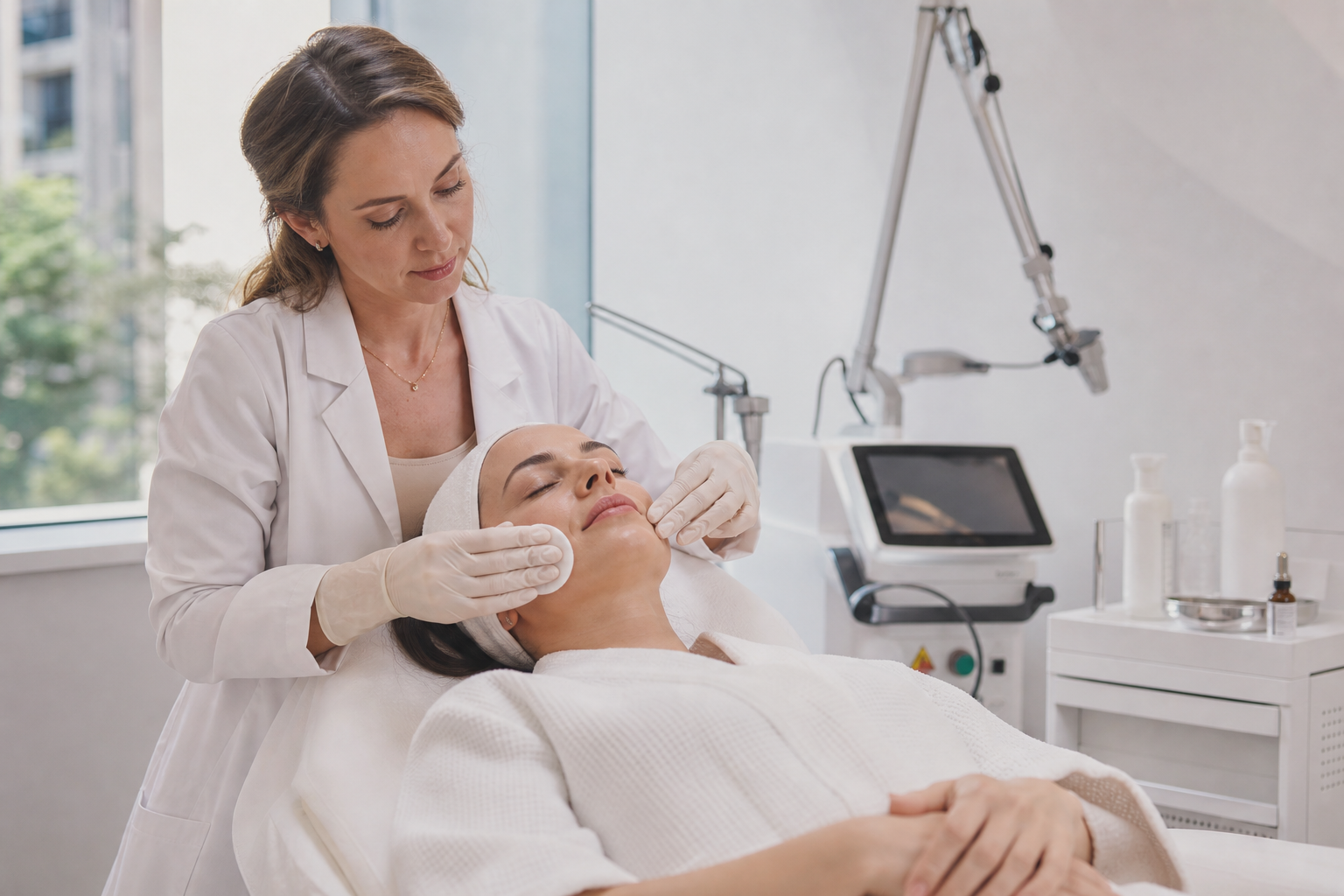
In the evolving field of dermatology and aesthetic medicine, laser technology has become a cornerstone for treating a variety of skin concerns efficiently and with precision. From combating pigmentation irregularities to addressing fine lines and scars, the rationale for selecting a particular laser system is inherently tied to the specific condition one aims to correct. Given the multitude of laser types and treatment modalities available today, understanding which laser is used for which skin concern is paramount for both patients considering treatment and practitioners aiming for optimal results.
This article serves as an in-depth, medically-informed guide to the various lasers employed in skin treatment, particularly focusing on their distinguishing characteristics and clinical applications. It is designed to clarify the differences between ablative, non-ablative, and fractional lasers—notably without conflating Intense Pulsed Light (IPL), which, despite common misconceptions, is a distinct technology not classified as a laser. The goal is to inform readers about candidacy considerations, treatment benefits, limitations, and recovery expectations where relevant, enabling a well-rounded understanding of how these technologies fit into a comprehensive skin rejuvenation strategy.
As minimally invasive procedures continue to replace more traditional surgical interventions in the quest for skin rejuvenation, a clear grasp of which laser corresponds to which dermatologic issue will empower individuals to make informed decisions grounded in medical expertise rather than marketing promises. In this context, knowing the operational nuances and targeted skin concerns unique to each laser type is the first essential step on the path to effective and safe treatments.
Understanding Laser Types: Ablative, Non-Ablative, and Fractional Technologies
Laser systems utilized in skin therapy can broadly be categorized based on their mechanism of action and their interaction with skin layers. Ablative lasers function by removing the epidermal and sometimes dermal layers, thereby encouraging the growth of new, healthy skin. Conversely, non-ablative lasers bypass the epidermis, focusing energy deeper into the dermis to stimulate collagen production without disrupting the skin surface.
Adding further complexity, fractional laser treatment technology—available in both ablative and non-ablative forms—delivers laser energy in a grid-like pattern of micro-beams. This creates microscopic treatment zones surrounded by untreated skin, which accelerates healing while still provoking substantial regeneration. This “fractional” approach balances efficacy with minimized downtime and risk.
Each of these laser categories has distinct benefits and is appropriate for different skin concerns. Clear differentiation among these types is crucial for practitioners to tailor treatments effectively and for patients to set realistic expectations regarding outcomes and recovery.
What Are Ablative Lasers and Which Skin Issues Do They Address Best?
Ablative lasers—most commonly the CO2 and Erbium-doped Yttrium Aluminum Garnet (Er:YAG) lasers—are well-established tools for resurfacing skin by physically removing layers of affected tissue. Their core strength lies in treating more pronounced skin problems that involve texture irregularities, deep wrinkles, pronounced pigmentation, and scars.
The mechanism through which ablative lasers work involves the ablation (vaporization) of damaged skin cells in the epidermis and varying depths of the dermis, followed by a natural regenerative process. This stimulates substantial collagen remodeling, resulting in firmer, smoother, and more evenly pigmented skin over time. Their capacity to penetrate deeply and encourage intensive rejuvenation makes them a go-to option for patients seeking significant correction of sun damage, age-related skin laxity, and deep acne scars.
However, the treatment with ablative lasers warrants a cautious approach: since these lasers remove the skin’s protective barrier, the recovery period can be protracted and requires vigilant skincare and sun protection measures. Potential side effects, including redness, peeling, pigment variability, and risk of infection, underscore the need for treatment by experienced clinicians following thorough patient evaluation.
When Are Non-Ablative Lasers the Preferred Option?
Non-ablative lasers differ fundamentally by leaving the skin surface intact while targeting deeper dermal layers. This approach is suited for mild to moderate skin concerns such as fine lines, early signs of photoaging, mild pigment inconsistencies, and improvement of skin tone and texture without the downtime typical of ablative procedures.
Because non-ablative lasers do not compromise the epidermal barrier, the treatment process is generally more comfortable, with minimal visible side effects and a quicker return to daily activities. These lasers trigger collagen production through controlled heating, promoting gradual skin tightening and rejuvenation over a series of sessions.
This modality is particularly advantageous for patients with sensitive skin, darker skin types prone to post-inflammatory pigmentation, or individuals unable to afford extended recovery periods. Non-ablative lasers play a vital role in maintenance therapy or in combination with other procedures to enhance overall skin quality.
How Fractional Lasers Combine Efficiency with Safety
Fractional laser technology refines the concept of laser skin treatment by delivering energy in microscopic pixels rather than a continuous beam across the skin surface. This targeted damage prompts a potent healing response within treated columns, surrounded by unaffected tissue that accelerates recovery.
Fractional lasers can be ablative or non-ablative. Ablative fractional lasers, such as fractional CO2, remove tiny columns of skin to tackle severe texture defects, prominent wrinkles, or substantial scarring while preserving rapid healing zones. Non-ablative fractional lasers, meanwhile, induce collagen remodeling without epidermal removal, suitable for less intense corrections.
The fractional method effectively marries the advantages of both ablative and non-ablative systems. It reduces downtime relative to full ablative resurfacing yet achieves deeper skin remodeling than purely non-ablative treatments. Patients often experience significant improvements in skin texture, pore size, and scar reduction with fractionated therapies, typically requiring fewer sessions to see marked results than non-fractional counterparts.
Matching Lasers to Specific Skin Concerns
Effective laser therapy begins with a nuanced assessment of the patient’s skin issue and desired outcomes. For deep wrinkles, acne scars, and marked photoaging, ablative lasers like CO2 or Er:YAG provide robust remodeling through intensive tissue ablation and stimulation. They are especially valuable when dramatic skin rejuvenation is the goal.
For patients seeking enhancement of mild fine lines, subtle pigment correction, and improved skin tone with minimal interruption in lifestyle, non-ablative lasers present a safer, less invasive option. Typically, these treatments are administered in a series for cumulative effect.
Where a balance between efficacy and downtime is needed, fractional lasers—both ablative and non-ablative—offer flexible solutions that can be fine-tuned to the skin concern’s intensity and patient tolerance. The micro-treatment zones allow clinicians to customize energy levels and coverage, optimizing results while managing recovery.
It is critical to underscore that devices such as IPL, despite being frequently mistaken for laser treatments, are fundamentally different and belong to a separate category of light-based technology targeting pigmentation and vascular lesions. Patients and clinicians need to distinguish these to set proper expectations.
Who Should Consider Which Type of Laser? Assessing Candidacy and Risks
Patient selection is a cornerstone of laser treatment success. Ablative lasers, due to their invasiveness, are generally reserved for individuals with lighter skin types who are able to accommodate longer healing windows and have no contraindications such as active infections, certain medical conditions, or propensity for scarring. These treatments require close follow-up to mitigate risks like hyper- or hypopigmentation and infection.
Non-ablative and fractional lasers have a broader candidacy profile, including patients with darker complexions or those averse to prolonged downtime. Nevertheless, even these safer alternatives require a comprehensive skin and medical evaluation to rule out contraindications such as photosensitive medications or ongoing inflammatory skin conditions.
It is essential to manage patient expectations by discussing potential side effects, the necessity of multiple sessions for optimal results, and the importance of sun protection and post-treatment skincare to preserve outcomes.
What Can Patients Expect During and After Laser Treatments?
Treatment experiences vary according to laser type and area addressed. Ablative treatments often require topical anesthesia or sedation, with the sensation described as intense heat during the procedure. Post-treatment, patients can expect redness, swelling, peeling, and sensitivity for days to weeks depending on the extent of skin ablation.
Non-ablative lasers typically produce mild warming sensation and minimal immediate skin changes, allowing patients to resume normal activities swiftly. Fractional laser sessions fall between these two, with moderate redness and swelling resolving within several days.
Across all laser treatments, adherence to post-procedure care instructions is fundamental to minimize complications and optimize hydration, repair, and photoprotection. Follow-up consultations help track healing progress and guide adjunctive skincare or further treatments.


