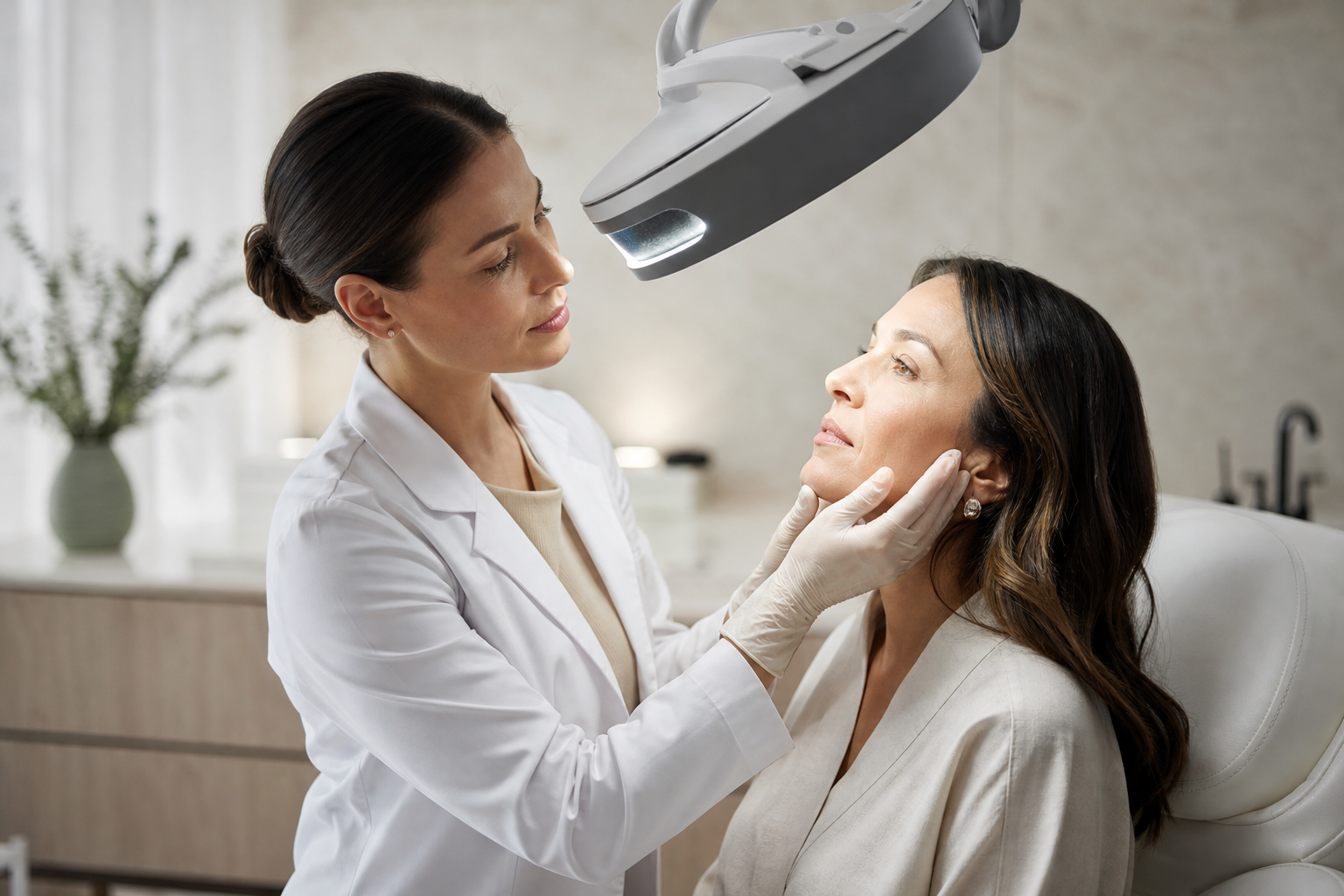
The CO2 laser for the face stands as one of the most powerful and effective tools in the modern arsenal of skin rejuvenation technologies. Designed primarily for individuals seeking profound improvements in skin texture, tone, and overall appearance, it addresses challenges ranging from fine lines and wrinkles to sun damage and acne scars. Understanding the CO2 laser's mechanism, expected results, recovery process, and inherent risks is essential for anyone considering this treatment. This comprehensive overview aims to clarify these aspects, helping readers make informed decisions based on credible dermatological knowledge and realistic expectations.
Laser skin rejuvenation encompasses a broad spectrum of procedures tailored to stimulate collagen production and encourage healthy skin regeneration. Among these, the CO2 laser is distinguished by its ablative action—meaning it physically removes the outer skin layers, prompting the growth of new, refreshed tissue. This treatment is particularly suited for those whose skin concerns are more advanced or resistant to non-ablative methods.
Given that laser rejuvenation can be highly technical and nuanced, it is important to differentiate the CO2 laser from other laser types and light-based technologies. Ablative lasers like the CO2 remove and remodel tissue, non-ablative lasers work beneath the skin surface without disrupting the epidermis, and fractional lasers treat only portions of the skin, leaving surrounding areas intact for faster recovery. Confusion sometimes arises with IPL (intense pulsed light), which is not a laser and operates through different mechanisms and indications. This article will carefully unpack these distinctions where relevant.
What Exactly Is a CO2 Laser and How Does It Work on Facial Skin?
The CO2 laser emits a concentrated beam of infrared light that targets water molecules within the skin cells. Its ablative property destroys the top layer of the epidermis as well as portions of the underlying dermis, sparking the body's wound healing response. This process stimulates the production of collagen and elastin—key structural proteins responsible for skin firmness, elasticity, and youthful appearance.
There are two main operational modes of CO2 laser treatment: fully ablative and fractional ablative. A fully ablative CO2 laser removes the entire treated skin surface, offering dramatic results but involving a more extensive recovery. Fractional CO2 laser, on the other hand, treats microscopic columns of tissue while leaving intervening areas untouched. This fractional approach balances efficacy with safety, reducing downtime and side effects while still promoting significant collagen remodeling.
Compared to non-ablative lasers that work beneath the skin to induce collagen through heat without surface removal, ablative CO2 lasers produce more significant improvement for deeper wrinkles, scars, and pigment irregularities. However, with greater benefits come increased risks and a more involved healing process.
Who Should Consider CO2 Laser Treatment for the Face?
Ideal candidates for CO2 laser resurfacing are individuals with moderate to severe skin damage, such as deep wrinkles, sun-damaged skin, acne scars, or uneven pigmentation, who have not achieved satisfactory results through topical treatments or non-ablative lasers. Those wishing for marked rejuvenation of texture and tone commonly seek this treatment to address visible signs of aging or specific problem areas.
That said, candidacy depends on multiple factors including skin type, medical history, and lifestyle. Patients with lighter skin tones often have lower risks of certain complications like post-inflammatory pigmentation changes, making CO2 laser a safer choice for them. Conversely, individuals with darker complexions need careful assessment due to higher susceptibility to hyperpigmentation or hypopigmentation.
Moreover, people with active skin infections, autoimmune diseases, impaired wound healing, or a history of keloid scarring are generally advised against receiving ablative laser resurfacing. An in-depth consultation with an experienced dermatologist or plastic surgeon is paramount to determine eligibility and devise a tailored treatment plan. Understanding these nuances helps avoid complications and enhances overall satisfaction with results.
What Can Patients Expect Regarding Results from CO2 Laser Facial Treatment?
The hallmark of CO2 laser treatment is the significant improvement in skin smoothness, firmness, and radiance. Immediately following the healing phase, patients often notice skin that looks clearer and feels softer. Over the course of several months, the remodeling of collagen further refines wrinkles and tightens the skin, leading to a rejuvenated and more youthful visage.
This gradual progression means that while visible improvements begin soon after recovery, optimal outcomes may take up to six months or more to fully manifest. Importantly, the depth and severity of the initial skin concerns influence the degree of change; extensive sun damage or deep scarring typically respond well to ablative treatments but may require multiple sessions or adjunctive procedures.
Compared to non-ablative and some fractional lasers, the CO2 laser’s ability to remove damaged surface layers allows for unparalleled correction of complex textural and pigmentary issues. Still, maintenance of results requires adherence to a proper skincare regimen, including diligent sun protection and possibly periodic touch-up treatments.
How Does Recovery from Facial CO2 Laser Treatment Unfold?
Recovery after CO2 laser resurfacing is a critical aspect that distinguishes it from other aesthetic procedures. The initial healing phase typically spans 7 to 14 days, during which the skin undergoes redness, swelling, crusting, and peeling. The intensity and duration of these effects vary by whether a fully ablative or fractional approach was employed.
With fully ablative treatments, patients should anticipate a more extended period of downtime, including significant discomfort and a visible peeling stage. Fractional CO2 laser commonly offers shorter recovery since untreated skin islands facilitate quicker re-epithelialization and reduced inflammation.
Proper post-procedure care involves gentle cleansing, continuous hydration, and use of ointments or barrier creams as directed by the clinician. Avoidance of sun exposure is paramount during healing to prevent pigmentary changes. Some practitioners may recommend specific topical agents or cold compresses to mitigate swelling and discomfort.
It is also important to monitor for signs of infection or abnormal scarring and maintain close follow-up with the treating specialist. The recovery journey not only restores the skin barrier but also sets the groundwork for the final aesthetic improvements.
What Are the Risks and Potential Complications of Using CO2 Laser on the Face?
While CO2 laser resurfacing offers compelling benefits, it carries inherent risks that necessitate thorough pre-treatment evaluation and post-treatment vigilance. Common side effects include prolonged redness, swelling, dryness, and crust formation. For most patients, these are temporary and resolve with appropriate care.
More serious complications, although less frequent, can include infections, delayed wound healing, scarring, and pigmentary alterations such as hyperpigmentation (darkening) or hypopigmentation (lightening) of the treated areas. These risks are notably higher in individuals with darker skin tones or those with a history of abnormal scarring.
Thermal damage caused by improper laser settings or technique may aggravate tissue injury, emphasizing the need for treatments to be performed by qualified professionals using calibrated equipment. Additionally, an immunologic reaction or inflammation unrelated to the laser itself can occur, underlining the importance of comprehensive medical screening beforehand.
Risk mitigation strategies involve selecting suitable candidates, employing fractional rather than fully ablative methods when appropriate, and adhering to proper protocols during both treatment and recovery phases.
How Does CO2 Laser Resurfacing Compare to Other Laser Skin Rejuvenation Options?
To fully appreciate the unique qualities of CO2 laser resurfacing, it is useful to contextualize it within the spectrum of laser treatments. Ablative lasers like CO2 and Er:YAG physically remove skin layers, generating powerful collagen stimulation but with longer downtime. Non-ablative lasers, including certain fractional devices, heat dermal tissue without disrupting the epidermis—offering milder results and shorter recovery.
Fractional laser technology, whether ablative or non-ablative, creates microscopic treatment zones surrounded by untouched skin, enabling faster healing and reduced side effects. The choice between fractional and fully ablative CO2 laser treatments hinges on the balance between desired efficacy and tolerance for downtime.
Unlike IPL (intense pulsed light) devices, which emit broad-spectrum light for pigment and vascular concerns, CO2 lasers provide precise, deep resurfacing capabilities. Understanding these distinctions assists patients and clinicians in selecting the optimal modality aligned with individual goals and skin conditions.
When Is It Appropriate to Choose CO2 Laser for Facial Rejuvenation?
CO2 laser treatment is most suitable when addressing significant skin aging signs, stubborn scars, or sun damage that have not responded satisfactorily to less invasive interventions. Its ability to produce transformative textural refinement makes it the treatment of choice for individuals prioritizing pronounced and lasting cosmetic improvements.
Patients seeking mild improvements or wishing to avoid substantial downtime may explore non-ablative or fractional non-ablative lasers as alternatives. Conversely, those desiring an aggressive approach with acceptable recovery may elect fully ablative CO2 laser resurfacing.
In all cases, a detailed consultation evaluating skin health, expectations, and medical history ensures selection of the most appropriate treatment pathway. When combined with other modalities or skincare products, CO2 laser resurfacing can be a cornerstone of a comprehensive facial rejuvenation strategy.
What Practical Steps Should Patients Take Before and After CO2 Laser Treatment?
Preparation for CO2 laser facial resurfacing includes avoiding sun exposure and certain medications that might impair healing or increase bleeding risk. Informing the clinician of all health conditions and recent skin procedures is vital. Some patients may benefit from pre-treatment skin conditioning to optimize results.
Post-treatment care is critical to support healing and enhance outcomes. This typically entails gentle cleansing, regular application of moisturizers or prescribed ointments, strict sun avoidance, and possibly the use of sunscreen once skin has healed sufficiently. Patients should also attend all scheduled follow-up visits to monitor progress and address concerns promptly.
Adherence to instructions and open communication with the healthcare provider facilitate a smoother recovery and reduce the chance of complications, thereby maximizing the benefits of this potent treatment.


