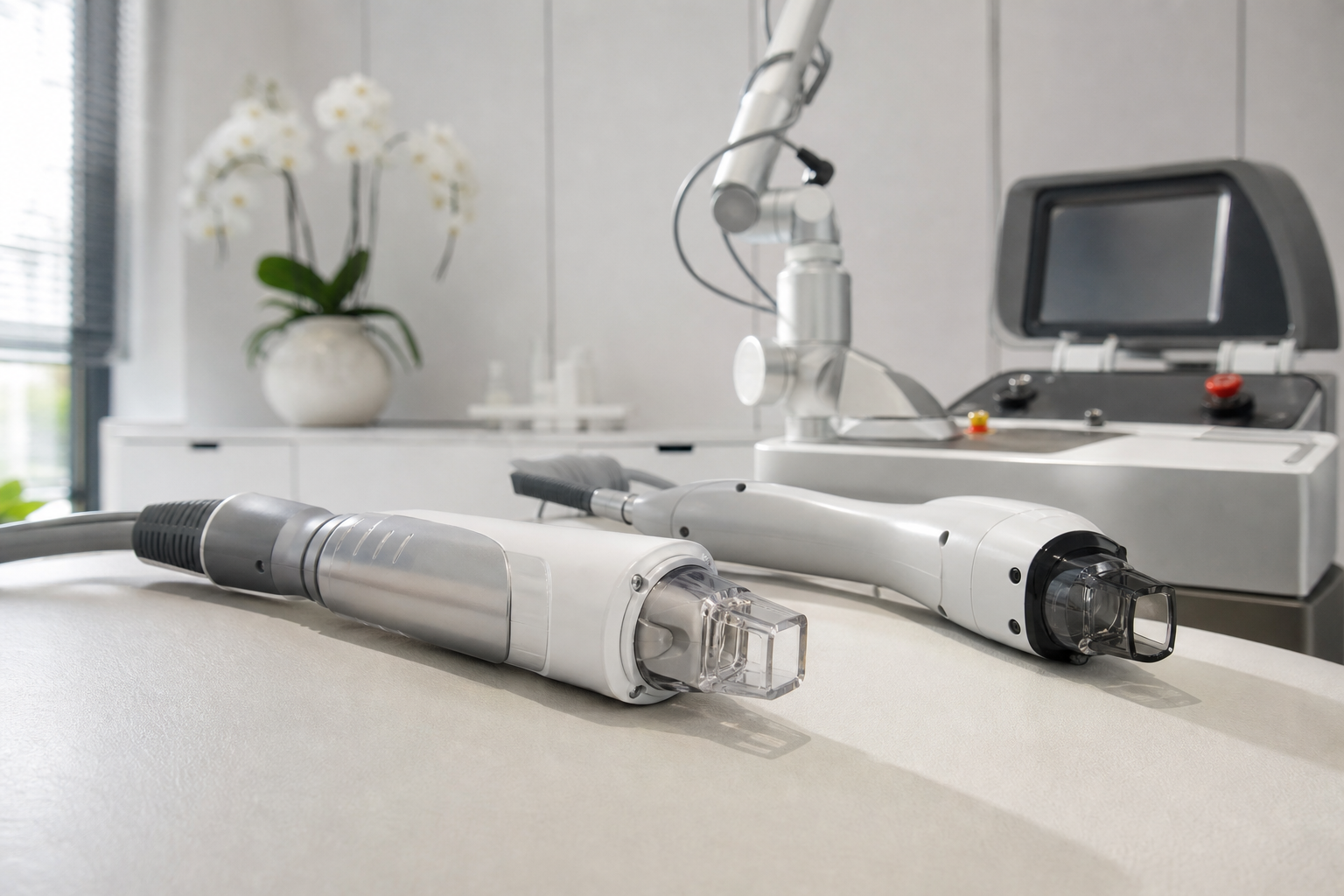
In the evolving field of dermatology and aesthetic medicine, fractional laser technology stands out as a significant advancement in skin rejuvenation treatments. Designed to stimulate the skin’s natural repair mechanisms, fractional lasers offer a balanced approach to addressing various skin concerns such as wrinkles, scars, and uneven texture while minimizing downtime and recovery. But what exactly is a fractional laser, how does it work on skin, and who can benefit from its application? Understanding this technology in detail empowers patients and clinicians alike to make informed decisions tailored to individual skin health goals.
This article delves into the nature of fractional lasers, elucidates their mechanism of action on the skin, and distinguishes them from other laser types—including ablative, non-ablative, fully ablative lasers, and non-laser technologies often confused with lasers, such as intense pulsed light (IPL). By exploring candidacy criteria, procedural benefits, limitations, recovery nuances, and potential risks, this comprehensive overview aims to clarify the role of fractional laser treatments within the broader context of skin rejuvenation.
Whether you are a prospective patient considering laser therapy to enhance your complexion or a practitioner seeking a refined understanding of fractional lasers’ unique position among skin resurfacing modalities, this editorial serves as a valuable resource for navigating modern laser technologies with precision and confidence.
What Is a Fractional Laser and How Does It Differ from Other Laser Technologies?
A fractional laser is a specialized laser technology that delivers energy in a pattern of microscopic columns rather than uniformly across the entire skin surface. Unlike fully ablative lasers, which remove a continuous layer of the skin’s surface, fractional lasers create a grid of microscopic treatment zones—small, targeted areas of controlled injury surrounded by unaffected skin tissue. This approach allows the skin to heal more rapidly, as the untreated areas act as reservoirs for regeneration.
Traditional ablative lasers, such as CO2 and Er:YAG lasers, fully ablate or vaporize the epidermis and sometimes parts of the dermis, leading to significant improvements in skin texture and scarring but requiring considerable recovery time. Non-ablative lasers, on the other hand, penetrate the skin to stimulate collagen production without removing the surface layer, resulting in less downtime but often more subtle improvements.
Fractional lasers essentially bridge the gap between these two methods by combining the deeper collagen remodeling benefits of ablative treatments with the quicker healing and fewer side effects typical of non-ablative procedures. This balance makes fractional lasers an appealing option for patients seeking meaningful rejuvenation with a manageable recovery process.
It is also crucial to clarify that IPL (Intense Pulsed Light) devices, although widely used in skin treatments, are not lasers. While IPL uses broad-spectrum light to target pigments and superficial blood vessels, fractional lasers emit focused, single-wavelength laser light to induce precise tissue remodeling and regeneration.
How Does Fractional Laser Treatment Work on Skin to Promote Rejuvenation?
The fundamental mechanism of fractional laser treatment involves creating controlled micro-injuries known as Microthermal Treatment Zones (MTZs) within the skin. These tiny columns of laser energy penetrate into the dermis, sparking a cascade of biological processes that activate the body’s natural wound healing response.
Following treatment, the skin initiates increased production of collagen and elastin—key structural proteins responsible for firmness, resilience, and youthful texture. As these new proteins integrate into the skin’s architecture, damaged and aged tissue is gradually replaced with fresh, healthy skin cells.
This regenerative process unfolds over several weeks to months, meaning initial results such as mild redness and tightening can be observed early, but the most significant improvements in skin quality and appearance develop progressively. The fractional delivery method fosters this healing by leaving surrounding intact areas, accelerating recovery and reducing risks compared to fully ablative resurfacing.
Moreover, the depth and density of the laser pulses can be precisely adjusted, allowing practitioners to customize treatments for specific concerns—from fine lines and superficial pigmentation irregularities to deeper scars—while balancing efficacy and downtime.
Who Is an Ideal Candidate for Fractional Laser Treatment, and What Skin Concerns Can It Address?
Fractional laser therapy is suitable for a broad range of individuals seeking to improve skin texture, tone, and overall appearance, particularly for those interested in skin rejuvenation without the extensive downtime associated with fully ablative lasers.
Common indications for fractional laser treatment include the reduction of fine lines and wrinkles, improvement of acne scarring, minimization of pigmentation irregularities, and enhancement of skin firmness via collagen stimulation. It is often recommended for patients wishing to address early to moderate signs of skin aging or superficial scarring.
However, candidacy must be individually assessed by qualified dermatologists or aesthetic medicine professionals. Contraindications often include active skin infections or inflammation, a history of keloid scarring, certain autoimmune or systemic diseases, pregnancy, or particular medications that may interfere with healing or increase sensitivity.
Patients with very deep wrinkles or significant facial volume loss might require complementary or alternative therapies, as fractional laser alone may not suffice for more advanced aging changes. Similarly, certain skin types—particularly those prone to pigmentation changes after injury—warrant cautious treatment planning, including test spots and pre/post care to mitigate complications.
Comparing Ablative, Non-Ablative, and Fractional Lasers: When to Choose Each Approach?
Laser skin resurfacing options generally fall into three categories: fully ablative, non-ablative, and fractional lasers, each with distinct profiles regarding effectiveness, recovery, and suitable patient goals.
Fully Ablative Lasers: Devices like CO2 and Er:YAG lasers remove entire layers of the epidermis and variable depths of dermis. They offer dramatic improvements in deep wrinkles, pronounced scarring, and significant pigmentation concerns. However, these procedures entail longer healing times, increased discomfort, and a higher risk of side effects including infection and prolonged redness.
Non-Ablative Lasers: These systems work beneath the skin’s surface to stimulate collagen without destroying the epidermis. They require minimal downtime and carry fewer risks but generally provide subtler results, making them suitable for individuals with mild to moderate skin aging or those seeking incremental maintenance treatments.
Fractional Lasers: Integrating features of both, fractional lasers treat a fraction of the skin surface with micro-ablations or microthermal zones, promoting collagen formation and skin remodeling while preserving untreated areas for rapid healing. This modality is often a preferred initial step for patients seeking effective rejuvenation with balanced safety and comfort.
When deciding among these options, factors such as the severity of skin concerns, patient lifestyle, tolerance for downtime, and desired outcomes must be carefully considered with expert guidance. Fractional laser therapy is especially advantageous for those looking to rejuvenate skin texture and tone with reduced risk and recovery compared to classic ablative treatments.
Understanding Recovery and Post-Treatment Care Following Fractional Laser Procedures
Recovery timelines after fractional laser therapy can vary depending on treatment intensity, skin type, and individual healing responses, but typically involve a shorter downtime than fully ablative laser resurfacing.
Immediately after the procedure, patients may experience redness, swelling, mild discomfort, and the appearance of tiny dark spots or crusts corresponding to the treated microthermal zones. These effects usually subside within a few days to a week.
It is essential to follow post-treatment care instructions rigorously, including avoiding sun exposure, using gentle skincare products, and applying recommended moisturizers or healing ointments. Protection from ultraviolet radiation is critical to prevent post-inflammatory hyperpigmentation and support optimal healing.
Avoidance of harsh exfoliants, retinoids, or other potentially irritating substances is advised during the recovery phase. Clinicians may also recommend specific products to soothe and repair the skin barrier.
While everyday activities can usually be resumed within days, patients should anticipate a gradual improvement in skin quality over subsequent weeks as collagen remodeling processes progress. Some may benefit from multiple sessions spaced appropriately to maximize results.
Potential Risks and Contraindications Associated with Fractional Laser Treatments
Although fractional laser procedures are generally safe when performed by experienced professionals, potential risks do exist and must be clearly communicated to patients before treatment.
Common temporary side effects include erythema (redness), edema (swelling), mild pain or discomfort, and transient hyperpigmentation or hypopigmentation. Proper patient selection and adherence to treatment protocols help mitigate these risks.
More serious but rare complications can involve infection, scarring, or prolonged pigmentary changes, often related to poor post-procedure care or underlying skin conditions that were unaddressed prior to treatment.
Contraindications for fractional laser therapy encompass active skin infections or inflammations, certain autoimmune disorders, recent use of isotretinoin (due to propensity for delayed healing), pregnancy, and a history of abnormal scar formation.
Therefore, comprehensive consultation including detailed medical history, skin assessment, and discussion of expectations is indispensable. This ensures patient safety and optimizes the likelihood of successful outcomes.


