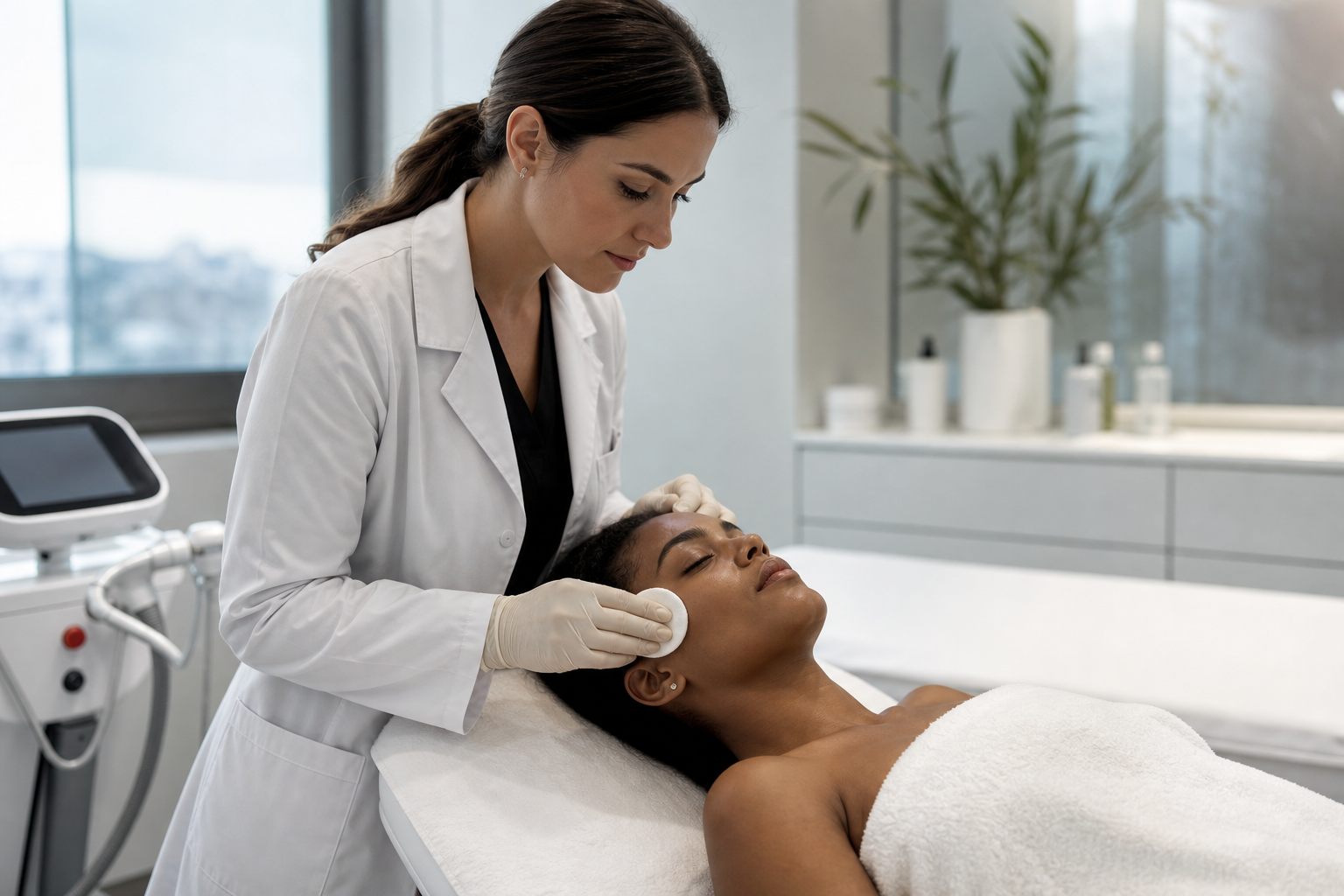
Laser treatments represent a transformative advancement in dermatology and aesthetic medicine, harnessing concentrated light energy to address a multitude of skin concerns. However, when it comes to individuals with darker skin phototypes—classified commonly as Fitzpatrick types IV, V, and VI—the application of these technologies requires a discerning, meticulous approach. Darker skin contains higher melanin concentrations, which increases the susceptibility to complications such as hyperpigmentation, hypopigmentation, burns, and scarring when exposed to certain laser parameters.
This article is dedicated to readers with darker skin tones who are contemplating or preparing for laser-based procedures. Understanding the nuanced interaction between laser devices and melanin-rich skin is essential not only for safety but also for achieving effective, lasting results. We will explore candidacy considerations, technological options tailored to darker complexions, necessary precautions, potential risks, and post-treatment expectations. Throughout, the emphasis remains on providing medically responsible information devoid of unfounded claims—empowering patients and practitioners alike to make informed decisions and avoid adverse outcomes.
Given the rising demand for aesthetic enhancements across ethnically diverse populations, knowledge about laser treatments for darker skin phototypes holds profound practical importance. Misapplication or insufficient expertise can lead to distressing and often difficult-to-treat side effects, underscoring the imperative for specialized protocols and professional vigilance. This detailed examination thus serves both educational and preventive roles within advanced treatment settings.
How Does Darker Skin Influence the Efficacy and Safety of Laser Treatments?
The primary challenge in administering laser therapies to darker skin phototypes lies in the high melanin content. Melanin absorbs laser energy, which is beneficial when targeting pigment-related lesions but also increases the risk of collateral thermal injury to surrounding healthy tissue. Consequently, traditional lasers effective for lighter skin might induce burns or pigmentary changes when used indiscriminately on darker skin.
Lasers operate on specific wavelengths, pulse durations, and energy settings designed to selectively target chromophores in skin, such as hemoglobin in blood vessels or melanin in hair follicles and pigmented lesions. In darker skin, these parameters require adjustment. For instance, lasers with longer wavelengths (e.g., Nd:YAG 1064 nm) penetrate deeper and are less absorbed by superficial melanin, thus offering safer options. By contrast, shorter wavelength lasers (e.g., Alexandrite 755 nm, Ruby 694 nm) tend to be absorbed more superficially, increasing risk.
Understanding these distinctions is vital for clinicians: effective treatment hinges on balancing sufficient energy to target problematic tissue while mitigating overheating or damage to pigmented healthy skin. Patients should be aware that not all laser types are suitable for their skin phototype and that the expertise of the provider directly influences outcomes and safety.
Who Are Suitable Candidates for Laser Treatments within Darker Skin Phototypes?
Evaluating candidacy for laser procedures in darker skin involves a comprehensive clinical assessment. Dermatologists and aesthetic specialists must determine the exact Fitzpatrick phototype and perform a thorough skin examination to identify existing pigmentary irregularities, scarring tendencies, or underlying dermatoses which could complicate therapy.
A detailed medical history is equally crucial. Prior treatments, especially laser or chemical peels, and any history of post-inflammatory hyperpigmentation or keloid formation must be disclosed to assess risk. Patients with active skin infections, systemic illnesses that impair healing, or pregnancy might be advised to defer such interventions.
While many patients with darker skin can benefit from laser treatments such as laser hair removal, skin rejuvenation, or vascular lesion correction, the selection and customization of the laser device and protocol are paramount. A candid conversation with a qualified clinician about expected results, potential complications, and care requirements ensures that patients make informed decisions and set realistic expectations.
What Are the Key Safety Measures and Contraindications Specific to Darker Skin?
Safety in laser treatments for darker phototypes encompasses multiple facets, beginning with technology selection. Nd:YAG lasers emitting at 1064 nm are preferred for their deeper penetration and reduced melanin absorption. This makes them more suitable for procedures like laser hair removal and vascular treatments in darker skin.
Energy parameters must be carefully titrated—initial sessions may employ conservative settings to gauge patient response, minimizing adverse reactions. Cooling devices and pre-treatment skin conditioning can also help protect the epidermis.
A paramount safety consideration is strict avoidance of ultraviolet (UV) exposure before and after treatments. Sunburn or tanning increases melanin activity, escalating risks of hyperpigmentation. Patients should adhere rigorously to sun protection routines, including the use of broad-spectrum, high-SPF sunscreens, protective clothing, and behavioral modifications.
Contraindications to laser therapy include active infections, such as herpes simplex outbreaks, which can flare with laser exposure. Individuals prone to hypertrophic scarring or keloids face heightened risk of permanent marks and might require alternative treatments. Uncontrolled underlying medical conditions and pregnancy represent additional contraindications requiring deferral of laser procedures.
Which Complications Are Most Common and When Should Patients Seek Urgent Evaluation?
Despite expert precautions, complications can arise, especially given the delicate balance in managing melanin-rich skin. Hyperpigmentation remains the most frequent concern, manifesting as darkened patches where the laser induced inflammation and melanocyte stimulation. Although often transient, it can be persistent and distressing.
Conversely, hypopigmentation—loss of pigment—results from excessive melanocyte damage or destruction. This complication tends to be more challenging to reverse.
Thermal injury leading to superficial or deep burns can occur with inappropriate laser settings or inadequate cooling, sometimes leading to blistering or scarring. Scars, particularly keloids, may emerge especially in susceptible individuals after an injury or abrasion from laser treatment.
Immediate professional evaluation should be sought if patients experience escalating pain, widespread redness, swelling, pus discharge, or any skin changes that worsen or fail to improve over time. Early intervention can mitigate sequelae and guide appropriate management.
What Does the Recovery Process Look Like for Darker Skin Following Laser Procedures?
Recovery experiences vary by the type and intensity of the laser treatment, but patients with darker skin often require extended healing periods and vigilant care. Typical initial symptoms include erythema (redness), edema (swelling), and mild discomfort, usually resolving within days.
Diligent adherence to post-treatment protocols is crucial. This involves gentle cleansing, application of prescribed topical agents to hydrate and soothe, and strict UV avoidance to prevent pigmentary shifts. Exfoliating or irritating products should be avoided until the skin barrier fully recovers.
Patients should anticipate gradual, not instantaneous, improvements in skin appearance. Multiple sessions spaced by adequate intervals might be necessary to achieve desired effects judiciously. Close follow-up appointments enable monitoring and timely management of any adverse signs.
Why Is Professional Expertise and Patient Education Vital for Laser Treatments in Darker Skin?
Laser therapy in darker phototypes demands a high level of clinical knowledge and experience. Providers must not only master the technical aspects of various laser systems but also possess a deep understanding of skin biology, pigmentation dynamics, and potential adverse outcomes unique to these patients.
Patient education prior to treatment is equally important. Informed individuals who understand the rationale behind device choice, the necessity for conservative settings, expected timelines, risks, and aftercare responsibilities are better positioned to comply with recommendations and report concerns promptly.
Choosing a board-certified dermatologist or a qualified medical aesthetic practitioner with demonstrable expertise in treating darker skin phototypes mitigates risk and fosters confidence. Many practices offer consultations emphasizing detailed assessments and tailored treatment plans, ensuring both safety and efficacy.
Integrating Knowledge from Complementary Topics on Laser Treatment Safety for Darker Skin
Exploring related content enhances a comprehensive understanding of laser treatment in darker skin. Resources such as Laser Treatment Safety – Contraindications, Risks and Practitioner Selection provide foundational guidance on patient screening and device choice. Meanwhile, Laser Skin Rejuvenation – A Complete Guide to Treatments, Results and Recovery offers insights into procedural expectations and post-care tailored for diverse skin tones.
Further readings, including Possible Complications of Facial Laser Treatment and Burns After Laser Treatment – How They Occur and How Risk Is Reduced, shed light on complication prevention and management strategies. Patients can also benefit from reviewing Hyperpigmentation After Laser – Causes and Risk Factors to better comprehend pigmentary responses unique to their skin characteristics.
Such comprehensive educational materials empower patients and practitioners to navigate the intricacies of laser treatments for darker skin with confidence and prudence.


