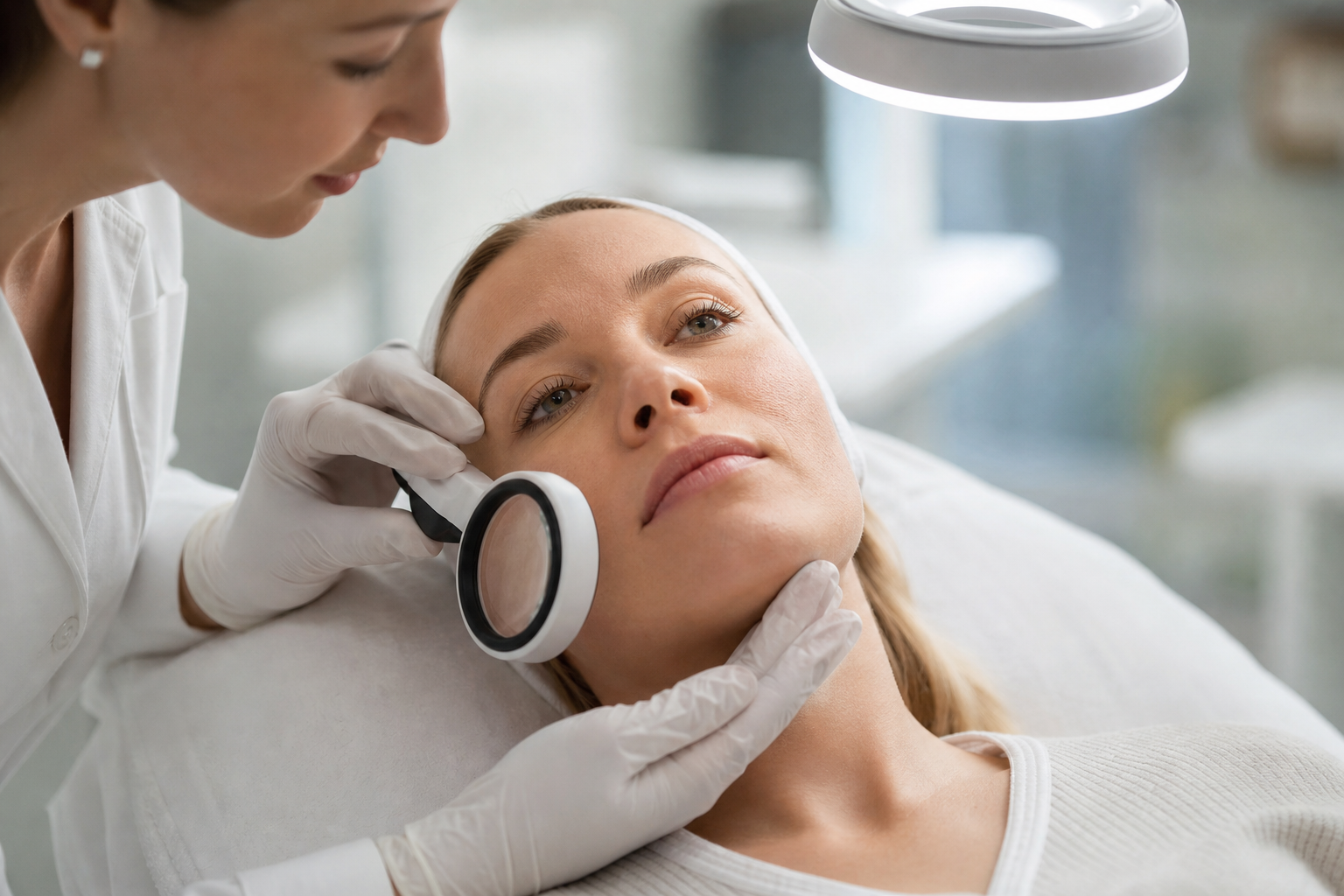
Laser resurfacing is a widely discussed term within the realm of dermatology and aesthetic skin treatments, frequently encountered by individuals interested in skin rejuvenation. Despite its common usage, there remains a degree of ambiguity surrounding what laser resurfacing precisely entails. At its core, laser resurfacing involves harnessing laser energy to target, remove, or stimulate the skin, facilitating regeneration and improvement in skin texture, tone, and overall quality. This treatment plays a significant role in mitigating visible signs of aging, such as wrinkles and pigment irregularities, as well as addressing scarring and sun damage.
This article is designed for those seeking a clear, detailed understanding of laser resurfacing: what it means, the distinctions between various laser techniques, and who may benefit from these treatments. It aims to clarify procedural details, including the mechanisms behind ablative, non-ablative, fractional, and fully ablative laser approaches, while dispelling common misconceptions, such as the confusion between lasers and devices like IPL—which is not a laser and should not be classified as laser resurfacing.
Understanding the subtleties and diversities within laser resurfacing technology is essential for anyone considering this procedure. It guides better decision-making based on individual skin conditions and expectations, fostering a well-informed dialogue with medical professionals. The following discussion unpacks the term laser resurfacing comprehensively, drawing distinctions where crucial and providing insight into candidacy, recovery, and treatment outcomes without overstating results.
What Exactly Does Laser Resurfacing Mean in Dermatology?
Laser resurfacing is a cosmetic procedure that employs concentrated beams of light energy—lasers—to address and improve skin imperfections. Specifically, this technique targets and removes damaged outer layers of the skin or stimulates deeper layers to encourage collagen production and skin renewal. The overarching goal is to reveal fresher, more youthful-looking skin and to promote repair of sun spots, wrinkles, scars, and uneven skin texture.
The process can involve either ablative or non-ablative methods, or sometimes a blend of both, each with its own action mechanism and recovery profile. In ablative laser resurfacing, the laser vaporizes the epidermis—essentially removing the outer skin layers—resulting in a controlled wound that prompts new skin growth. Non-ablative techniques, conversely, deliver laser energy beneath the skin’s surface without removing tissue, encouraging internal collagen remodeling while sparing the epidermis and reducing downtime.
Fractional laser resurfacing refines these approaches further by dividing the laser beam into thousands of microscopic treatment zones that target fractions of the skin at a time, leaving surrounding tissue intact for quicker healing. Fully ablative lasers represent the traditional, more intensive form of resurfacing that removes a uniform layer of skin extensively, generally requiring longer recovery periods but potentially yielding dramatic results.
Who Is the Ideal Candidate for Laser Resurfacing Treatments?
Laser resurfacing is suited primarily for adults seeking to improve the quality, smoothness, and appearance of their facial or body skin. Candidates often include those wishing to reduce the signs of aging—fine lines, wrinkles, laxity—as well as individuals aiming to diminish sun damage, freckles, uneven pigmentation, acne scars, or other surface irregularities.
Appropriate candidacy depends on multiple factors: skin type, the extent of skin damage, general health, and specific aesthetic goals. Patients with lighter skin tones typically experience fewer pigmentation-related complications after ablative resurfacing compared to those with darker skin, who may be better candidates for non-ablative or fractional approaches. Moreover, existing skin conditions such as active infections, a history of keloids, or certain autoimmune diseases may contraindicate these procedures.
Consultation with a qualified dermatologist or specialist in laser therapies is imperative to assess candidacy, discuss risks, and determine the most suitable type of laser resurfacing tailored to individual skin characteristics.
How Do Ablative, Non-Ablative, Fractional, and Fully Ablative Lasers Differ?
The terminology surrounding laser resurfacing is often nuanced, and understanding the distinctions helps clarify expected results and recovery implications.
Ablative laser resurfacing involves lasers like CO or Er:YAG, which precisely ablate or vaporize the upper layers of the skin, including the epidermis and superficial dermis. This controlled injury triggers the body's healing response, resulting in new, collagen-rich skin formation. Ablative lasers are effective for deeper wrinkles, extensive sun damage, and marked scarring but come with longer downtime and a higher risk profile.
Non-ablative laser resurfacing utilizes different laser wavelengths that penetrate into the dermis without disrupting the epidermis surface. The induced heat stimulates collagen production, leading to gradual skin tightening and texture improvement. The recovery period is significantly shorter, with minimal visible skin damage post-treatment, albeit with more moderate and progressive results.
Fractional laser resurfacing enhances both ablative and non-ablative approaches by splitting the laser beam into fractional microbeams, each creating microscopic columns of treatment surrounded by unaffected tissue. This method supports faster healing and reduces adverse effects like prolonged redness or infection risks. Fractional ablative lasers can balance efficacy with recovery ease, making them popular choices for many patients.
Fully ablative lasers refer to traditional ablative treatments where the laser impacts the entire target skin area uniformly without fractionation. While potentially offering pronounced improvements, these treatments necessitate longer healing and greater precaution.
It is also pertinent to emphasize that Intense Pulsed Light (IPL) devices are not lasers, as they emit broad-spectrum light rather than coherent laser light. Though useful for treating pigmentation and vascular lesions, IPL does not perform laser resurfacing and differs substantially in mechanism and outcomes.
What Benefits Does Laser Resurfacing Offer, and What Are Its Limitations?
Laser resurfacing offers a range of benefits, making it a distinguished tool in skin rejuvenation. Key advantages include improved skin texture and tone, reduction in fine lines and wrinkles, fading of pigmentation irregularities, and smoothing of scars, particularly those caused by acne or injury.
The stimulation of collagen synthesis enhances skin firmness and elasticity, contributing to a more youthful appearance over time. The precision of laser treatment allows targeting specific concerns while sparing adjacent tissues, especially with fractional techniques.
Nevertheless, these benefits come with limitations: not all skin concerns respond equally well to laser resurfacing, and not every skin type is amenable to every laser approach. Certain conditions, such as severe photoaging or very deep wrinkles, may require combination therapies to achieve noticeable improvement.
Moreover, potential adverse effects—including redness, swelling, pigment changes, or scarring—necessitate thorough patient selection and post-procedure care. Results are also influenced by patient lifestyle factors such as sun exposure and skin care regimen.
What Does the Recovery Process Entail and What Risks Should Patients Understand?
The recovery timeline after laser resurfacing depends significantly on the specific type of procedure performed. Ablative laser resurfacing commonly involves an initial phase of redness, swelling, and peeling that can last one to two weeks. Patients may experience sensitivity, discomfort, and heightened vulnerability to sun exposure during this window, necessitating diligent aftercare.
Non-ablative and fractional laser treatments generally involve minimal downtime, often just mild redness and swelling that resolve within a few days. Nevertheless, a series of treatments may be required to achieve the desired effects.
Risks associated with laser resurfacing include infection, pigmentary changes such as hypo- or hyperpigmentation, prolonged redness, and, in rare cases, scarring. These risks emphasize the importance of having the procedure performed by experienced medical professionals who adhere to strict protocols and provide comprehensive pre- and post-treatment guidance.
Patients should also be aware that laser resurfacing does not halt the natural aging process; maintenance treatments and supportive skincare therapies can optimize and prolong outcomes.
How Can Patients Navigate the Variety of Laser Resurfacing Options Effectively?
Given the diversity of laser technologies and treatment approaches, patients benefit from a clear, educational framework when evaluating options. Resources such as detailed guides on Types of Lasers for Skin Rejuvenation – Ablative, Non-Ablative and Fractional Treatments and comprehensive overviews like Laser Skin Rejuvenation – A Complete Guide to Treatments, Results and Recovery contribute significantly to informed decision-making.
Understanding distinctions such as Ablative vs Non-Ablative Lasers – What Is the Difference? or exploring the mechanisms in articles like What Is a Fractional Laser and How Does It Work on Skin? allows patients to align expectations with realistic outcomes.
For individuals considering advanced ablative treatments, further insights can be gained from literature on the CO2 Laser for the Face – Results, Recovery and Risks and Er:YAG Laser – Who Is It For and How Does It Differ from CO2?. Similarly, understanding newer modalities such as the Non-Ablative Fractional Laser – Rejuvenation with Shorter Downtime and distinctions highlighted in Fractional vs Fully Ablative Laser – Key Treatment Differences can guide patients through an increasingly nuanced landscape.
Engagement with these expert-based materials supports a well-rounded perspective, ensuring laser resurfacing choices are made with clarity and confidence.


