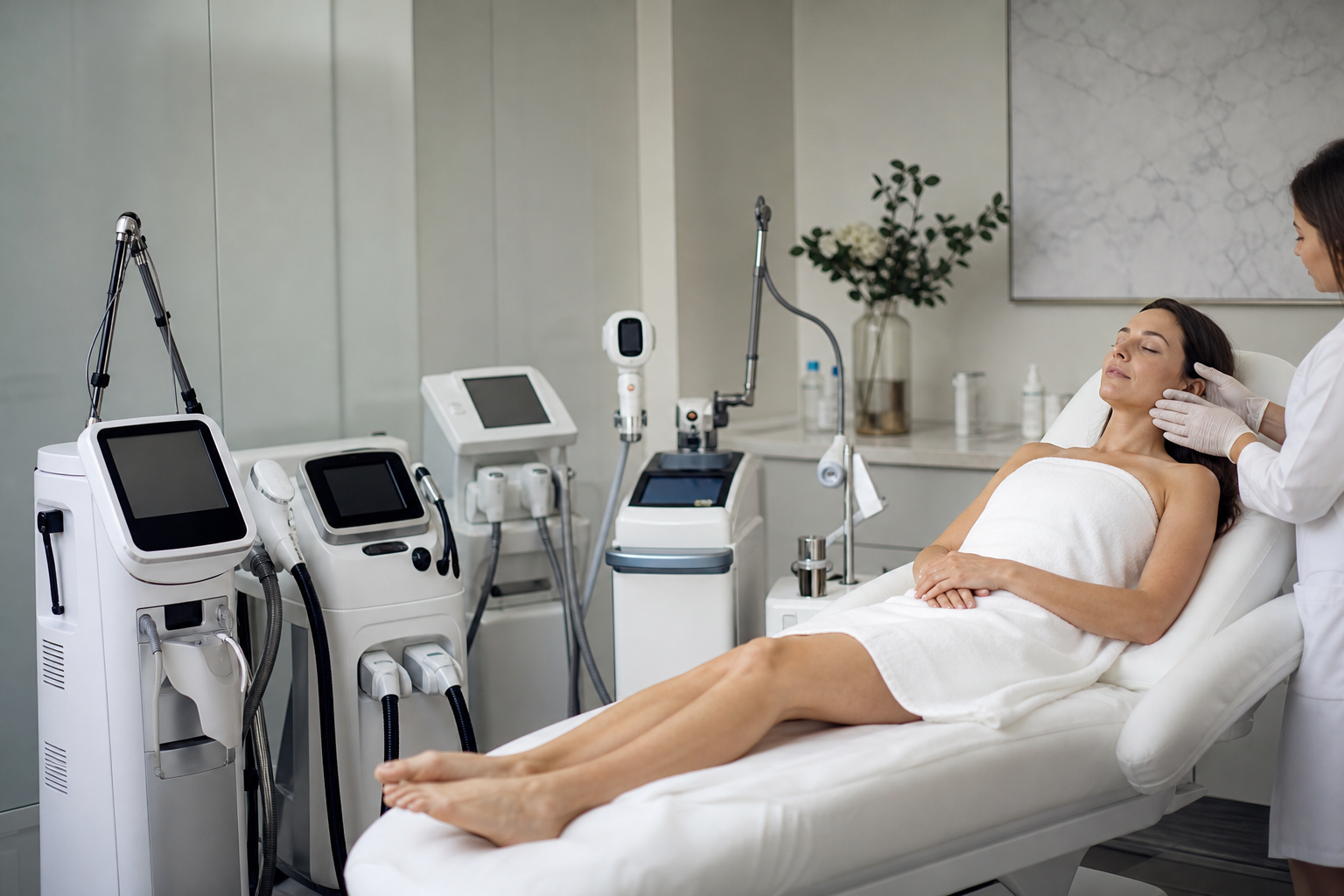
In the evolving landscape of aesthetic medicine, the pursuit of optimized skin treatments has encouraged practitioners to combine various modalities, prominently featuring lasers alongside other aesthetic procedures. This strategy aims to address the multifaceted nature of skin concerns—ranging from fine lines and pigmentation irregularities to textural imperfections and vascular anomalies—by harnessing complementary technologies within a tailored therapeutic plan.
Combining lasers with other aesthetic procedures is particularly relevant for individuals seeking a comprehensive and nuanced approach to skin rejuvenation and correction. Patients with complex concerns, such as facial aging compounded by sun damage or scarring with uneven pigmentation, often benefit from synergistic treatments that go beyond what a single modality can achieve alone. Understanding how these combinations work, their mechanisms, benefits, limitations, and associated risks is crucial for both clinicians and patients to ensure safe and effective outcomes.
This article delves deeply into the principles behind combining laser therapy with other aesthetic interventions, such as IPL (Intense Pulsed Light) and RF (Radiofrequency) microneedling, chemical peels, and biorevitalization. It clarifies distinctions among these technologies, explores candidacy and contraindications, examines recovery considerations, and highlights practical examples where combined approaches have proven advantageous. Above all, readers will find an educational resource that supports informed treatment decisions without prescribing universal solutions, upholding the individualized nature of aesthetic care.
Why Integrate Laser Treatments with Other Aesthetic Procedures?
Laser treatments operate primarily through precision targeting of specific skin layers, utilizing photothermal or photomechanical effects to stimulate collagen production, target pigmented lesions, or diminish vascular irregularities. However, skin aging or damage is often multifactorial, involving issues such as decreased hydration, uneven texture, and diminished elasticity, which lasers alone may not fully address.
Incorporating other modalities like RF microneedling or chemical peels into a laser-based regimen enables a more comprehensive remodeling of the skin architecture. For instance, RF microneedling delivers controlled thermal energy into the dermis via insulated micro-needles, intensifying collagen and elastin synthesis. Concurrently, the procedure enhances the absorption of topical serums, which can further nourish and rejuvenate the skin’s layers.
Chemical peels, by exfoliating the outer epidermal layers, can improve surface smoothness and facilitate more effective laser penetration or act as a maintenance step following laser resurfacing. Moreover, combining IPL with lasers can simultaneously target a broader range of pigmentation and vascular concerns, given their differing light source characteristics.
Understanding the Distinctions Between Lasers, IPL, and RF Microneedling
Appreciating the technical and operational differences between these modalities is foundational when considering combined treatments. Lasers emit coherent, monochromatic light beams that penetrate to specific depths, enabling highly targeted photothermolysis of chromophores such as melanin or hemoglobin. This precision allows for deeper dermal stimulation or selective removal of pigmented lesions and vascular abnormalities but may entail longer recovery and certain risks, particularly in darker skin types.
IPL, meanwhile, delivers broad-spectrum, non-coherent light pulses that scatter across the skin and impact multiple chromophores simultaneously. Although often conflated with lasers, IPL systems are distinct technologies and typically provide less focused, surface-level interventions. Their versatility can complement lasers by treating varied pigmentary and vascular concerns in a gentler manner with minimal downtime.
RF microneedling integrates mechanical injury from micro-needles with radiofrequency energy to induce collagen remodeling. Unlike lasers, which rely on light-based energy, RF energy heats dermal tissues without pigmentation-based absorption, reducing the risk of pigmentary changes in diverse skin types. It's essential to be aware that RF microneedling devices are subject to evolving regulatory oversight, with the FDA announcing warnings slated for 2025, underscoring the need for treatments to be performed by qualified professionals who adhere to updated safety protocols.
Who Is an Ideal Candidate for Combined Laser and Aesthetic Modalities?
The suitability for combined aesthetic procedures hinges on individual skin characteristics, medical history, and treatment goals. Candidates without active skin inflammation, infections, or uncontrolled dermatologic conditions generally tolerate combination treatments well. Conversely, patients with sensitive skin prone to post-inflammatory hyperpigmentation, such as those with darker Fitzpatrick skin phototypes, require cautious protocol selection and tailored approaches.
The presence of specific contraindications—for example, recent isotretinoin use, certain autoimmune diseases, or history of keloid scarring—may limit candidacy or necessitate modified treatment plans. Moreover, patients should disclose all medications and prior procedures to facilitate comprehensive risk assessment.
Practitioners must ensure thorough consultation and evaluation to formulate a personalized strategy that weighs the synergistic benefits of combinations alongside potential cumulative side effects.
Navigating Recovery and Risks in Combined Aesthetic Treatments
The recovery period following combined laser and other aesthetic treatments varies according to the intensity and depth of procedures performed. Aggressive fractional laser resurfacing paired with medium-depth chemical peels, for instance, may require extended downtime characterized by erythema, peeling, and sensitivity. In contrast, combinations involving RF microneedling frequently afford shorter recovery intervals with less overt inflammation.
Risks associated with multimodal approaches include transient redness, edema, risk of infection, and in certain cases, pigmentary disturbances such as hyper- or hypopigmentation. Importantly, the chronology and spacing of treatments influence outcomes—allowing sufficient healing time between modalities minimizes compounded adverse effects.
Therefore, treatment plans should integrate realistic recovery expectations and incorporate post-procedure care protocols including sun protection, topical agents, and follow-up evaluations to ensure optimal skin restoration.
Effective Combination Protocols and Their Clinical Benefits
Clinical experience and emerging research support several successful combinations. One example involves fractional laser resurfacing followed by topical application of biorevitalizing serums rich in antioxidants and hyaluronic acid. This sequence enhances matrix regeneration at multiple skin levels while providing surface hydration and barrier repair.
Another approach pairs IPL with vascular laser treatments to comprehensively address mixed pigmentary and vascular lesions commonly seen in photodamaged skin. This tandem enables a broader spectrum of correction unattainable by a single modality alone.
RF microneedling combined with judicious chemical peeling can potentiate collagen induction while refining epidermal texture, offering a balanced rejuvenation for patients seeking moderate downtime and holistic skin enhancement.
Choosing the Optimal Combination: What Should Guide the Decision?
Determining the best synergistic treatment combination depends on meticulous skin analysis and clearly defined aesthetic objectives. This necessitates a collaborative dialogue between patient and clinician to prioritize desired outcomes, whether it be wrinkle reduction, pigmentation correction, scar remodeling, or general rejuvenation.
Physicians should consider factors such as skin type, sensitivity, previous responses to treatments, and lifestyle constraints that might affect healing. Furthermore, understanding the specific mechanisms, recovery timelines, and potential complications of each modality informs the sequencing and intensity of combined procedures.
Personalization remains paramount—there is no universally superior combination. Each case invites careful tailoring to maximize benefits while mitigating risks.


