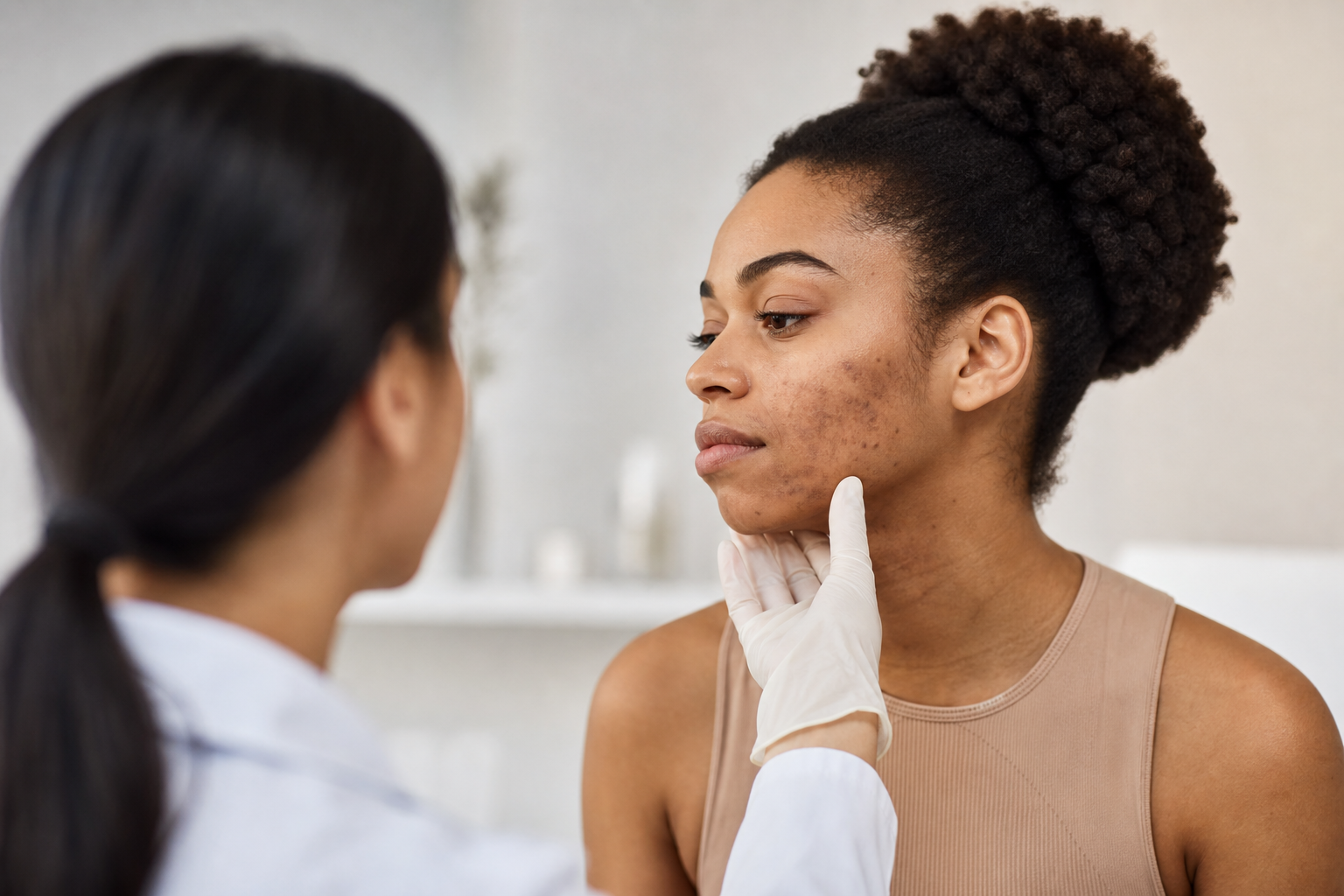
Post-inflammatory hyperpigmentation (PIH) is a prevalent dermatological concern that manifests as darkened patches or spots on the skin following an inflammatory event. Unlike congenital pigmentation differences or genetic predispositions, PIH is an acquired condition, arising from the skin’s response to injury, irritation, or inflammation. This condition is especially concerning for individuals who have experienced acne, eczema, psoriasis, burns, or other skin traumas, as the resultant pigmentation marks can compromise the uniformity of skin tone and overall aesthetic appearance.
The significance of understanding PIH extends beyond superficial cosmetic issues—it holds particular importance for patients and clinicians dealing with darker skin phototypes, who are more susceptible to pronounced pigmentary changes. Furthermore, distinguishing PIH from related conditions, such as post-inflammatory erythema (red marks), is critical because it directly influences treatment choices and outcomes. This article offers a comprehensive examination of what PIH entails, who it affects most, and why effectively managing it calls for nuanced treatment strategies, particularly when considering advanced methods like laser therapies.
Given the complexity of PIH, there exists no one-size-fits-all protocol for its management. Its causes, manifestations, and prognosis vary widely among individuals, making tailored care essential. This editorial seeks to equip readers—ranging from concerned patients to practicing dermatologists—with a thorough understanding of PIH’s nature and the therapeutic considerations required for optimal care.
Understanding Post-Inflammatory Hyperpigmentation: Definition and Clinical Features
Post-inflammatory hyperpigmentation is characterized by the development of darkened patches on the skin that emerge after an inflammatory insult. This discoloration results from the overproduction or uneven distribution of melanin, the pigment responsible for skin color, by melanocytes in response to the inflammatory cascade. Typically, PIH presents as brown, gray, or black spots that correspond to the site of previous injury or inflammation.
The depth and intensity of pigmentation depend on various factors, including the extent and severity of the inflammatory process, the individual’s skin phototype, and the duration of the inflammatory insult. Patients with Fitzpatrick skin types III through VI (medium to dark skin) tend to exhibit more conspicuous and persistent hyperpigmentation because their melanocytes are inherently more active.
Common triggers of PIH include acne vulgaris, eczema, psoriasis, contact dermatitis, insect bites, dermatological procedures, and physical trauma such as cuts or burns. Clinically, PIH poses both a cosmetic and psychological burden, often prompting patients to seek treatments that aim to restore a uniform complexion and improve self-esteem.
Distinguishing Brown PIH from Red Post-Inflammatory Erythema
An important diagnostic nuance is differentiating PIH from post-inflammatory erythema (PIE), as the two conditions arise through distinct pathophysiological mechanisms and thus require different management approaches. Brown PIH results from melanocyte hyperactivity and melanin deposition within the epidermis or dermis. Conversely, red post-inflammatory erythema is a vascular response marked by dilated superficial capillaries and inflammation, presenting as red or pink discoloration.
Brown PIH patches are typically persistent and can linger for several months without specific treatment. In contrast, PIE may gradually resolve over time as the vascular inflammation subsides, though it can also be persistent in some cases. Crucially, treatments targeting melanin pigment may not affect erythema, highlighting the importance of accurate diagnosis. Misidentifying these conditions can lead to ineffective or counterproductive therapies, emphasizing why clinicians must carefully evaluate skin discolorations following inflammation.
Why Controlling Active Inflammation Is Essential in Preventing and Treating PIH
The pathogenesis of PIH hinges on sustained or excessive skin inflammation. During the inflammatory phase, immune cells release mediators that stimulate melanocytes to increase melanin production as a protective mechanism. Without effective control of the underlying inflammation, this melanogenic stimulation persists, leading to more intense and widespread pigmentary changes.
Consequently, early intervention to curb inflammation is paramount for both prevention and successful treatment of PIH. Therapeutic strategies typically involve the use of topical anti-inflammatory agents such as corticosteroids or calcineurin inhibitors, as well as retinoids that modulate cell turnover and melanin distribution. Dermatologists also stress the importance of comprehensive skin care routines that minimize irritation, provide adequate moisturizing, and protect against ultraviolet (UV) exposure—another factor that exacerbates PIH.
Failing to adequately control active inflammation can result in the progression, deepening, or expansion of hyperpigmented lesions, thereby complicating treatment outcomes and prolonging patient distress.
Special Considerations for Darker Phototypes: Challenges and Precautions
Individuals with darker skin tones face unique challenges regarding PIH due to the increased baseline activity of melanocytes, which predisposes them to more intense and persistent pigmentary changes. Additionally, skin of color is more vulnerable to post-procedure PIH, where interventions—especially laser or chemical treatments—may inadvertently trigger further pigmentation.
To mitigate these risks, clinicians must adopt a cautious and individualized approach, particularly when employing procedures that induce controlled skin trauma. Pre-treatment assessment should include a detailed history and careful evaluation of skin type, alongside discussions about potential risks and realistic expectations. Preventative strategies, such as preemptive use of sun protection and topical agents that stabilize melanocyte activity, are crucial components of care in these patients.
It is equally important to choose laser parameters judiciously, as certain wavelengths and high-energy settings can exacerbate PIH rather than alleviate it. Lighter, gentler technologies like picosecond lasers and fractional resurfacing modalities are often favored in darker phototypes due to their precision and safety profile.
The Role of Laser Treatments in Post-Inflammatory Hyperpigmentation: Benefits and Risks
Laser therapies have emerged as an advanced option in managing PIH, offering the advantage of targeted pigment reduction and skin rejuvenation. Lasers function by delivering concentrated light beams that either break down melanin deposits or stimulate collagen remodeling, thereby improving skin tone and texture.
Nonetheless, the efficacy of laser treatment for PIH hinges on meticulous case selection, appropriate laser choice, and expert administration. Overly aggressive treatments or improper laser settings can provoke additional inflammation or thermal injury, culminating in worsened hyperpigmentation or new lesions. This potential complication underscores the importance of laser treatments being delivered by clinicians with specialized training in pigmentary disorders and an understanding of the nuanced response of both the epidermal and dermal layers.
Moreover, laser therapy for PIH should be integrated within a broader therapeutic framework that includes ongoing anti-inflammatory management and stringent photoprotection for sustained improvement.
Timing and Expectations for Initiating Laser Treatments for PIH
Initiating laser therapy for post-inflammatory hyperpigmentation requires careful timing. Treatment is most effective once the active phase of skin inflammation has completely resolved, as ongoing inflammation can reduce efficacy and increase the risk of adverse effects. Typically, clinicians wait for visible stabilization of the skin’s condition, including the subsidence of erythema and absence of active lesions.
Patients should be counseled that laser therapy is not a one-time fix but a process that may require multiple sessions spaced over weeks or months. The response to treatment varies according to factors such as pigment depth, skin type, and individual healing responses.
When combined with adjunctive topical treatments and diligent sun protection, laser therapies can yield significant improvement in skin appearance, contributing to renewed confidence and quality of life.
Post-Treatment Care and Maintenance to Prolong Laser Therapy Benefits
Following laser procedures, post-care is critical to maximize results and prevent recurrence of PIH. Typical immediate responses include transient redness and skin sensitivity, which resolve with appropriate care. Patients must adhere to recommended skincare routines focusing on gentle cleansing, hydration, and avoidance of irritants.
Consistent application of broad-spectrum sunscreens is perhaps the most pivotal preventive step, as UV exposure is a primary trigger for melanin synthesis and can reverse therapeutic gains. In addition, maintenance use of topical agents containing ingredients such as azelaic acid, vitamin C, and mild exfoliants may support ongoing lightening of residual pigmentation.
Long-term vigilance is necessary because PIH has a propensity for recurrence, especially if new inflammatory insults occur. Regular follow-up with a dermatologist helps tailor ongoing care and identify early signs of relapse.
Common Questions Regarding Post-Inflammatory Hyperpigmentation
Can PIH be completely removed?
Complete resolution of PIH depends on the lesion’s depth, the individual’s skin type, and adherence to treatment. While many patients experience significant fading, especially with early and appropriate intervention, some deeper or more extensive pigmentations may persist longer or partially.
Are home remedies or over-the-counter products sufficient?
Topical agents like hydroquinone, retinoids, and vitamin C have documented efficacy but are most effective when used under professional supervision as part of a comprehensive regimen that addresses inflammation and protects the skin. Inappropriate or excessive use can worsen pigmentation or cause irritation.
Is laser treatment suitable for all skin types?
Laser treatment requires customization according to skin color and lesion characteristics. Darker skin tones necessitate specialized laser types and settings to avoid exacerbating PIH. It is not universally suitable, and candidacy should be determined by a qualified specialist.
What is the difference between treating brown PIH and red marks?
Red post-inflammatory erythema is vascular and may respond better to treatments targeting blood vessels, including lasers designed for vascular lesions or topical agents that reduce redness. Brown PIH requires pigment-targeted approaches. Misapplication of treatments can worsen one or the other.


