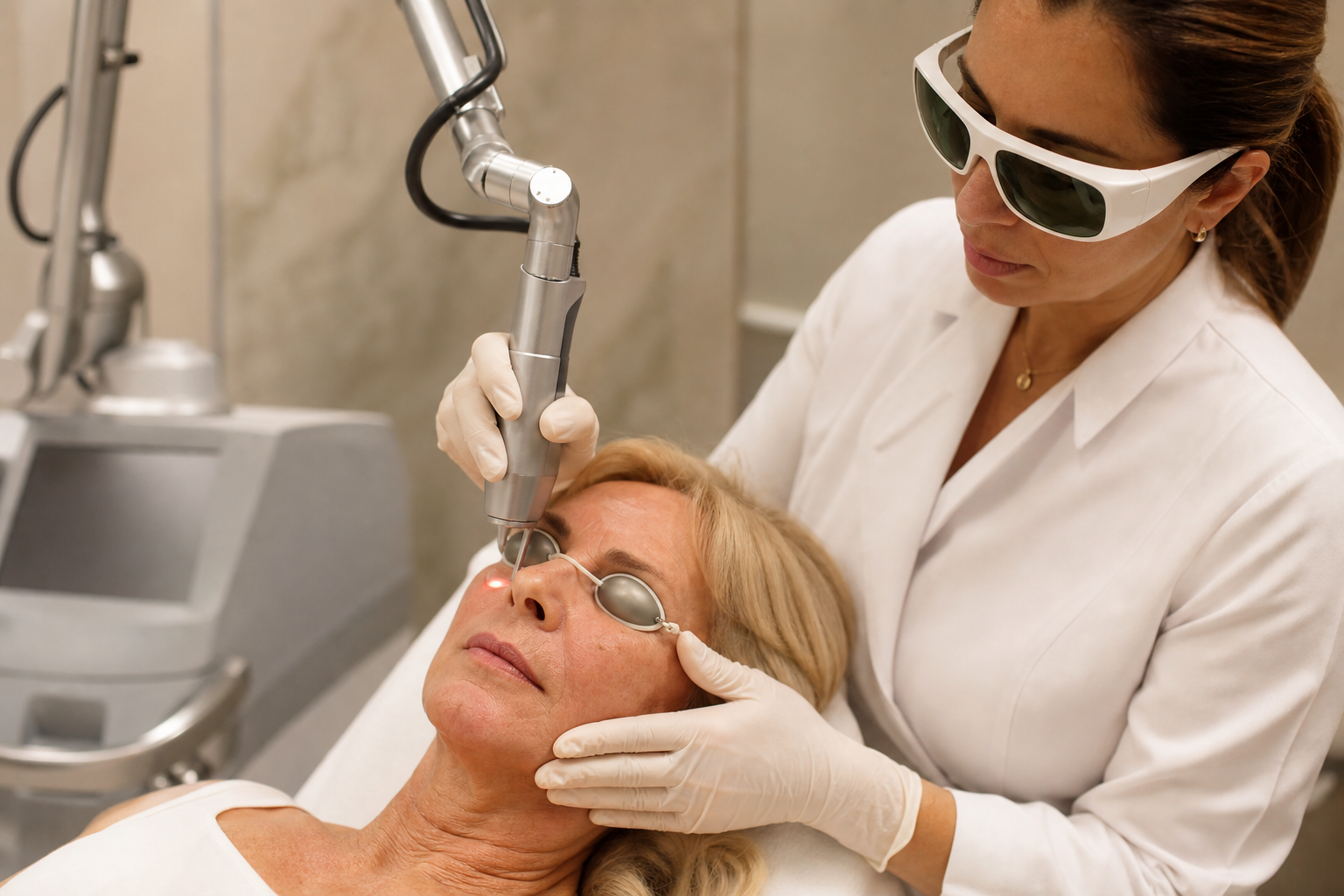
Sun spots and solar lentigines are common skin concerns that arise predominantly due to prolonged exposure to ultraviolet (UV) radiation from the sun. These pigmented lesions often present as well-defined, flat, brown or tan patches on sun-exposed areas such as the face, hands, and décolletage. While not harmful in a medical sense, they can be a source of cosmetic dissatisfaction, impacting one’s perception of skin health and youthfulness. The advent of laser technology has introduced an effective method for the removal of these sun-induced spots, offering patients a non-invasive way to restore a more even and radiant complexion.
This article is intended for individuals grappling with sun spots or solar lentigines who seek to understand their condition better and explore the treatment options available, particularly the role of lasers in targeted pigmentation removal. It is equally relevant to dermatologists, skincare professionals, and aesthetic practitioners aiming to provide insightful, evidence-based guidance to patients. Understanding what these spots are, how lasers function to remove them, and what results can realistically be anticipated is crucial for making an informed decision about one’s skin health.
Laser removal is a sophisticated dermatological procedure that uses focused light energy to selectively target melanin-rich cells responsible for hyperpigmentation. Compared to other methods such as Intense Pulsed Light (IPL), laser treatments often provide more precise control, depth of action, and potentially faster results. However, assessing suspicious lesions before engaging in cosmetic interventions ensures that no underlying malignancy is overlooked, preserving patient safety while optimizing aesthetic outcomes.
What Are Sun Spots and Solar Lentigines, and How Do They Develop?
Sun spots, medically termed solar lentigines, are benign skin lesions caused by cumulative ultraviolet light damage. They typically appear as sharply demarcated, flat brown patches and are most prevalent on the face, dorsal hands, and neckline—areas habitually exposed to sunlight. Their formation is linked to an increase in melanin production triggered by UV radiation, where melanocytes—the pigment-producing cells in the skin—respond by synthesizing excess pigment as a protective mechanism.
Aside from UV exposure, several factors contribute to the development of solar lentigines. Aging is a prominent influence, as skin’s ability to regulate pigmentation diminishes over time. Genetic predispositions, lifestyle habits such as outdoor activities without adequate sun protection, and environmental factors cumulatively accelerate photodamage. Unlike freckles, which are more transient and genetically influenced, sun spots are chronic manifestations of photodamage.
While typically harmless, distinguishing benign solar lentigines from malignant pigmented lesions remains essential. Some pigmented spots may resemble early forms of skin cancer, necessitating careful clinical evaluation before any cosmetic removal procedure. This distinction underscores the importance of medical consultation prior to undertaking laser treatments.
Why Is It Essential to Evaluate Suspicious Lesions Before Laser Treatment?
Cosmetic procedures aiming to remove pigmentation must be preceded by thorough dermatological assessment to exclude malignancies such as melanoma or other atypical lesions. Solar lentigines and certain precancerous or cancerous pigmented spots can share similar clinical characteristics, including size, color variability, and border irregularity.
Dermatoscopy—a non-invasive imaging technique—facilitates detailed visualization of skin patterns and structures beyond what the naked eye can discern, aiding the clinician in differentiating benign lentigines from malignant lesions. In cases where uncertainty persists, a biopsy may be performed to obtain histopathological confirmation.
By carefully screening all pigmented lesions before initiating laser treatment, practitioners reduce the risk of inadvertently treating or masking skin cancers, improving patient safety and ensuring that any serious conditions are managed appropriately.
Which Laser Technologies Are Most Effective for Removing Sun Spots?
Several laser modalities have been developed specifically for pigmentation management, each with unique wavelengths and properties designed to target melanin absorption efficiently. Among the most commonly employed for solar lentigines are Q-switched lasers, Alexandrite lasers, and diode lasers.
Q-switched lasers emit high-intensity pulses in nanosecond durations that break down pigmented particles into smaller fragments, which the body’s immune system subsequently clears away. They are highly precise and effective in treating discrete pigmented spots with minimal damage to surrounding tissues.
Alexandrite lasers operate at a wavelength that is well absorbed by melanin, making them suitable for lighter skin types with solar lentigines. Their spot size and pulse characteristics allow for uniform coverage of moderately sized lesions, often requiring fewer sessions.
Diodine lasers provide deeper penetration and are useful for treating both epidermal and some dermal pigmentation but require careful parameter selection to avoid adverse effects in darker skin types. The versatility of these lasers has made them a mainstay in pigmentation protocols.
In contrast to lasers, Intense Pulsed Light (IPL) is a broader spectrum light therapy that can address a range of skin issues, including pigmentation and vascular irregularities. IPL may be advantageous for diffuse or mild pigmentation but generally lacks the specificity and depth penetration offered by laser treatments for stubborn lentigines.
The optimal choice between lasers and IPL depends on various factors like skin type, pigment depth, lesion size, and patient expectations. Hence, consultation with an experienced clinician is imperative to tailor the therapy accordingly.
How Does Laser Removal Adapt to Different Body Areas?
Sun spots commonly develop in areas chronically exposed to the sun, notably the face, hands, and décolletage. These regions differ in skin thickness, sensitivity, and vascularization, influencing how laser treatment is administered.
On the face, skin is thinner and more delicate, necessitating lower energy settings and precise targeting to minimize side effects like redness, swelling, or post-inflammatory hyperpigmentation. Laser removal at this location often leads to a more uniform skin tone and youthful appearance with relatively short downtime.
The hands are frequently overlooked in photoprotection yet commonly bear prominent solar lentigines. Due to their thinner epidermis and less subcutaneous fat, treating the hands requires balancing effective pigment clearance with preserving skin integrity. Multiple sessions might be needed to address widespread or dense pigmentation.
The décolletage, including the chest area, also poses challenges due to increased skin laxity and sun-induced damage. Lasers can improve pigmentation but may be combined with other rejuvenation therapies to enhance skin texture while ensuring safety.
How Many Treatments Are Typically Needed to Achieve Desired Results?
The number of laser sessions required for effective removal of sun spots varies based on lesion characteristics, individual skin response, and the type of laser used. Generally, mild to moderate solar lentigines may improve significantly after two to four treatments spaced several weeks apart to permit skin recovery and assess gradual pigment fading.
Heavier or more widespread pigmentation might necessitate additional sessions. It is paramount that treatment plans are individualized and include realistic expectations about the gradual nature of pigment clearance without immediate perfection.
Moreover, ongoing sun protection is essential post-treatment to prevent recurrence or emergence of new spots. Without adequate photoprotection, the benefits of laser removal may diminish over time, emphasizing the value of a comprehensive skincare approach.
What Does the Recovery Process Entail After Laser Removal of Sun Spots?
Laser treatments for sun spots generally involve minimal downtime but do require specific post-care measures. Immediately following the procedure, treated areas may display redness, mild swelling, or a slight crusting effect. These manifestations typically resolve within a few days to a week, though variations occur based on individual skin sensitivities.
Patients are advised to avoid direct sun exposure and apply broad-spectrum sunscreen consistently. Moisturization and gentle skincare without irritants help accelerate skin healing. It is also essential to avoid picking or scratching treated lesions to reduce the risk of scarring or post-inflammatory pigmentation changes.
Follow-up visits enable the clinician to monitor outcomes, manage any side effects, and schedule additional treatments if necessary. With proper care, most individuals experience a safe recovery alongside noticeable improvements in skin pigmentation.
How Does Laser Treatment Fit Into Managing Photoaging and Sun-Related Skin Damage?
Beyond pigment removal, laser therapy can complement broader anti-photoaging strategies by stimulating collagen production and improving skin texture. Many laser platforms used for sun spots incorporate fractional or non-ablative modes that engage deeper dermal remodeling processes, enhancing elasticity and reducing fine lines.
This multifaceted approach addresses both the pigmentary and structural components of photoaged skin, contributing to a more youthful, healthy appearance. Patients often report improved skin tone uniformity alongside a refreshed complexion, underscoring the therapeutic value of lasers.
Nevertheless, lasers are one component of a comprehensive sun damage management plan that should also include daily photoprotection, topical antioxidants, and regular dermatologic assessments to maintain skin health over time.
What Are Realistic Expectations Regarding Results and Potential Recurrence?
While laser removal of sun spots offers significant aesthetic enhancements, it is important for patients to set realistic goals. Complete clearance may not always be achievable, especially for extensive or deeply pigmented lesions. Multiple treatments and ongoing maintenance might be necessary to sustain results.
Additionally, although laser therapy effectively diminishes existing spots, it does not confer immunity against future photodamage. Without diligent sun protection and lifestyle modifications, new sun spots may develop or previous spots may recur.
Therefore, laser treatment is best viewed as part of an ongoing skin-care regimen rather than a one-time cure. Clear communication between patient and practitioner regarding expected outcomes, side effects, and the role of preventive measures enhances satisfaction and long-term benefits.
Frequently Asked Questions About Laser Removal of Sun Spots
Is laser removal painful? Most patients experience mild discomfort during laser procedures. Topical anesthetics or cooling devices are often employed to enhance comfort.
Can all skin types safely undergo laser pigmentation removal? Yes, but certain lasers are better suited for darker skin tones to minimize risks such as post-inflammatory hyperpigmentation. A thorough skin assessment guides laser selection.
How soon can I resume normal activities? Recovery times vary, but most individuals can return to routine tasks shortly after treatment with appropriate skincare.
Are there alternatives to laser for sun spot removal? Chemical peels, cryotherapy, and topical agents can also reduce pigmentation but may be less precise or effective compared to lasers.