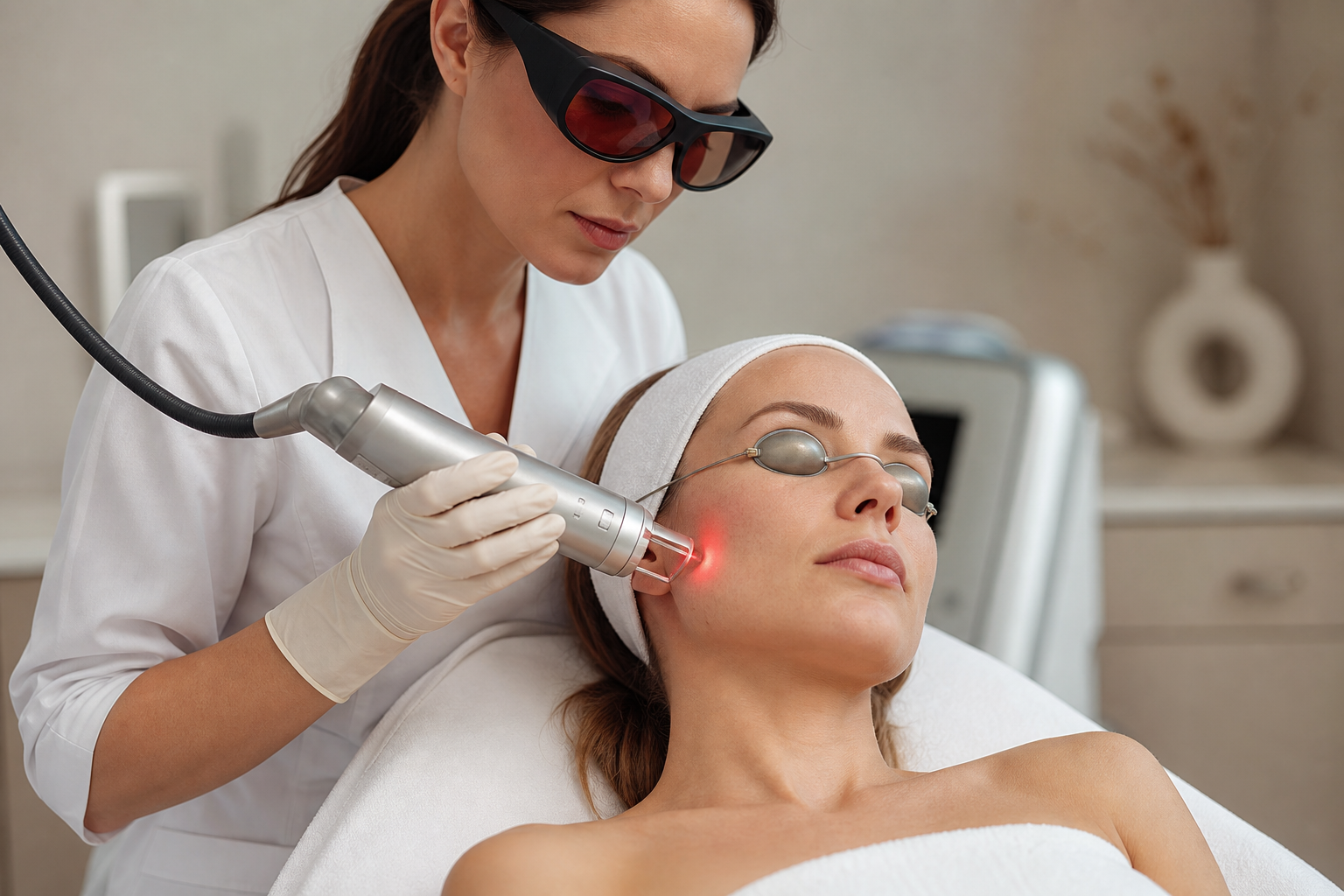
The ruby laser, recognized for its distinctive deep red wavelength of approximately 694.3 nanometers, stands as one of the pioneering laser technologies in the field of dermatology and medical aesthetics. Developed in the 1960s, it has retained its relevance over decades primarily because of its precise interaction with melanin, the skin's natural pigment. Understanding where this laser fits within the broad spectrum of laser devices used today is crucial for practitioners, patients seeking treatment for pigmentation issues, and anyone keen on the nuances of laser-based therapies. This article delves into the contemporary applications of the ruby laser, exploring its underlying mechanism, clinical indications, limitations, and the importance of skin-type considerations alongside potential risks involved.
Intended for dermatologists, aesthetic professionals, and informed patients considering laser pigmentation treatments, this in-depth examination aims to provide clarity on what to expect when engaging with ruby laser therapy. Given the proliferation of advanced laser technologies offering targeted solutions for various skin concerns, the ruby laser’s unique qualities warrant a thoughtful review. Rather than presenting marketing claims, the focus remains on evidence-based explanations and practical insights that emphasize the role of professional diagnosis and individualized parameter selection in ensuring safe and effective outcomes.
Laser technology has revolutionized dermatological treatments, especially in addressing pigmentary anomalies ranging from sun-induced age spots to tattoo removal. However, the choice of laser device depends heavily on factors including skin phototype, type and depth of pigmentation, and treatment goals. Against this complex backdrop, understanding the ruby laser’s niche is essential for informed decision-making.
What Distinguishes the Ruby Laser from Other Laser Systems?
The ruby laser is categorized as a solid-state laser, utilizing a synthetic ruby crystal to emit a red beam of light at a wavelength specifically absorbed by melanin. This contrasts with other laser types such as Nd:YAG (neodymium-doped yttrium aluminum garnet), which operates at longer wavelengths (1064 and 532 nm), or Alexandrite lasers emitting at 755 nm. The 694.3 nm wavelength of the ruby laser offers selective photothermolysis capabilities, whereby pigmentation can be targeted with minimal collateral damage to surrounding tissue.
The precise absorption peaks of melanin at this wavelength allow the ruby laser to be especially effective in treating dark pigment lesions and black or dark blue ink in tattoos. Yet, its penetration depth is somewhat limited compared to longer-wavelength lasers, restricting its use to more superficial pigmentary concerns. Additionally, ruby lasers tend to operate with longer pulse durations relative to newer picosecond laser technologies, influencing the texture of the treatment effect and the side-effect profile.
While its historical significance is unmatched, the ruby laser is now one of many options in a dermatologist’s arsenal. The choice to employ it depends on several patient factors and pigmentation characteristics.
In Which Clinical Situations Is the Ruby Laser Most Commonly Applied?
In modern clinical practice, the ruby laser’s primary indications revolve around the removal of unwanted pigmented lesions and the eradication of certain tattoo colors. Specifically, this laser is utilized for:
1. Treating Hyperpigmentation: This includes solar lentigines, commonly known as sun spots or age spots, and other epidermal hypermelanosis arising due to chronic ultraviolet exposure or post-inflammatory pigmentation. Patients seeking to restore an even skin tone often consider ruby laser treatment after topical therapies have proven insufficient.
2. Tattoo Removal: The ruby laser is particularly adept at eliminating black and dark blue inks. These pigments absorb the red light effectively, fragmenting the ink particles for subsequent removal by the body’s immune system. However, it is less suitable for colors that do not absorb red wavelengths efficiently.
3. Other Pigmentary Disorders: Though less common, ruby laser therapy can be indicated for certain benign pigmented lesions that are refractory to other interventions.
Given its specificity, the ruby laser is not typically employed for large-area skin rejuvenation or vascular lesions, where alternative wavelengths and laser types may yield superior results.
How Does Skin Phototype Influence the Suitability of Ruby Laser Treatments?
One of the fundamental aspects of laser pigment treatment is consideration of the patient’s skin phototype, typically classified by the Fitzpatrick scale from I (very fair) to VI (very dark). Melanin content varies significantly across these types, influencing both efficacy and risk.
Ruby laser therapy is generally safer and more predictable in patients with lighter skin phototypes (I to III). In darker skin tones (IV to VI), the increased melanin absorption may cause unintended thermal injury to non-targeted cells, raising risks of hypopigmentation, hyperpigmentation, or scarring. These adverse effects can diminish aesthetic outcomes and complicate recovery.
Consequently, specialists must evaluate the skin type thoroughly during consultation. Alternative lasers such as the Nd:YAG operating at 1064 nm are often preferred for darker skin due to deeper penetration and reduced melanin absorption, thereby lowering the risk profile.
What Are the Typical Parameters and Techniques Used in Ruby Laser Treatments?
Successful laser treatment hinges on the precise calibration of multiple parameters tailored to the individual patient. For the ruby laser, critical factors include pulse energy (measured in joules), pulse duration, repetition rate, and spot size.
Pulse duration is instrumental in controlling the thermal effect on target pigment—longer pulses may result in more diffuse heating, while short pulses focus energy more intensely. Spot size affects both the area treated per pulse and the depth of penetration; larger spots allow more uniform energy distribution but require careful adjustment to avoid overtreatment.
Experienced clinicians begin with conservative settings, progressively adjusting based on immediate skin response, pigment density, and treatment area. Cooling techniques—either dynamic skin cooling or chilled contact devices—are often integrated to enhance patient comfort and protect epidermal layers.
What Limitations and Risks Are Associated with Ruby Laser Use?
Despite its effectiveness, the ruby laser carries several limitations:
1. Limited Depth of Penetration: Its wavelength restricts it primarily to epidermal and superficial dermal pigment, rendering it less effective for deeper or heavily embedded pigmentations.
2. Color Selectivity: While excellent for black and dark blue tattoos, it inadequately treats red, green, and yellow pigments found in multicolored tattoos.
3. Skin Type Constraints: As discussed, higher Fitzpatrick phototypes have increased susceptibility to pigment changes and adverse effects.
4. Potential Side Effects: Common transient effects include erythema, edema, crusting, or mild discomfort. Rarely, scarring and pigmentary alterations may occur, underscoring the necessity of professional evaluation and technique.
These factors mean ruby laser application demands stringent patient selection and protocol adherence to minimize complications.
When Should One Prefer the Ruby Laser Over Other Advanced Lasers?
Choosing the ruby laser involves balancing its advantages against more modern options. While picosecond lasers have recently gained popularity due to their ultra-short pulse durations allowing more precise pigment fragmentation with reduced thermal damage, ruby lasers still hold value for particular tattoo inks and pigment types.
Compared to other systems such as Alexandrite or Q-switched Nd:YAG lasers, ruby lasers excel in treating light-skinned patients with superficial, dark-colored pigmentations requiring precise targeting. They also remain pertinent in settings where cost or device availability limits access to newer technologies.
Ultimately, treatment selection should be individualized, incorporating evidence on laser-tissue interaction, expected clinical results, and patient-specific factors such as tolerance and downtime considerations.
What Are the Typical Patient Experiences During and After Ruby Laser Treatment?
Patients undergoing ruby laser therapy can expect a procedure duration ranging from a few minutes for small areas to up to half an hour for more extensive sites. The sensation during treatment often resembles a snapping or mild stinging feeling, which is generally well tolerated. Pre-treatment application of topical anesthetics or cooling reduces discomfort.
Post-treatment, transient redness and swelling are common, followed by crusting or superficial peeling as the skin heals. Proper aftercare includes diligent sun protection and avoiding irritants to prevent pigmentation irregularities. Several sessions spaced several weeks apart are usually necessary to achieve optimal pigment clearance.
Close follow-up with the treating clinician ensures monitoring for adverse effects and adjustment of treatment parameters if needed.
How Do Professionals Determine the Suitability of Ruby Laser for Individual Patients?
The pivotal step in ensuring successful ruby laser therapy involves comprehensive skin assessment and medical history review by a qualified professional. This evaluation encompasses:
- Skin phototype classification;
- Type, color, and depth of pigmentation;
- Prior treatments and skin response;
- Presence of active skin conditions;
- Patient expectations and tolerance for possible side effects.
This comprehensive diagnosis informs the choice of suitable laser devices and specific settings, optimizing the balance between efficacy and safety.
What Are the Future Prospects and Continued Relevance of Ruby Laser Technology?
Despite the advent of newer laser modalities, the ruby laser maintains its place in practice due to its unparalleled precision in targeting certain pigments. Ongoing developments in laser engineering and integration of advanced cooling techniques aim to enhance its safety profile further and expand applications.
Moreover, continuous comparative studies between ruby and alternative lasers aid in refining patient selection criteria, enabling dermatologists to harness each technology’s strengths effectively.
In settings where access to cutting-edge picosecond lasers or multi-wavelength systems is limited, the ruby laser remains a reliable and well-studied option for pigmentary treatments and tattoo removal.


