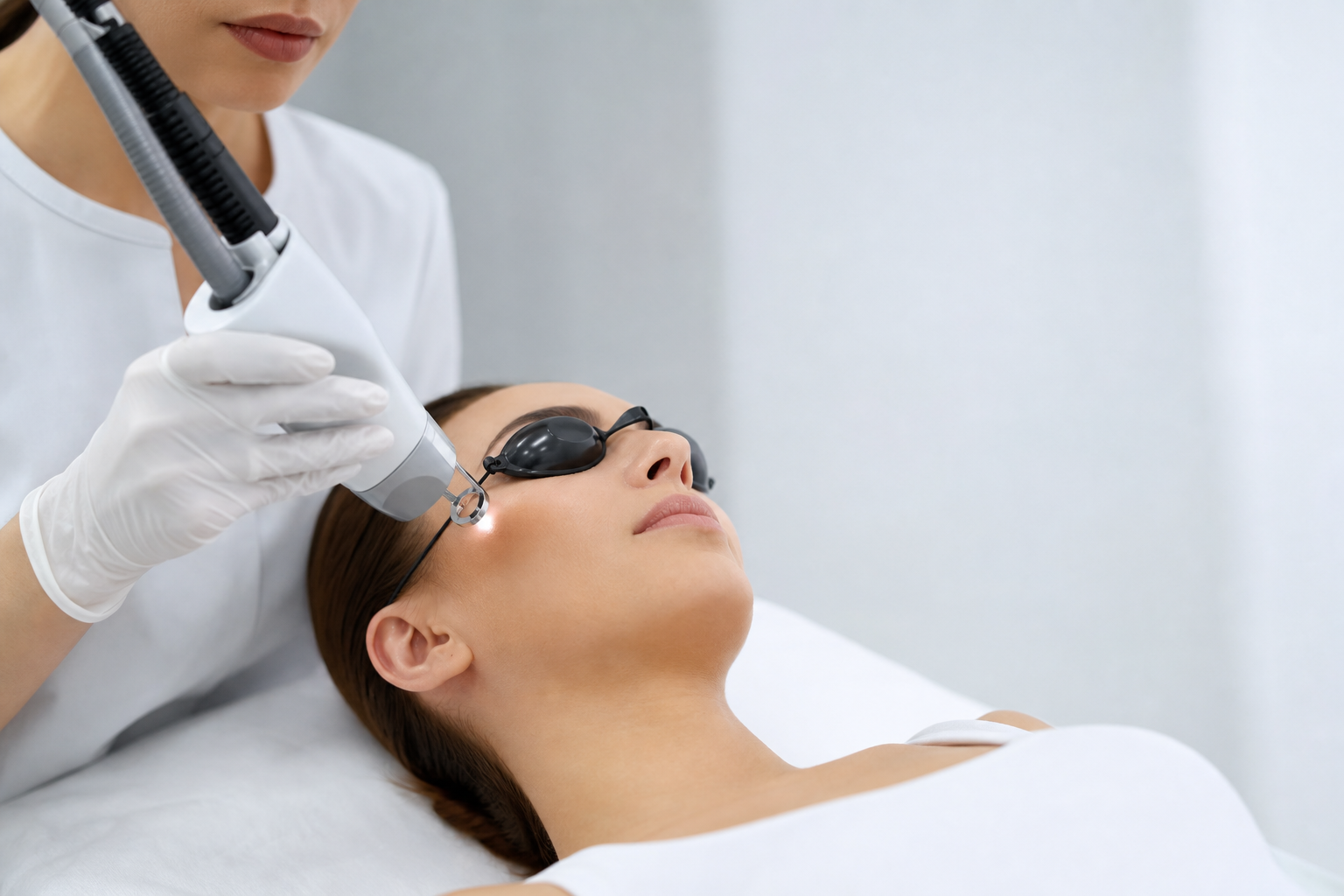
The interaction between laser light and skin pigments is a fundamental concept in dermatology and aesthetic medicine, crucial for the design and application of effective laser treatments. Understanding how wavelength—the length of the laser light waves—determines which pigment a laser targets enables clinicians to selectively focus the laser’s energy on specific chromophores in the skin, such as melanin or hemoglobin. This precision underpins the ability to treat various pigmentary disorders and vascular lesions successfully, while minimizing harm to adjacent tissues.
This article is tailored for medical professionals, aesthetic practitioners, and individuals interested in the science behind laser pigmentation treatments. It aims to clarify the mechanisms by which wavelength influences pigment targeting, delineate common indications and limitations, and emphasize the importance of careful device selection based on skin type and lesion characteristics. By exploring these facets, readers will appreciate how informed choices contribute to improved outcomes and patient safety in laser procedures.
In the sections that follow, we will dissect the principles of selective photothermolysis, identify the key pigments targeted by lasers, discuss how various wavelengths interact with these pigments, and explain how qualified professionals determine optimal treatment parameters. This knowledge is essential for unlocking the full potential of laser technology in pigment correction.
What Is the Relationship Between Laser Wavelength and Pigment Targeting?
Laser technology operates by delivering light energy at specific wavelengths which are preferentially absorbed by distinct pigments or chromophores within the skin. The wavelength—measured in nanometers (nm)—dictates how deeply the laser penetrates and which molecular structures absorb the energy effectively.
The principle of selective photothermolysis, articulated by Dr. Rox Anderson and Dr. John Parrish in the 1980s, describes how lasers can selectively destroy a targeted pigment without damaging surrounding tissue. This occurs because each pigment has a characteristic absorption spectrum, with peaks corresponding to the wavelengths at which light energy is most efficiently absorbed.
For example, melanin, the pigment responsible for skin color and focal pigmentation such as freckles and lentigines, strongly absorbs wavelengths between about 500 and 800 nm. Hemoglobin, the oxygen-carrying pigment in blood vessels, absorbs light most effectively in the 400 to 600 nm range. Therefore, lasers emitting wavelengths tuned to these particular intervals can selectively target melanin-rich or hemoglobin-rich lesions, respectively.
Which Pigments Are Commonly Targeted by Laser Treatments?
In dermatologic laser therapy, the primary targets are melanin and hemoglobin, though other pigments may be relevant in specific scenarios.
Melanin: This brown pigment governs skin, hair, and eye color. It accumulates in areas of pigmentation such as solar lentigines (age spots), melasma, post-inflammatory hyperpigmentation, and some congenital lesions. Lasers targeting melanin aim to fragment the pigment granules, which are subsequently cleared by the body’s immune system. Effective absorption of laser energy by melanin ensures precision in treating hyperpigmented spots without affecting non-pigmented skin.
Hemoglobin: Present within red blood cells, hemoglobin enables the targeting of vascular lesions including broken capillaries, rosacea-associated redness, and hemangiomas. Lasers tuned to wavelengths absorbed by hemoglobin coagulate the blood vessels leading to their resorption and reduction in visible redness.
Other Pigments: Less commonly, lasers may aim at exogenous pigments such as tattoo ink or dermal pigment deposits. These often require specialized lasers, for instance Q-switched or picosecond lasers, with particular wavelengths optimized according to the color and chemical composition of the pigment.
How Do Specialists Choose the Optimal Wavelength for Pigment Treatment?
Determining the suitable laser wavelength involves an intricate assessment of several factors including the type and depth of pigmentation, the patient’s skin phototype, and the intended treatment outcome. Experienced clinicians incorporate diagnostic evaluations and clinical judgment to select the most appropriate laser system and associated parameters.
For superficial pigmentation such as solar lentigines, lasers like the Alexandrite laser, operating at approximately 755 nm, are favored due to their high affinity for melanin and significant penetration depth that still safely targets epidermal pigment. This wavelength balances efficacy with safety for many lighter to medium skin types.
In contrast, for deeper or more extensive pigmentation challenges such as melasma, the Nd:YAG laser at 1064 nm is often preferred. Despite melanin’s lower absorption at this wavelength, the longer wavelength penetrates deeper into the dermis and poses a lesser risk of epidermal injury and post-inflammatory hyperpigmentation, especially relevant for darker skin types.
Skin type, classified according to the Fitzpatrick scale, greatly influences wavelength selection. Darker skin types (IV to VI) possess higher epidermal melanin, increasing the risk of adverse effects if shorter wavelengths are used indiscriminately. Therefore, longer wavelengths that bypass superficial melanin layers reduce complications.
What Are the Advantages and Limitations of Using Specific Wavelengths in Pigment Lasers?
The precision afforded by wavelength selection brings multiple benefits, but it is not without complexity and potential downsides.
Advantages: Lasers tuned to specific wavelengths enable targeted destruction of undesired pigment with minimal collateral damage, leading to improved therapeutic outcomes and patient comfort. This specificity permits tailored treatments adapted to individual lesions and skin characteristics, enhancing safety and effectiveness.
Limitations: Not all pigmentary conditions can be addressed by a single wavelength or laser type. Some lesions may require combination therapies or sequential application of different wavelengths to achieve complete clearance. Furthermore, treatment of darker skin requires caution and expertise to avoid post-treatment complications such as hypopigmentation or scarring. The depth and composition of pigment also challenge laser selection – deeper or dermal pigmentations may respond poorly to wavelengths that only penetrate superficially.
Why Is Professional Expertise Critical in Selecting Lasers and Treatment Parameters?
The process of laser and parameter selection is nuanced, demanding a thorough clinical evaluation and deep understanding of laser-tissue interactions. Professionals such as dermatologists or licensed aesthetic practitioners utilize diagnostic tools, clinical photographs, and sometimes imaging technologies to characterize the pigment and skin type precisely.
Choice of laser wavelength, fluence (energy density), pulse duration, and treatment protocols are tailored individually to optimize efficacy and minimize risks. Real-time monitoring of skin responses during treatment further refines parameter adjustments, allowing for adaptive management that enhances safety and improves final results.
Improper choice of wavelength or parameters not only reduces the likelihood of successful pigment removal but also increases the chance of side effects such as burns, pigmentary alterations, or scarring. Thus, entrusting laser treatments to qualified experts is paramount.
How Do Different Wavelengths Affect Treatment Outcomes and Patient Experience?
The choice of wavelength influences not only the effectiveness but also the patient’s comfort and the post-treatment recovery process.
Lasers with shorter wavelengths (e.g., 532 nm) tend to be absorbed superficially and may produce more immediate visual improvement in epidermal lesions but might require multiple sessions. They can cause more transient erythema (redness), swelling, and discomfort during and after treatment.
Longer wavelengths (e.g., 1064 nm) penetrate deeper and can treat dermal pigmentary disorders. While the effects may take longer to manifest, these lasers often offer a more gradual, safer approach, especially important for pigmented and sensitive skin types with lower incidence of adverse effects.
Typically, mild side effects such as redness and edema persist for hours to a few days post-procedure. These tend to resolve quickly under professional guidance, with appropriate skin care and sun protection.
Frequently Asked Questions Regarding Wavelengths and Laser Pigment Treatments
Can one laser wavelength treat all types of pigmentation?
No. Pigmentation varies in depth, composition, and size. Different wavelengths target different pigments and depths; hence, multiple lasers or wavelength settings may be necessary.
Is it safe for people with darker skin tones to undergo laser treatment with the same wavelengths used for lighter skin?
Careful adjustment and often longer wavelengths that minimize epidermal melanin absorption are required to reduce the risk of complications in darker skin types.
How many treatment sessions are typically needed to see significant pigment improvement?
This depends on pigment type, size, and depth, as well as laser parameters. Multiple sessions spaced weeks apart are commonly necessary.
Does laser treatment for pigmentation cause scarring?
When performed appropriately by skilled professionals, the risk of scarring is very low. Post-treatment care and sun avoidance are critical to prevent complications.


