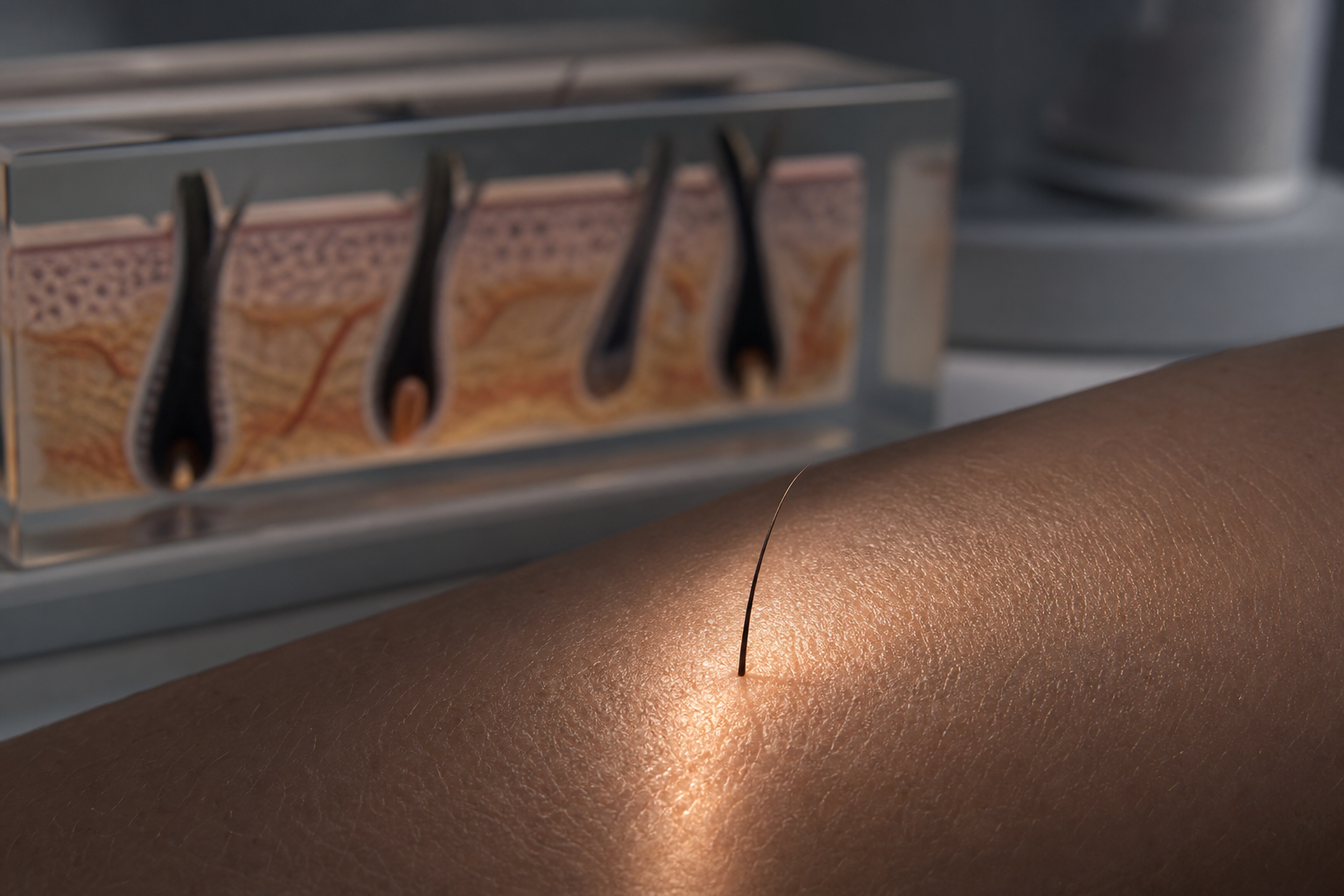
Laser hair removal stands as one of the most sought-after aesthetic treatments worldwide, prized for its ability to yield long-lasting reduction in unwanted hair. Central to its success is the intricate interplay between laser technology and the biological characteristics of hair and skin. One of the most intriguing and clinically significant observations within this field is the particularly effective response of dark hair to laser treatment. This phenomenon is not incidental but rather rooted in the principles of selective photothermolysis and the differential absorption qualities of melanin, the pigment responsible for hair and skin color.
The purpose of this deep-dive editorial is to unravel why dark hair often responds best to laser hair removal, a question of great relevance to individuals considering laser treatments and to professionals within dermatology and aesthetic medicine aiming to optimize therapeutic outcomes safely. Understanding this dynamic allows for better patient counseling, tailored treatment regimens, and the advancement of laser technologies and protocols that maximize efficacy while minimizing risks.
This discussion is tailored for those seeking clarity on the science behind laser hair removal efficacy, especially concerning pigment interactions, and for clinicians who strive to expand their technical knowledge base to enhance patient outcomes across diverse skin and hair types.
The Science of Selective Photothermolysis: Targeting Melanin with Precision
At the heart of laser hair removal lies the principle of selective photothermolysis—a process by which light energy from a laser is used to selectively heat and destroy a target chromophore without damaging surrounding tissues. In the context of hair removal, the chromophore of interest is melanin, the eumelanin pigment concentrated within the hair shaft and bulb. This pigment acts as a natural absorber of specific laser light wavelengths.
The process begins with the emission of a laser beam whose wavelength is carefully chosen to match the absorption spectrum of melanin. When the laser pulse is applied, melanin molecules absorb the light energy and convert it into heat. This localized thermal effect selectively damages the hair follicle keratinocytes and stem cells, impairing the follicle's ability to regenerate hair. Crucially, the laser energy must be delivered in durations shorter than the thermal relaxation time of the targeted structures to prevent heat diffusion to surrounding skin tissues.
Individuals with dark hair have a higher melanin concentration within their hair shafts compared to those with lighter hair colors. This pigment-rich environment enhances the absorption of laser energy, creating a more robust thermal damage to the follicle. Conversely, light-colored or grey hairs contain less melanin, which diminishes the laser’s effectiveness, warranting different treatment approaches or alternative hair removal techniques.
The Role of Melanin Contrast: Why Skin and Hair Tone Matter
Effective laser hair removal is a balancing act between the melanin content in hair and that in the skin—a concept known as contrast. The ideal scenario for laser treatment is a high contrast between the dark hair follicle’s melanin and the lighter surrounding skin, allowing the laser to target the hair robustly without significant absorption by the skin.
When the skin is lighter and the hair is dark, the laser energy is preferentially absorbed by hair follicle melanin, sparing the epidermis and dermis from extensive exposure. This selective uptake reduces the risk of burns, hyperpigmentation, or other adverse effects. The safety window in this context is broad, facilitating the use of optimal laser parameters for effective follicle disruption.
However, individuals with darker skin types present additional challenges because the melanin in their epidermis absorbs some laser energy, narrowing the safety margin. Here, the contrast between hair and skin tones is reduced, increasing the risk for epidermal injury and complications. Such cases demand lasers operating at longer wavelengths, like Nd:YAG lasers, which penetrate deeper with less melanin absorption by the skin, thus preserving safety while maintaining efficacy.
Hair Calibre and Growth Phases: How Thickness and Timing Influence Laser Success
Beyond pigment concentration, the physical structure of hair—especially its thickness or calibre—significantly influences laser response. Coarse, thick hairs have a greater volume of melanin-containing keratin, absorbing more laser energy and responding more readily to treatment. Thin or fine hairs possess less melanin and thus require more nuanced or repeated laser applications for noticeable reduction.
The hair growth cycle comprises three phases: anagen (active growth), catagen (transitional), and telogen (resting). Laser hair removal primarily targets follicles in the anagen phase because these hairs are connected deeply to the follicle structure containing melanin-rich cells. During catagen or telogen phases, hair is not as strongly attached, and laser energy is less effectively transferred to follicular cells, resulting in lower efficacy.
This cycle explains why multiple treatment sessions, spaced at specific intervals, are necessary to catch hairs entering the anagen phase, ensuring comprehensive and lasting reduction. The precise timing and number of treatments depend on individual hair growth rates and the body area treated.
Body Region Variability: Tailoring Laser Approaches to Different Areas
The density, calibre, and growth phases of hair vary across body regions, influencing laser hair removal outcomes. For instance, facial hair tends to be finer and more sensitive, requiring gentler laser parameters, while underarms and legs typically feature coarser and denser hair suited for more robust energy settings.
Additionally, skin thickness and pigmentation may differ between body parts, necessitating bespoke approaches to minimize side effects and optimize results. For example, the bikini area combines sensitive skin with typically darker and coarser hair, prompting careful parameter selection and device choice to balance efficacy with comfort and safety.
Why Dark Hair on Dark Skin Demands Specialized Techniques
Laser hair removal in individuals with both dark hair and dark skin presents a specialized challenge due to the diminished contrast in melanin content between hair and skin. Since melanin in the epidermis readily absorbs laser light, energy directed at the hair follicle risks being partially absorbed by the skin, risking burns, hyperpigmentation, or hypopigmentation.
To address this, lasers with longer wavelengths, such as the Nd:YAG with a wavelength of 1064 nm, are preferred. This wavelength can penetrate deeper into skin layers with reduced melanin absorption, targeting hair follicles more selectively and safely. Additionally, advanced cooling systems are employed concurrently during treatment to protect the skin and minimize thermal injury.
The treatment protocol in such cases involves lower laser fluences and potentially more sessions to ensure gradual and safe follicle destruction while preserving skin integrity. This tailored strategy underscores the necessity of personalized care in laser therapies.
Choosing the Right Laser Device for Dark Hair Types
The market for laser hair removal devices encompasses several technologies differentiated primarily by wavelength, pulse duration, and cooling mechanisms. For dark hair removal, the choice hinges on matching the laser’s characteristics to the patient’s skin type and hair properties.
Diod lasers operating around 800–810 nm offer an excellent balance for light to medium skin tones with dark hair, providing effective melanin absorption and adequate penetration depth. Alexandrite lasers (approximately 755 nm) are highly absorbed by melanin but are mainly indicated for lighter skins due to higher epidermal melanin absorption risks.
Nd:YAG lasers, with their longer 1064 nm wavelength, offer a safer profile for darker skin types and are effective against coarse, dark hair. Their reduced melanin absorption by epidermal layers decreases complications, making them a staple in diverse skin pigmentations. The presence of integrated cooling systems and customizable pulse durations enhances treatment comfort and safety.
Managing Expectations: What Patients Should Know About Dark Hair Laser Treatments
Despite the favorable response dark hair demonstrates to laser removal, it is essential for patients to maintain realistic expectations. Laser hair removal is primarily a hair reduction technique rather than an absolute permanent removal. Factors such as hormonal influences, individual hair regrowth patterns, and treatment adherence impact results.
Typically, a series of 6 to 8 treatments, spaced 4 to 8 weeks apart, are recommended to target all hair follicles in their anagen phases effectively. Patients may experience gradual reduction in hair density and thickness, with some regrowth possible, often finer and lighter in appearance.
Adverse effects, although infrequent with proper technique and device selection, can include transient redness, swelling, or pigment changes—factors healthcare providers should discuss thoroughly. Additionally, darker-skinned patients require a tailored approach to mitigate risks, reinforcing the importance of treatment at reputable clinics with experienced practitioners.
Frequently Asked Questions About Laser Hair Removal for Dark Hair
Q: Can dark hair be completely removed with laser hair removal?
A: While laser hair removal is highly effective in reducing dark hair density and thickness, complete and permanent removal cannot be guaranteed. Multiple sessions are necessary, and individual responses vary.
Q: How does laser treatment differ for dark hair on dark skin versus light skin?
A: Dark hair on dark skin requires lasers with longer wavelengths (e.g., Nd:YAG) and adjusted treatment parameters to ensure selective follicle targeting without damaging the melanin-rich epidermis.
Q: What is the ideal contrast between hair and skin for laser hair removal?
A: The greater the contrast between dark hair and lighter skin, the more efficient and safe the laser treatment tends to be due to focused absorption of laser energy by hair melanin.
Q: How important is hair thickness in laser hair removal efficacy?
A: Hair thickness influences melanin volume and absorption capacity; thicker, coarser hair typically responds better, while fine or light-colored hair presents challenges.
For more comprehensive information on Laser Hair Removal and Hair Type, including insights on lighter or less responsive hair colors, and Coarse Hair and Laser Hair Removal, these resources offer detailed guidance tailored to specific hair characteristics.


