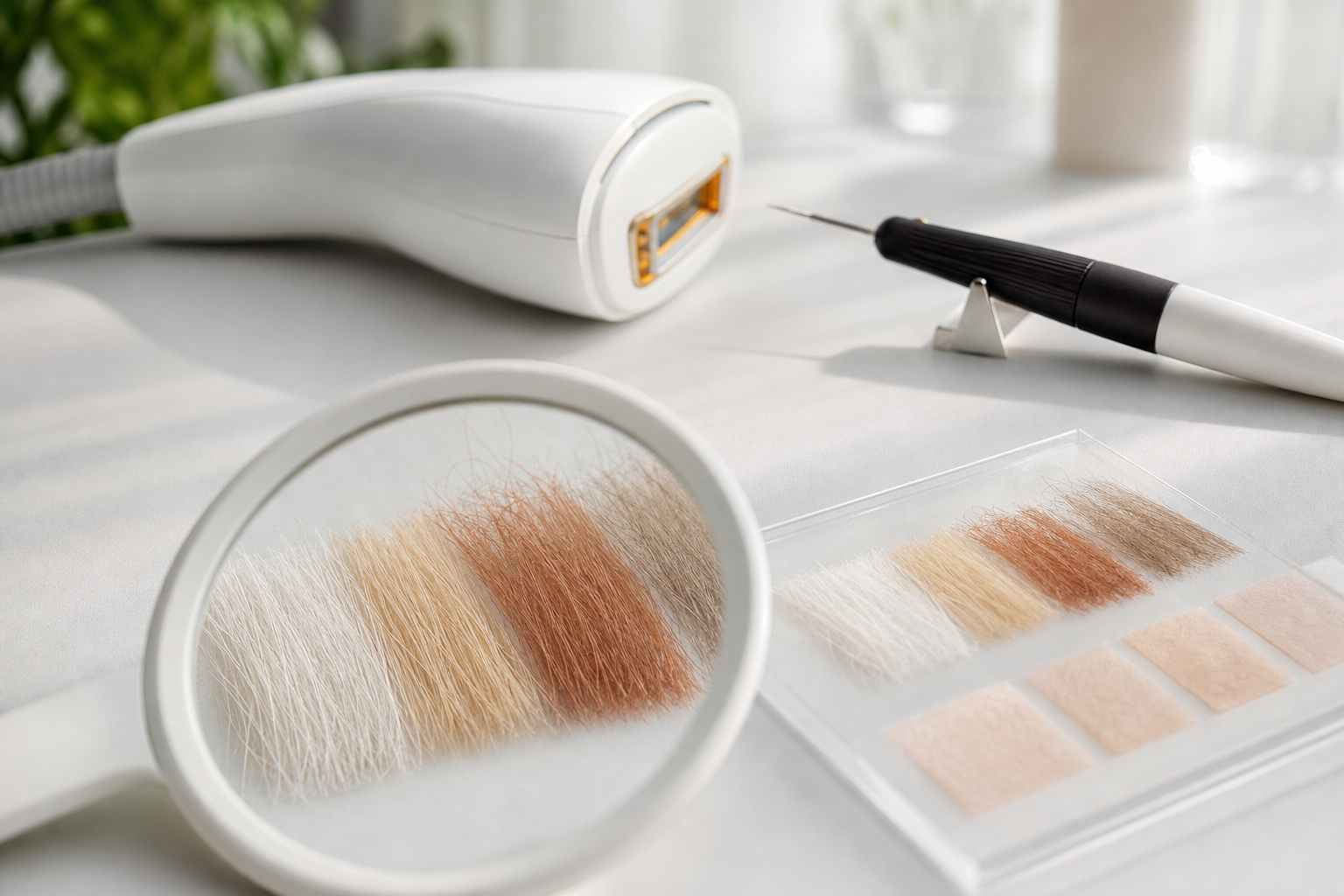
Laser hair removal has become a cornerstone in modern aesthetic medicine due to its effectiveness at long-term hair reduction. By harnessing concentrated light energy to target hair follicles, laser treatments offer a convenient pathway to smoother skin with fewer ingrown hairs and less frequent maintenance compared to traditional hair removal methods. However, not all hair types respond equally to laser hair removal, and understanding these variations is crucial for anyone considering this procedure. Whether you're a potential patient seeking realistic expectations or a professional in dermatology or cosmetology striving to tailor treatments effectively, exploring the nuances in hair types relative to laser responsiveness is essential.
This article delves into which specific hair types standard laser hair removal struggles to treat reliably. It clarifies the biological and technological factors limiting laser efficacy, differentiates temporary poor responses from intrinsic unsuitability, addresses common misconceptions, and highlights testing protocols and alternatives such as electrolysis. The goal is to equip readers with informed insight, enabling better decision-making and more personalized care in the pursuit of permanent hair reduction.
By understanding the interaction between hair pigmentation, follicle structure, and laser technology, as well as acknowledging individual variability, readers will gain a comprehensive perspective on why certain hairs—such as white, gray, very light blonde, many red, and fine vellus hairs—pose challenges for laser removal and how these hurdles can be addressed.
How Does Laser Hair Removal Work and Why Does Hair Type Matter?
Laser hair removal is fundamentally based on the principle of selective photothermolysis, a process whereby the laser selectively targets melanin, the pigment located within hair shafts and follicles. The laser emits a specific wavelength absorbed primarily by melanin, converting light energy into heat, which then damages the hair follicle and impedes future hair growth.
Because melanin in hair follicles is the laser's target, the amount and type of pigment significantly influence treatment effectiveness. Darker hairs, rich in eumelanin, provide a stronger contrast against the skin, allowing the laser energy to home in on follicles more efficiently. Conversely, hair with little or no pigment offers fewer targets for the laser, decreasing the likelihood of follicular damage and hair removal success.
This pigment-dependent mechanism explains why laser hair removal is often less effective or ineffective on white, gray, very light blonde, and some red hair types, as well as extremely fine or vellus hairs. It also underscores why the contrast between hair and skin color influences treatment parameters and expected results.
Which Specific Hair Types Commonly Do Not Respond to Standard Laser Hair Removal?
White Hair: White hairs are virtually devoid of melanin, making them invisible to the laser's targeting mechanism. Their lack of pigment means there’s no chromophore for the laser to absorb energy from, leaving the follicle untreated and rendering standard laser techniques ineffective.
Gray Hair: Gray hairs are transitional; they gradually lose pigment as melanin production declines with age. Depending on the stage, some gray hairs may retain enough pigment to respond weakly to laser treatment, but many become too faint and eventually resist laser effects completely. Early-stage gray hairs might exhibit limited response, but later stages typically require alternative approaches.
Very Light Blonde Hair: Very light blonde hairs contain minimal melanin, often close to skin tone, reducing the contrast necessary for effective laser targeting. This similarity in coloration decreases energy absorption, making it challenging for standard lasers to weaken follicles.
Red Hair: Red hair contains pheomelanin rather than eumelanin, a pigment type that has a different absorption profile and generally responds less efficiently to common laser hair removal wavelengths. While some lasers can be tuned for red hair, many standard devices demonstrate limited effect, necessitating specialized protocols or technology.
Very Fine or Vellus Hair: Vellus hairs are fine, thin, and light-colored hairs that cover much of the body. Their small diameter and low pigment concentration mean they absorb less laser energy. This often results in suboptimal follicular damage, making laser hair removal ineffective or only modestly beneficial for reducing these fine hairs.
What Is the Difference Between Permanent Unsuitability and Temporary Treatment Resistance?
It is essential to distinguish between hair that is permanently unresponsive to laser hair removal and hair that may show a transient poor response due to growth cycle phases or treatment parameters. Lasers are most effective during the anagen, or growth, phase of hair follicles when melanin concentration and follicular activity is highest.
Hairs in the telogen (resting) or catagen (transitional) phases have reduced or absent pigment activity in follicles, diminishing laser absorption and immediate treatment impact. Consequently, multiple sessions spaced over months are necessary to capture follicles as they enter anagen, incrementally reducing hair density.
On the other hand, an inadequate treatment protocol—such as suboptimal laser wavelength, insufficient energy settings, inappropriate pulse duration, or improper technique—can result in insufficient follicle damage, mimicking non-responsiveness. Correction of these technical factors often improves outcomes, emphasizing the importance of individualized treatment plans.
Thus, an initial lack of response does not always indicate a permanent mismatch; repeated, well-calibrated treatments can maximize efficacy where hair pigmentation and follicle activity allow.
Why Are Some Claims About Laser Hair Removal Misleading?
The market for aesthetic procedures is susceptible to exaggerated and oversimplified claims, with some promotions suggesting that laser hair removal is universally effective across all hair types and skin tones. Such assertions overlook the fundamental biological constraints related to pigment presence and follicle physiology.
Characteristic myths include:
"Laser can permanently remove white or gray hairs." As established, the absence of melanin in these hairs means conventional lasers cannot reliably target them.
"Laser eliminates fine vellus hairs completely." Given their low pigment and fine structure, vellus hairs often persist despite laser treatment, and their removal may be incomplete or require alternative modalities.
"Few sessions are sufficient for lifetime hair removal." The hair growth cycle demands multiple sessions, sometimes eight to twelve or more, for significant lasting reduction, especially considering individual variation.
Understanding such nuances protects consumers and patients from unrealistic expectations and ensures they pursue treatments aligned with their unique hair characteristics and personal goals.
When and How Should Laser Hair Removal Be Tested for Different Hair Types?
Given the variability in hair response, a patch test or trial session is often advisable before starting comprehensive laser hair removal. This approach assesses skin sensitivity, potential adverse reactions, and preliminary efficacy on specific hair types and skin tones.
This testing generally involves applying the chosen laser settings to a small, inconspicuous area. The practitioner monitors for expected hair reduction, skin reaction, and patient comfort over the ensuing weeks. Adjustments to laser parameters, such as wavelength selection, fluence (energy level), pulse duration, and spot size, can be made based on test results.
Particularly for challenging hair types like red or very light blonde hairs, or in patients with darker skin where pigment contrast is reduced, comprehensive testing helps determine whether laser hair removal is advisable or if alternative methods should be recommended.
What Are Effective Alternatives to Laser Hair Removal for Intractable Hair Types?
When lasers cannot reliably remove certain hair types, such as white, gray, red, and fine vellus hairs, alternative approaches become critical for achieving permanent hair reduction.
Electrolysis is the most widely recognized alternative. This technique inserts a tiny probe into individual hair follicles and uses electric current to destroy follicular cells responsible for hair growth. Unlike laser hair removal, electrolysis does not rely on melanin and can effectively treat all hair colors and types, including white and gray hairs.
Electrolysis is a meticulous, follicle-by-follicle procedure, often requiring more time and multiple sessions compared to laser hair removal. However, it remains the only method recognized by the U.S. Food and Drug Administration (FDA) for permanent hair removal across all hair and skin types.
Additionally, some clinics combine laser hair removal for dark hairs with electrolysis for lighter or resistant hairs, creating a complementary, comprehensive strategy to the full spectrum of hair types.
What Should You Expect When Undergoing Laser Hair Removal Considering Hair Type Limitations?
Patients embarking on laser hair removal should approach treatment with informed expectations. Darker coarse hairs typically exhibit the most significant and rapid reduction. For hairs that are lighter, finer, or contain alternative pigment types, progress may be slower, incomplete, or require adjunctive treatments.
Multiple sessions spaced several weeks apart are standard to target hairs cycling through different growth phases. Maintenance sessions might be necessary to sustain smoothness over time.
Communication with a qualified practitioner is essential to tailor the treatment plan effectively, including technology selection—such as diode, alexandrite, or Nd:YAG lasers—adjusted for skin type and hair characteristics.
Moreover, depending on individual hair response, practitioners might recommend trial treatments, combined laser modalities, or transitions to electrolysis, ensuring personalized pathways toward optimal outcomes.
Frequently Asked Questions (FAQs)
Q: Can laser hair removal ever work on red or blond hair?
A: Laser hair removal can have limited success on some red or dark blond hairs, but it is generally less effective than on dark brown or black hairs due to lower melanin absorption. Specific laser types and protocols may improve results but often not to the degree seen with darker hair.
Q: Is it possible to remove white or gray hairs with lasers?
A: Standard laser hair removal is ineffective on white and gray hairs because they lack melanin. Electrolysis remains the preferred option for these hair colors.
Q: Why do very fine or vellus hairs resist laser treatment?
A: Vellus hairs have little pigment and tiny diameters, leading to insufficient laser energy absorption and limited follicle damage. Hence, this hair type often shows resistance to laser treatments.
Q: How many sessions are required for laser hair removal?
A: Usually, 6 to 10 sessions spaced 4 to 8 weeks apart are recommended, though the number varies depending on hair type, skin color, treatment area, and individual response.
Q: Can combining laser and electrolysis improve results?
A: Yes, combining the two methods can address a broader range of hair types, with lasers focusing on pigmented hairs and electrolysis targeting lighter or resistant hairs for comprehensive reduction.


