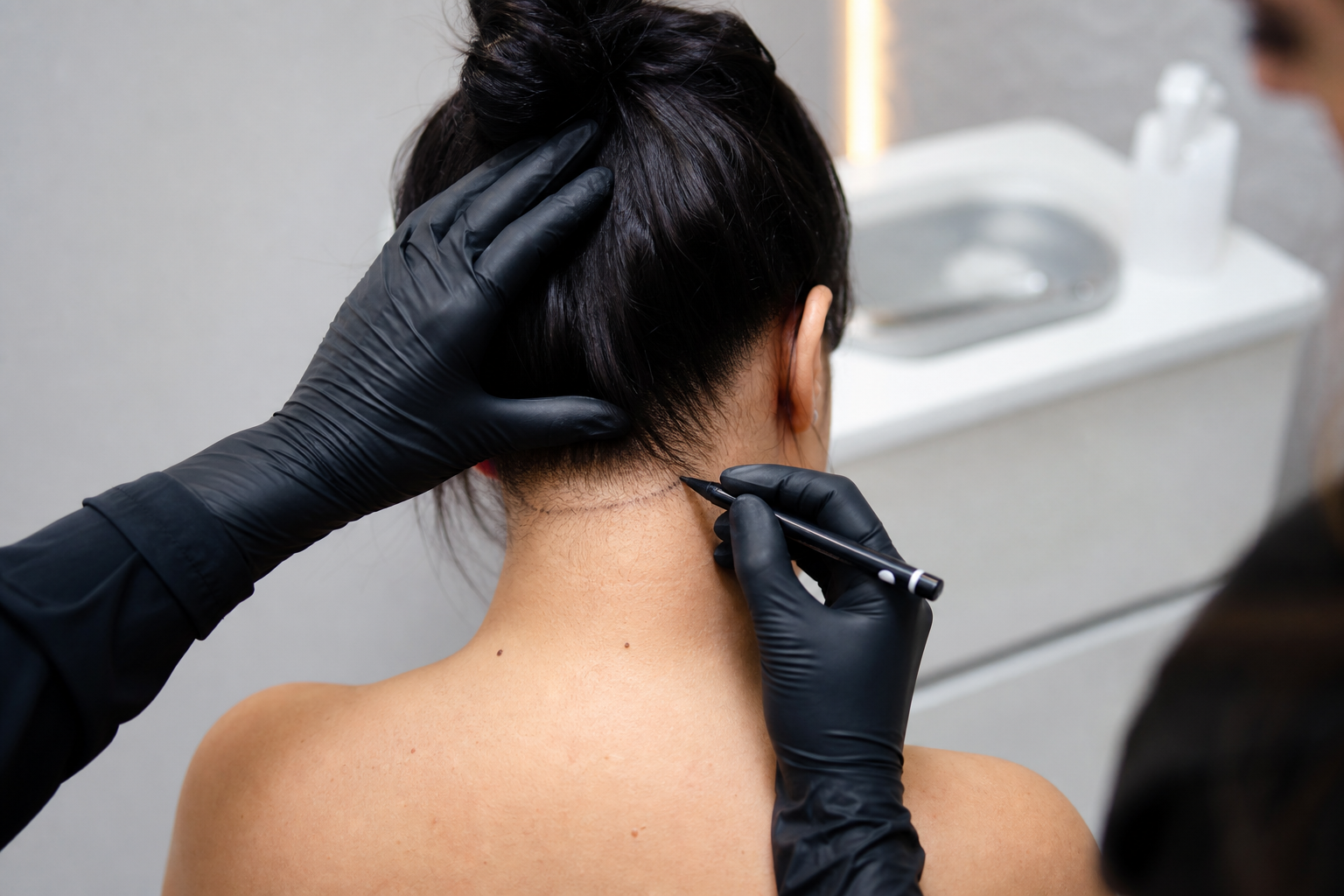
Neck laser hair removal is a highly sought-after cosmetic procedure designed to remove unwanted hair from both the front and back of the neck with precision and efficiency. Unlike traditional hair removal methods such as shaving or waxing, laser treatment targets hair follicles at their root level, providing longer-lasting results and smoother skin. This treatment demands specialized knowledge due to the delicate and highly visible nature of the neck area, its proximity to the face and hairline, and the diverse hair types encountered.
This article is crafted for individuals considering laser hair removal on the neck—men and women alike, across various skin tones and hair textures. Understanding the nuances involved, such as treatment boundaries close to the face, hormonal influences on hair growth, hair density and coarseness, and the importance of preparation and aftercare, can empower clients to make informed decisions. Beyond aesthetic enhancement, neck laser hair removal can significantly improve personal comfort and confidence in daily life.
Providing a comprehensive overview, we will explore how laser technology works specifically on the neck, the unique challenges this anatomical region presents, and how treatment protocols differ for men and women without resorting to stereotypes. Additionally, we will cover how to prepare for a session, maintain skin health afterward, and what realistic outcomes one can expect from this advanced laser procedure.
What Is Neck Laser Hair Removal and How Does It Work?
Neck laser hair removal employs concentrated laser light targeting melanin—the pigment in hair shafts—within the hair follicle. The laser heats the follicle sufficiently to disable its ability to regenerate hair. This method is effective at permanently reducing hair growth after multiple treatment sessions, making it superior in duration compared to waxing, plucking, or shaving.
The laser penetrates the skin surface without damaging surrounding tissue, which is particularly important in the neck area where skin is delicate and frequently exposed to environmental factors. The process requires careful mapping of treatment boundaries to avoid impacting adjacent facial areas or the hairline, a task necessitating professional expertise and precise equipment.
Advancements in laser technology now allow customization for various hair types and skin tones by adjusting wavelength and energy settings. This adaptability enhances safety and efficacy, especially in regions where hair varies from coarse and dense to fine and light.
Who Should Consider Laser Hair Removal for the Neck?
Laser hair removal on the neck suits anyone seeking a long-term solution for unwanted neck hair, appreciating both aesthetic improvement and skin comfort. It is suitable for diverse individuals—regardless of gender—because the approach can be tailored to different hair and skin characteristics.
Women experiencing hair changes due to hormonal fluctuations—such as those related to menstrual cycles, pregnancy, or menopause—often find laser treatments beneficial. Those prone to irritation, ingrown hairs, or redness following traditional hair removal methods can especially benefit from the laser’s precision and gentleness.
Men frequently present with thicker, denser hair and may opt for laser hair removal to mitigate issues arising from frequent shaving, such as razor bumps or folliculitis, particularly where neck hair merges into the beard area. Both men and women should be aware that treatment success depends on factors like hair density, pigmentation, and adherence to recommended session frequency.
Hormonal and Mechanical Influences on Neck Hair Growth
Understanding what drives neck hair growth is crucial when considering laser hair removal. Hormonal imbalances, especially elevated androgen levels, can lead to excessive or coarse neck hair growth. Conditions such as thyroid dysfunction or polycystic ovary syndrome (PCOS) may also contribute, necessitating hormonal evaluation before undergoing laser sessions.
Mechanical factors, including frequent shaving, waxing, or irritation caused by clothing and jewelry, may promote inflammation and ingrown hairs—complications that laser treatment can help alleviate. However, aggressive mechanical manipulation may also temporarily disturb hair follicles, influencing the timing and effectiveness of laser therapy.
It is vital for prospective patients to disclose any relevant medical history and medication use to their treatment provider to ensure laser settings are optimized and risks minimized.
Distinct Considerations for Front and Back Neck Laser Treatment
The anterior (front) neck is more visible and sensitive, requiring meticulous definition of treatment areas to achieve a natural and seamless appearance near the jawline and chin without affecting facial hair. Laser practitioners must adjust beam focus and energy to suit the thin skin and subtle hair patterns found here.
Conversely, the posterior (back) neck area, often obscured by hair or clothing, poses challenges in accessibility and clear visualization. The hair in this area might be coarser or denser, prompting tailored energy dosages and sometimes staggered treatment sessions to ensure safety and maximize efficacy.
Patient comfort and stability during treatments are paramount, as movement can impede laser precision and increase discomfort. Professional facilities often employ positioning aids and cooling techniques to enhance the patient experience across both neck regions.
How Comfortable Is the Procedure, and How Should You Prepare?
Laser hair removal of the neck generally causes minimal discomfort, often described as a mild snapping sensation or warmth. Modern laser systems include integrated cooling mechanisms that substantially reduce side effects and pain.
Preparation ahead of sessions is essential. Clients should refrain from waxing or plucking hair in the treated areas for at least six weeks since these methods remove hair from the root, which the laser targets. Shaving is encouraged shortly before the appointment to eliminate hair above the surface but preserve the follicle. Avoiding sun exposure and tanning beds for a month prior reduces risk of pigment changes or burns.
On the treatment day, skin should be clean, free from lotions, perfumes, and cosmetics. An initial consultation is necessary to assess skin and hair type, discuss medical history, and set realistic expectations.
Post-Treatment Skin Care and What Results to Anticipate
Following laser hair removal, the neck skin may exhibit redness or mild swelling akin to a sunburn; these effects typically subside within hours to days. Applying soothing products containing aloe vera or prescribed topical agents can accelerate healing. Avoiding hot showers, strenuous exercise, and sun exposure for 48 hours post-treatment mitigates irritation.
Consistent use of broad-spectrum sunscreen with high SPF is critical throughout the treatment course and afterward due to the temporary increase in photosensitivity. It is equally important to avoid harsh exfoliants or chemical treatments that might compromise skin integrity.
Patients generally observe reduction in hair growth after the second or third session, with women sometimes experiencing slight variations tied to hormonal phases. The full series—often six to eight sessions spaced four to six weeks apart—culminates in significant, durable hair reduction with smoother and clearer skin texture.
Gender-Neutral Differences in Treatment Approach Without Stereotypes
While men tend to have thicker and denser hair on the neck, women frequently present with finer, lighter hair and may require adjustment in laser settings to balance efficacy with safety. These differences are anatomical and physiological rather than stereotypical, mandating a personalized evaluation for each individual.
Men might require higher fluence (energy) and potentially more sessions to achieve similar long-term results, especially near the junction of the neck and beard. Women’s hormonal fluctuations might influence hair regrowth patterns, and treatment schedules may be adapted accordingly upon professional advice.
Ultimately, both men and women benefit from thorough consultation, customized protocols, and adherence to preparatory and post-treatment guidelines to optimize outcomes.
How Many Sessions Are Needed and When Can You Expect Noticeable Changes?
The number of sessions varies widely based on factors such as hair thickness, follicle depth, hormonal influences, and skin type. Typically, a series of 6 to 8 treatments spaced several weeks apart is recommended to align with the hair growth cycle, ensuring laser energy targets follicles in the active (anagen) phase.
Visible reduction in hair density often emerges after the second or third treatment. Subsequent sessions progressively diminish hair growth rate and thickness until optimal smoothness is attained. Periodic maintenance sessions might be necessary in some cases due to hormonal changes or incomplete follicle destruction.
Realistic expectations and patience are essential; no laser hair removal should be viewed as an instant, one-time fix, but rather a gradual process demanding commitment.
FAQs and Common Concerns About Neck Laser Hair Removal
Is laser hair removal safe for neck skin? Yes, when performed by trained professionals using modern equipment, the procedure is safe. Proper patient selection and adherence to protocols minimize adverse effects.
Does the treatment hurt? Most clients report only minor discomfort, often compared to a light pinprick or rubber band snap, with many appreciating the cooling systems that mitigate pain.
Can treatment boundaries be inaccurate? While possible, experienced practitioners carefully map and delineate treatment zones to prevent unwanted hair loss or skin issues near the face and hairline.
How long does a session take? Typically, neck laser hair removal lasts between 15 to 30 minutes, depending on area size and hair density.
Are there risks of complications? Rare side effects include temporary redness, pigmentation changes, or slight swelling. These are generally short-lived with appropriate care.


