Back laser hair removal represents a profoundly transformative option for individuals seeking effective and lasting solutions to unwanted hair on the upper and lower back. This area, characterized by a large surface and variable hair density, poses unique challenges that require specialized approaches. Both men and women may consider this treatment for a variety of reasons — from aesthetic preferences to enhanced comfort and hygiene — making it a significant topic in advanced cosmetic dermatology.
Understanding how back laser hair removal works, who it is best suited for, and what the process entails is essential for anyone contemplating this procedure. The significance lies not only in the aesthetic enhancement but also in the psychological and practical benefits of reduced body hair, especially in regions traditionally difficult to manage with standard hair removal methods. This article aims to provide a comprehensive, nuanced exploration that covers everything from the initial consultation and treatment mechanics to preparation, aftercare, and realistic expectations.
Whether you are a man experiencing thick, dense hair growth on your back, a woman with hormonal hair concerns, or simply someone eager to reduce the hassle of routine shaving or waxing, a clear understanding of back laser hair removal will guide you toward an informed decision. Below, we delve deep into the key aspects of this treatment, ensuring that prospective clients and curious readers alike gain valuable insight and practical knowledge.
What Is Back Laser Hair Removal and How Does It Work?
Back laser hair removal is a medical aesthetic procedure that uses targeted laser light to reduce unwanted hair permanently from the upper and lower back regions. Unlike temporary methods such as shaving or waxing, laser hair removal operates by directing concentrated light energy towards the melanin pigment in hair follicles. This energy converts to heat, which damages the follicle, thus inhibiting or delaying future hair growth.
Applying this technology to the back requires dealing with a vast and irregularly shaped surface, with areas of both high and low hair density. Different zones of the back may contain hair varying in thickness, color, and growth phase, which affects the laser's efficiency. Because lasers are most effective on hair in the anagen (active growth) phase, multiple treatment sessions scheduled several weeks apart are critical to targeting hair follicles as they cycle through these phases.
The procedure uses sophisticated laser systems designed to accommodate different skin types and hair characteristics safely. Cooling mechanisms integrated into modern lasers help minimize discomfort and protect the surrounding skin during treatment. Precision in delivering the laser energy ensures maximal follicle disruption with minimal impact on the skin itself.
Who Is an Ideal Candidate for Back Laser Hair Removal?
The ideal candidate for back laser hair removal is someone seeking a long-term reduction in unwanted hair on their back, with realistic expectations about the treatment process and outcomes. This includes men with dense, dark back hair who wish to improve comfort, aesthetics, or manageability. It also benefits women who experience thicker or hormonally influenced back hair growth that does not respond well to other hair removal strategies.
In general, candidates should have healthy skin without active infections or wounds on the back area and should avoid extensive sun exposure right before treatment. While laser hair removal technology has advanced to treat a broad spectrum of skin tones, suitability varies based on individual skin and hair color. Persons with very light, fine hair may achieve less dramatic results due to lower melanin content, which diminishes laser absorption.
Those considering the procedure are advised to undergo a professional consultation for assessment and personalized planning, factoring in skin type, hair thickness, density, and medical history. This ensures safety and sets the foundation for optimal results.
What Are the Advantages of Choosing Laser Hair Removal Over Traditional Methods?
Traditional hair removal methods on the back—such as shaving, waxing, depilatory creams, or manual plucking—often present numerous challenges due to the back's size and accessibility. These methods are typically temporary, requiring frequent repetition, which can lead to irritation, ingrown hairs, or uneven regrowth.
Laser hair removal offers multiple advantages:
Durable Results: Unlike temporary solutions, laser treatments target hair follicles to reduce hair growth long term, offering a smoother back for months or years after a complete session series.
Precision: Lasers selectively target pigmented hair follicles without damaging surrounding skin, reducing the risk of irritation or scarring prevalent with mechanical methods.
Time Efficiency: Although the procedure can take 30-60 minutes, it replaces hours of repeated manual hair removal, making it a practical choice for busy individuals.
Improved Comfort and Hygiene: For many, reducing back hair enhances comfort during exercise, minimizes sweating-related problems, and improves overall skin cleanliness.
Even Hair Reduction: Laser allows uniform treatment across the large back surface, ensuring consistent results free from patchiness common with waxing or shaving errors.
How Are Back Treatment Boundaries Mapped and Why Is This Step Crucial?
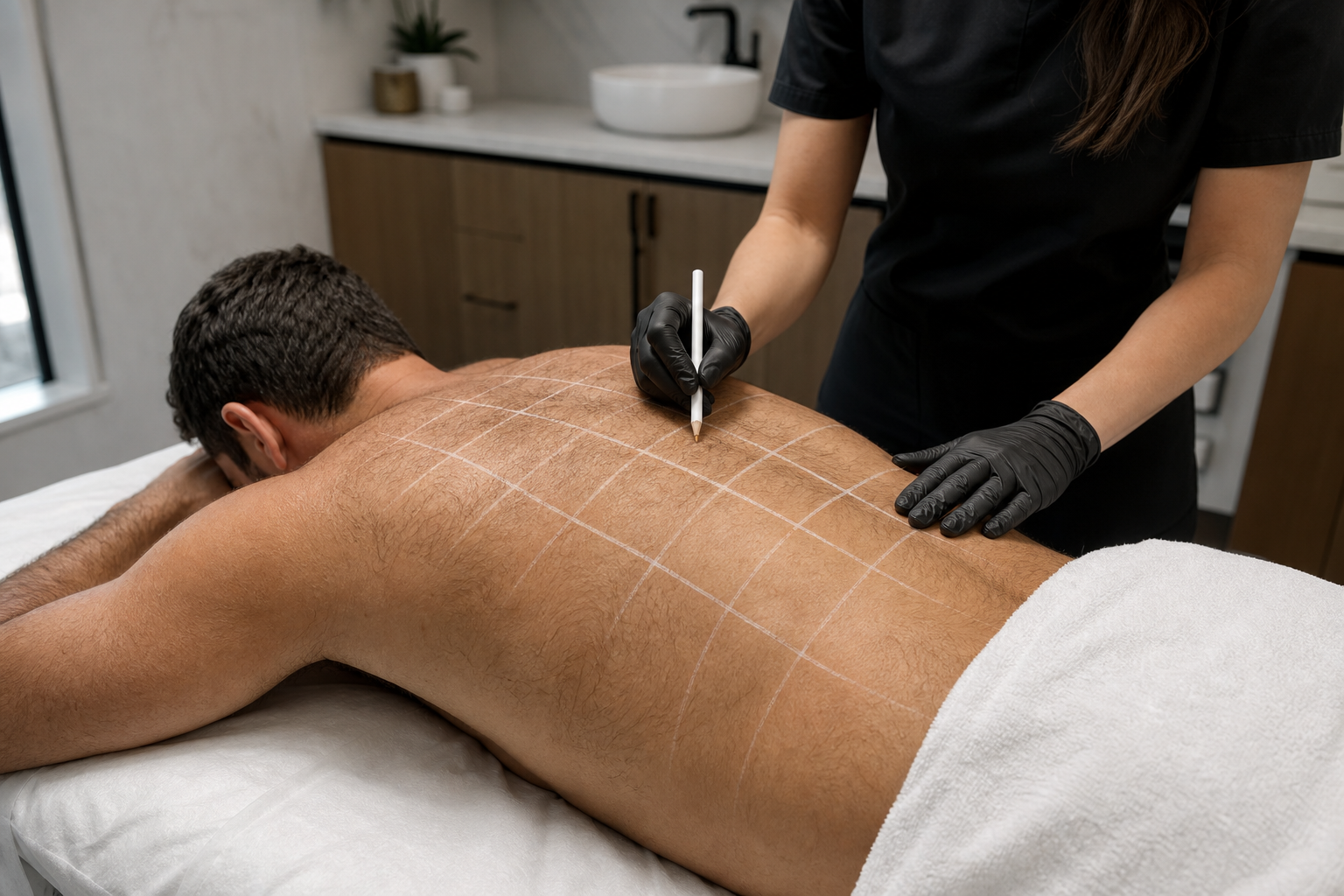
Before commencing a back laser hair removal session, precise mapping of the treatment area is essential. This involves outlining the exact parts of the back to be treated, corresponding to the patient’s goals and hair distribution.
The back’s substantial surface area, with varying contours and hair densities, makes uniform coverage challenging without meticulous boundary mapping. Mapping ensures the laser technician treats all intended zones evenly without missing spots or overlapping excessively.
Technicians assess hair patterns across the upper and lower back, shoulder blades, and areas near the waist or sides. They mark treatment boundaries with non-permanent markers, clearly communicating these limits to both the client and practitioner for focus during sessions.
This step also helps customize treatment parameters based on hair density and sensitivity of different back regions, enhancing safety and optimizing hair reduction without unnecessary skin irritation.
What Should You Expect in Terms of Treatment Duration and Client Positioning?
The duration of a single back laser hair removal session varies between 30 and 60 minutes, influenced primarily by the size of the treatment area and hair density. Those requiring treatment of both upper and lower back with thick hair can expect sessions on the longer end of the spectrum.
During treatment, clients typically lie comfortably on their stomachs to provide practitioners easy access to the entire back. Maintaining a steady, relaxed position ensures precise laser delivery and minimizes movement that could reduce treatment efficacy.
For added comfort during prolonged sessions, specialized ergonomic equipment or adjustable treatment beds are often used. These support proper posture and reduce muscle strain, supporting a positive experience while ensuring maximal treatment accuracy.
How Does Back Laser Hair Removal Feel and What Sensations Might You Encounter?
Clients often describe the sensation of back laser hair removal as a mild, intermittent snapping or stinging feeling, comparable to a rubber band gently snapping the skin. Some may also feel brief warmth or tingling at laser contact spots.
The perception of discomfort varies widely depending on individual pain tolerance, hair thickness, and density. Areas with denser, coarser hair typically generate more notable sensations due to greater laser energy absorption.
Modern laser devices frequently incorporate advanced cooling systems that spray cold air or utilize chilled tips to soothe the skin continuously during the treatment, significantly alleviating discomfort. Clients should communicate any pain or excessive irritation immediately so practitioners can adjust settings or apply additional cooling methods.
How to Properly Prepare for Your Back Laser Hair Removal Session?
Proper preparation is key to a safe, effective back laser hair removal treatment. Patients should avoid sun tanning or direct sun exposure on the back for at least two weeks before the session. Suntanned or sunburned skin can increase the risk of burns or pigmentation changes following laser exposure.
Ahead of treatment, shaving the back area to a close, even level is usually recommended within 24 hours of the session. This removes hair above the skin surface so that the laser targets the follicle directly without energy loss through hair shafts above the skin.
Importantly, patients should avoid waxing, plucking, or other hair removal methods that remove hair from the root for at least four to six weeks prior. The laser cannot effectively treat hair follicles if there’s no hair present in the follicle itself.
Showering before the appointment and arriving with clean, dry skin free of lotions, oils, or deodorants on the back helps reduce skin sensitivity and enhances laser efficiency.
Discussing any medications or skin products with the practitioner beforehand is essential, particularly those that might cause photosensitivity or skin irritation.
What Is the Recommended Aftercare Following Back Laser Hair Removal?
After a back laser hair removal session, the skin may appear slightly reddened or swollen, similar to mild sunburn. These effects are usually transient, resolving within a few hours to a couple of days.
Post-treatment care primarily focuses on soothing and protecting the skin. Applying gentle, fragrance-free moisturizers or aloe vera gel recommended by the practitioner can alleviate discomfort and promote healing. Avoiding hot showers, saunas, or intense physical activity that causes excessive sweating immediately after treatment is advisable.
Sun protection is vital during the weeks following treatment to prevent pigmentation changes since the treated skin area is more vulnerable. Using broad-spectrum sunscreen with a high SPF when exposure to sunlight is unavoidable helps safeguard results and skin health.
Patients should avoid applying harsh exfoliants, chemical peels, or abrasive skincare products on the back for at least a week to prevent irritation. Maintaining hydration by drinking plenty of water complements topical skin care.
Understanding the Treatment Course: Number of Sessions and Visible Progress
Achieving significant, lasting hair reduction on the back generally requires six to eight treatment sessions spaced approximately four to six weeks apart. This schedule aligns with the hair growth cycle, allowing repeated targeting of follicles as they enter the laser-sensitive anagen phase.
While some reduction may be noticeable after two or three sessions, full benefits accumulate gradually. Hair growth after treatments often becomes finer and lighter before diminishing markedly. Patience and adherence to the recommended session plan are critical for optimal outcomes.
Practitioners monitor progress throughout the course and adjust laser settings as needed to address any resilient hair areas or variable skin responses. Periodic maintenance treatments may be suggested after the initial series to uphold smoothness.
Special Considerations for Fine Hair on the Back
Fine, light-colored hair presents a unique challenge in back laser hair removal because melanin content is low, reducing laser absorption and follicle damage efficiency. This may result in slower or less dramatic hair reduction compared to coarser, darker hair.
Experienced clinicians approach fine hair carefully to optimize outcomes, perhaps using lasers tuned to different wavelengths better suited for lighter pigments or modifying treatment intensity. Sometimes, a combination of laser types or complementary methods may be advisable to manage fine hair effectively.
Consulting with professionals skilled in treating diverse hair types ensures a personalized strategy that balances efficacy with skin safety.
Frequently Asked Questions About Back Laser Hair Removal
Is the procedure painful? Sensations vary, but many describe the treatment as mildly uncomfortable with a snapping feeling. Cooling technology and expert technique typically keep discomfort minimal.
Will the hair come back? Some regrowth can occur over time, but treated areas usually exhibit a substantial and lasting reduction in hair density and thickness.
Is it safe for all skin types? Modern lasers accommodate a wide range of skin tones, including darker complexions, but initial assessment is necessary to customize treatment safely.
How should I care for my skin after laser hair removal? Use soothing and hydrating products, avoid sun exposure, and refrain from harsh skincare on treated areas as recommended by the practitioner.
For broadened expertise, consider exploring related procedures such as Laser Hair Removal by Body Area, including specialized treatments like Upper Lip Laser Hair Removal, Chin Laser Hair Removal, and Underarm Laser Hair Removal which address distinct regional hair concerns.


