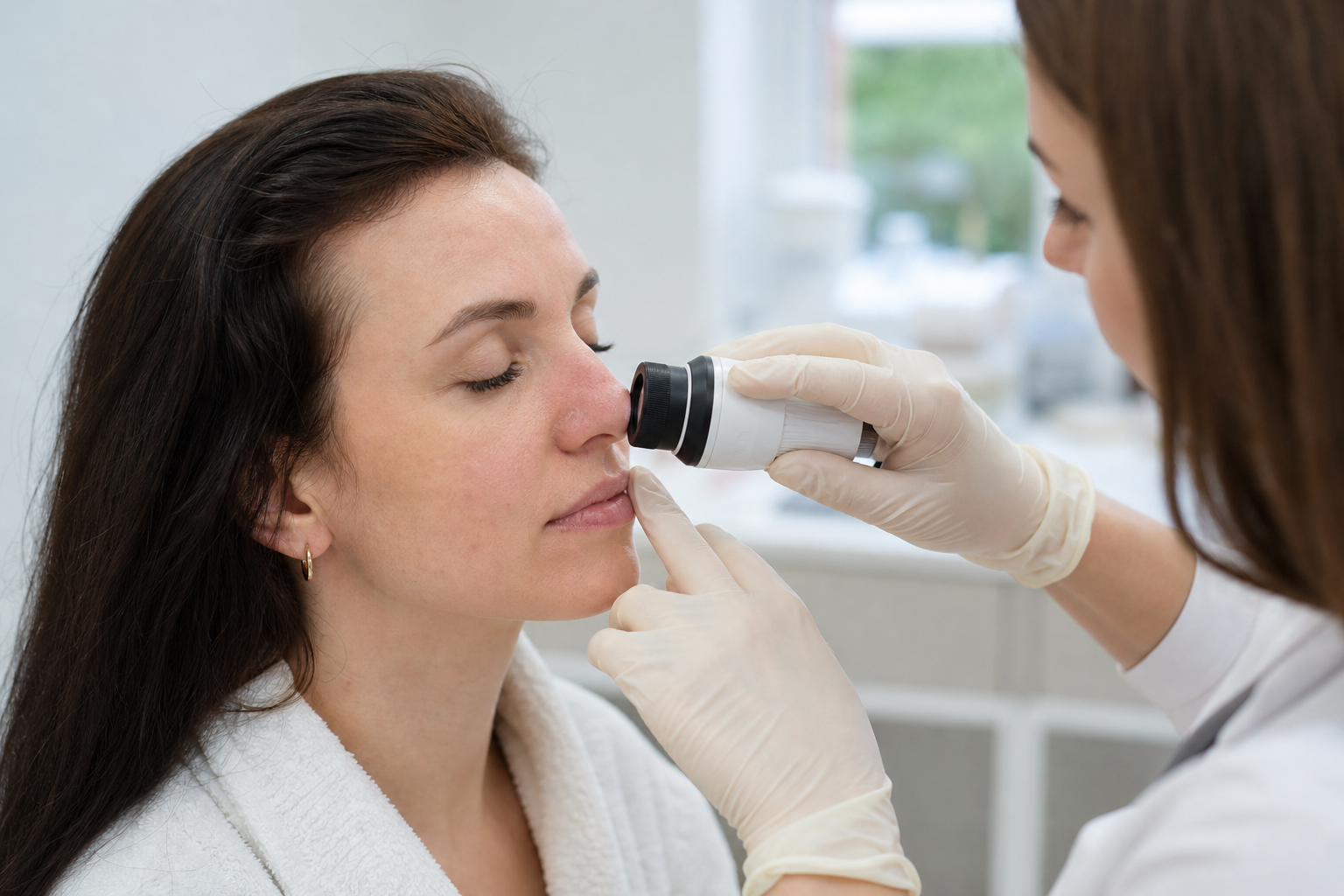
Visible capillaries on the nose, often appearing as fine red or purple thread-like lines, can be a source of cosmetic concern and self-consciousness for many individuals. These tiny blood vessels, also known as telangiectasias, become prominent due to various factors including genetics, environmental exposure, or underlying skin conditions. As a result, many seek effective, lasting solutions to diminish their appearance and restore a more uniform skin tone.
In the realm of dermatological treatments, laser therapy stands out as a precise and highly effective method for targeting and eliminating these problematic vascular lesions. Understanding which laser is best suited for treating nose capillaries is essential for achieving optimal results, minimizing risks, and ensuring patient satisfaction. This article aims to elucidate the types of lasers commonly used in such cases, the science behind their action, and practical guidance on treatment expectations.
Whether you are someone noticing persistent redness on your nose or a healthcare professional exploring treatment options, gaining clear insights into laser therapies for nose capillaries will empower informed decisions. The discussion includes distinctions between laser technologies and other light-based devices, focusing on realistic outcomes supported by reliable dermatology knowledge.
What Are Nose Capillaries and Why Do They Become Visible?
Capillaries are the smallest blood vessels in the body, facilitating the exchange of oxygen and nutrients between blood and tissue cells. Normally, they remain invisible beneath the skin's surface. However, when these vessels become enlarged or dilated, they manifest as visible red or purple lines, often on the delicate skin of the nose and cheeks.
Several factors contribute to the development of visible nose capillaries. Genetic predisposition plays a significant role, as some individuals inherit thinner skin or more fragile vasculature. External factors such as exposure to ultraviolet radiation, extreme temperatures, or mechanical irritation can exacerbate their formation. Additionally, certain medical conditions—like rosacea or chronic inflammation—can cause capillaries to expand and become persistent.
The presence of visible capillaries is more than a superficial aesthetic issue. It can signal underlying skin sensitivity and may progress without appropriate intervention. Thus, addressing the problem effectively and safely is important both for cosmetic satisfaction and dermatological health.
Why Choose Professional Laser Treatment Over At-Home Remedies for Nose Capillaries?
Many affected individuals initially attempt to manage visible capillaries using over-the-counter creams, cold compresses, or makeup products to conceal redness. While these approaches may provide temporary relief or masking, they do not address the underlying vascular changes and offer no permanent improvement.
Professional laser treatment provides a targeted, scientifically validated solution. Lasers emit specific wavelengths of light that selectively target hemoglobin within blood vessels, causing their closure without damaging surrounding skin. This precision ensures maximal therapeutic benefit while reducing the risk of side effects compared to home remedies or less selective technologies.
Furthermore, treatment parameters must be carefully determined based on the patient’s skin type, capillary characteristics, and overall health. Such customization is best conducted by trained dermatologists who employ sophisticated diagnostics and adhere to safety protocols to yield the highest effectiveness and patient comfort.
Which Laser Technologies Are Used to Treat Nose Capillaries?
Different laser systems are available for the treatment of vascular lesions, each with unique properties that influence their suitability depending on the nature of the capillaries and patient skin characteristics.
KTP Laser (Potassium Titanyl Phosphate): Operating at a wavelength of approximately 532 nm, the KTP laser is highly effective for superficial and small-caliber blood vessels that reside close to the skin’s surface. Its wavelength is well absorbed by oxyhemoglobin, making it an excellent option for treating fine, red capillaries and diffuse redness mainly found on lighter skin phototypes. Its precision minimizes damage to adjacent tissues, allowing for quick recovery and high patient satisfaction.
Nd:YAG Laser (Neodymium-Doped Yttrium Aluminum Garnet): Emitting light at 1064 nm, the Nd:YAG laser penetrates deeper into the skin, making it ideal for larger, more deeply rooted capillaries and broader vascular networks. It is particularly effective for darker skin types owing to its lower melanin absorption, reducing the risk of pigmentation changes. The Nd:YAG laser is often utilized when KTP or other superficial lasers are insufficient, providing a robust treatment for resistant vascular abnormalities.
Pulsed Dye Laser (PDL): Though not the primary focus in some clinics, the pulsed dye laser, typically emitting at around 585 to 595 nm, is another common vascular laser known for its efficacy in treating redness and superficial veins. It selectively targets blood vessels with minimal discomfort and excellent cosmetic outcomes. Its application extends beyond the nose to other facial vascular concerns.
It's critical to note that IPL (Intense Pulsed Light) devices, often marketed for redness treatment, are not lasers but broad-spectrum light sources. While IPL can offer some improvement, it lacks the selective precision of vascular lasers and may not provide consistent or long-lasting results for nose capillaries.
How Do Vascular Lasers Work to Eliminate Nose Capillaries?
Vascular lasers operate on the principle of selective photothermolysis. This process involves delivering specific wavelengths of light that hemoglobin within the blood vessels absorbs preferentially. The laser energy converts into heat, which damages the vessel walls, causing them to collapse and eventually be reabsorbed by the body.
This targeted approach allows for treatment of visible capillaries without harming surrounding skin cells or other structures. Following laser therapy, the treated capillaries fade gradually over days to weeks, resulting in a clearer, more homogenous skin complexion.
Effectiveness depends on multiple factors including laser wavelength, pulse duration, energy settings, vessel size, depth, and patient skin type. Experienced practitioners tailor these parameters to maximize safety and outcomes while minimizing side effects such as bruising, redness, or pigmentation changes.
When Should Someone Consider Laser Treatment for Nose Capillaries?
Laser treatment is generally recommended when visible capillaries persist, cause cosmetic distress, or are indicative of underlying vascular or inflammatory skin conditions requiring intervention. Early consultation with a dermatologist is advisable upon noticing consistent redness or the appearance of thread-like veins that do not resolve with conservative measures.
A thorough clinical evaluation is essential to distinguish capillaries from other vascular anomalies and to rule out conditions that may contraindicate laser therapy. After establishing suitability, a personalized treatment plan can be formulated based on the lesion's characteristics and the patient's expectations.
While laser treatments can significantly improve the appearance of nose capillaries, multiple sessions may be necessary for optimal results. Patience and adherence to post-treatment care are vital components of the therapeutic journey.
What Can Patients Expect During and After Laser Treatment for Nose Capillaries?
During the procedure, patients typically experience brief pulses of light targeting the affected areas. Sensations can range from mild discomfort, often described as snapping or warmth, to minimal pain depending on individual sensitivity and laser parameters.
Post-treatment effects may include temporary redness, swelling, or minor bruising. These side effects are usually transient, resolving within a few days. Proper skin care, sun protection, and avoidance of irritants play important roles in promoting healing and preventing complications.
Visible improvements often become apparent after several weeks as the body clears the collapsed vessels. Follow-up sessions are scheduled based on initial response and treatment goals. Regular assessment ensures that the therapy is adapted as needed to maintain or enhance outcomes.
Common Questions About Laser Treatment for Nose Capillaries
Is laser treatment for nose capillaries safe? When performed by qualified dermatologists using appropriate protocols, laser treatment is considered safe and effective with minimal risk of adverse effects.
Is the procedure painful? Discomfort varies among individuals but is generally manageable. Some clinics offer topical anesthetics or cooling devices to enhance comfort.
How long do the results last? Treated capillaries typically do not return; however, new capillaries may develop over time due to ongoing factors. Maintenance treatments may be recommended.
Can all skin types be treated? Yes, particularly with Nd:YAG lasers, which are suitable for darker skin types. Personalized evaluation ensures the safest approach.
Is IPL effective for nose capillaries? While IPL may reduce redness, it is less precise than lasers and generally less effective for persistent capillaries on the nose.


