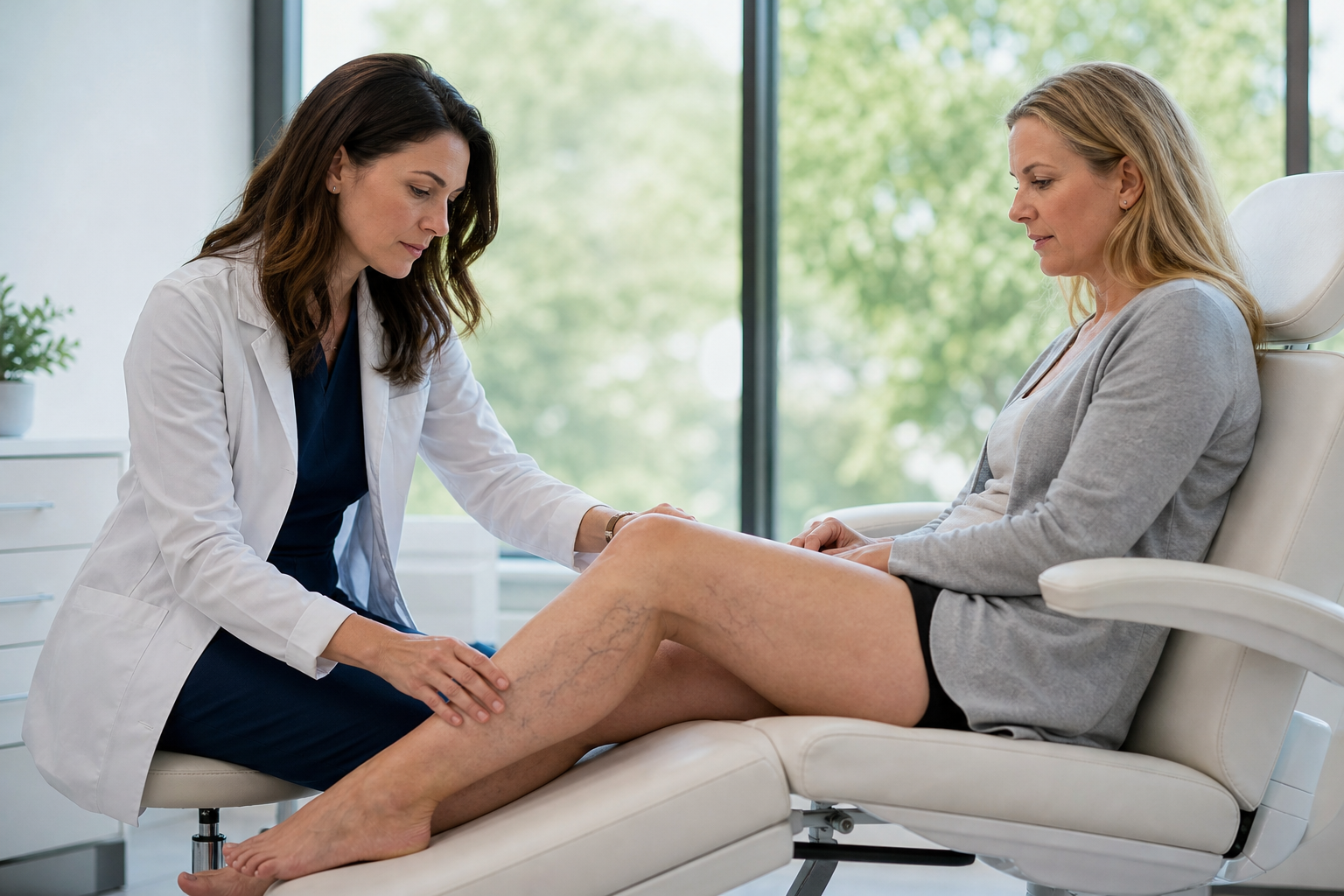
Diffuse facial redness is a prevalent dermatological challenge affecting a wide demographic, from young adults to older individuals. Characterized by a widespread, often inflammatory redness across the cheeks, nose, forehead, or the entire lower part of the face, this condition can significantly impact a person's self-esteem and quality of life. The redness is not typically limited to isolated blood vessels or spots but rather presents as an even, persistent blush that may fluctuate in intensity depending on various internal and external factors.
This article is intended for individuals struggling with diffuse facial redness, seeking a comprehensive understanding of the treatment options available. It is equally valuable for dermatologists and aesthetic practitioners who aim to deepen their expertise in advanced vascular laser treatments and light-based therapies for managing this complex skin condition. Understanding the nuances of different modalities, their mechanisms, suitability, and expected outcomes is essential in guiding patients toward effective and safe interventions.
Diffuse facial redness matters because it often signals underlying vascular dilations, inflammation, or conditions such as rosacea, each requiring tailored therapeutic strategies. By exploring the current evidence and professional approaches, readers can appreciate how innovations in vascular lasers and light therapies are transforming management paradigms—improving both the visible appearance and the relief of associated symptoms.
What Constitutes Diffuse Facial Redness and How Does It Present Clinically?
Diffuse facial redness extends beyond transient flushing or the localized visibility of a few dilated blood vessels. It represents a persistent, often symmetric erythema involving extensive surface areas of the face. Patients may describe a sensation of warmth, tenderness, or even mild burning accompanying the redness, which can worsen with triggers such as thermal extremes, sun exposure, spicy foods, or emotional stress.
Clinically, the condition's root cause may vary: chronic vasodilation of superficial capillaries, inflammatory changes characteristic of early rosacea, or less commonly, dermatoses like seborrheic dermatitis. Differentiating the etiology is vital for selecting an appropriate treatment regimen. Diffuse redness typically involves fine telangiectatic vessels alongside general erythema but may coexist with papules or pustules in inflammatory variants.
Additionally, individuals with this condition often exhibit heightened sensitivity to topical applications or environmental irritants, complicating skin care and necessitating gentle, non-irritating cosmeceutical support alongside procedural interventions.
Which Treatment Modalities Are Primarily Employed for Diffuse Facial Redness?
The management of diffuse facial redness hinges on reducing vascular hyperreactivity, stabilizing fragile capillary walls, and alleviating associated inflammation. While topical pharmaceuticals such as metronidazole, azelaic acid, or brimonidine have roles in mild to moderate cases, many patients seek procedural options to address persistent redness effectively.
Among these, light-based technologies stand out, particularly vascular lasers and intense pulsed light (IPL) systems. These methods harness targeted light energy to selectively coagulate abnormal blood vessels, diminishing their visibility and the overall redness. The choice between these modalities depends on factors including skin type, vessel depth, and redness severity.
Vascular lasers—Nd:YAG and KTP being primary examples—utilize specific wavelengths that hemoglobin absorbs efficiently, enabling precise targeting of dilated vessels with minimal damage to surrounding tissue. By contrast, IPL is a broad-spectrum light source that disperses energy across various chromophores, requiring careful adjustment to optimize outcomes.
How Do Vascular Lasers Function to Mitigate Capillaries and Diffuse Redness?
Vascular lasers operate on the principle of selective photothermolysis. Their emitted light waves are preferentially absorbed by hemoglobin within the blood vessels. This absorption converts light energy into heat, inducing controlled vessel coagulation and subsequent resorption by the body. The process results in the gradual fading of redness and reduced vessel prominence.
The Nd:YAG laser emits light at a wavelength particularly suited for penetrating deeper skin layers, making it effective against larger, deeper-seated vascular lesions contributing to diffuse facial redness. Its ability to target a broader diameter vessel without harming the epidermis is a notable advantage for complex cases.
The KTP laser, operating at a shorter wavelength, is ideal for targeting smaller, superficial capillaries near the skin’s surface. Its precision minimizes risks such as scarring or pigmentation changes, making it suitable for treating sensitive or delicate regions prone to redness.
What Is the Role of IPL in Treating Capillaries and Diffuse Facial Redness?
Intense Pulsed Light (IPL) therapy emits a spectrum of light wavelengths that target pigmentation and vascular lesions. Unlike lasers, IPL is not a single wavelength coherent light but rather a broad-spectrum flash of light that can affect multiple chromophores including melanin and hemoglobin.
In the context of diffuse facial redness, IPL can reduce superficial redness and improve skin texture by targeting mild vascular proliferation and associated photodamage. However, IPL is less specific than vascular lasers; its energy disperses over a broader area and depth, occasionally resulting in incomplete treatment of prominent telangiectasias.
Therefore, IPL is best suited for patients with mild to moderate redness and for those who may benefit from combined treatment approaches addressing both vascular and pigmentary concerns. It provides a complementary option but does not replace targeted vascular laser therapy for significant or resistant diffuse redness.
When Is Nd:YAG Laser Preferred for Treating Larger Facial Capillaries?
The Nd:YAG laser is the treatment of choice for patients presenting with prominent or deeply located vascular lesions contributing to diffuse facial redness. Its longer wavelength (approximately 1064 nm) allows it to penetrate beneath the epidermis to reach deeper vessels that are beyond the effective range of superficial vascular lasers or IPL.
Specifically, in areas like the nose and malar regions where larger-caliber vessels commonly create persistent redness, Nd:YAG provides robust coagulative effects without injuring the overlying skin. This makes it indispensable in cases where superficial treatments have failed or when a combined layered vascular involvement exists.
Under expert administration, Nd:YAG laser treatments are well-tolerated, with transient erythema and mild edema being the usual post-procedural effects. Its versatility also allows safe treatment across diverse skin phototypes when appropriate parameters are used.
How Does the KTP Laser Target Superficial Capillaries and Facial Redness?
The KTP laser utilizes a wavelength around 532 nm, which is highly absorbed by oxyhemoglobin in blood vessels superficial to the dermis. This makes it highly effective for addressing fine, superficial capillaries that manifest as common contributors to diffuse redness.
Due to its precision and limited penetration, the KTP laser minimizes damage to surrounding tissues, preserving skin texture and minimizing the risk of side effects such as hyperpigmentation or scarring. It is frequently employed for delicate facial areas prone to redness, including the periorbital region and cheeks.
Patients experiencing early or moderate diffuse redness, or those with a lighter complexion, often benefit most from KTP laser treatment. Treatments are generally well-tolerated with brief recovery periods, making it a convenient option for improving skin tone uniformity.
What Factors Influence the Selection of Treatment According to Skin Type and Redness Characteristics?
The patient's individual skin characteristics and the nature of the vascular changes largely determine the most appropriate intervention for diffuse facial redness. Skin phototype classification guides the safety parameters due to varying risks of pigmentary alterations post-treatment; for example, higher Fitzpatrick phototypes require cautious laser settings to avoid hyperpigmentation.
Additionally, assessment of vessel size, depth, and distribution informs whether superficial treatments like KTP laser or IPL are sufficient or if deeper-penetrating Nd:YAG laser sessions are necessary. Thicker skin, oily complexion, or concurrent dermatoses such as seborrhea may also influence treatment choice and regimen.
Comprehensive skin evaluation by a trained dermatologist or laser specialist ensures tailored treatment plans that optimize efficacy and minimize adverse effects. Patient medical history, tolerance for procedures, and cosmetic goals are integral to this decision-making process.
What Are the Expected Results and Treatment Course for Managing Diffuse Facial Redness?
Effective management of diffuse facial redness is typically a gradual process, necessitating multiple treatment sessions spaced several weeks apart. After each session, targeted vessels slowly collapse, leading to decreased redness and improved skin uniformity. Patients often report progressive comfort and normalization of skin tone over subsequent weeks.
Visible improvement generally becomes apparent after two to four treatments, though the complete effect may require up to six sessions depending on severity. Maintenance treatments might be recommended at intervals to sustain results, particularly if underlying triggers persist.
Post-treatment care focusing on photoprotection, gentle skincare, and avoidance of known exacerbating factors enhances and prolongs therapeutic benefits. It is important to counsel patients on realistic expectations to foster satisfaction and adherence.


