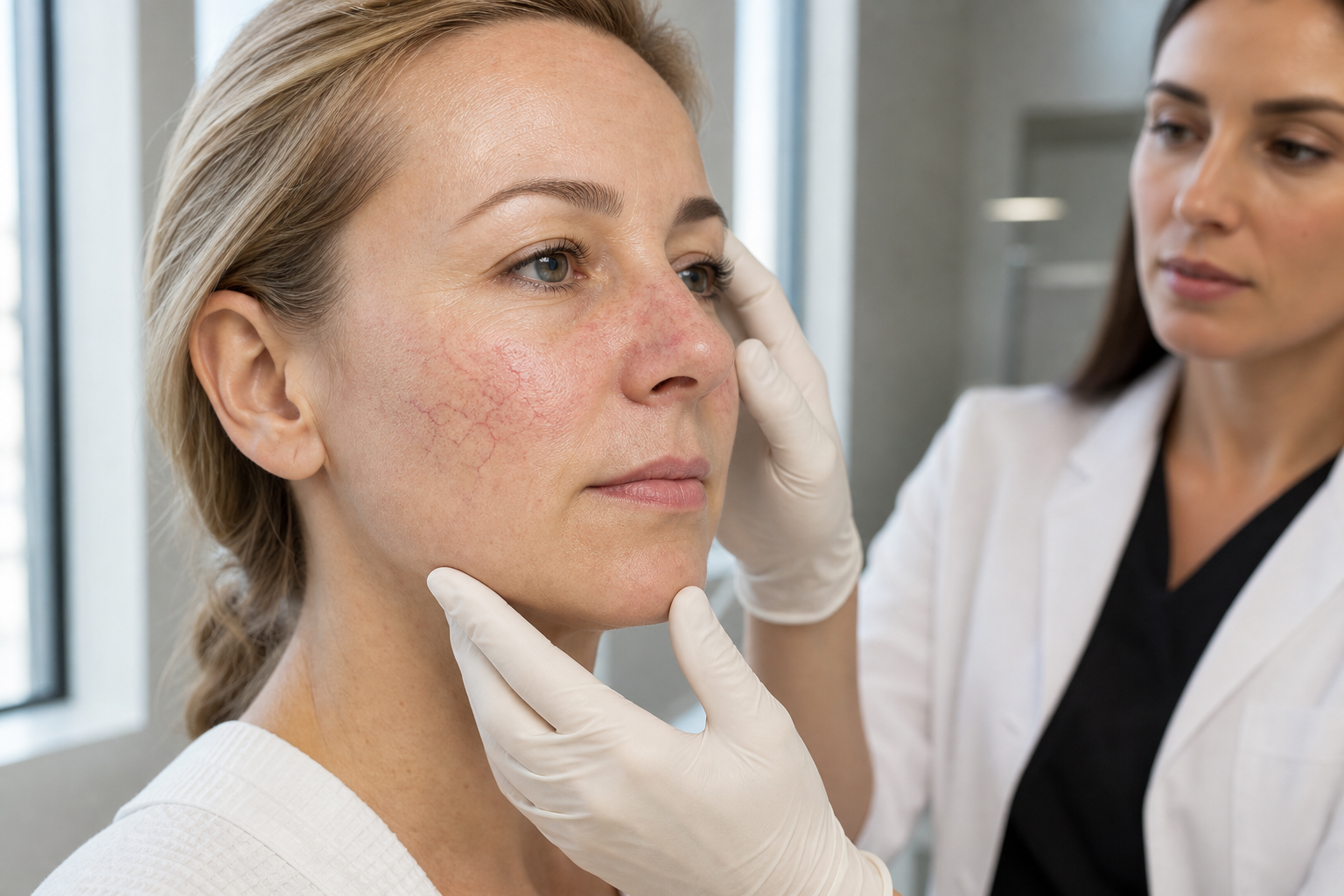
Intense Pulsed Light (IPL) has emerged as a transformative technology in dermatology, especially for addressing common and often distressing skin concerns such as visible capillaries and redness. These vascular issues can affect an individual’s appearance, confidence, and sometimes reflect underlying skin health conditions. Understanding how IPL works specifically for capillaries and redness is crucial for those considering treatment options to improve skin clarity and achieve a more uniform complexion.
Unlike laser therapies that use single wavelengths of light, IPL employs a broad spectrum of light pulses targeting various skin components, including blood vessels beneath the surface. This non-invasive technique selectively targets hemoglobin within the affected vessels, diminishing their appearance without damaging surrounding tissue. Suitable for particular skin types and vascular conditions, IPL offers a customizable approach tailored by skilled practitioners.
This article delves deeply into the mechanisms behind IPL treatment for capillaries and redness. It aims to help readers discern whether IPL might be an appropriate solution for their skin concerns, outline expected benefits, compare IPL to other vascular laser treatments like KTP and Nd:YAG, and provide insights into treatment preparation and outcomes. By gaining a comprehensive understanding of IPL’s role in managing vascular skin issues, readers can make informed decisions aligned with their skincare goals and expectations.
What Is Intense Pulsed Light and How Is It Different From Laser Treatment?
Intense Pulsed Light, known as IPL, refers to a technology that emits a broad range of wavelengths of high-intensity light in pulses. This contrasts with lasers, which emit light of a single, specific wavelength. The spectrum of IPL spans various wavelengths, typically ranging from 500 to 1200 nanometers, enabling it to target multiple skin chromophores such as melanin and hemoglobin effectively.
The primary advantage of IPL lies in its versatility. Because it covers multiple wavelengths, IPL devices can treat diverse skin issues like hyperpigmentation, hair removal, skin rejuvenation, and vascular lesions like capillaries and redness. The broad spectrum allows for user-adjustable filters that refine the wavelengths delivered based on the condition being treated and the patient’s skin characteristics.
In the context of vascular issues, IPL’s light is absorbed predominantly by hemoglobin in dilated blood vessels near the skin’s surface. This absorption converts light energy into heat, which coagulates and ultimately causes the affected capillaries to collapse and be reabsorbed by the body’s natural processes. Unlike traditional laser treatments with focused beams and a fixed wavelength, IPL’s customizable and diffused light allows for treatments tailored to individual needs, potentially spanning various vessel sizes and depths.
It's important to note that this broader and less focused energy delivery requires meticulous adjustment of treatment parameters to avoid side effects and maximize effectiveness—underscoring the importance of professional administration by qualified dermatologists or trained specialists experienced in vascular skin therapies.
Who Is the Ideal Candidate for IPL Treatment of Capillaries and Redness?
IPL treatment for capillaries and redness is best suited for individuals with mild to moderate visible superficial blood vessels and diffuse redness, most commonly on the face. These symptoms often manifest as fine broken capillaries, redness across the cheeks, nose, chin, or jawline, and sometimes are associated with skin conditions such as rosacea or sun-induced vascular fragility.
Optimal candidates generally have lighter skin types, classified as Fitzpatrick types I through III, because lighter skin absorbs less light energy in the melanin pigment, allowing the IPL treatment to focus on hemoglobin without excessive risk to surrounding tissue. Darker skin tones are more prone to side effects such as hyperpigmentation or burns and require cautious consideration and specialized protocols.
Moreover, ideal candidates have capillaries and redness that are relatively superficial or mildly moderate in size and depth. Those with deep or large blood vessels may see limited benefits from IPL and often require treatment with focused vascular lasers like KTP or Nd:YAG lasers, which target deeper or larger vessels more precisely.
Patients should be in good overall skin health and free of active infections, inflammatory skin conditions (except for chronic vascular diseases when approved by a dermatologist), or recent sunburn. Additionally, a thorough consultation evaluating medical history, skin type, and specific vascular presentation is essential to determine candidacy and customize treatment safely and effectively.
How Does IPL Specifically Target Capillaries and Reduce Redness?
The mechanism by which IPL works to diminish capillaries and redness is rooted in the principle of selective photothermolysis. This concept involves targeting specific chromophores—light-absorbing molecules—in the skin with appropriate wavelengths of light, causing selective thermal damage to targeted structures while sparing surrounding tissue.
In treating vascular issues, hemoglobin within the blood vessels absorbs the IPL light energy. This absorption generates heat that causes controlled thermal injury to the vessel walls, leading to coagulation of blood and subsequent collapse of the capillary structure. Over several days to weeks, the body’s immune system gradually removes the damaged vessel material, reducing visibility.
IPL’s broad wavelength spectrum allows targeting a range of vessel sizes within the superficial dermis. This is beneficial for treating diffuse redness, which may originate from numerous tiny vessels rather than distinct individual veins. The pulsed nature of IPL allows skin cooling between pulses, protecting the epidermis while delivering effective energy to the vessels.
By diminishing capillaries and reducing localized blood flow in affected areas, IPL improves the overall skin tone, decreases mottled redness, and enhances skin texture without invasive procedures. Repeated sessions spaced appropriately optimize results by gradually eliminating vascular imperfections and accommodating skin healing.
Comparing IPL with Vascular Lasers: When Should Each be Used?
Both IPL and vascular lasers are powerful interventions for treating capillaries and redness, but they are distinct in technology and clinical indications. Understanding their differences helps identify the most effective approach for each patient’s unique condition.
IPL's broad spectrum light makes it versatile for treating a variety of superficial vascular lesions and diffuse redness, especially in cases involving multiple small vessels. It offers a less aggressive option with minimal downtime, favorable for cosmetic improvement and patients seeking non-invasive treatments.
In contrast, vascular lasers such as the KTP and Nd:YAG lasers emit a single specific wavelength designed to precisely target blood vessel hemoglobin at particular depths. The KTP laser, with a wavelength around 532 nanometers, excels at treating fine superficial capillaries and redness close to the skin surface. Nd:YAG laser, operating at approximately 1064 nanometers, penetrates deeper and is suited for larger or deeper vessels.
Clinicians often select IPL when treating widespread facial redness and smaller vessels, providing broad improvements in skin appearance. For patients with larger or more robust veins, or lesions resistant to IPL, targeted vascular laser treatment may be indicated. Sometimes, a combination of both IPL and vascular laser sessions is recommended for comprehensive management.
The choice between IPL and vascular lasers depends on vessel size, depth, skin type, and treatment goals, requiring individualized evaluation by dermatology professionals experienced in light- and laser-based therapies.
What to Expect During and After an IPL Treatment Session?
An IPL treatment session for capillaries and redness typically occurs in a clinical setting under the supervision of a trained healthcare provider. Initial consultation includes assessment of skin type, vascular condition, and discussion of realistic expectations and possible risks.
During the procedure, the skin is cleansed and sometimes a cooling gel is applied to improve comfort and enhance light transmission. Protective eyewear is essential to shield eyes from intense light exposure. The IPL device is then passed methodically over the treatment area, delivering pulses of light. Patients often describe sensations akin to brief pinpricks or mild warmth. Depending on the extent of treated area, sessions can last from several minutes to around half an hour.
Post-treatment, patients may notice mild redness, swelling, or a subtle sensation of warmth akin to a mild sunburn. These effects are temporary, typically resolving within hours to a few days. Darkened spots or a slight bruising effect may appear on treated capillaries, which then gradually fade as the vessels are reabsorbed.
Protection from sun exposure following treatment is critical to minimize risks of pigmentation changes. Multiple sessions, usually spaced several weeks apart, are often necessary to achieve optimal and lasting reduction of redness and visible vessels. Patience and adherence to post-care instructions enhance efficacy and safety.
Realistic Expectations and Limitations of IPL for Capillaries and Redness
While IPL offers meaningful improvement for many patients dealing with capillaries and redness, managing expectations is key. The treatment typically reduces visible blood vessels significantly but may not eliminate all affected vessels entirely. Improvement occurs progressively over a series of treatments rather than instantaneously.
IPL is not a cure for underlying conditions causing vascular fragility like rosacea or chronic sun damage; thus, maintenance treatments or adjunctive skincare may be necessary to sustain results. Some individuals might experience transient discomfort, redness, or pigment changes, especially if not selected carefully as candidates or if aftercare protocols are not followed.
It is also important to recognize that IPL is not effective for all types of vascular lesions, especially deep or large varicose veins. For such cases, more specialized vascular laser treatments or other medical interventions are recommended.
Ultimately, success with IPL depends on appropriate patient selection, skilled administration, and a commitment to ongoing skin care and protection. Close collaboration with dermatology experts ensures safe and satisfactory outcomes aligned with personal skin goals.
Preparing for IPL Treatment and Aftercare Guidance
Proper preparation enhances treatment safety and effectiveness. Patients are generally advised to avoid sun exposure and tanning beds for at least several weeks before IPL to reduce skin sensitivity and risk of pigmentation issues. Using broad-spectrum sunscreen diligently is vital during this period.
Avoiding certain skincare products such as retinoids, alpha hydroxy acids, and harsh exfoliants prior to treatment helps minimize irritation. Informing the provider of any medications or skin conditions ensures safe parameter selection. Makeup should be removed on the day of treatment to optimize light penetration.
Post-treatment care involves gentle skin cleansing, moisturizing, and careful sun protection to allow healing and prevent complications. Heat exposure, vigorous exercise, and potentially irritating topical agents are usually avoided temporarily as advised by the practitioner. Following these guidelines helps the skin recover and supports the clearance of treated vessels.
Regular follow-up appointments allow assessment of progress and adjustment of treatment protocols as needed, fostering a personalized, safe approach to vascular skin care.


