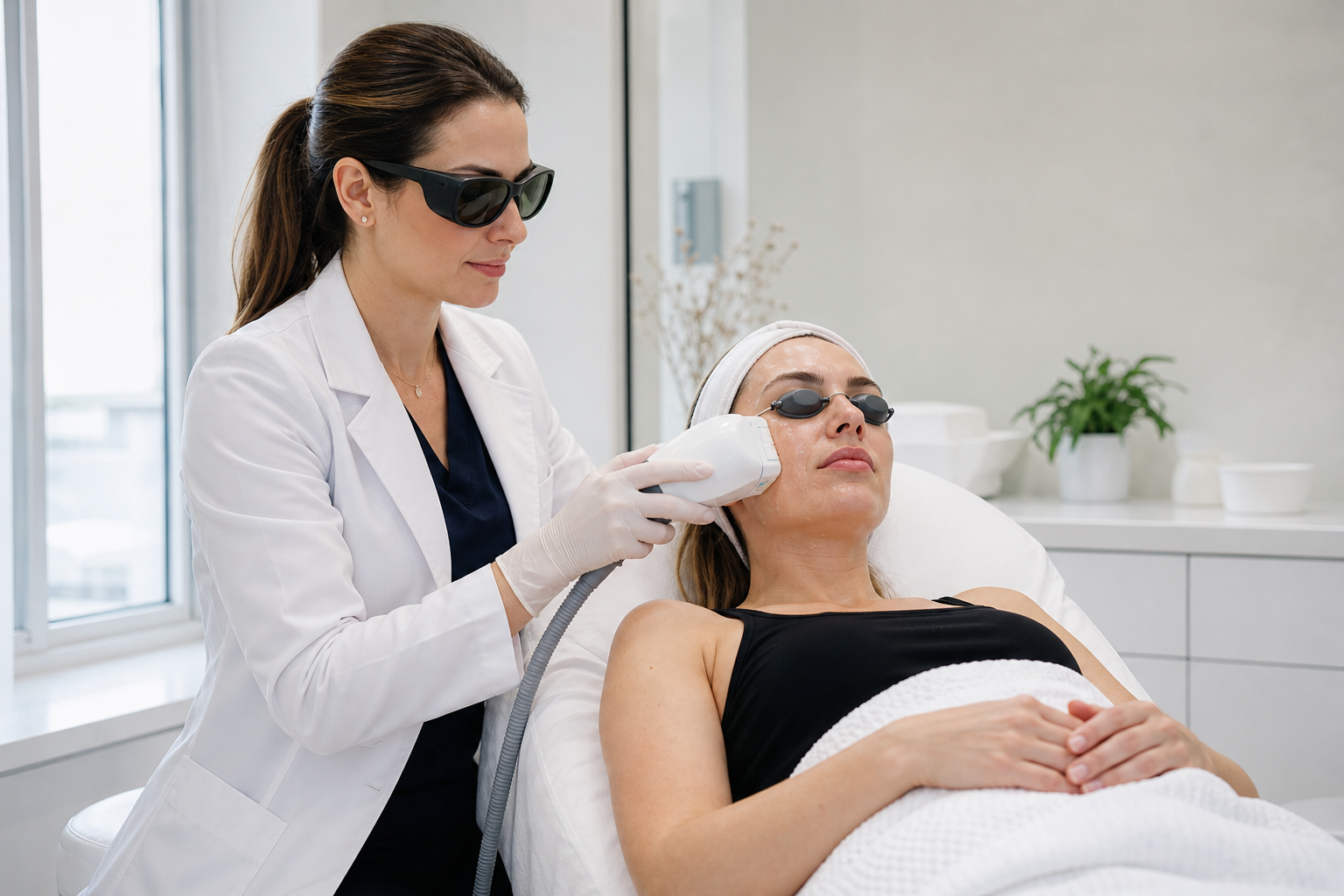
Blood vessels serve as the fundamental framework of the vascular system, responsible for the vital task of transporting blood, oxygen, and nutrients throughout the body. In dermatology and aesthetic medicine, understanding the distinctions between superficial and deep blood vessels is crucial—especially when addressing vascular concerns such as visible capillaries, redness, and other skin discolorations. These vascular imperfections not only affect the skin's appearance but may also cause discomfort and emotional distress for many individuals. Consequently, the choice of treatment is paramount and hinges heavily on whether affected vessels are situated superficially or deeper within the skin.
This article targets individuals interested in vascular skin issues, dermatologists, and aesthetic practitioners who seek to comprehend why superficial and deep blood vessels require different treatment approaches. The discussion is grounded in reliable dermatological knowledge and emphasizes realistic expectations when using advanced methods such as vascular lasers and Intense Pulsed Light (IPL) therapy. We will explore how these technologies function, their selective application depending on vessel depth, and the importance of tailored treatment planning.
Delving into the nuances of superficial versus deep blood vessels reveals more than just anatomical differences; it uncovers the rationale behind selecting one treatment method over another to optimize effectiveness while minimizing risks. For anyone considering vascular treatments, understanding these distinctions is an essential first step toward achieving satisfying and lasting results.
What Defines Superficial and Deep Blood Vessels in the Skin?
The skin's vascular network comprises vessels located at varying depths, each with unique characteristics and clinical implications. Superficial blood vessels, primarily capillaries and small venules, lie near the skin's surface, typically within the epidermal and upper dermal layers. These vessels are often visible as fine red, blue, or purple lines, commonly referred to as thread veins or spider veins. They are directly influenced by environmental exposure, hormonal changes, and mechanical pressures, factors that can precipitate their dilation or damage, leading to prominent redness or localized telangiectasia.
In contrast, deep blood vessels are embedded within the deeper dermis and subcutaneous tissue layers. These vessels, generally larger in diameter and often less visible to the naked eye, play a critical role in systemic circulation and skin physiology. Their deeper location requires that treatment modalities penetrate more profoundly to exert an effect, a task that presents different challenges compared to treating surface vessels.
Recognizing this dichotomy is not merely academic. It directly informs the selection of appropriate therapeutic technologies and protocols. Superficial vessels often respond well to treatments targeting hemoglobin's absorption spectrum near the surface, whereas deeper vessels necessitate devices capable of delivering energy to increased tissue depths while preserving surrounding structures.
How Do Vascular Lasers and IPL Systems Target Superficial Blood Vessels?
Vascular lasers and Intense Pulsed Light systems are the cornerstones of modern treatment for superficial vascular lesions. Their operation centers on the principle of selective photothermolysis, which enables them to target hemoglobin within blood vessels selectively. By using specific wavelengths of light, these devices transform light energy into heat, effectively damaging the vessel wall and promoting its eventual resorption without significant harm to the adjacent skin.
A prime example is the Pulsed Dye Laser (PDL), which emits light at a wavelength optimally absorbed by oxyhemoglobin, typically around 585 nanometers. This targeted absorption causes localized heat generation, coagulating and collapsing the vessel. PDL is renowned for its precision in treating facial redness and superficial telangiectasias due to its efficacy and favorable safety profile.
Meanwhile, IPL devices differ from lasers in that they emit a broad spectrum of light, usually filtered to target ranges relevant to vascular tissues. Although IPL is not a laser, it achieves similar outcomes for thin and superficial vessels by customizing treatment parameters to suit vessel color, size, and patient skin type. IPL is often preferred for treating diffuse redness or multiple small capillaries over extensive skin areas.
It is essential to emphasize that these modalities are most effective for vessels within a limited depth—namely, those close to the skin surface. Beyond a certain penetration threshold, light energy diminishes, and efficacy declines, highlighting why different strategies are required for deeper vascular lesions.
Why Are Treatments for Deeper Blood Vessels Different and More Complex?
Deep blood vessels require specialized treatment approaches because their anatomical depth and size necessitate penetration beyond what superficial-targeted lasers or IPL can safely or effectively achieve. The energy delivered must be sufficient to reach and impact these vessels without collateral damage to the overlying skin and tissues.
Lasers such as the Nd:YAG, emitting near-infrared light around 1064 nanometers, are uniquely suited for this role. Their longer wavelengths allow deeper tissue penetration and selective absorption by hemoglobin, enabling them to target larger, deeper veins typical in vascular malformations or thicker telangiectasias. Nd:YAG laser treatments must be carefully calibrated for pulse duration and energy to maximize vessel closure and minimize side effects like bruising or pigmentation changes.
Moreover, treating deep vessels often involves adjunct imaging tools such as ultrasonography to accurately map vessel location and diameter. This information guides precise targeting, improving treatment outcomes and reducing risks. The intricate nature of these procedures underscores the necessity for professional assessment and execution by experienced clinicians.
How Does the Choice Between IPL and Laser Treatments Depend on Vascular Characteristics?
Choosing the appropriate treatment modality is a nuanced process that considers multiple factors, including vessel color, size, depth, skin type, and anatomical location. Fine, superficial capillaries with a red or pink hue respond best to shorter-wavelength laser light or filtered IPL designed to cover a spectrum of vascular absorption peaks.
Conversely, larger or deeper veins with a bluish or purple tint often require lasers with longer wavelengths and higher energy outputs, such as Nd:YAG lasers. These parameters ensure sufficient penetration and hemoglobin targeting to induce vascular collapse effectively. Additionally, skin phototypes influence device selection and parameter settings to minimize risks such as post-inflammatory hyperpigmentation, especially in individuals with darker skin tones.
It is crucial to appreciate that IPL is not a laser; its polychromatic light leads to less selective absorption. While IPL offers versatility and can be effective for certain superficial vascular conditions, it is not a universal solution. Individualized evaluation and treatment planning remain fundamental to achieving optimal results with either technology.
What Role Does Selective Photothermolysis Play in Vascular Treatments?
Selective photothermolysis is the foundational principle behind both laser and IPL vascular treatments. It involves matching specific wavelengths and pulse durations to the absorption characteristics and thermal relaxation times of target chromophores—in this case, oxyhemoglobin within blood vessels. This precise coupling ensures that the light energy is absorbed predominantly by the targeted vessels, generating heat sufficient to disrupt their structure without widespread damage to surrounding tissues.
The therapeutic window created by selective photothermolysis is critical for safety and efficacy. Devices like the Pulsed Dye Laser capitalize on this principle to achieve fine-tuned targeting of superficial capillaries. For deeper vessels, devices such as the Nd:YAG laser utilize wavelengths capable of deeper skin penetration while maintaining selectivity for hemoglobin.
Understanding this mechanism helps explain why different vessels require distinct treatment wavelengths and pulse durations, affirming the need for tailored therapeutic strategies guided by expert knowledge.
When Should Patients Seek Treatment and What Results Are Realistic?
Early intervention upon noticing visible capillaries, persistent redness, or vascular lesions generally improves treatment outcomes and mitigates progression. Prompt evaluation by a dermatology or aesthetic professional allows the formation of a tailored approach aligning with the patient’s unique vascular profile and skin type.
Patients can typically expect gradual improvement following treatment, as damaged vessels undergo a natural resorption process. Multiple treatment sessions are often necessary, especially for deeper or more extensive vascular irregularities. The aim is to enhance skin appearance with decreased redness and visible vessels, but complete eradication, particularly for deeper veins, may not always be achievable.
Setting realistic expectations before treatment helps align patient satisfaction with achievable outcomes. Importantly, long-term management and lifestyle modifications may be advised to maintain results and prevent new vessel formation.
Why Are Professional Treatments Essential Compared to At-Home Approaches?
The complexity of vascular therapies necessitates professional assessment and execution. Sophisticated equipment, precise parameter adjustment, and detailed knowledge of vascular anatomy and skin physiology are required to achieve safe and effective results.
Over-the-counter or home-use devices lack the adaptability and precision of clinical platforms, increasing risks such as burns, worsening vessel dilation, or incomplete treatment. Additionally, misjudgment in treating deep vessels with superficial methods can lead to complications or treatment failure.
Professional practitioners also offer comprehensive consultation, properly diagnosing underlying vascular conditions, planning individualized treatment protocols, and providing follow-up care. This expertise markedly enhances both immediate treatment success and long-term skin health.


