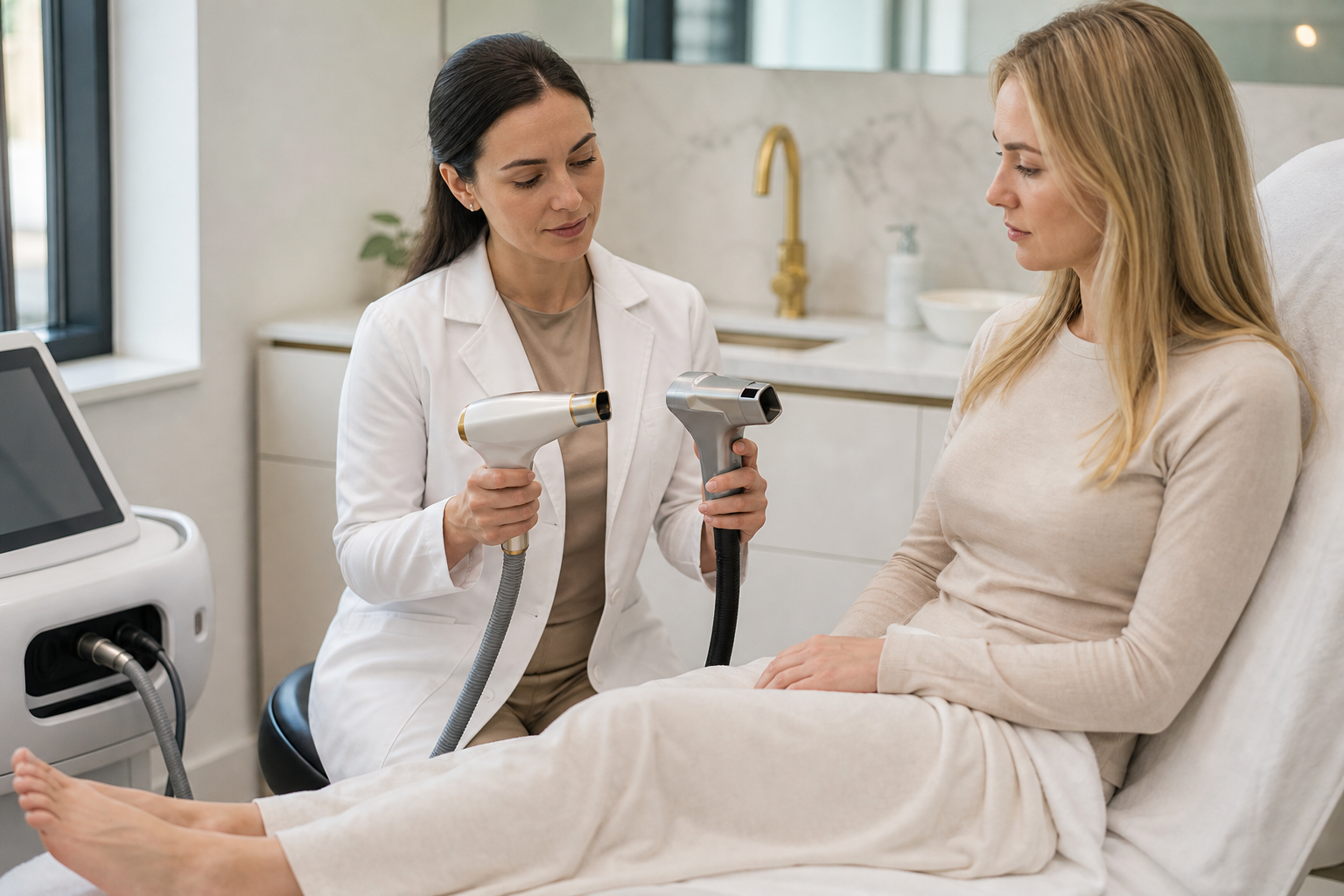
Vascular lasers represent a sophisticated frontier within dermatological technology, designed specifically to target and treat visible capillaries, redness, and other vascular irregularities of the skin. Understanding how vascular lasers work on capillaries is essential for individuals seeking advanced, effective treatments for conditions such as facial redness, spider veins, and other superficial vascular lesions. Whether you are a patient considering treatment options or a professional in the dermatological field aiming for a deeper technical insight, exploring the mechanisms and nuances of vascular lasers provides critical clarity on why these therapies matter and how they achieve their results.
Capillaries are tiny blood vessels located close to the surface of the skin. When they become dilated or damaged, they can manifest as visible red or purple lines and blotches that sometimes affect one's appearance and self-confidence. Vascular laser treatment offers a targeted approach to minimize or eliminate these unsightly vessels with precision, fostering clearer and more even-toned skin. This article explores how various vascular lasers operate on capillaries, the factors influencing treatment choices, and the science behind selective photothermolysis – the foundational principle that enables lasers to selectively target blood vessels without harming surrounding tissues. By elucidating distinctions such as the differences between true vascular lasers and Intense Pulsed Light (IPL) devices, readers will gain a well-rounded understanding necessary to engage knowledgeably with vascular treatments.
What Are Vascular Lasers and How Do They Target Capillaries?
Vascular lasers are specialized laser devices that emit specific wavelengths of light absorbed preferentially by hemoglobin, the pigment in red blood cells. This selective absorption enables the laser energy to concentrate on blood vessels such as capillaries, spider veins, and small varicosities while sparing the surrounding skin tissue. The fundamental concept driving vascular laser treatment is selective photothermolysis, where "photo" refers to light, "thermo" to heat, and "lysis" to destruction. By precisely calibrating the laser parameters—wavelength, pulse duration, and energy density—the laser induces controlled thermal injury within the targeted vessels, causing their walls to collapse and eventually be reabsorbed and eliminated by the body's natural processes.
The capillaries targeted during therapy are often superficial vessels contributing to visible redness or telangiectasias. Effective vascular lasers operate within wavelengths that the hemoglobin chromophore absorbs strongly—commonly in the visible and near-infrared spectrum, roughly between 500 and 1,100 nanometers. This absorption leads to heating within the blood, coagulating the vessel contents, damaging the endothelial lining, and encouraging vessel closure between sessions. The ability to focus on these tiny vessels while preserving the delicate skin matrix ensures patients receive results without scarring or significant downtime.
Why IPL Is Not a Laser and How It Differs From Vascular Lasers
Intense Pulsed Light (IPL) is often discussed in the context of skin vascular treatments but fundamentally differs from true vascular lasers. Unlike lasers, which emit a single, coherent wavelength of light, IPL emits a broad spectrum of wavelengths filtered to target a range of chromophores including hemoglobin, melanin, and water. Due to this polychromatic output, IPL penetration depth and specificity are less precise than those of monochromatic laser light. While IPL can reduce redness and improve skin tone by affecting superficial blood vessels, it is generally less selective and often requires multiple sessions for comparable effects.
IPL devices allow practitioners to adjust filters to tailor wavelength ranges for targeted issues. However, because this broad-spectrum light disperses energy across multiple chromophores, surrounding tissues might be affected to a degree. Consequently, IPL may suit patients with lighter skin types and more superficial vascular concerns, whereas lasers deliver higher specificity necessary for treating deeper or larger vessels safely in diverse skin phototypes. Understanding these technical distinctions assists patients and professionals in selecting the appropriate modality for individual vascular conditions.
The Principle of Selective Photothermolysis and Its Role in Capillary Treatment
Selective photothermolysis is the scientific cornerstone underlying vascular laser treatments. Formulated in the 1980s, it explains how specific wavelengths of light can target particular chromophores in the skin—such as melanin in hair follicles or hemoglobin in blood vessels—while minimizing collateral damage to adjacent tissues. In the context of capillaries, this theory enables practitioners to design laser protocols that deliver pulse durations shorter than or equal to the thermal relaxation time of the targeted vessels. This measurement corresponds to how quickly these vessels dissipate heat, crucial to confining laser-induced injury solely to the capillary walls.
By tuning the laser's wavelength to coincide with hemoglobin's absorption peak and adjusting energy parameters for vessel size and depth, practitioners ensure that heat accumulates selectively within the vessel. This controlled thermal damage leads to protein denaturation, collapsed vessel walls, and eventual reabsorption without causing open wounds or scarring on the overlying epidermis. Therefore, selective photothermolysis allows vascular laser treatment to be both effective and safe, an advancement that transformed dermatologic management of vascular lesions.
Types of Vascular Lasers Commonly Used for Capillaries and Redness
Multiple vascular laser types target capillaries and redness, each with unique wavelengths and clinical applications. Understanding their differences guides choice based on individual patient needs, vessel characteristics, and skin phototype.
Pulsed Dye Laser (PDL) is often considered the gold standard for treating red skin conditions such as rosacea, port wine stains, and facial telangiectasias. Operating primarily at 585–595 nm, the PDL emits light well absorbed by oxyhemoglobin, causing precise vessel coagulation. Its relatively short pulse duration makes it effective for small to medium-sized vessels while sparing surrounding tissues. PDL treatments can significantly reduce redness and improve skin texture.
Nd:YAG Laser uses a longer wavelength, typically 1,064 nm, enabling deeper penetration to address larger, deeper blood vessels. It is especially effective for treating leg veins and deeper telangiectasias resistant to other modalities. Nd:YAG laser’s longer wavelength reduces melanin absorption, permitting safer use on darker skin types and minimizing pigmentary side effects. Though it penetrates deeper, the device has adjustable pulse durations that accommodate vessels of differing diameters.
KTP Laser
How Vessel Characteristics Influence Laser Selection and Treatment Outcomes
The choice of vascular laser treatment depends heavily on anatomic and physiologic characteristics of the target vessels. Key factors include vessel color, diameter, depth, and anatomical location, as well as the patient's skin phototype. These influence both the efficacy and safety of treatment and help avoid complications such as scarring or pigment changes.
Capillary color indicates the oxygenation status and size of vessels—bright red vessels usually have higher oxygenation and may respond well to shorter wavelengths like PDL or KTP lasers, while darker or purplish veins might require Nd:YAG treatment. Vessel diameter affects the laser pulse duration setting; smaller vessels require shorter pulses to match their thermal relaxation time, whereas larger vessels need longer pulses for efficient destruction.
The depth of the vessel beneath the skin surface determines the appropriate wavelength selection, as longer wavelengths penetrate deeper but may have reduced hemoglobin absorption. Additionally, anatomical location is important because areas with thinner skin or increased sensitivity necessitate more cautious energy settings. Skin phototype, classified by the Fitzpatrick scale, also critically informs treatment parameters. Darker skin types contain more melanin, raising the risk of pigmentary changes; hence, longer wavelength lasers with reduced melanin absorption, such as Nd:YAG, are preferred in these cases.
What to Expect During and After Vascular Laser Treatment for Capillaries
Vascular laser sessions typically involve the application of topical anesthetics or cooling to enhance patient comfort. Treatment duration varies with the size and extent of the area being addressed. During the procedure, patients may feel a brief warming or snapping sensation as laser pulses target the vessels.
Immediately following treatment, treated capillaries may appear pink to red and slightly swollen. Sometimes mild bruising or pinpoint bleeding can occur due to vessel closure. These effects are generally transient and resolve within days to a week. Over subsequent weeks, the coagulated vessels are broken down and resorbed by the body's immune system, leading to gradual fading of redness and visible vessels.
Multiple sessions spaced several weeks apart may be necessary to achieve optimal results. Photoprotection and gentle skin care following treatment help minimize side effects and ensure smooth healing. Patients should maintain realistic expectations, understanding that while vascular lasers significantly reduce redness and capillaries, no treatment can guarantee complete removal or preclude recurrence.
Common Questions and Misconceptions About Vascular Laser Treatment
Many patients inquire whether vascular laser treatment is painful or if it carries significant risks. While discomfort levels vary, most patients tolerate treatment well, aided by cooling techniques. Side effects are typically mild and temporary when performed by experienced practitioners.
A common misconception is equating IPL with vascular lasers. Although IPL is useful for some vascular concerns, it is not classified as a laser due to its broad spectrum light output and lower specificity. Choosing between IPL and lasers should be based on individual diagnosis, vessel characteristics, and skin type for optimal safety and efficacy.
Some wonder if vascular laser treatments are permanent. While they effectively reduce visible vessels, underlying conditions such as rosacea or genetic predispositions may cause new vessels to form over time, necessitating maintenance sessions. Vascular lasers are therefore part of a comprehensive vascular care strategy rather than a one-time cure.
Integrating Vascular Laser Knowledge Into Treatment Planning
Proper patient evaluation and diagnosis are prerequisite to selecting the most suitable vascular laser or treatment modality. Knowledge of available laser types, their mechanisms, and vessel-specific considerations enables clinicians to devise personalized protocols that maximize outcomes and minimize risks.
Comprehensive assessment includes identifying the vascular lesion’s nature, size, color, and distribution; evaluating the patient's skin type; and reviewing medical history. Incorporating this information with a deep understanding of selective photothermolysis and laser-tissue interactions facilitates informed consent and realistic expectation setting.
Moreover, recognizing technological advances and current research within vascular laser treatments enables continued refinement of therapeutic approaches. This commitment to ongoing education ensures that vascular laser interventions maintain their critical role in achieving clearer, healthier skin for patients with challenging capillary and redness conditions.


