Sunbeds and laser pigmentation removal represent two seemingly disparate yet increasingly intersecting facets of modern skin care and aesthetic dermatology. Sunbeds, devices that emit ultraviolet (UV) radiation to induce a tanned appearance, have long been used by individuals seeking a warm, bronzed complexion. Conversely, laser pigmentation removal is a cutting-edge cosmetic procedure designed to target and diminish areas of uneven pigmentation, such as age spots, melasma, and solar lentigines, restoring a more uniform skin tone. Understanding the interplay between these two approaches is vital for anyone considering pigmentation treatments or tanning, as their interaction carries significant implications for both efficacy and skin health.
This article aims to offer an evidence-based, impartial examination of sunbeds and laser pigmentation removal, elucidating their mechanisms, the risks of their combination, suitable candidacy, and safer alternatives. It is intended for individuals contemplating the use of sunbeds or laser treatments for pigmentation issues, as well as for dermatology and cosmetic professionals seeking a comprehensive understanding of the related clinical considerations. The knowledge shared here empowers readers to make informed decisions rooted in scientific understanding rather than anecdote or marketing claims.
The relevance of this topic cannot be overstated. Misuse or uninformed combination of UV tanning devices and laser interventions may exacerbate pigmentation irregularities, increase the risk of adverse skin reactions, and compromise treatment outcomes. Proper scheduling and skin preparation are essential for optimal results and skin safety. Therefore, grasping the nuances of sunbed exposure before and after laser pigmentation removal is crucial for preserving skin integrity and achieving desired cosmetic goals.
What Causes Skin Pigmentation Irregularities?
Skin pigmentation irregularities arise from variations in melanin distribution within the epidermis and dermis. Melanin, synthesized by melanocytes, determines skin color and offers protection against ultraviolet radiation. When melanin production is locally increased, hyperpigmentation manifests as dark patches or spots. Conversely, reduced melanin leads to hypopigmentation, characterized by lighter areas. This article concentrates on hyperpigmentation, which includes conditions such as melasma, solar lentigines (age spots), post-inflammatory hyperpigmentation (PIH), and freckles intensified by UV exposure.
Multiple factors influence the development of hyperpigmented lesions, including genetic predisposition, hormonal fluctuations (notably during pregnancy or with contraceptive use), inflammatory skin conditions like acne or eczema, and cumulative sun exposure. Ultraviolet radiation, in particular, is a potent trigger; it stimulates melanocytes to overproduce melanin as a defensive response, which can result in or worsen pigmentary disorders. Understanding these underlying causes is fundamental to tailoring effective treatment strategies and preventing recurrence.
How Do Sunbeds Affect Pigment Production and Skin Health?
Sunbeds predominantly emit UVA and, in some cases, UVB rays, imitating the sun’s electromagnetic spectrum to stimulate melanogenesis—the process of melanin production. Exposure to these UV rays leads to skin darkening, an effect often sought for cosmetic reasons. However, this pigmentation is a direct response to DNA damage within skin cells, initiating a protective mechanism.
While a tanned appearance may be aesthetically pleasing, UV exposure from sunbeds carries considerable risks. UV radiation activates melanocytes, which may exacerbate pre-existing hyperpigmentation or induce new pigmented spots, particularly in individuals with pigmentary disorders. Moreover, UV radiation accelerates skin aging (photoaging) by degrading collagen and elastin fibers and poses a significant risk factor for skin cancers, including melanoma. Therefore, any use of sunbeds warrants a cautious approach.
Considering these dangers, experts advise minimizing or avoiding sunbed use, especially around the time of skin treatments like laser pigmentation removal where the skin’s protective barrier is compromised. UV exposure can increase photosensitivity and inflammation, undermining treatment safety and effectiveness.
Principles and Mechanisms of Laser Pigmentation Removal
Laser pigmentation removal employs selective photothermolysis, a process where specific wavelengths of laser light target pigmented lesions while sparing surrounding healthy tissue. Melanin efficiently absorbs particular laser wavelengths, causing localized heating that fragments the pigment. Following laser application, cellular debris from disrupted pigment is gradually cleared by the body's immune system over days to weeks, resulting in lightening of the pigmented area.
Different laser systems—such as Q-switched Nd:YAG, Alexandrite, and PicoSure lasers—offer various wavelengths adjusted for skin type, pigment depth, and lesion characteristics. The choice of laser and treatment parameters is critical and necessitates expert evaluation to avoid adverse effects, including scarring or post-inflammatory hyperpigmentation.
Pre-treatment skin conditioning and post-treatment care are essential elements of laser therapy. Patients receive guidance on sun protection, topical agents, and follow-up intervals to optimize outcomes and promote skin healing.
Why Is It Important to Manage Sunbed Exposure Before Laser Treatments?
Solar exposure, including sunbed use, immediately prior to laser pigmentation removal presents potential complications. Skin recently exposed to UV rays is typically more inflamed, sensitized, and prone to phototoxic reactions. Undertaking laser treatments on such skin increases the risk of adverse side effects such as redness, blistering, altered pigmentation, and delayed healing.
Additionally, UV-induced melanin production in the days leading up to treatment may reduce the laser’s selective efficacy and complicate precise targeting, as existing pigmentation changes dynamically. A sunburned or tanned complexion may necessitate postponing treatment to reduce risks and facilitate a safer, more effective procedure.
Therefore, dermatological guidelines recommend consultative evaluation whereby patients disclose recent sun or sunbed exposure so that optimal scheduling and skin preparation can be established. This individualized approach enhances safety and therapeutic success.
What Are the Recommendations Regarding Sunbed Use After Laser Pigmentation Removal?
Post-laser care is a sensitive period during which the skin’s barrier function is disrupted, making it vulnerable to UV radiation damage. Exposure to UV rays from sunbeds after laser pigmentation removal significantly increases the risk of hyperpigmentation recurrence and can cause new pigmentation anomalies or inflammation.
Moreover, UV exposure during the recovery phase can interfere with normal skin regeneration, potentially resulting in suboptimal cosmetic outcomes, prolonged redness, discomfort, and even scarring. Because UV radiation is a major catalyst of pigment dysregulation, sunbed use is generally contraindicated throughout the healing period following laser treatment.
The exact duration of avoidance varies based on the laser type, extent of treatment, individual skin response, and medical advice. Patients should receive clear instructions from their dermatologist or treatment provider to prevent inadvertent harm or compromised results.
Are There UV-Free Alternatives for Achieving a Tanned Appearance?
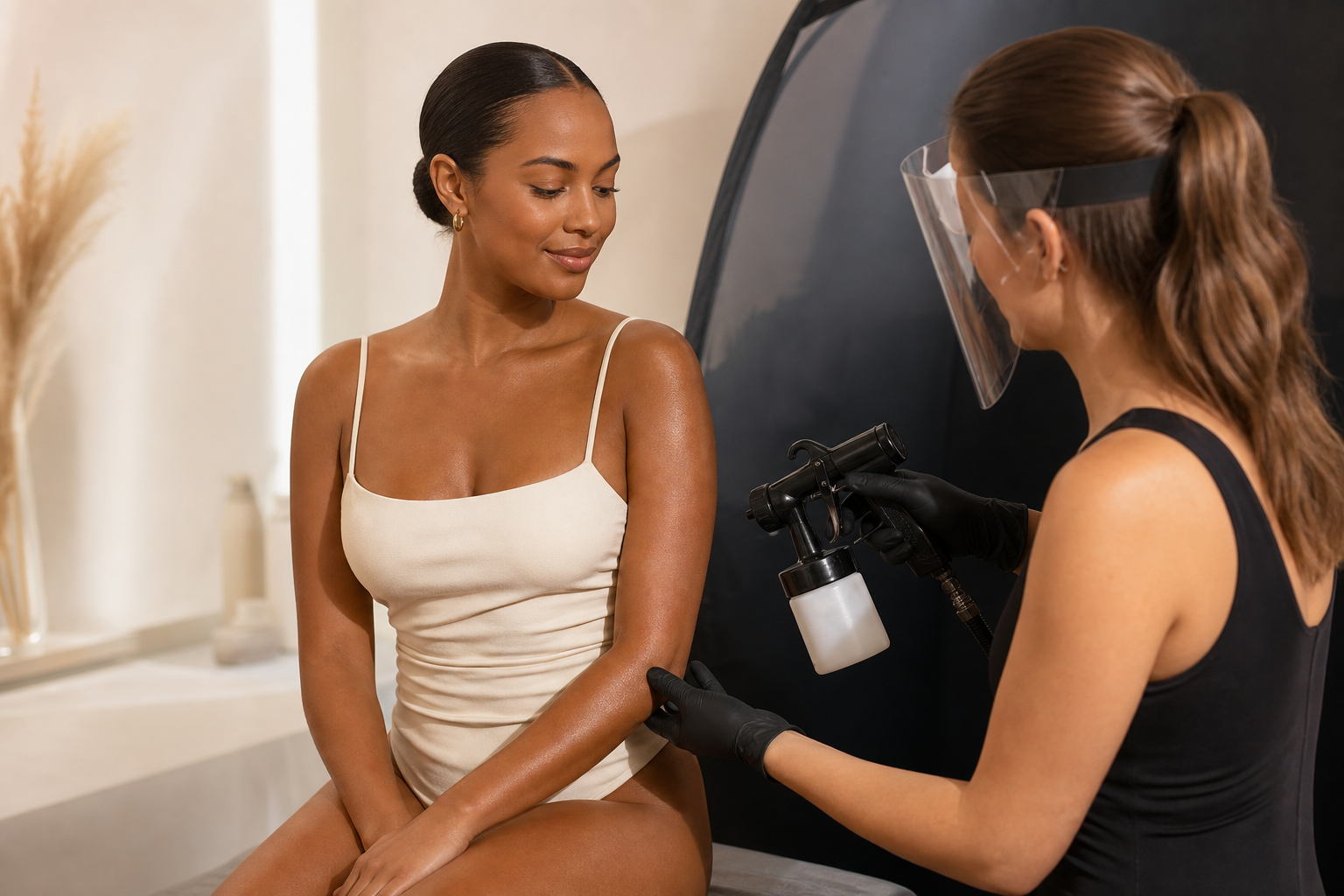
For individuals seeking the aesthetics of a tan without subjecting their skin to UV radiation—and especially those with pigmentation concerns—there exist safe, UV-free tanning options. Self-tanning products, such as lotions, mousses, and sprays (including spray tans), impart a bronzed color through the interaction of dihydroxyacetone (DHA) with the outermost layer of the skin. This chemical reaction creates a temporary pigment without melanoma risk or photoaging side effects.
It is crucial to underscore that these cosmetic tanning methods do not provide any sun protection factor (SPF) and do not confer resistance against UV-induced skin damage. Users must continue to apply adequate sunscreen products when exposed to actual sunlight to safeguard their skin health.
For those who have undergone or plan to undergo laser pigmentation removal, UV-free tanning serves as a non-invasive option to achieve desired skin tone without jeopardizing treatment integrity or skin recovery.
What Risks Are Associated with Combining Sunbeds and Laser Pigmentation Treatments?
When sunbed use coincides with laser pigmentation removal treatments, the combined effects can heighten the probability of complications. UV exposure activates melanocytes and may counteract the pigment clearing effects of the laser. It can amplify inflammatory responses, leading to increased erythema, swelling, and hyper- or hypopigmentation after treatment.
Moreover, frequent UV exposure from sunbeds enhances cumulative skin damage and carcinogenic risk, which is exacerbated when laser procedures disrupt skin integrity. This confluence can impede healing, diminish treatment durability, and promote recalcitrant pigmentation issues.
Hence, cautious avoidance of sunbeds is advised during the peri-treatment intervals to guard against aggravating pigmentary disorders and to optimize therapeutic benefits.
How Should Patients Prepare for Laser Pigmentation Removal if Using Sunbeds?
Patients regularly using sunbeds who consider laser pigmentation treatments should fully inform their dermatologist or aesthetic specialist about their UV exposure routine. This transparency allows customization of treatment timing, pre-conditioning protocols, and care plans.
Typically, a period of sunbed abstinence is recommended prior to laser intervention to allow skin normalization and reduce photosensitivity. Additional skin conditioning with prescribed topical agents may be advised. Follow-up scheduling is critical to monitor skin response and adjust treatment parameters.
Individual factors such as skin phototype, extent and depth of pigmentation, and overall skin condition influence preparation strategies. An evidence-based, medical guidance-centered approach ensures maximal safety and optimal outcomes.
What Can Patients Expect During and After Laser Pigmentation Removal?
During laser treatment, patients may experience sensations of mild warmth, tingling, or snapping on the skin's surface. The duration depends on the treated area and lesion number, usually ranging from minutes to under an hour.
Following treatment, transient effects include redness, slight swelling, and darkening of pigmented spots before they fade. These responses signify skin healing and clearance of disrupted pigment particles. Proper post-procedure care involves sun avoidance, application of soothing and moisturizing products, and strict photoprotection to prevent complications.
Clinical follow-up appointments are essential to evaluate progress and determine the need for additional sessions or adjunct therapies. Adherence to professional recommendations greatly influences treatment success and patient satisfaction.