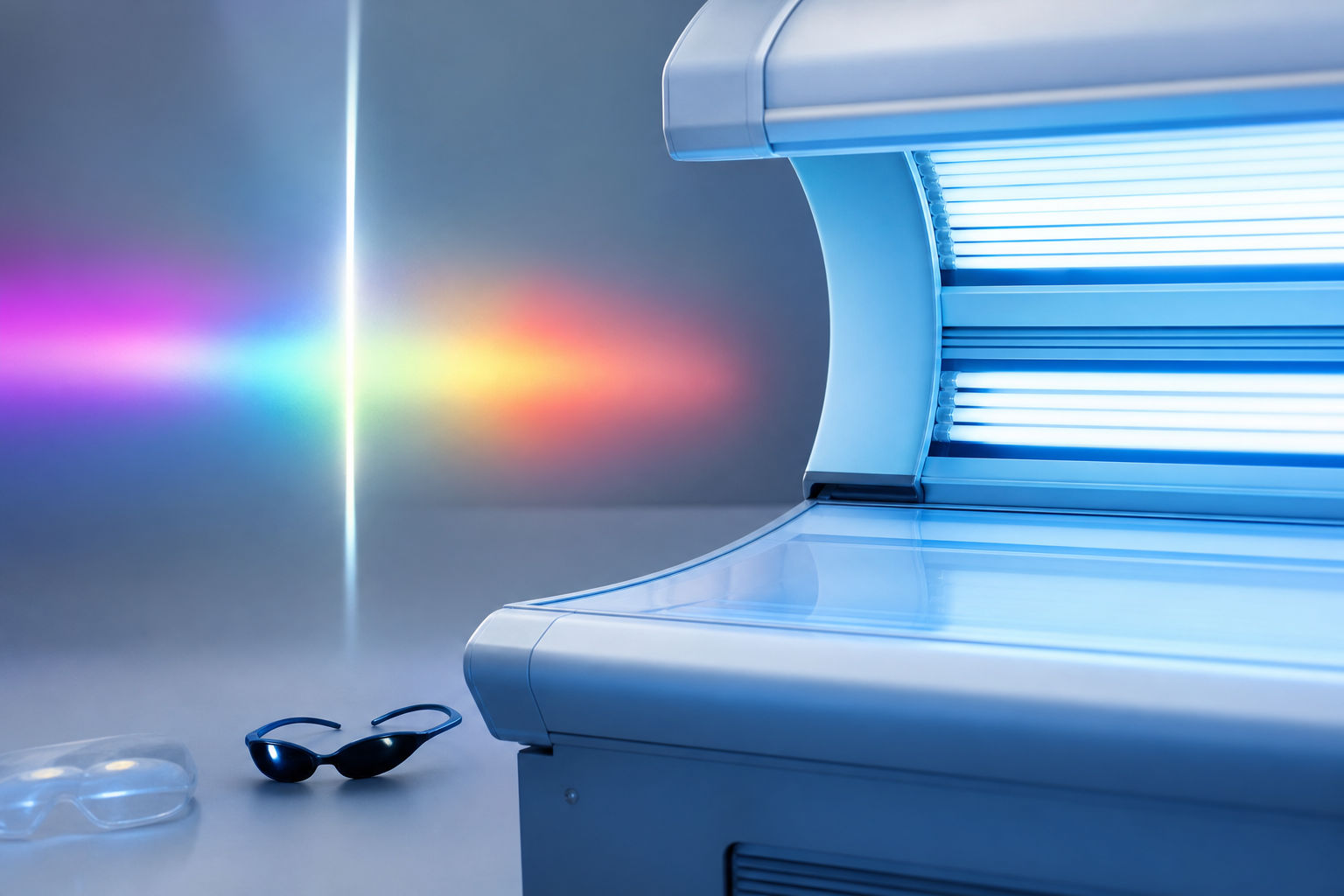
Sunbeds, often used for achieving a tanned complexion, emit ultraviolet (UV) radiation that can pose significant risks not only to the skin but also to the eyes. While the dangers of UV exposure on skin health are well-documented, there is a crucial need to highlight and understand the acute damage that sunbeds can inflict upon the eye surface. This article is dedicated to individuals who currently use or are considering sunbed use, as well as healthcare professionals and educators seeking evidence-based insights into the ocular hazards associated with sunbed UV exposure.
The relevance of this topic is underscored by the delicate nature of the ocular surface and its vulnerability to UV radiation, which can directly damage the epithelium of the cornea and conjunctiva. Such damage manifests as painful conditions resembling burns, medically referred to as photokeratitis or ultraviolet keratitis. Importantly, there is no established safe threshold of UV radiation for the eyes; even brief exposure entails risk. Moreover, UV radiation from sunbeds is classified by the International Agency for Research on Cancer (IARC) as a Group 1 carcinogen, indicating established carcinogenicity in humans. Understanding the mechanisms, symptoms, and risks associated with eye surface damage from sunbeds is essential for personal and public health.
In the sections that follow, we explore what constitutes acute ocular surface damage from sunbed UV radiation, identify who is most at risk, outline common symptoms, and discuss recommended responses if injury occurs. This in-depth analysis aims to provide a clear and factual foundation for awareness and informed decision-making regarding sunbed use and eye health.
What Constitutes Acute Ocular Surface Damage from Sunbed UV Radiation?
Acute damage to the surface of the eye caused by sunbed use primarily involves photokeratitis, a condition akin to a sunburn affecting the corneal and conjunctival epithelium. Sunbeds emit UV-A and UV-B radiation, both of which contribute to epithelial injury. Unlike natural sunlight, the spectral quality and intensity of UV rays from sunbeds can vary, sometimes amplifying the risk of immediate eye injury.
The ocular surface is particularly vulnerable because its epithelial layers are thin and lack the significant protective pigmentation found in the skin. UV rays penetrate these superficial layers, causing cellular damage, inflammation, and edema. The resulting injury disrupts the corneal surface integrity and conjuctival health, leading to pain, impaired vision, and photophobia.
This type of acute damage should be viewed as a differential from chronic UV-related eye conditions. While chronic exposure may contribute to degenerative changes, photokeratitis represents a sudden onset injury appearing within hours of UV exposure. Understanding this distinction is critical when evaluating symptoms and advising sunbed users on eye health.
Who Is Particularly Vulnerable to Sunbed-Related Eye Surface Injuries?
While any individual exposed to sunbed UV radiation can incur ocular surface damage, some groups are especially at risk. Persons with lighter eye colors and fair skin have reduced natural melanin pigmentation, which means less inherent protection against UV radiation infiltration to ocular tissues.
Additionally, individuals taking photosensitizing medications — including certain antibiotics, diuretics, and nonsteroidal anti-inflammatory drugs — experience increased susceptibility to UV-induced eye damage. People with existing ocular surface conditions such as dry eye syndrome or previous corneal injuries may also face heightened risk and prolonged recovery times.
Frequent sunbed users or those with extensive cumulative UV exposure, whether from sunbeds or outdoor environments, are at risk for additive effects that exacerbate the probabilities of acute and chronic ocular impairments. Awareness of these vulnerabilities aids both users and healthcare providers in risk assessment and preventive guidance.
What Are the Typical Symptoms of Acute Eye Surface Damage from Sunbed Use?
Symptoms following sunbed-induced photokeratitis usually develop several hours post-exposure. Common manifestations include a burning or gritty sensation in the eyes, conjunctival redness, and excessive tearing. Patients often report difficulty keeping eyes open and increased sensitivity to light, known as photophobia.
In more severe presentations, transient blurred vision or eye pain may occur, interfering with normal activities. Since such symptoms can mimic other ocular conditions, it is crucial to consider recent sunbed UV exposure as a potential etiological factor during symptom evaluation. Prompt recognition supports timely care and limits the risk of complications.
Why Is There No Safe Threshold of UV Exposure for the Eyes in Sunbed Use?
The absence of a firmly defined safe limit for UV radiation exposure to the eyes distinguishes ocular risk from some skin-related UV thresholds. Scientific consensus acknowledges that even low doses of artificial UV radiation can cause DNA damage to epithelial cells, potentially leading to both acute injury and long-term carcinogenic processes.
The IARC has classified UV radiation from sunbeds as Group 1 carcinogenic to humans, placing it among agents with sufficient evidence for causing cancer. This classification underscores that any exposure carries a level of risk, and no dose is considered entirely safe or risk-free, especially for delicate ocular tissues.
Additionally, individual variations in sensitivity, use conditions, and device specifications complicate risk standardization. This complexity bolsters the imperative for preventive measures rather than reliance on presumed safe exposure limits.
What Steps Should Be Taken if Symptoms of Eye Damage Occur After Sunbed Exposure?
If someone experiences symptoms such as eye burning, redness, excessive tearing, light sensitivity, or blurred vision following sunbed use, seeking professional medical advice is essential. Contacting an ophthalmologist or pharmacist promptly can facilitate appropriate diagnosis and intervention.
Self-treatment is discouraged without expert guidance, as improper management may exacerbate inflammation or delay healing. Medical evaluation typically includes examination of the corneal surface and assessment of injury extent, enabling tailored treatment which may include anti-inflammatory and lubricating agents.
While awaiting professional care, individuals should avoid further UV exposure and minimize activities that strain the eyes. Eye protection and rest are important interim measures to support recovery.
How Does Sunbed UV Radiation Impact General Eye Health Beyond Acute Injury?
Beyond the immediate effects of acute photokeratitis, cumulative UV exposure from sunbeds can contribute to long-term ocular complications. These include accelerated lens opacity formation (cataracts), abnormal conjunctival growths such as pterygium, and increased risk for periorbital skin cancers and potentially ocular surface neoplasms.
The additive nature of UV damage heightens the importance of cautious sunbed use, as repetitive epithelial injuries may impede the eye’s natural repair mechanisms and foster chronic degenerative changes. Understanding these broader implications supports comprehensive risk communication and preventive strategies for users.
Why Are Closed Eyes, Regular Glasses, or Contact Lenses Inadequate Protection Against Sunbed UV Radiation?
Common misconceptions hold that closing the eyes, wearing ordinary eyeglasses, or using contact lenses sufficiently protects the eyes during sunbed sessions. However, UV radiation can penetrate closed eyelids, and the thin skin and vascularized tissue beneath make this a limited barrier.
Conventional eyeglasses are typically not manufactured to filter UV rays effectively and may allow harmful wavelengths to reach the ocular surface. Similarly, contact lenses cover only the corneal area and do not shield the conjunctiva or eyelids, providing incomplete protection.
Effective prevention requires specialized UV-blocking eyewear designed and tested to absorb or reflect significant proportions of UV-A and UV-B rays, ensuring comprehensive eye safety during sunbed use.
Why Are Improvised Barriers Like Towels Ineffective for Protecting Face and Eyes in Sunbeds?
Some individuals attempt to shield their face and eyes with towels or other fabric during sunbed exposure. Such improvised methods fail to provide consistent and reliable UV protection due to incomplete coverage, potential UV reflection around edges, and unknown material properties concerning UV transmission.
Additionally, loosely positioned fabrics can shift during session use, leaving areas exposed. Mechanical irritation from rough cloth surfaces may also harm sensitive facial skin and eye regions.
Given these shortcomings, using purpose-designed protective eyewear and following established safety protocols is crucial for effective UV radiation shielding in sunbed environments.


