Unevenness in the skin's appearance at the knees, elbows, and ankles is a common concern faced by many individuals seeking both aesthetic appeal and skin health. These body parts are uniquely susceptible to variations in skin texture and coloration due to their frequent use, exposure, and structural qualities. Often, people notice rough patches, darker discolorations, or thickened skin in these specific areas, which can affect self-confidence and overall skin satisfaction.
This article is crafted for individuals who are noticing these uneven areas on their knees, elbows, and ankles and want to understand the underlying causes, safe approaches to care, and realistic outcomes. It offers practical guidance without resorting to harsh scrubs, questionable home remedies, or unwarranted medical promises. Additionally, for those who use cosmetic methods such as spray tanning and wish to avoid common pitfalls and irregularities on these challenging skin zones, the information here is particularly pertinent.
Why does this matter? Because the skin on these joints often requires specialized attention distinct from other parts of the body, due to its thickness, propensity for dryness, and exposure to mechanical stress. A well-informed approach can help manage and even improve the appearance and condition of these areas, supporting healthier skin and a more uniform look.
What Makes the Knees, Elbows, and Ankles Prone to Uneven Skin?
The skin covering the knees, elbows, and ankles serves as a protective barrier over joints frequently bent, pressed against surfaces, or rubbed during daily activities. These areas have a naturally thicker epidermis, a layer designed to withstand pressure and reduce injury. However, this robustness comes with a trade-off: increased potential for dryness, roughness, and localized thickening known as hyperkeratosis.
Several factors contribute to unevenness here. First, low hydration levels can cause the skin to become flaky and darker as dead cells accumulate instead of shedding regularly. Second, repeated mechanical friction — from leaning elbows on tables, kneeling, or wearing tight footwear — stimulates the skin to produce extra protective layers, resulting in thickened, rough spots. Third, insufficient exfoliation allows dead skin cells to build up, worsening texture and discoloration. Lastly, environmental elements such as sun exposure, wind, and pollution can damage skin integrity and worsen irregularities.
How Do Lifestyle and Health Conditions Influence Skin Unevenness in These Areas?
Beyond the general contributors, individual habits and health conditions play influential roles. For example, people who habitually sit or kneel on hard surfaces may amplify friction-induced thickening on their knees. Similarly, neglecting moisturizing routines on elbows and ankles can set the stage for dryness and pigment changes.
Certain dermatological conditions are known for manifesting at these locations. Psoriasis may cause scaly, red patches; eczema can lead to dry, itchy, and inflamed skin; and keratosis pilaris frequently appears as small bumps, often on upper arms but sometimes extending to elbows. These diseases compound the challenge of achieving smooth, even-toned skin and usually benefit from professional evaluation for targeted management.
Why Is Proper Skin Care Essential for Knees, Elbows, and Ankles?
Consistent skin care tailored to these joint areas addresses the root causes of unevenness: hydration loss and pressure-induced thickening. Hydrating regularly with creams containing ingredients such as urea, glycerin, and ceramides helps replenish moisture and restore the skin barrier. This encourages natural shedding of dead cells and promotes softer, more elastic skin.
Equally important is gentle exfoliation. Unlike facial skin, the thicker skin on knees and elbows can safely tolerate mild exfoliation methods that remove accumulated dead skin without causing microabrasions or irritation. Using enzyme-based exfoliants or formulations with alpha hydroxy acids in controlled amounts is advisable, whereas harsh scrubbing or strong acids can exacerbate problems.
Additionally, protecting these vulnerable sites from environmental damage through daily sun protection and appropriate clothing reduces discoloration and premature aging.
How Can Spray Tanning Affect Uneven Skin on Knees, Elbows, and Ankles?
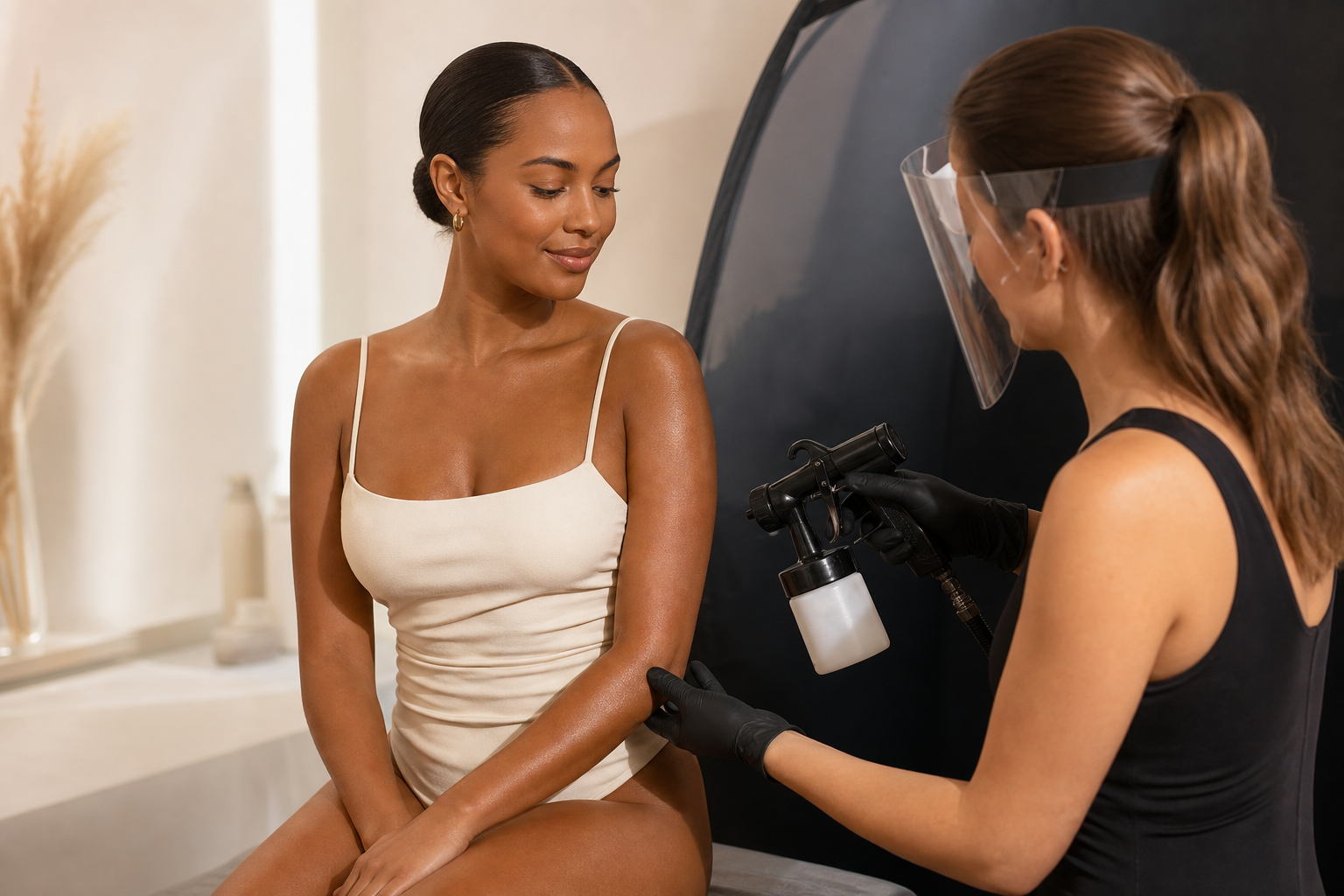
Spray tanning has become a popular option for achieving a sun-kissed glow without harmful UV exposure, as described in Spray Tan: The Complete Guide to a Sun-Kissed Look Without UV Exposure. However, uneven skin on knees, elbows, and ankles can present significant challenges during and after application. The thicker, drier patches on these joints tend to absorb tanning solution differently, often resulting in blotchy or darker areas, a phenomenon explored in Why Does Spray Tan Cling to Dry Areas?
This irregularity happens because drier, thicker skin absorbs and holds on to tanning agents more intensely, while well-moisturized, smooth skin develops a more even tone. Therefore, meticulous preparation involving thorough hydration and gentle exfoliation can markedly improve the uniformity of spray tan results.
It's also critical to understand that spray tans do not provide sun protection. Applying a broad-spectrum sunscreen with at least SPF 30 afterward remains essential, especially since uneven skin is often more vulnerable to sun damage.
When Should You Consult a Dermatologist About Skin Unevenness on Joints?
While many cases of uneven knees, elbows, and ankles can be managed with correct home care, certain symptoms warrant professional attention. Any persistent, painful cracks, bleeding, itching, swelling, or worsening thickening are signs to seek evaluation. Skin infections, allergic reactions, or underlying skin diseases may require prescription medications or specialized treatments.
If diligent home care over several weeks does not improve dryness or discoloration, or if you have a history of skin conditions such as psoriasis or eczema, consulting a dermatologist will provide tailored advice that can prevent complications.
What Are the Best Practices to Achieve Smooth and Even Skin on These Areas?
To promote an even and healthy look to knees, elbows, and ankles, embrace a skincare routine that respects the skin’s delicate balance while addressing its specific needs:
Hydration with Gentle Emollients: Use creams enriched with moisturizing agents such as urea or ceramides daily, preferably after bathing when the skin is primed to absorb moisture.
Regular, Mild Exfoliation: Incorporate chemical exfoliants with natural enzymes or alpha hydroxy acids in low concentrations once or twice a week to remove dead cells without irritation.
Protection Against Environmental Factors: Apply sunscreen to exposed joints to prevent pigmentation changes. Cover skin appropriately in cold or windy weather.
Mindful Use of Cosmetic Treatments: Prepare and maintain skin carefully before and after spray tan applications to reduce uneven results on hands, feet, and joints.