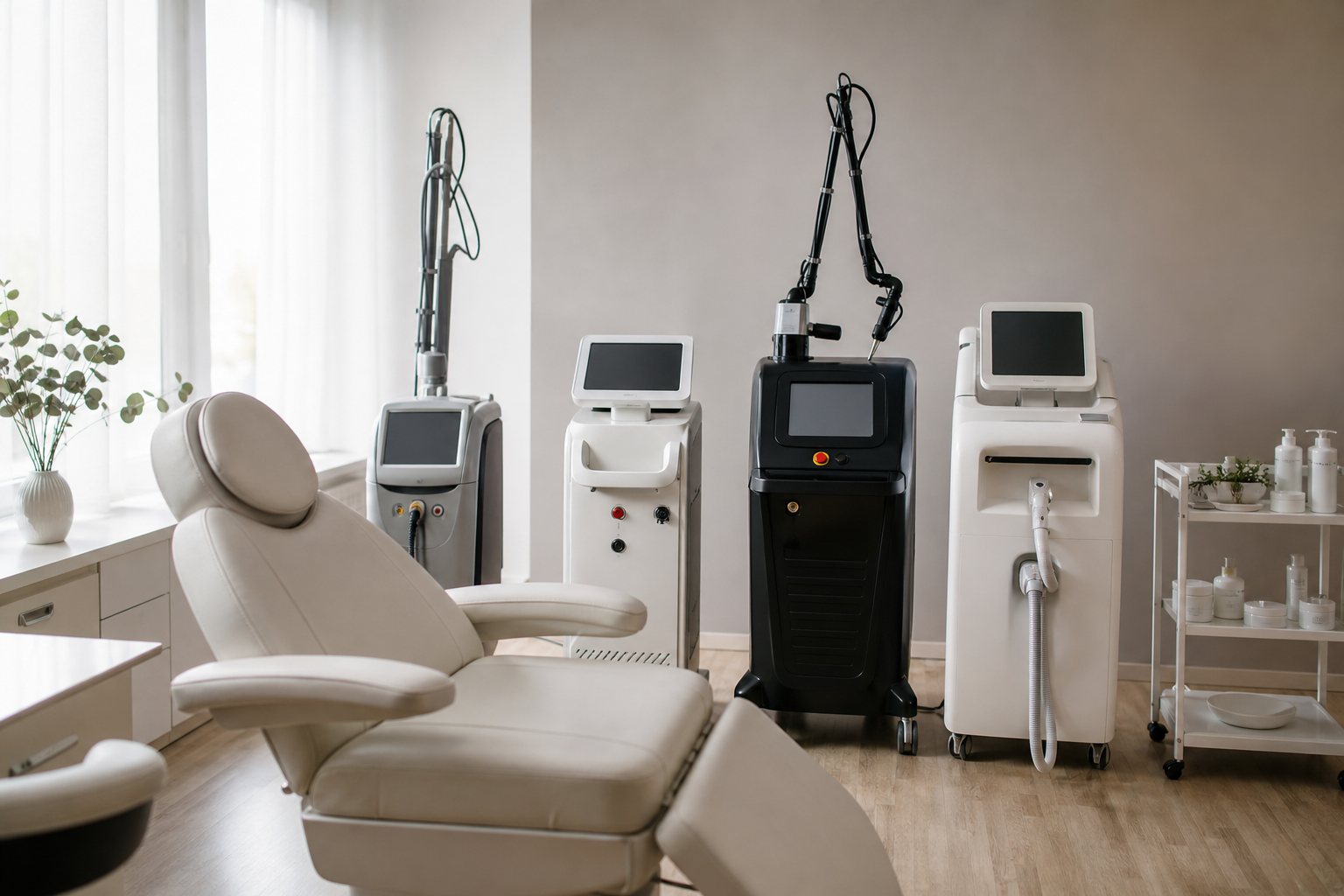
Acne scars represent a common and often distressing concern for many individuals, owing to their persistent and visible nature on the skin’s surface. These scars result from inflammation and damage during the acne healing process, often leaving behind depressions, discoloration, or irregular textures that can affect self-esteem and overall skin satisfaction. While complete eradication of acne scars remains elusive, modern dermatological advancements have introduced laser treatments as a prominent option to soften, improve, and reduce the visibility of these imperfections.
This article comprehensively explores laser options specifically targeted at acne scars, elucidating the mechanisms, variety of available treatments, candidacy considerations, expected outcomes, and relevant limitations. It is tailored for those seeking a deeper understanding of how laser technology can assist in managing acne scarring, providing clear insights without overstating the results. Through this, readers will be equipped to make informed decisions and set realistic expectations when considering laser interventions.
In the broader spectrum of skin rejuvenation, laser technology represents an intricate balance of precision and controlled skin remodeling. If you are grappling with the aftermath of acne scars or are curious about high-level treatment options beyond topical remedies and non-hormonal therapies, this detailed examination will meet your informational needs.
How Does Laser Technology Function in Treating Acne Scars?
At its core, laser treatment for acne scars involves the application of concentrated light energy designed to interact with specific skin layers. This energy induces microscopic injuries to the scarred tissue, which in turn triggers the body's natural healing responses. Central to this process is the stimulation of fibroblasts—the cells responsible for producing collagen and elastin—both vital proteins for skin elasticity and structure.
These lasers can either remove the damaged skin surface or penetrate deeper layers to remodel collagen, depending on the laser type used. The removal of compromised tissue sets the stage for new, healthier skin to emerge, while the internal stimulation enhances skin thickness and smoothness over time. Importantly, the goal is to reduce scar depth and soften their contours to achieve a more uniform skin surface, rather than guaranteeing scar removal.
Recognizing this transformative but gradual process helps patients align their expectations, emphasizing improvement and rejuvenation rather than outright cure.
Which Laser Treatment Modalities Are Most Commonly Employed for Acne Scars?
Lasers used in acne scar treatment generally fall into two broad categories: ablative and non-ablative. The choice between these depends on the scar type, skin characteristics, and desired balance between efficacy and downtime.
Fractional Ablative Lasers such as CO2 and Erbium:YAG are among the most effective for deeper scars. These lasers vaporize microscopic columns of skin, removing damaged layers with precision. Fractional technology treats only portions of the skin at a time, leaving untreated areas for faster healing. The resulting tissue remodeling can lead to significant textural improvement and scar softening. However, the recovery period involves redness, swelling, and peeling, requiring diligent post-treatment care.
Fractional Non-Ablative Lasers penetrate beneath the skin surface without removing the top layer, stimulating collagen production internally. They present a gentler alternative with reduced discomfort and minimal downtime. Examples include certain infrared lasers that promote skin tightening and gradual scar improvement over several sessions, making them suited for milder scars or patients preferring less invasive interventions.
Pulsed Dye and Other Vascular Lasers target redness and pigmentation associated with acne scars. While they do not remodel scar tissue directly, reducing erythema and discoloration contributes to an overall smoother and more uniform skin tone.
The selection of laser type must be customized by a qualified dermatologist or skin specialist, who will consider the scar morphology, skin tone, and overall patient health to optimize outcomes.
Who Makes an Ideal Candidate for Laser Acne Scar Treatments?
While laser treatments hold promise for many, candidacy depends on several critical factors. Prospective patients ideally have stable skin without active acne lesions or infections. The best results are typically seen in individuals with post-inflammatory scars rather than those with keloid-prone skin or hypertrophic scarring tendencies.
Skin type also plays a pivotal role; patients with lighter skin tones generally have a lower risk of pigmentation changes post-laser. Those with darker skin require cautious assessment due to increased susceptibility to hyperpigmentation or hypopigmentation following treatment.
Moreover, candidates should not be undergoing photosensitizing medications or have conditions impairing wound healing. Realistic expectations are essential—patients must understand that laser treatments may improve but not erase scars, often requiring multiple sessions to achieve noticeable results.
Consultation with a board-certified dermatologist is critical to evaluate these factors and determine if laser therapy is appropriate or whether alternative scar improvement measures should be considered.
What Is the Typical Treatment Process and Recovery Timeline?
Preparation before laser therapy usually involves avoiding sun exposure and certain skincare products that may increase skin sensitivity. Some clinicians recommend pre-treatment with topical agents to prime the skin and minimize side effects.
The laser session itself can vary from 15 minutes to an hour depending on the area being treated, the type of laser, and the extent of scarring. Local anesthesia or numbing creams are often applied to ensure patient comfort.
Following the procedure, immediate side effects may include redness, swelling, and sometimes mild discomfort resembling a sunburn. In ablative treatments, peeling and crusting can occur as new skin surfaces renew. Recovery timelines differ: non-ablative lasers often allow patients to resume normal activities within a day or two, whereas ablative lasers may require a week or more of healing.
Careful adherence to post-treatment instructions—such as avoiding sun exposure, using gentle cleansers, and applying moisturizers—is essential to protect the skin and optimize healing. Follow-up visits help monitor progress and plan subsequent sessions if necessary.
What Are the Advantages and Limitations of Using Lasers for Acne Scars?
The major advantage of laser therapy lies in its ability to precisely target scarred skin and induce regenerative changes while sparing surrounding healthy tissue. This results in improved skin texture, tone, and elasticity, often accompanied by a subtle rejuvenation effect. Multiple studies in dermatological literature endorse lasers as a cornerstone in acne scar management.
Nevertheless, lasers do have limitations. Several treatment sessions may be required to achieve satisfactory improvement, with incremental benefits after each session. The risk of adverse effects—including pigmentary changes, infection, or scarring—though low in expert hands, must be acknowledged.
Additionally, lasers cannot completely erase all types of acne scars, particularly very deep or ice pick scars, which sometimes necessitate adjunctive procedures such as subcision or chemical peels. The financial cost and downtime associated with some laser modalities may also impact patient choice.
How Should Patients Choose the Most Suitable Laser Approach for Their Scars?
Selecting the optimal laser treatment starts with a thorough skin evaluation by an experienced clinician. This assessment involves identifying scar types—whether they're rolling, boxcar, atrophic, or hypertrophic—as well as skin phototype and patient medical history.
Factors such as the patient’s tolerance for downtime, desired speed of results, and sensitivity of the skin area to be treated influence the laser choice. For example, ablative lasers are typically reserved for those willing to accept longer recovery in exchange for more noticeable changes, whereas non-ablative lasers suit those needing minimal interruption to daily life.
Clinicians may also combine laser therapy with complementary treatments including microneedling, fillers, or topical regimens to enhance results. Transparent discussion of realistic outcomes and potential risks forms an essential part of shared decision-making.
What Can Patients Expect After Completing a Course of Laser Treatment?
Upon completion of the recommended series, many patients observe a smoother skin texture, reduced scar depth, and more even pigmentation. These improvements often unfold progressively over months as collagen remodeling continues beneath the surface.
Maintenance of results requires diligent skin care and sun protection, as ongoing UV exposure can reverse benefits and provoke pigmentation issues. Some patients benefit from periodic touch-up treatments to sustain improvements.
Importantly, while laser therapy does not claim to restore skin to a flawless state, it consistently enhances aesthetics and skin health, promoting a more confident appearance for many individuals.


