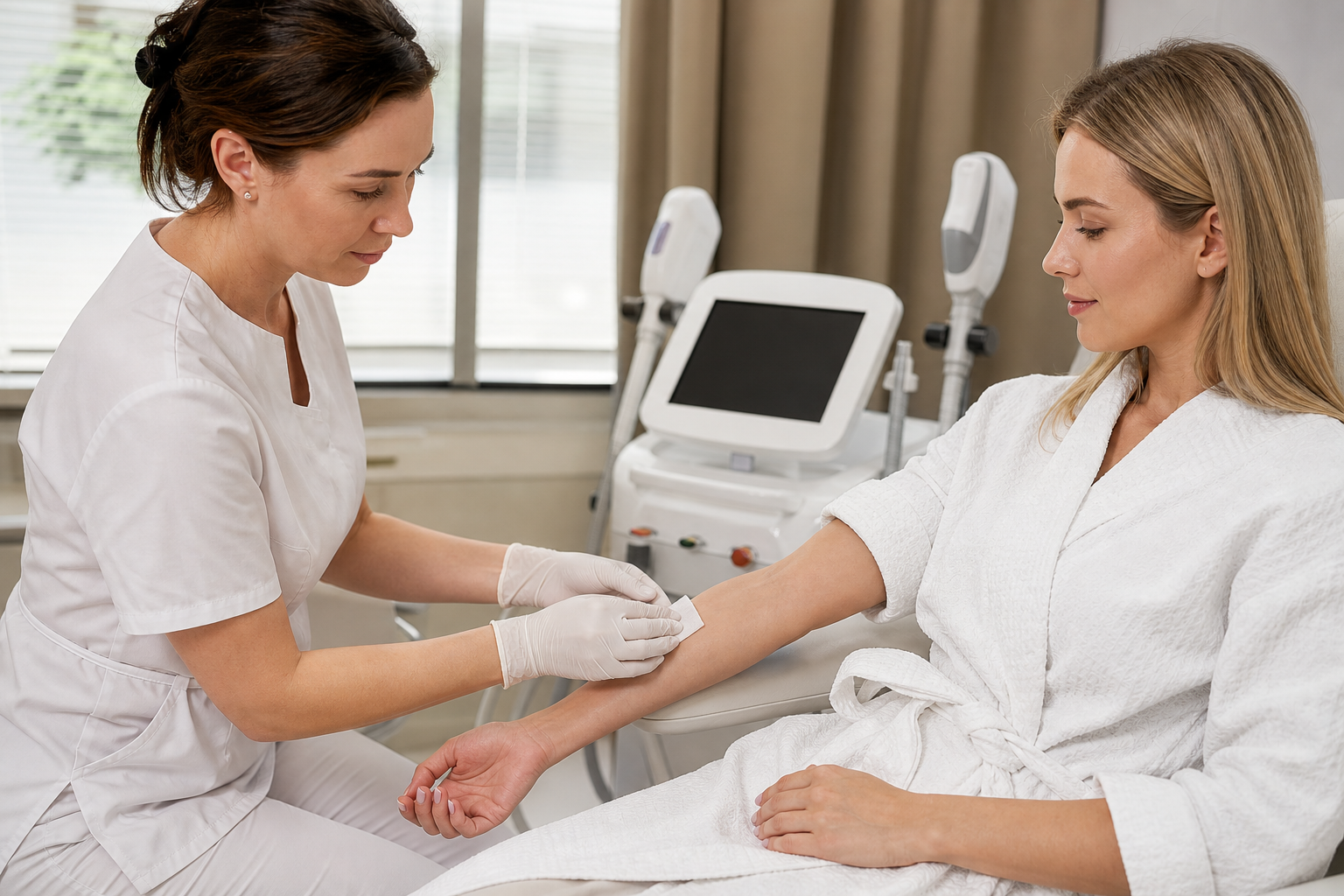
In the realm of modern aesthetic treatments, individuals seeking skin rejuvenation, hair removal, or correction of pigmentation and vascular issues often encounter two prevalent technologies: Intense Pulsed Light (IPL) and laser treatments. Despite their widespread use and often interchangeable references in casual conversations, IPL and lasers significantly differ in their underlying mechanisms, treatment goals, safety profiles, and recovery processes. Understanding these differences is essential for patients considering cosmetic procedures, as well as for practitioners aiming to tailor optimal treatment plans.
This article delves into the essential distinctions between IPL and laser therapies, focusing on their specific mechanisms of action, typical applications, expected downtime, and potential risks. We also explore the role of related technologies like radiofrequency (RF) microneedling, particularly in light of the FDA's announcement regarding regulatory oversight in 2025. By clarifying these aspects, readers—whether new to aesthetic medicine or looking to deepen their knowledge—can make informed decisions suited to their skin types and desired outcomes.
While neither IPL nor lasers claim universal superiority, discerning their respective strengths and limitations can improve treatment efficacy and patient safety. We also highlight relevant clinical considerations, ensuring that educational insights are distinct from personalized medical advice. For those interested in comprehensive overviews, linked resources such as "Laser, IPL, RF or Microneedling – Comparing Skin Rejuvenation Treatments" and "Laser Skin Rejuvenation – A Complete Guide to Treatments, Results and Recovery" provide further detailed analyses.
What Distinguishes IPL from Laser Technology in Aesthetic Treatments?
Intense Pulsed Light (IPL) and laser treatments are often grouped under the umbrella of light-based skin therapies, but their technological underpinnings differ markedly. IPL utilizes a broad spectrum of incoherent, non-focused light waves that emit multiple wavelengths simultaneously. This wide spectral output allows IPL devices to target a range of chromophores—such as melanin, hemoglobin, and water—with varying degrees of penetration and absorption. Treatments typically involve filtering specific bands of wavelengths depending on the desired therapeutic effect.
In contrast, laser systems generate coherent, monochromatic light with a single, well-defined wavelength. This focused and directional light is absorbed with high precision by a particular target chromophore. Various laser types—such as diode, Nd:YAG, erbium, and CO₂—are employed depending on treatment objectives, depth of tissue penetration, and skin type considerations. The consistency and specificity of laser light enable controlled thermal effects at targeted depths, allowing precise ablation, coagulation, or stimulation within the skin.
These fundamental differences influence not only the treatment indication but also the patient experience, side effects, and recovery dynamics. IPL’s broader light spectrum lends itself to more generalized and superficial skin treatments, whereas lasers offer the possibility of tailored, deeper interventions.
Who Is Best Suited for IPL or Laser Treatments?
Patient candidacy for either IPL or laser treatments depends on multiple factors, including skin type, treatment goals, and individual tolerance.
IPL is often selected for patients with lighter skin types (Fitzpatrick types I-IV) and concerns such as mild to moderate pigmentation issues, visible but superficial capillaries, uneven skin tone, rosacea, and unwanted hair removal. Its ability to cover larger surface areas relatively quickly with minimal discomfort makes it attractive for those seeking mild skin enhancements or maintenance therapy. However, IPL is generally not recommended for deeper pigmentation disorders or darker skin types, where risks of hyperpigmentation or burns are higher.
Lasers, with their diverse modalities, accommodate a wider range of skin types, including some darker tones when appropriate wavelengths are utilized. They are preferred for targeted treatments—such as permanent hair reduction, deep scar remodeling, pronounced pigmentation correction, vascular lesion ablation, and robust skin resurfacing. Advanced settings allow clinicians to customize energy delivery to suit the patient’s cutaneous characteristics and clinical concerns, potentially accomplishing more dramatic improvements.
Nonetheless, lasers can carry greater risk of transient side effects or prolonged recovery, especially with aggressive settings or in inadequately selected candidates. Consultation with a qualified dermatologist or aesthetic medicine specialist is critical to assess suitability and to design an individualized treatment regimen.
How Do IPL and Laser Treatments Work Differently to Address Skin Concerns?
The therapeutic success of IPL and laser treatments hinges on the principle of selective photothermolysis, where specific wavelengths of light are absorbed by target chromophores, converting optical energy into heat that damages unwanted structures while preserving surrounding tissue. The divergence lies in the spectral composition and coherence of the light source.
IPL emits a broad range of wavelengths in rapid pulses, resulting in a less focused but simultaneously multi-targeted effect. This allows treatment of multiple chromophores in one session but may compromise depth penetration and precision. For example, IPL can address superficial pigmented lesions, minor vascular changes, and mild hair reduction with adaptable filters. Its mode of action is more diffuse, spreading thermal energy over a wider skin area.
Lasers deliver a narrow, monochromatic beam with precise wavelength selection. This targeted approach allows for specific destruction or stimulation of deep structures within the skin. The narrow spectrum and coherence of laser light promote deeper penetration and predictable thermal effects, which can be finely tuned by altering pulse duration, fluence, and spot size. This precision is invaluable when treating specific lesions or inducing collagen remodeling with minimal collateral damage.
In practical terms, laser treatments can achieve deeper tissue remodeling, more durable hair removal, and focused correction of pronounced pigmented or vascular lesions. IPL’s utility rests in its versatility and gentler action on the epidermis.
What Are the Typical Treatment Goals for IPL Versus Laser Procedures?
While both IPL and laser treatments are used to enhance skin appearance, their typical objectives often diverge based on the technology’s capabilities.
IPL commonly targets facial redness reduction, alleviation of rosacea symptoms, removal of superficial age spots and freckles, and mild hair thinning. It also stimulates collagen production to improve skin texture and tone gradually. Due to its superficial mode of action, IPL is well-suited for patients desiring photorejuvenation or modest improvements without significant discomfort or downtime.
Laser treatments, on the other hand, are designed for more intensive outcomes, including permanent hair removal, ablation of scars and deep wrinkles, removal of vascular lesions such as spider veins, and substantial pigment correction. Fractional lasers can induce controlled micro-injuries to encourage pronounced dermal remodeling, leading to firmer and smoother skin. Thus, laser therapy is often selected for patients seeking substantial transformation or correction of complex skin conditions.
The choice between IPL and laser must reflect realistic expectations, balancing desired results with tolerable recovery and risks.
What Should Patients Expect Regarding Downtime and Recovery?
A key consideration distinguishing IPL from laser treatments is the nature and duration of recovery. IPL treatments are generally less aggressive, with minimal disruption to the epidermis. Post-treatment effects may include mild redness, slight swelling, or a warm sensation lasting from a few hours to a day. Patients usually resume normal activities immediately and experience low risk of significant complications if appropriate post-care—including sun avoidance—is observed.
Laser procedures, especially ablative or fractional types, may induce more pronounced skin trauma. Recovery can involve redness, swelling, peeling, and sensitivity lasting from several days up to two weeks, depending on treatment intensity. Strict adherence to wound care protocols and sun protection is vital during this period to avoid infections, scarring, or pigmentary changes.
Non-ablative lasers offer intermediate recovery times but still necessitate cautious aftercare. Patients should be prepared for the possibility of transient discomfort and downtime proportional to treatment aggressiveness.
What Are the Associated Risks and Side Effects of IPL and Laser Treatments?
Both IPL and laser therapies are generally safe when executed by trained professionals, yet they carry inherent risks due to their thermal and photonic actions.
Common side effects following IPL include erythema, swelling, transient hyper- or hypopigmentation, and in rare cases, blistering or scarring. Risk factors include darker skin types, recent sun exposure, or incorrect device settings. Pre-treatment evaluation is essential to mitigate these risks.
Laser treatments can lead to more significant adverse effects, such as prolonged redness, crusting, pigmentary alterations, or hypertrophic scarring. The risk escalates with deeper penetration lasers or overly aggressive parameters. Meticulous patient selection, device calibration, and post-procedure instructions are fundamental to reducing complications.
It is important to distinguish that neither treatment guarantees permanent results without proper maintenance and that individual response varies.
How Does RF Microneedling Compare and What Does the FDA Warning Mean for Patients?
RF microneedling combines the mechanical action of tiny needles penetrating the skin with radiofrequency energy delivered deep into the dermis. This technique stimulates collagen and elastin production, promoting skin tightening, texture improvement, and scar reduction. It does not rely on light-based energy like IPL or lasers and therefore represents a distinct category within cosmetic interventions.
The U.S. Food and Drug Administration’s announcement to issue warnings for RF microneedling devices starting in 2025 signals increased regulatory scrutiny. This likely reflects concerns regarding safety standards, device variability, and reporting of adverse events. Patients considering RF microneedling should consult thoroughly with certified practitioners who adhere to best practices and monitor ongoing regulatory developments.
RF microneedling may complement or serve as an alternative to IPL or laser treatments depending on individual skin needs, but it is not a substitute. Understanding its unique mechanism and emerging regulatory context is critical for informed treatment planning.
How Can Patients Make an Informed Choice Between IPL and Laser Treatments?
Deciding between IPL and laser therapies requires a nuanced assessment of personal skin characteristics, clinical indications, treatment goals, and tolerance for downtime and risks. There is no universally superior option; rather, the optimal choice depends on matching the modality to the individual’s condition and expectations.
Patients are encouraged to seek consultation with experienced dermatologists or aesthetic medical professionals who can conduct thorough skin evaluations, discuss realistic outcomes, explain potential side effects, and tailor treatment protocols accordingly. Additionally, considering treatment combinations or staged approaches may maximize benefits while minimizing risks.
Further exploration of these modalities in dedicated articles—such as "Fractional Laser or Chemical Peel – How Do They Differ?" and "Laser or Microneedling for Scars and Skin Texture?"—can provide broader context and deepen understanding.


