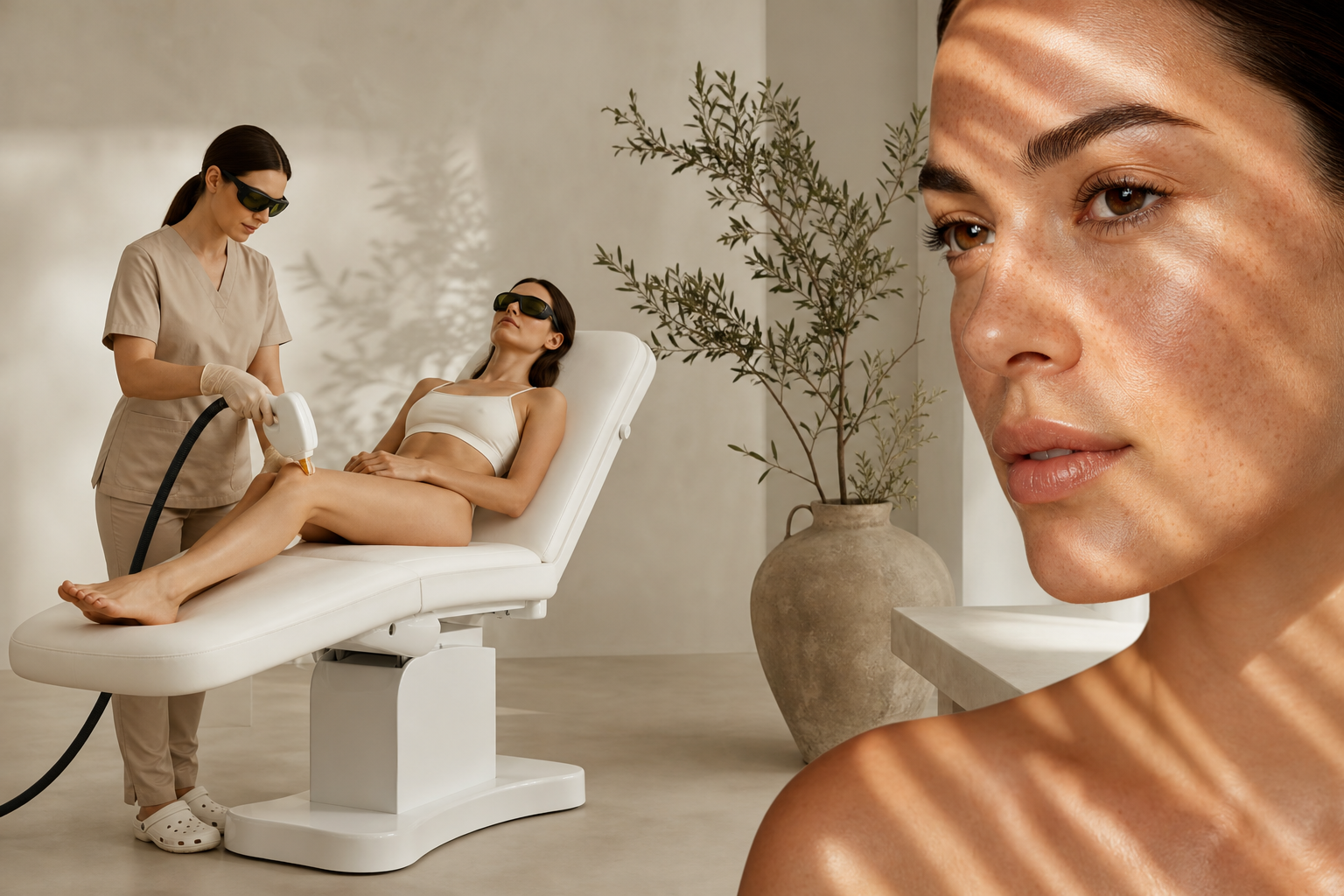
Melanin, the pigment responsible for the color of our skin, hair, and eyes, plays a pivotal role in many aspects of our biological identity. Beyond its obvious influence on appearance, melanin is integral to how our skin interacts with light, which directly impacts the effectiveness of certain cosmetic procedures, notably laser hair removal. Understanding melanin’s biological function and its interaction with laser technology is crucial for anyone considering or undergoing laser hair removal treatments. This exploration will unpack what melanin is, why it matters for laser hair removal, and how it influences the safety and outcomes of this popular aesthetic procedure.
This article is designed for individuals seeking comprehensive knowledge about laser hair removal, including those new to the treatment and those curious about how skin pigmentation affects the process. Aesthetic practitioners and laser technicians may also find value in a detailed breakdown of melanin's role to better educate clients and customize treatment approaches. Ultimately, grasping the interplay between melanin and laser hair removal empowers informed decisions, enhances treatment efficacy, and upholds safety standards.
Given the widespread appeal of laser hair removal as a long-term solution for unwanted hair, understanding the science behind it is more than a curiosity—it’s essential. Melanin is not only central to the treatment's mechanism but also a critical factor in assessing candidacy and tailoring procedures. This makes the topic highly relevant in contemporary aesthetic treatments where personalized, evidence-based approaches are the norm.
What Is Melanin and How Does It Affect Our Skin and Hair?
Melanin is a natural pigment synthesized by specialized cells called melanocytes, located in the epidermis, the outermost layer of the skin. There are two primary types of melanin: eumelanin, which imparts brown to black hues, and pheomelanin, which gives hair and skin a reddish or yellowish tint. The concentration and ratio of these pigments determine an individual’s unique skin tone, hair color, and eye coloration.
Beyond cosmetic implications, melanin serves an essential protective function. It absorbs ultraviolet (UV) radiation from sunlight, mitigating DNA damage and reducing the risk of skin cancer. This photoprotective property underscores melanin's evolutionary importance and its role in maintaining skin health. However, melanin’s interaction with UV and visible light also affects how the skin reacts to artificial light sources such as lasers used in medical and cosmetic procedures.
The distribution and density of melanin vary widely among individuals and ethnic groups. People with darker skin have more active melanocytes producing higher levels of melanin, while lighter skin tones reflect a lower melanin concentration. This variation significantly influences the approach and expected outcomes in dermatological and aesthetic interventions that depend on light absorption.
How Does Laser Hair Removal Work and Why Is Melanin Central to Its Mechanism?
Laser hair removal operates on the principle of selective photothermolysis, whereby specific wavelengths of light target pigment in hair follicles while sparing surrounding skin tissue. When a laser beam is applied to the skin, the melanin in the hair shaft and follicle absorbs the light energy. This absorption converts light into heat, which damages the follicle’s structural integrity, ultimately inhibiting or delaying hair regrowth.
Because melanin is the primary chromophore—the molecule that absorbs laser light—in hair follicles, its presence dictates the treatment’s effectiveness. Darker, coarser hairs contain more melanin and respond better to laser treatments since the pigment can absorb more laser energy, leading to effective follicle destruction. Conversely, fine, light-colored hairs have less melanin, making them less responsive to laser hair removal. This explains why patients with dark hair and lighter skin often experience the most successful outcomes.
Importantly, melanin in the skin competes with hair follicle melanin for laser light absorption. In individuals with darker skin tones, skin melanin absorbs more laser energy, raising the risk of burns, hyperpigmentation, or hypopigmentation after treatment. Therefore, selecting the appropriate laser type and tuning treatment parameters to account for skin melanin levels is vital to maximize safety and efficacy.
Why Is Melanin Consideration Critical When Choosing Laser Types?
The efficacy and safety of laser hair removal significantly depend on matching the laser wavelength to the patient’s skin and hair color, which are determined by melanin levels. Various laser systems are available, each emitting at different wavelengths tailored to target melanin selectively without damaging the skin.
For lighter skin tones with darker hair, shorter wavelength lasers like Alexandrite (755 nm) and Diode (800–810 nm) lasers are often effective. These wavelengths are strongly absorbed by hair follicle melanin but have limited penetration, reducing the risk to the epidermis. However, for darker skin tones with high melanin content in the epidermis, longer wavelength lasers such as Nd:YAG (1064 nm) are preferred. The Nd:YAG laser penetrates deeper with lower melanin absorption at the skin surface, thus minimizing epidermal injury while still targeting hair follicles.
Using an inappropriate laser wavelength or energy setting for a given skin type can increase adverse effects, including burns, scarring, or pigmentary changes. Therefore, thorough skin assessment and understanding melanin's role guide practitioners to select the safest and most effective laser system for each individual. This personalized approach acknowledges the diverse melanin profiles across patients.
How Does Melanin Influence Treatment Planning and Patient Suitability?
Assessment of a patient’s skin type, commonly based on the Fitzpatrick scale, helps estimate melanin levels and guides treatment planning for laser hair removal. The Fitzpatrick scale ranges from Type I (very light skin, low melanin) to Type VI (very dark skin, high melanin). This classification predicts how skin will respond to laser exposure and potential risks involved.
Practitioners must evaluate hair and skin melanin together. For example, a patient with Type II skin (fair) and dark hair is an ideal candidate with likely favorable results and minimal risks. Conversely, a patient with Type V or VI skin (dark brown or black) requires lasers with longer wavelengths and adjusted energy levels to balance efficacy with safety. Additionally, hair color—especially if it is gray, white, blonde, or red—can be challenging due to reduced melanin content, often necessitating alternative hair removal methods.
Skin conditions affecting pigmentation, such as vitiligo or post-inflammatory hyperpigmentation, must also be considered since laser treatment can exacerbate or trigger uneven pigmentation. These complexities reinforce why comprehensive evaluation of melanin distribution in skin and hair is a cornerstone of successful laser hair removal protocols.
What Are the Benefits of Understanding Melanin for Patients Considering Laser Hair Removal?
Patients equipped with knowledge about melanin can engage more actively in treatment decisions and hold realistic expectations. Awareness about how skin and hair pigment influence laser hair removal clarifies why multiple sessions are necessary, why results vary across individuals, and why certain skin or hair types respond better than others.
Understanding melanin’s role also helps patients recognize the importance of choosing qualified practitioners trained to assess skin phototypes and select appropriate laser parameters. This awareness can prevent complications, such as burns or unwanted pigment changes, by encouraging adherence to pre- and post-treatment care instructions tailored to melanin considerations.
Furthermore, patients with darker skin tones can find reassurance knowing that advancements in laser technology, mindful of melanin’s impact, have enhanced the safety and effectiveness of hair removal options that were once limited. This progress broadens accessibility while maintaining high safety standards.
How Can Patients and Practitioners Optimize Outcomes Considering Melanin Factors?
Effective laser hair removal outcomes hinge on a partnership between patient and practitioner grounded in an accurate understanding of melanin's influence. For patients, disclosing medical history, previous treatments, and any skin changes helps practitioners gauge melanin-related risks. Following instructions regarding sun exposure, tanning, and skin care before and after treatment reduces the chances of pigmentary complications.
For practitioners, employing diagnostic tools like melanin meters or spectrophotometers can objectively assess melanin concentration, complementing visual examination. Tailoring laser parameters—such as pulse duration, fluence (energy density), and spot size—to melanin levels ensures adequate targeting of the hair follicles without causing harm to the surrounding skin.
Incremental testing with patch treatments and vigilant monitoring further minimize adverse outcomes. Educating patients about the gradual nature of hair reduction, influenced by hair growth cycles and melanin content, helps maintain realistic expectations and encourages commitment to the full treatment course.
When Is Laser Hair Removal Less Effective Due to Melanin Characteristics?
Laser hair removal effectiveness declines in cases where hair lacks sufficient melanin to absorb laser energy. Gray, white, red, and very fine blond hairs contain minimal melanin, rendering standard laser treatments less successful. In such instances, alternative hair removal methods, like electrolysis, may be recommended.
Additionally, individuals with very dark skin and light hair may face limitations, as laser targeting relies on contrast between hair and skin melanin. The lack of this contrast can increase the risk of skin damage or treatment ineffectiveness. Although newer technologies and customized settings continue to improve results, such cases present inherent challenges.
Any pre-existing pigmentary disorders or recent tanning can alter melanin distribution, affecting laser absorption unpredictably and potentially increasing side effects. Therefore, timing treatments carefully relative to sun exposure and mitigating skin pigmentation changes are vital to maintaining safe and effective laser hair removal regimens.
What Can Patients Expect During and After Laser Hair Removal Treatments in Relation to Melanin?
During a laser hair removal session, patients typically experience brief pulses of light targeted at the treatment area. Those with higher melanin content in hair follicles may notice a mild warming or snapping sensation as the laser interacts with the pigment. Practitioners adjust parameters based on melanin-related considerations to balance comfort and efficacy.
Post-treatment, individuals may observe slight redness or swelling, which usually resolves quickly. For darker-skinned patients, practitioners vigilantly monitor for hyperpigmentation or hypopigmentation, which may manifest as darker or lighter patches on the skin respectively; however, with proper technique, these risks are minimized.
Patients should avoid sun exposure and use broad-spectrum sunscreens to protect the skin and maintain pigment stability. Multiple sessions spaced weeks apart are necessary to target hair at different growth phases, accommodating the melanin uptake cycle in hair follicles to achieve optimal hair reduction.
Frequently Asked Questions About Melanin and Laser Hair Removal
Q: Can laser hair removal be done on all skin types?
A: Most skin types can undergo laser hair removal, but treatment parameters vary based on melanin content in the skin and hair. Darker skin tones require specific lasers like Nd:YAG to minimize risks, while lighter skin tones often respond well to other laser types.
Q: Does tanning affect melanin and laser hair removal safety?
A: Yes, tanning increases melanin in the skin, which can heighten absorption of laser energy at the epidermis, raising the risk of burns or pigmentation changes. It is generally advised to avoid tanning before and during laser treatment courses.
Q: Why is laser hair removal less effective on blonde or gray hair?
A: Blonde, gray, and white hairs have little to no melanin, which is essential for laser energy absorption. Without sufficient melanin, the laser cannot effectively heat and destroy the hair follicle.
Q: Can melanin levels change over time, affecting laser results?
A: Melanin can fluctuate due to age, hormonal changes, or sun exposure, which may impact hair color and skin tone, potentially influencing laser treatment responses and necessitating adjustments in therapy.


