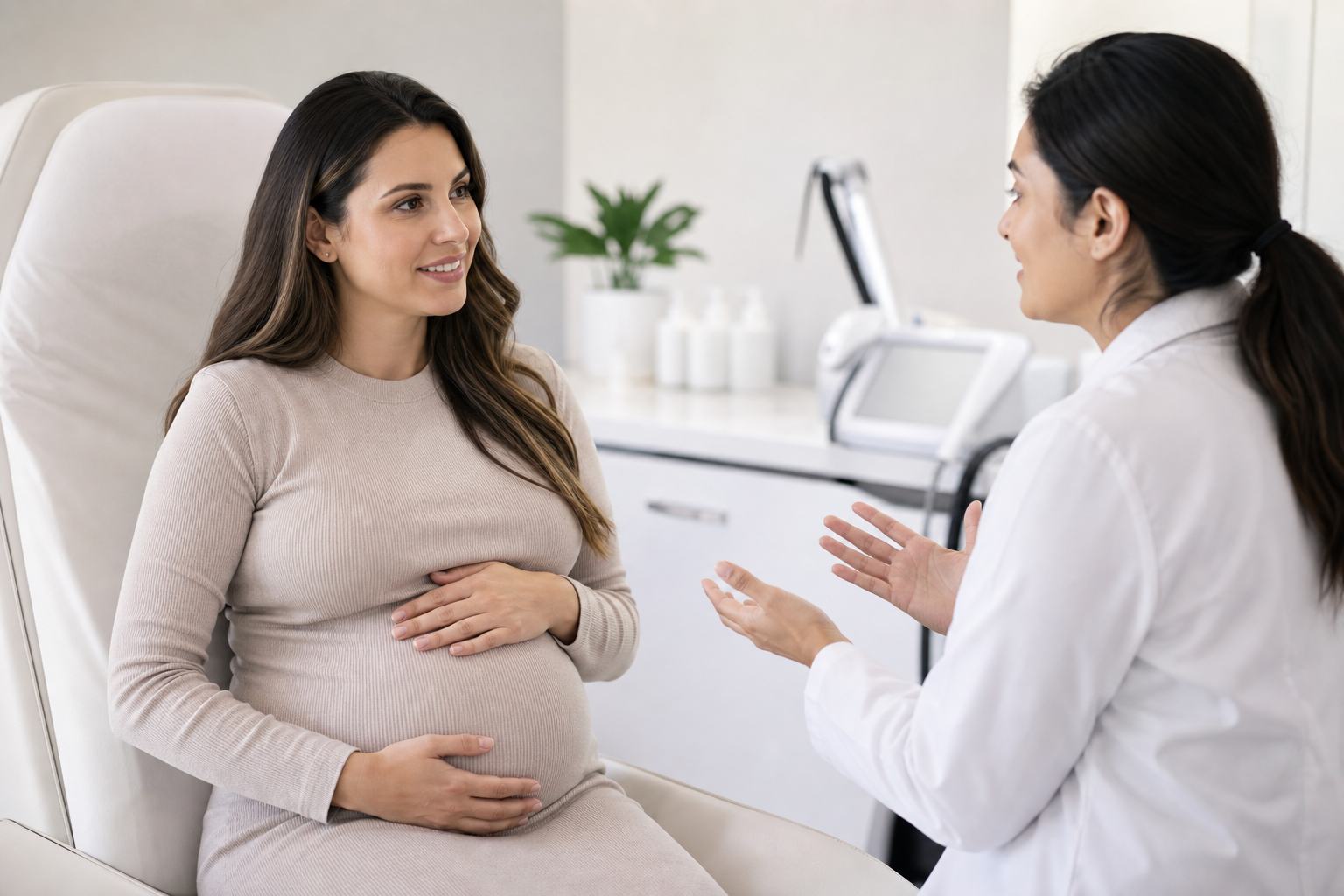
Pregnancy is a transformative journey that reshapes many aspects of a woman's body, not least of which is hair growth. The changes in hair during pregnancy and the postpartum period often puzzle and intrigue expectant and new mothers alike. Many notice that hair becomes thicker, fuller, or appears in new places during pregnancy, only to experience seemingly paradoxical hair shedding after childbirth. These changes are closely tied to the complex hormonal and physiological shifts that occur during pregnancy and postpartum recovery.
This article explores the nuanced relationship between pregnancy and hair growth cycles, aiming to provide a clear understanding of why such changes happen, who experiences them, and what one might expect as the body transitions back after childbirth. Additionally, it addresses the frequently asked question about if and when elective laser hair removal treatments can be safely resumed postpartum, an area of interest for many women navigating aesthetic decisions alongside their evolving physiology.
Designed for women experiencing or preparing for these changes, as well as healthcare professionals in dermatology, gynecology, and aesthetic medicine, this comprehensive review sheds light on the biological underpinnings and practical considerations surrounding hair growth during these remarkable phases of life.
How Does Pregnancy Influence Hair Growth Cycles?
The hallmark hormonal milieu of pregnancy plays a pivotal role in modulating hair growth. The key hormones involved include estrogen, progesterone, and to a lesser extent, androgens. Normally, hair follicles cycle through phases: the anagen (growth) phase, catagen (transitional) phase, and telogen (resting and shedding) phase. Pregnancy notably prolongs the anagen phase due to elevated estrogen levels, which slows down normal hair shedding and promotes a denser, more lustrous hair appearance.
This hormonal influence means that many pregnant women observe that their scalp hair appears thicker and grows longer, while hair loss decreases during this time. Conversely, some may notice increased hair growth in atypical areas, such as the face or abdomen, due to altered androgen levels, which can lead to conditions like mild hirsutism. These phenomena are generally transient and reflect the body's hormonal adjustments rather than pathological processes.
It is also important to acknowledge that individual responses vary widely, with genetics, baseline hormonal profiles, and overall health status playing roles in how hair growth changes manifest during pregnancy.
Why Might New or More Noticeable Hair Appear During Pregnancy?
Beyond the scalp, pregnancy can prompt the emergence or thickening of hair in areas where it was previously sparse or fine. Hormonal fluctuations can activate dormant hair follicles or shift their growth phase, leading to increased hair density and pigmentation, sometimes described as "pregnancy hair."
Additionally, the body's metabolic and immune adaptations during pregnancy alter blood flow and nutrient delivery to hair follicles, thereby influencing their function. Increased vascularization and nutrient availability can stimulate follicular activity, further contributing to the perception of new or more prominent hair growth.
For some women, these changes might be more noticeable in regions such as the face, chest, or abdomen. Although usually benign and self-limited, the appearance of new hair in these locations can cause concern or impact self-image.
In cases of pronounced or persistent excessive hair growth, evaluation for underlying hormonal disorders such as polycystic ovary syndrome (PCOS) may be warranted, as pregnancy can unmask or exacerbate such underlying conditions.
What Happens to Hair Growth in the Postpartum Period?
The postpartum phase heralds a reversal of the pregnancy-driven hormonal environment. Estrogen and progesterone levels sharply decline, prompting hair follicles to synchronously enter the telogen phase. This leads to increased hair shedding known as postpartum telogen effluvium, which can begin several weeks after delivery.
For many women, this can be an alarming experience, as the volume of hair loss appears substantial. Nevertheless, this shedding is generally temporary and thought to normalize within several months to a year as hormonal levels stabilize and normal hair cycling resumes.
While this natural cycle might cause temporary thinning, it rarely results in permanent hair loss. However, ongoing hair shedding beyond this period might indicate nutritional deficiencies, stress, or an underlying medical issue, underscoring the potential need for clinical assessment.
Why Do Some Hair Growth Changes Revert After Pregnancy?
The hair growth cycle is inherently dynamic and responsive to hormonal cues. The elevations in estrogen during pregnancy prolong hair growth and suppress shedding, while the abrupt hormonal withdrawal postpartum allows follicular cycling to normalize. This physiological ebb and flow explain why many hair growth changes observed during pregnancy eventually revert.
The restoration to pre-pregnancy hair patterns involves gradual recalibration of follicular activity across all affected areas. This period of transition can feature uneven hair density or texture changes, which generally improve with time.
It is important to note that some women, particularly those with pre-existing hormonally influenced hair conditions, might experience lingering effects or altered hair characteristics postpartum. Maintaining a healthy diet, managing stress, and monitoring scalp health can support the normalization of hair growth during this recovery phase.
Is Elective Laser Hair Removal Safe During Pregnancy?
Laser hair removal is a widely used cosmetic procedure that targets hair follicles with concentrated light energy to achieve long-term hair reduction. Despite its popularity and general safety profile in non-pregnant individuals, elective laser hair removal is commonly deferred during pregnancy.
The primary rationale for postponing such treatments in pregnant women is the absence of robust, high-quality clinical data confirming safety during this sensitive period. While laser energy primarily acts superficially on the skin and does not penetrate systemically, the conservative approach prioritizes fetal safety in the context of uncertain evidence.
Additionally, pregnancy-related changes in skin sensitivity, pigmentation, and hormonal environments may alter treatment efficacy or risk profiles, further supporting deferral until after childbirth.
Women interested in laser hair removal are advised to consult their healthcare providers and treatment specialists to discuss timing based on personal and clinical considerations.
How Should Laser Hair Removal Be Approached After Childbirth?
Following delivery and the conclusion of breastfeeding, many women consider resuming or initiating laser hair removal treatments. Timing and treatment protocols should account for the ongoing hormonal fluctuations that can influence hair growth patterns and treatment responsiveness.
Because postpartum hormonal profiles may remain in flux for several months, tailored treatment plans that include hormonal assessments can optimize outcomes. In particular, women affected by hormonally influenced hair growth conditions, such as PCOS or hirsutism, may require maintenance sessions or adjunct hormonal therapies to sustain results.
Collaborating with practitioners experienced in both laser hair removal technology and hormonal influences on hair growth can ensure comprehensive care that aligns aesthetic goals with health considerations.


