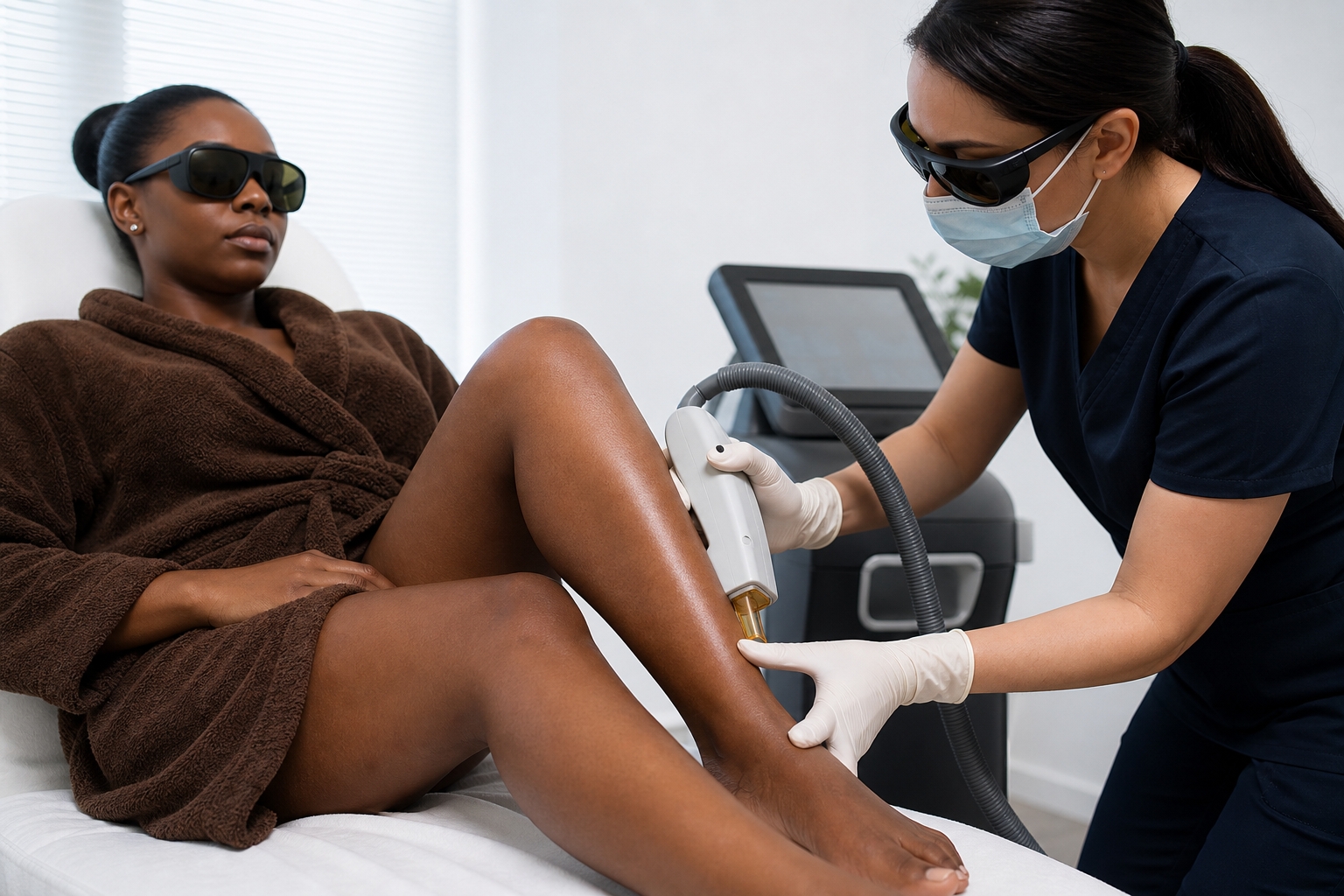
Laser hair removal for dark skin has long been considered a delicate and challenging procedure due to the higher melanin content in the epidermis, which can interfere with laser treatments. Unlike lighter skin tones, where the contrast between hair and skin allows for precise targeting of hair follicles, dark skin presents unique challenges that must be managed carefully to ensure both safety and efficacy. This topic is of significant interest to individuals with melanin-rich skin considering long-term hair removal options, as well as to dermatologists and laser practitioners seeking to refine treatment protocols that accommodate diverse skin types without compromising results or patient safety.
This article aims to provide a comprehensive overview of how laser hair removal can be successfully and safely performed on dark skin. It will examine the biological and optical factors that make this skin type distinct in laser treatments, explore technological advancements that have expanded possibilities for melanin-rich skin, and elucidate best practices for treatment customization. By doing so, it addresses the practical concerns of potential candidates and provides valuable insight for healthcare professionals into the nuances of laser parameter selection, cooling strategies, operator expertise, and risk management specific to darker skin tones.
Understanding laser hair removal for dark skin is essential because misconceptions persist that it cannot be performed safely or effectively, largely due to outdated information and early laser technologies not suited for pigment-rich skin. Advances in laser systems, pulse modulation, and treatment protocols have changed this landscape. Today, with the right approach, those with dark skin can experience the benefits of laser hair removal—reduced hair density, long-lasting smoothness, and convenient maintenance—with minimal risk. This article will unpack the complexities involved and guide readers through critical considerations to help make well-informed decisions.
Why Does Dark Skin Require Special Considerations in Laser Hair Removal?
The primary challenge in laser hair removal for dark skin lies in the decreased optical contrast between the hair and the surrounding epidermis due to the higher concentration of melanin pigment. Lasers target melanin within the hair follicle to heat and disable hair growth. However, when the skin itself contains elevated melanin levels, the laser energy can inadvertently be absorbed by the epidermis, rather than exclusively by the hair follicles, increasing the risk of burns, irritation, or pigmentary changes.
In lighter skin, the stark difference in pigment between skin and hair permits selective photothermolysis—a process where light is absorbed mainly by the hair follicle, sparing surrounding tissue. For dark skin types, this selectivity is reduced, creating a narrower therapeutic window and necessitating careful modulation of laser parameters to avoid collateral damage. The Fitzpatrick skin classification, which ranges from Type I (very fair) to Type VI (very dark), helps in stratifying skin types and tailoring the laser approach accordingly. Even within darker categories, variations exist that influence treatment strategies.
Historically, these concerns led to conservative approaches or avoidance of laser hair removal for dark-skinned individuals. However, with a deeper understanding of skin optics and laser physics, as well as advancements in equipment, effective treatment with manageable risks has become achievable. Recognizing these challenges explains why expert customization is critical, and why indiscriminate application of laser hair removal without proper adjustment is inadvisable for melanin-rich skin.
What Laser Technologies Are Most Suitable for Melanin-Rich Skin?
Laser systems with longer wavelengths tend to be better suited for darker skin tones because they penetrate deeper into the dermis while exhibiting reduced absorption by epidermal melanin. Nd:YAG lasers emitting at 1064 nm are predominantly favored for this reason. Their wavelength allows sufficient energy delivery to target hair follicles while minimizing the heat absorbed superficially, thereby decreasing risks of burns or pigment changes.
In addition to wavelength, the pulse duration is a critical factor. Longer pulse durations reduce the peak power delivered at any instant and allow heat to diffuse more gradually, focusing thermal damage within the follicle and sparing adjacent skin. Conversely, pulses that are too brief can generate excessive epidermal heat, which may cause complications.
Other technologies, such as diode lasers and alexandrite lasers, generally have shorter wavelengths and higher melanin absorption, making them less ideal for very dark skin tones. Nevertheless, some modern diode lasers offer adjustable parameters that may be suitable for select cases with appropriate caution. Hybrid or multiple-wavelength systems that combine the benefits of different lasers have also emerged, though no universal “best” technology applies uniformly; the choice depends on the individual’s skin and hair characteristics and the practitioner’s expertise.
How Are Laser Settings Adjusted to Enhance Safety and Effectiveness?
When performing laser hair removal on dark skin, a conservative approach to energy density or fluence is essential. Beginning with lower energy levels reduces the initial thermal burden on the skin and helps identify any adverse reactions early. Gradual increments across multiple treatment sessions allow for cumulative follicular damage while maintaining skin integrity.
The spot size—the area of skin exposed to each laser pulse—also influences treatment depth and energy distribution. Larger spot sizes enable deeper penetration due to reduced scatter, which can benefit targeting hair follicles beneath pigmented skin. Pulse repetition rate and the timing between pulses are optimized to allow heat dissipation, minimizing epidermal thermal buildup.
Importantly, laser settings are not fixed numbers but require dynamic adjustment based on real-time skin responses and individual variation. Therapists must monitor skin redness, edema, and patient feedback continuously during procedures, tailoring parameters accordingly for maximum efficacy with minimal discomfort or risk.
What Role Does Cooling Play in Protecting Dark Skin During Laser Treatments?
Cooling mechanisms are integral to safeguarding the epidermis in laser hair removal, particularly for dark skin where melanin absorption is heightened. Cooling can occur before, during, and after laser pulses, using a range of technologies including contact cooling with chilled sapphire tips, cryogen spray cooling, cold air flow, or cooling gels.
Effective cooling reduces skin surface temperature, thereby protecting the epidermis from thermal injury while enabling sufficient energy delivery to hair follicles. Moreover, cooling enhances patient comfort by numbing the skin and reducing sensations of heat or pain during treatments.
The choice of cooling technique correlates with the laser device and treatment area. Comprehensive cooling protocols are a key component of best practices and contribute significantly to the reduction of complications such as burns or pigment alterations in melanin-rich skin.
Why Is Practitioner Experience Critical in Treating Darker Skin Types?
Operator skill and expertise are paramount for the successful and safe laser hair removal of dark skin. Experienced practitioners possess nuanced understanding of the interplay between laser physics and the physiology of pigmented skin, enabling them to select and adjust parameters prudently for each patient.
Such professionals conduct thorough assessments, including identification of skin type, hair characteristics, and any preexisting skin conditions that could affect outcomes. They also recognize subtle signs of adverse reactions early and modify treatments or cease therapy as appropriate.
Beyond technical knowledge, a seasoned operator educates clients effectively about realistic expectations, treatment courses, pre- and post-treatment care, and risk factors. This comprehensive approach minimizes potential side effects, optimizes results, and enhances patient satisfaction.
How Does Pre-Treatment Testing Help Mitigate Risks?
Patch testing or trial treatments on a small, inconspicuous area of skin prior to full laser hair removal sessions is a standard precaution with dark skin. This procedure allows clinicians to gauge the skin's response to chosen laser parameters without exposing larger areas to unnecessary risk.
Through test treatments, practitioners observe for abnormal redness, blistering, swelling, or pigment changes which may indicate hypersensitivity or propensity for adverse reactions. Results inform adjustments in fluence, pulse duration, or cooling protocols before proceeding safely.
For clients with a history of pigmentary disorders such as post-inflammatory hyperpigmentation or vitiligo, or those prone to keloid scarring, pre-treatment testing is essential to evaluate suitability and tailor interventions carefully.
What Are the Common Risks and Side Effects of Laser Hair Removal on Dark Skin?
While laser hair removal is generally safe, individuals with dark skin are at a relatively increased risk for certain adverse events if the procedure is improperly administered. The most commonly reported side effects include transient redness, swelling, and discomfort immediately following treatment.
More significant risks involve thermal burns, characterized by blistering or scabbing when the epidermis sustains excessive heat. Melanin's light absorption qualities increase the likelihood of such injuries without cautious energy modulation and adequate cooling.
Pigmentary changes are among the primary concerns; these may manifest as hyperpigmentation—darkened skin patches—or hypopigmentation—lightened areas. Though often temporary, these changes can sometimes be persistent or distressing. Proper technique and conservative treatment protocols substantially reduce these occurrences.
Uncommonly, scarring or infection may arise, reinforcing the importance of professional service and post-treatment care guidelines.
How Many Sessions Are Needed and What Results Can Be Expected?
Laser hair removal efficacy depends on targeting hair follicles during their active growth phases (anagen). Since not all hairs grow simultaneously, multiple treatment sessions are usually required to achieve substantial and lasting hair reduction, typically ranging from six to eight spaced several weeks apart.
Clients with dark skin may experience comparable or slightly varied session counts relative to lighter skin types, influenced by factors such as hair density, coarseness, hormonal factors, and adherence to recommended protocols. Consistent treatments lead to gradual diminishment in hair thickness and quantity, resulting in smoother skin and reduced maintenance needs.
While many individuals attain significant long-term hair reduction, variations occur due to biological differences. Ongoing touch-up sessions may be necessary to maintain optimal results.
What Precautions and Preparations Should Be Taken Before Treatment?
Preparation plays a pivotal role in ensuring effective and safe laser hair removal for dark skin. Prior to treatment, clients should avoid sun exposure and tanning, which increase epidermal melanin and the risk of adverse effects. This includes refraining from using self-tanning products.
Additionally, waxing, plucking, or other hair removal methods that disturb hair follicles must be avoided for several weeks before treatment. Shaving remains the preferred method as it preserves follicles for laser targeting.
Clients should also disclose medical history, medications, and any previous treatments to their clinician. Conducting a skin patch test and following pre-treatment instructions—such as avoiding certain skincare products or topical agents—are essential steps in preparing for laser sessions.
How Does Laser Hair Removal for Dark Skin Compare to Other Hair Removal Methods?
Compared to manual methods like shaving, waxing, or depilatory creams, laser hair removal offers longer-lasting reduction and smoother results without the need for frequent upkeep. Unlike electrolysis, which targets individual follicles and can be time-consuming and uncomfortable, laser treatment covers larger areas efficiently.
For dark skin, careful laser use offers advantages over other photo- or light-based systems which may not penetrate deeply enough or may carry higher pigment-related risks. While some methods may be less costly initially, laser hair removal’s durability and convenience often prove more economical and satisfying over time.
Choosing the right method depends on individual preferences, skin and hair characteristics, pain tolerance, budget, and the availability of skilled practitioners familiar with treating melanin-rich skin.
For readers seeking in-depth understanding of how skin type affects laser hair removal, the article Laser Hair Removal and Skin Type offers foundational knowledge. Additionally, exploring Fitzpatrick Skin Types Explained provides context on pigment classification critical to treatment decisions.
For lighter skin concerns that contrast with the challenges discussed here, Laser Hair Removal for Light Skin and Laser Hair Removal for Sensitive Skin are valuable supplements. Questions about the interaction between skin color and laser results can be further explored in Does Skin Colour Affect Laser Hair Removal Results? and technology discussions framed in Which Laser Is Suitable for Darker Skin? and How Laser Settings Are Adapted to Skin Type.


