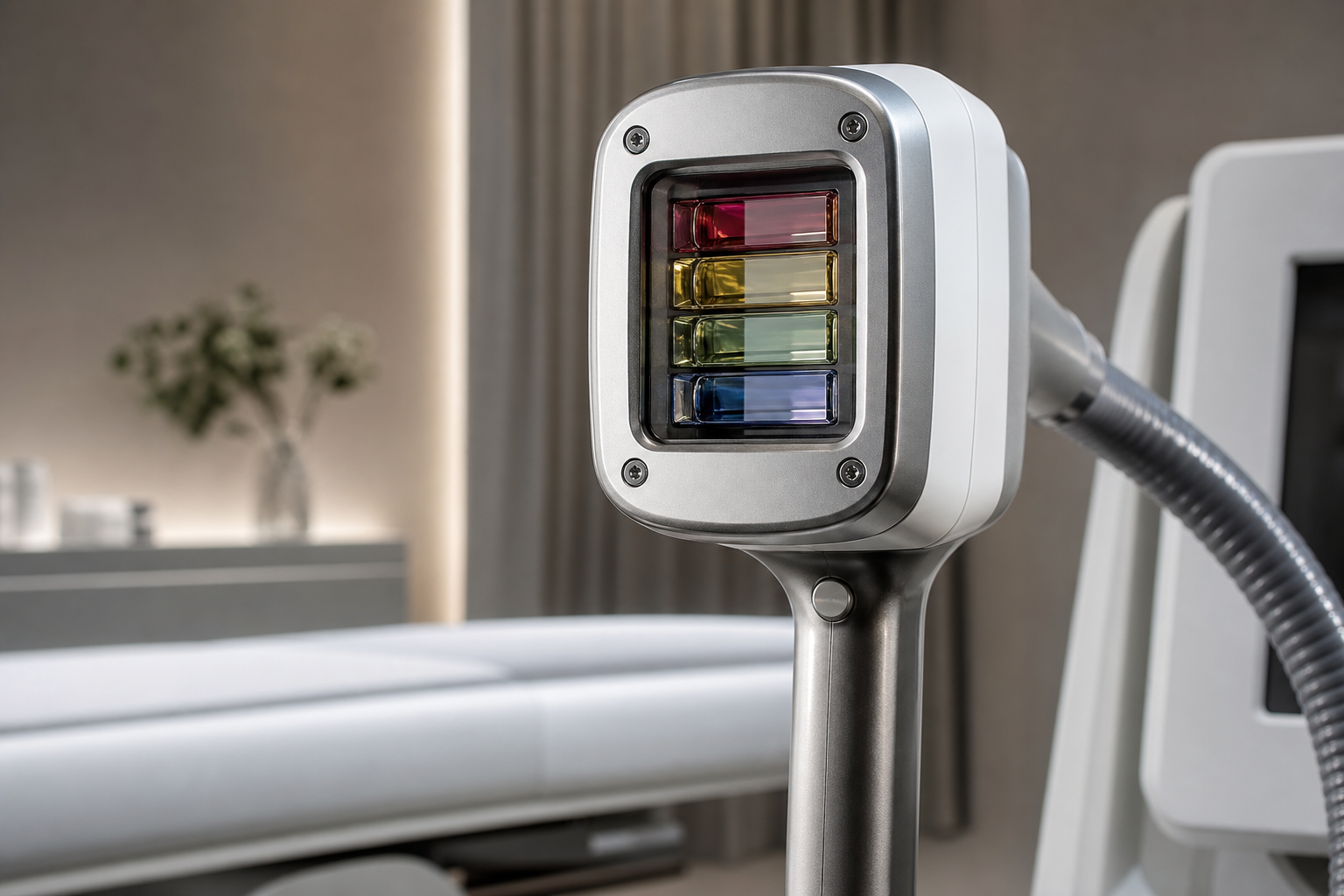
Laser hair removal has established itself as one of the most effective methods for long-term hair reduction, providing a smooth and convenient solution for millions worldwide. A pivotal element often highlighted in this technology is the concept of wavelength diversity—particularly the use of four distinct wavelengths within a single laser system. Promoted as a hallmark of cutting-edge performance, multifrequency lasers with four wavelengths (commonly 755 nm, 808/810 nm, 940 nm, and 1064 nm) often claim superior adaptability across skin types and hair characteristics. Yet, the question remains: do these multiple wavelengths truly guarantee better results, or does the reality demand a more nuanced understanding?
This article addresses that precise question, dissecting the science behind laser wavelengths, how they interact with melanin, follicle depth, and skin types, and why the mere presence of four wavelengths doesn't inherently confer treatment superiority. We will carefully explore each wavelength's role, the critical importance of parameters like fluence and pulse duration, and the decisive role of device quality, cooling systems, and operator proficiency.
Designed for both potential laser hair removal clients seeking informed choices and aesthetic professionals navigating the complexities of device selection, this analysis aims to separate solid technological benefits and clinical realities from marketing narratives. In doing so, it also naturally connects to broader discussions on laser selection—the subject of detailed guides such as Which Laser Is Best for Hair Removal? Comparing Diode, Alexandrite and Nd:YAG Technologies and comprehensive explorations of specific laser types including diode, Alexandrite, and Nd:YAG lasers.
Understanding Wavelength in Laser Hair Removal: Foundations and Implications
Laser light's interaction with biological tissue depends significantly on its wavelength, measured in nanometers (nm). The wavelength dictates not only how deeply the laser penetrates the skin but also the extent to which various chromophores—primarily melanin and water—absorb its energy. In laser hair removal, melanin within the hair follicle is the primary target. Absorption of laser light by melanin produces localized heat, which damages the follicle and inhibits hair regrowth without harming the surrounding skin.
The precise wavelength affects two key biological factors: the depth of follicle targeting and the selectivity of absorption. For example, shorter wavelengths, such as 755 nm (Alexandrite), are absorbed more avidly by melanin but do not penetrate as deeply. They are best suited for lighter skin types with finer hair. Conversely, longer wavelengths like 1064 nm (Nd:YAG) penetrate deeper and have reduced melanin absorption, making them safer choices for darker skin types, where excessive melanin absorption in the epidermis could cause complications.
This foundational knowledge underscores why wavelength is a starting point—not an endpoint—in achieving optimal laser hair removal outcomes. It also highlights that the right wavelength choice is highly patient-specific, depending on skin phototype, hair color, hair thickness, and follicle depth.
The Complementary Roles of the Four Common Wavelengths in Multifrequency Laser Systems
Multifrequency laser devices combining 755 nm, 808/810 nm, 940 nm, and 1064 nm wavelengths seek to leverage the scientific principles outlined above by offering clinicians the flexibility to tailor treatments across diverse patient profiles.
The 755 nm Alexandrite laser is prized for its high melanin absorption. It efficiently targets lighter skin types (Fitzpatrick I–III), particularly effective on finer and thinner hair due to its strong superficial action. Its limited penetration depth and higher melanin absorption make it less appropriate for darker skin tones due to increased risk of epidermal injury.
The 808 or 810 nm diode wavelength strikes a valuable balance between penetration and selectivity. It offers deeper follicular targeting than Alexandrite while maintaining moderate melanin absorption, enabling wider application across skin types II–V. Its broad clinical adoption derives from this versatility and well-tolerated side effect profile.
The 940 nm wavelength is less commonly utilized independently but serves a specialized function within combined systems. It possesses higher absorption by water and hemoglobin, potentially enhancing thermal effects in dermal microcirculation and deeper follicular structures. Though evidence of its incremental efficacy in hair removal is less established, it can support nuanced treatment protocols, particularly in multifaceted devices.
Finally, the 1064 nm Nd:YAG wavelength's deeper penetration and low melanin absorption make it uniquely suited for darker skin types (Fitzpatrick IV–VI). Its lower superficial energy absorption mitigates epidermal injury risk, essential for safe treatment of highly pigmented skin. However, lower melanin affinity necessitates careful parameter optimization to ensure follicular damage without collateral tissue harm.
Individually, each wavelength addresses particular clinical niches. Taken together, the four allow providers a broader therapeutic palette. Yet, despite this potential, no amount of wavelength variety inherently ensures superior clinical outcomes without accompanying precision in treatment execution.
Why Four Wavelengths Alone Cannot Guarantee Superior Laser Hair Removal Outcomes
While an appealing marketing proposition, the presence of four laser wavelengths in a single system should not be interpreted as a definitive marker of treatment success. Multiple interrelated technical and clinical factors predominantly govern efficacy and safety.
Fluence, or energy density, is fundamental. Treatments must deliver adequate fluence to induce follicular damage without exceeding thresholds that risk burns or pigmentation changes. Both undertreatment and overtreatment carry drawbacks. Thus, energy level calibration per skin type and target hair is vital.
Pulse duration controls how long energy is delivered during each laser pulse. Optimal pulse widths closely match the thermal relaxation time of hair follicles, maximizing heat confinement to targets while sparing surrounding tissue. Improper pulse durations risk insufficient follicular injury or unwarranted epidermal heating.
The spot size of the laser beam influences penetration depth and treatment speed. Larger spot sizes scatter less and penetrate deeper, aiding faster session times especially on large areas. Smaller spots enable precision in sensitive zones but can prolong procedures.
Cooling systems, whether contact, cryogen spray, or air-based, play a crucial role in protecting the epidermis. Effective cooling allows practitioners to use appropriately aggressive parameters, optimizing follicular injury while maintaining patient comfort and minimizing side effects.
Beyond device features, comprehensive treatment protocols tailored to individual skin and hair profiles are critical. This includes session count, interval timing, and parameter adjustments based on observed responses. A rigid protocol that fails to adapt can compromise results.
Equally important is meticulous skin assessment before each treatment, to evaluate pigmentary conditions, sensitivity, follicle characteristics, and contraindications. A poor assessment can lead to inappropriate wavelength or parameter choices.
Finally, operator expertise profoundly impacts outcomes. Skilled practitioners make informed decisions on wavelength selection, energy levels, pulse durations, and cooling, dynamically adjusting treatments based on real-time feedback. Their experience reassures patient safety and optimizes efficacy far beyond simple device capabilities.
How Skin Type and Hair Characteristics Guide the Optimal Wavelength Choice
The Fitzpatrick skin phototype classification remains an essential framework guiding laser wavelength selection, alongside parameters adjusted to individual hair traits.
For lighter skin (types I–III), the higher melanin absorption at 755 nm Alexandrite and 808/810 nm diode wavelengths allows effective targeting of hair follicles with acceptable risk profiles. This is particularly advantageous for finer, lighter hairs typically seen in these groups. In contrast, on darker skin types (IV–VI), the risk of epidermal damage with these wavelengths prompts reliance on the safer 1064 nm Nd:YAG laser, with its deeper penetration and lower superficial absorption.
Hair thickness and color also influence efficacy. Thick, coarse, dark hair responds well to most wavelengths due to higher melanin content. Thin, light-colored hair, by contrast, absorbs less energy, often requiring more precise wavelengths and parameter adjustments to achieve adequate results. Multifrequency systems can accommodate these variations but only if patient assessment and device settings are expertly managed.
Technical Comparison of the Four Wavelengths: Strengths and Limitations
755 nm Alexandrite: Excels in superficial hair follicle targeting and fast treatment of light to medium skin tones. Its high melanin absorption raises concerns regarding epidermal side effects on darker skin, limiting its use. It is a choice laser for fast treatments on finer hair but demands skillful use.
808/810 nm Diode: Considered a gold standard for versatility, offering balanced melanin absorption and penetration suitable for a broad skin and hair spectrum. Its favorable side effect profile and clinical efficacy underpin widespread adoption.
940 nm: With moderate melanin absorption and increased water absorption, this wavelength is more niche. Its role in hair removal remains adjunctive, often augmenting overall thermal delivery in multifrequency platforms but seldom used standalone.
1064 nm Nd:YAG: This wavelength is indispensable for treatment of darker skin types, combining deep tissue penetration with safety. However, relative melanin insensitivity requires higher fluences and longer pulses, demanding operator proficiency to balance efficacy and side effects.
The Critical Importance of Device Quality, Protocols, and Operator Expertise
High-end multifrequency devices incorporate advanced engineering: precise energy delivery, reliable calibration, robust cooling, and customizable settings. Without such quality, the theoretical advantages of multiple wavelengths cannot be realized.
Protocols underpin treatment success. They integrate clinical evidence and manufacturer guidelines tailored to individual cases. Such protocols ensure safe energy levels, appropriate pulse widths, and optimal session timing.
Expert clinicians remain the linchpin, interpreting patient variability, adjusting machine parameters live, and managing side effects. Their clinical judgment supersedes any marketing claims about the magic of multiple wavelengths alone.
Multifrequency versus Single-Wavelength Lasers: Weighing Practical Value
While multifrequency lasers promise versatility, some practitioners prefer specialized single-wavelength devices tailored for defined indications—e.g., diode lasers for general hair removal, Alexandrite for lighter skin, Nd:YAG for darker skin. Such focus can yield predictable, well-studied outcomes with streamlined protocols.
Conversely, multifrequency lasers offer adaptability, reducing the need for multiple devices in a single clinic. However, their advantage manifests fully only when operators expertly match wavelength selection to patient needs rather than relying on the presence of multiple wavelength options as a guaranteed solution.


