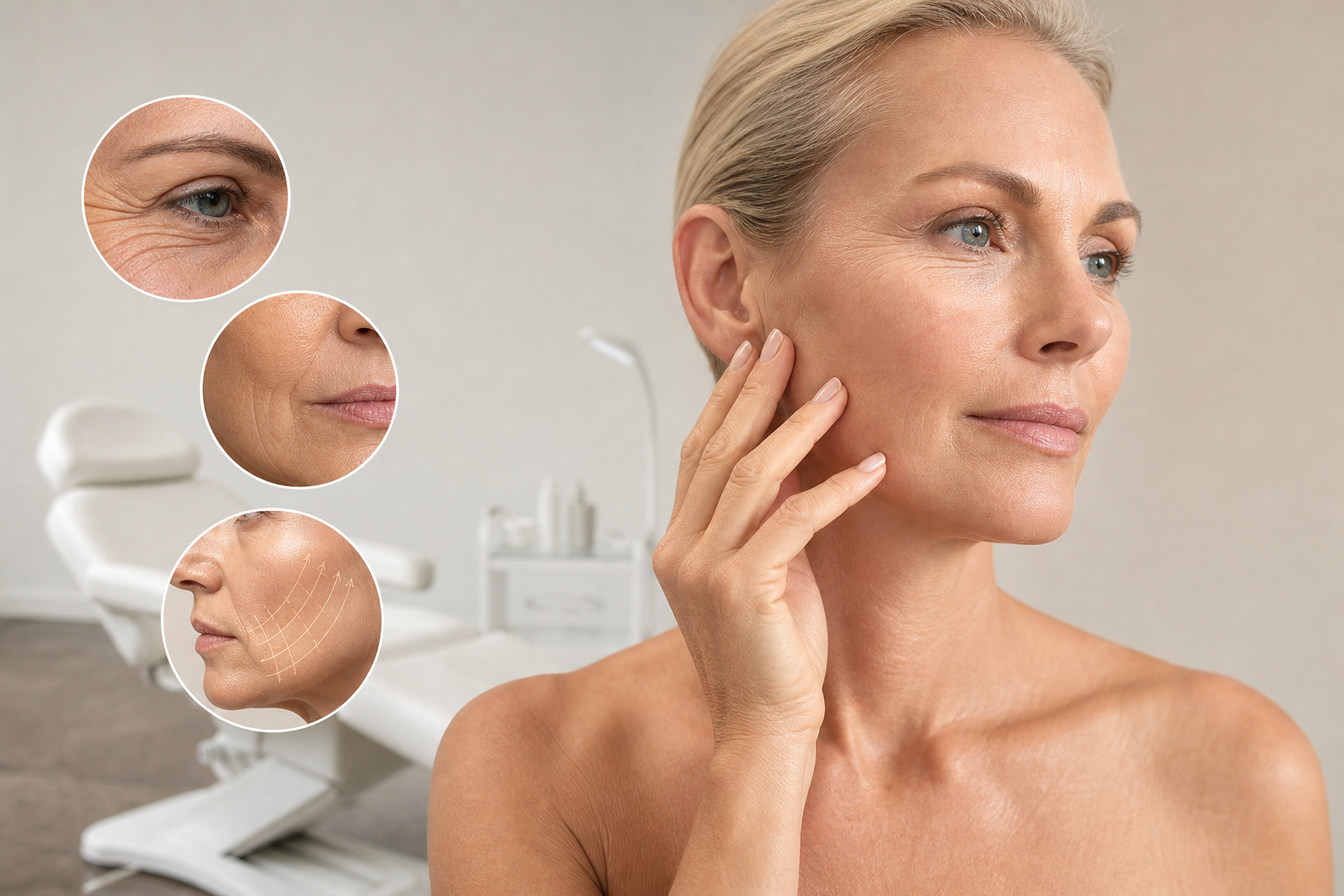
The pursuit of a youthful appearance has propelled advancements in cosmetic medicine, with wrinkle reduction and volume restoration constituting crucial elements of facial rejuvenation. Although often mentioned in tandem, wrinkles and volume loss are distinct phenomena that contribute differently to the aging face. Understanding the nuances—their causes, manifestations, and appropriate treatments—is essential for anyone considering cosmetic interventions such as Botox and dermal fillers. This awareness ensures realistic expectations, optimal outcomes, and the safe application of these procedures under professional guidance.
Wrinkles, visible on the skin’s surface, have become a universal symbol of aging. They can range from fine, dynamic lines formed by habitual facial movements to deeper static creases caused by structural changes within the skin. Conversely, volume loss occurs beneath the surface, involving the diminution of facial fat pads, muscle tone, and bone density, which results in sagging, hollows, and altered facial contours that traditional wrinkle treatments cannot fully address. For individuals seeking to refresh their appearance, discerning between these two aspects of aging is vital, as it informs the choice of intervention and expected effectiveness.
This article delves into the fundamental differences between wrinkles and volume loss, focusing on the role of Botox in managing facial aging signs. It serves as a precise and expert guide, clarifying commonly held misconceptions. Whether you are a prospective patient or a skincare professional, gaining insight into these aging mechanisms and their management can facilitate better decisions and personalized treatment plans, enhancing both aesthetic outcomes and satisfaction.
The Biological Origins of Wrinkles and Their Relationship to Facial Expression
Wrinkles primarily arise from repeated facial movements and intrinsic skin aging processes. Dynamic wrinkles, often the earliest visible signs of aging, result from consistent contraction of facial muscles responsible for expressions such as smiling, frowning, or squinting. These fine lines, typically found around the eyes (crow’s feet), forehead, and between the eyebrows (glabellar lines), stem from the skin folding as underlying muscles tighten during emotional or habitual movements.
Over time, these repeated contractions in combination with skin's natural loss of elasticity and collagen cause the dynamic lines to become etched into the skin, morphing into static wrinkles. Static wrinkles persist even without muscle movement and are exacerbated by factors such as sun exposure, smoking, and genetic predisposition to dry or thinning skin. The dermis thins, elastin fibers degrade, and collagen reduces, diminishing the skin’s resilience. This structural breakdown creates persistent creases and furrows that are visible at rest.
Botox has revolutionized the treatment of dynamic wrinkles by temporarily inhibiting nerve signals to the muscles responsible for these expressions. By selectively relaxing targeted muscle groups, Botox reduces muscle contractions, allowing dynamic wrinkles to soften and sometimes temporarily vanish. This functional mechanism underscores why Botox is highly effective for early intervention in youthful wrinkles where muscle activity predominates.
Volume Loss as an Independent Dimension of Facial Aging
While wrinkles arise from the skin surface and muscle activity, volume loss involves deeper changes in facial anatomy. Starting in the late 20s or early 30s, individuals gradually experience atrophy of the fat pads that cushion the face, weakening of facial muscles, and resorption of underlying bone structures that support soft tissues. These changes are influenced by intrinsic aging and compounded by environmental factors.
Volume loss manifests as hollowing beneath the eyes, flattened cheeks, thinning lips, and sagging jawlines. The resultant loss of structural support causes the skin to drape and fold, creating shadowing and sagging that cannot simply be smoothed out like surface wrinkles. This process leads to a tired or gaunt appearance, distinct from the fine lines caused by facial expressions.
Addressing volume loss requires a different approach than wrinkle treatment. While Botox modulates muscle movement, it does not add volume or restore structural fullness. Dermal fillers, typically composed of hyaluronic acid or other volumizing agents, are employed to replenish lost tissue volume, lift sagging features, and redefine contours. This restoration can revitalize a patient’s appearance, providing a complementary benefit alongside wrinkle reduction.
Botox’s Specific Role in Facial Aging and Its Limitations
Botox’s primary function is to reduce dynamic wrinkles by interfering with the communication between nerves and muscles. When injected in precise doses into selected muscles, it temporarily inhibits acetylcholine release, preventing muscle contraction. This relaxation leads to the smoothing of wrinkles caused by repeated facial movements, primarily in the upper face.
Despite its effectiveness, Botox is not a panacea for all aging signs. It does not replenish volume, nor can it repair skin damaged by environmental insults or intrinsic aging. Static wrinkles that do not rely on muscle contractions respond poorly to this treatment alone. Deep furrows caused by significant volume loss or skin laxity require additional modalities such as fillers or skin resurfacing techniques.
The duration of Botox effects typically ranges from four to six months. Patients must understand that maintenance treatments are necessary to sustain results. Overuse or incorrect injection techniques can produce undesirable outcomes, so procedures must be performed by qualified professionals with anatomical expertise.
Criteria for Selecting Appropriate Treatments and the Importance of Professional Consultation
Given the complex, multifactorial nature of facial aging, treatment plans should be individualized based on comprehensive assessment. Factors like the pattern of wrinkles, degree of volume loss, skin quality, muscle strength, and patient goals must be evaluated collaboratively between practitioner and patient.
Only a licensed and experienced dermatologist or aesthetic physician can perform this balanced evaluation. Misdiagnosis or unqualified treatment can lead to suboptimal results, asymmetry, unnatural appearance, or complications. Thorough consultation also enables setting realistic expectations and discussing potential side effects, benefits, contraindications, and post-treatment care.
The integrative approach often combines Botox for muscular relaxation with dermal fillers to restore volume, illustrating the necessity for tailored protocols rather than one-size-fits-all solutions. A holistic assessment ensures that the safety and efficacy of each treatment modality are maximized, preserving or enhancing natural facial dynamics and expressions.
Emerging Trends in Combined Facial Rejuvenation Therapies
Contemporary aesthetic medicine increasingly embraces multimodal strategies that address both surface wrinkles and underlying volume deficits. Sequential or simultaneous use of Botox and fillers offers a comprehensive solution to diverse aging signs. Botox reduces the formation of new dynamic wrinkles by limiting muscle activity, serving as a preventative and corrective tool.
Simultaneously, volume restoration with hyaluronic acid-based fillers restores youthful contours, replenishes mid-face hollows, and softens shadowed areas, complementing the muscle-relaxing effects of Botox. This synergy results in a harmonized facial rejuvenation that looks natural and avoids the artificial or “frozen” look sometimes associated with singular or excessive use of any one treatment.
Technological advancements have also improved product formulations and injection techniques, enabling subtle refinements and longer-lasting outcomes. These innovations reinforce the necessity for practitioners to stay current with best practices to provide safe, effective, and nuanced care tailored to individual aging patterns.
Safety Considerations and Managing Patient Expectations in Botox and Volume Loss Treatments
When administered by skilled professionals, Botox is a remarkably safe treatment with minimal risks. Common side effects like mild swelling, bruising, or redness usually resolve quickly. Serious adverse events are rare but emphasize the importance of professional administration and adherence to medical guidelines.
Volume replacement therapies also carry risks including lumpiness, asymmetry, or vascular complications if injected improperly. Precision and knowledge of facial anatomy are paramount to minimizing these risks. Patient education is crucial, highlighting that no treatment can permanently halt the aging process, and maintenance treatments are an integral part of long-term management.
Managing expectations by explaining the realistic scope of treatments—in particular, that Botox smooths specific types of wrinkles but doesn’t reverse volume loss—helps maintain trust and satisfaction. Customized treatment plans and open communication about goals and limitations are essential components of ethical and effective cosmetic practice.


