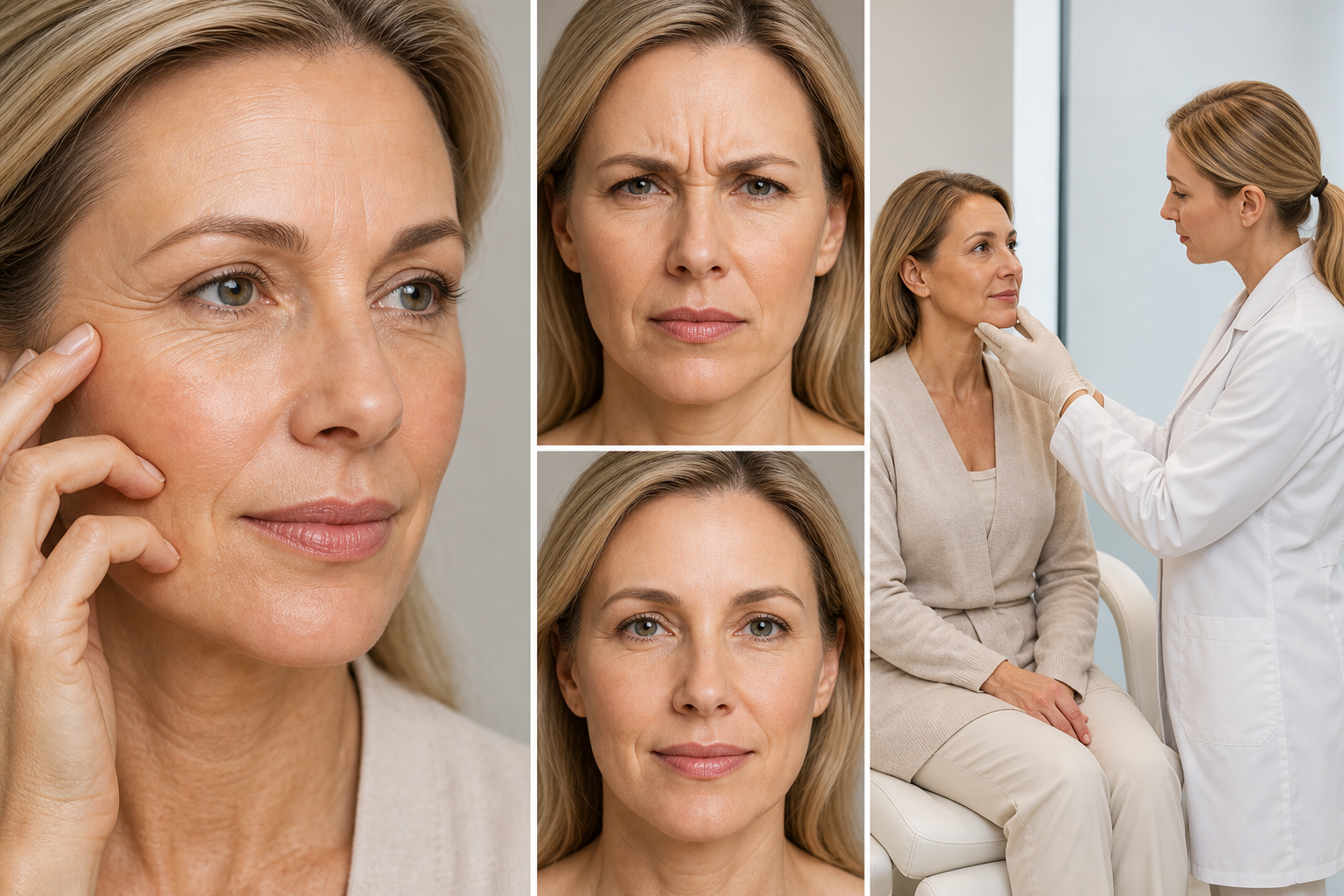
The journey of facial aging is often most visibly marked by the appearance of wrinkles. These lines on our face tell stories of emotion, experience, and time. Among them, two types stand out as fundamental to understanding and addressing aging skin: dynamic and static wrinkles. This distinction is not merely academic; it is critical for anyone considering aesthetic treatments such as Botox or dermal fillers. Knowing which wrinkles you have and why they form influences the choice of treatment, expected outcomes, and overall skin health management.
This editorial is designed for individuals exploring options to combat signs of aging as well as professionals passionate about the nuances of dermatology and aesthetic medicine. Through a detailed exploration of the mechanisms behind dynamic and static wrinkles, the role of Botox in treatment, its realistic limitations, and safety considerations, this article provides a comprehensive understanding of how these wrinkles affect the face and how best to approach them.
Wrinkles are more than surface imperfections; they are reflections of underlying biological changes in the skin and facial musculature, conveying not only age but also character and expression. A grasp of their nature empowers patients and practitioners alike to pursue treatments that are effective, natural-looking, and safe.
The Biology Behind Wrinkles: Dynamic versus Static
The formation of wrinkles is a complex process influenced by intrinsic and extrinsic factors, with dynamic and static wrinkles representing different aspects of this process. Dynamic wrinkles develop as a result of repeated muscle contractions beneath the skin. Every smile, frown, or squint causes these muscles to tighten, temporarily creasing the skin. Over years, the repetition of these movements imprints lines that become more persistent, transforming from transient lines visible only during movement to permanent grooves.
Conversely, static wrinkles are present irrespective of muscle activity or facial expression. They arise primarily due to structural changes within the skin, such as diminished collagen and elastin production, decreased hyaluronic acid levels, and reduction in skin elasticity. Factors accelerating this decline include prolonged sun exposure, smoking, environmental pollution, and natural aging. This leads to thinning of the dermis, loss of volume in subcutaneous tissues, and consequently deeper, more entrenched wrinkles that alter the facial contour and skin texture.
Recognizing the different origins of dynamic and static wrinkles is essential since their formation mechanisms point to different treatment pathways. Dynamic wrinkles are a reflection of muscular movement, while static wrinkles signal deeper dermal and volumetric changes.
Botox: Precision Tool for Dynamic Wrinkles
Botulinum toxin, commonly known as Botox, has revolutionized non-surgical aesthetic treatments. Its primary effect is to target dynamic wrinkles by temporarily blocking nerve signals to muscles, preventing their contraction. This results in the softening or temporary elimination of lines caused by facial movement, particularly on the forehead, glabella (between the eyebrows), and crow’s feet region around the eyes.
The beauty of Botox lies in its ability to reduce wrinkle formation while allowing natural facial expressions to remain intact. By carefully dosing and precisely injecting Botox, practitioners can smooth dynamic wrinkles without rendering the face expressionless. This subtlety is key to patient satisfaction and a natural result.
However, Botox’s action is biomechanically limited to dynamic lines. It cannot rebuild lost collagen, restore skin thickness, or replace volume — all essential aspects implicated in static wrinkles. Therefore, while Botox can dramatically improve the appearance of expression lines, it is not a panacea for all wrinkles or comprehensive facial aging.
Limitations and Realistic Expectations in Botox Treatment
Understanding Botox’s limitations is vital for anyone considering this treatment. Firstly, Botox is ineffective on static wrinkles, which often require additional approaches such as dermal fillers, laser resurfacing, or topical treatments aimed at collagen stimulation.
Secondly, the effects of Botox are temporary. Typically, the muscle-relaxing effect lasts between four to six months, after which repeated treatments are necessary to maintain results. Over time, consistent use can have a cumulative benefit by preventing the deepening of dynamic wrinkles, but it does not stop the intrinsic aging process.
Moreover, individual factors such as metabolism, muscle mass, and the degree of wrinkle severity influence the duration and extent of Botox’s effects. Patients should be counseled to set realistic goals—expecting a reduction, not an eradication, of wipes and lines, and an enhancement rather than a total transformation.
Safety and the Crucial Role of Expert Consultation
Safety is paramount when considering any aesthetic intervention. Botox, despite its widespread use and established safety profile, must be administered by qualified medical professionals trained in facial anatomy and injection techniques. This ensures not only effectiveness but also minimizes risks such as asymmetry, undesired drooping of facial features, or irregular expression.
Appropriate consultation includes a thorough assessment of health history, a detailed evaluation of wrinkle types and patterns, and an explanation of the procedure’s benefits and potential side effects. Patients should feel empowered to ask questions and understand their treatment plan fully.
Only through this informed partnership between patient and practitioner can optimal outcomes be achieved, aligned with individual facial characteristics and lifestyle considerations.
Comprehensive Approaches to Wrinkle Management
The nuanced differences between dynamic and static wrinkles necessitate a tailored, often multimodal treatment strategy. While Botox remains the gold standard for dynamic wrinkle management, adjunctive treatments are frequently required for static lines and volume loss. Dermal fillers, composed typically of hyaluronic acid, restore fullness and smooth deep creases, complementing Botox’s muscle-relaxing effect.
Additionally, non-invasive skin rejuvenation techniques such as microneedling, chemical peels, and laser therapy stimulate collagen remodeling and improve skin texture. Comprehensive skincare including sun protection, antioxidant application, and lifestyle modifications supports these treatments by preserving skin health and delaying wrinkle progression.
Successful wrinkle management is a dynamic process. Periodic reassessment and adjustments ensure that treatments evolve with the natural aging trajectory, optimizing long-term facial aesthetics.
The Importance of Wrinkle Classification in Personalized Treatment Plans
Correctly distinguishing between dynamic and static wrinkles is foundational to crafting effective and personalized treatment plans. Misclassification can lead to suboptimal results—excessive Botox injection in static lines may yield no visible improvement, while neglecting dynamic wrinkles might allow deepening of lines that could have been softened earlier in their progression.
For practitioners, this necessitates expertise in facial assessment and ability to combine modalities thoughtfully. For patients, understanding this distinction encourages informed decision-making and realistic expectations, fostering satisfaction and trust.
Ultimately, treating wrinkles is not merely about smoothing lines; it is about enhancing facial harmony, expression, and confidence.
Long-Term Strategies for Maintaining Youthful Facial Appearance
Facial aging is a continuous process influenced by genetics, environmental exposures, and lifestyle choices. As such, wrinkle treatment should be viewed within a broader context of skin health and aging management. Regular follow-ups to monitor changes allow the adaptation of therapeutic approaches to evolving facial features.
Integrating Botox treatments with dermal fillers, skin care protocols, and healthy habits such as balanced nutrition, hydration, and sun avoidance yields the best results. This synergy not only delays wrinkle formation but also preserves skin vitality and function.
Proactive, personalized care over time helps maintain a youthful appearance while respecting the natural expressions that define individual identity.


