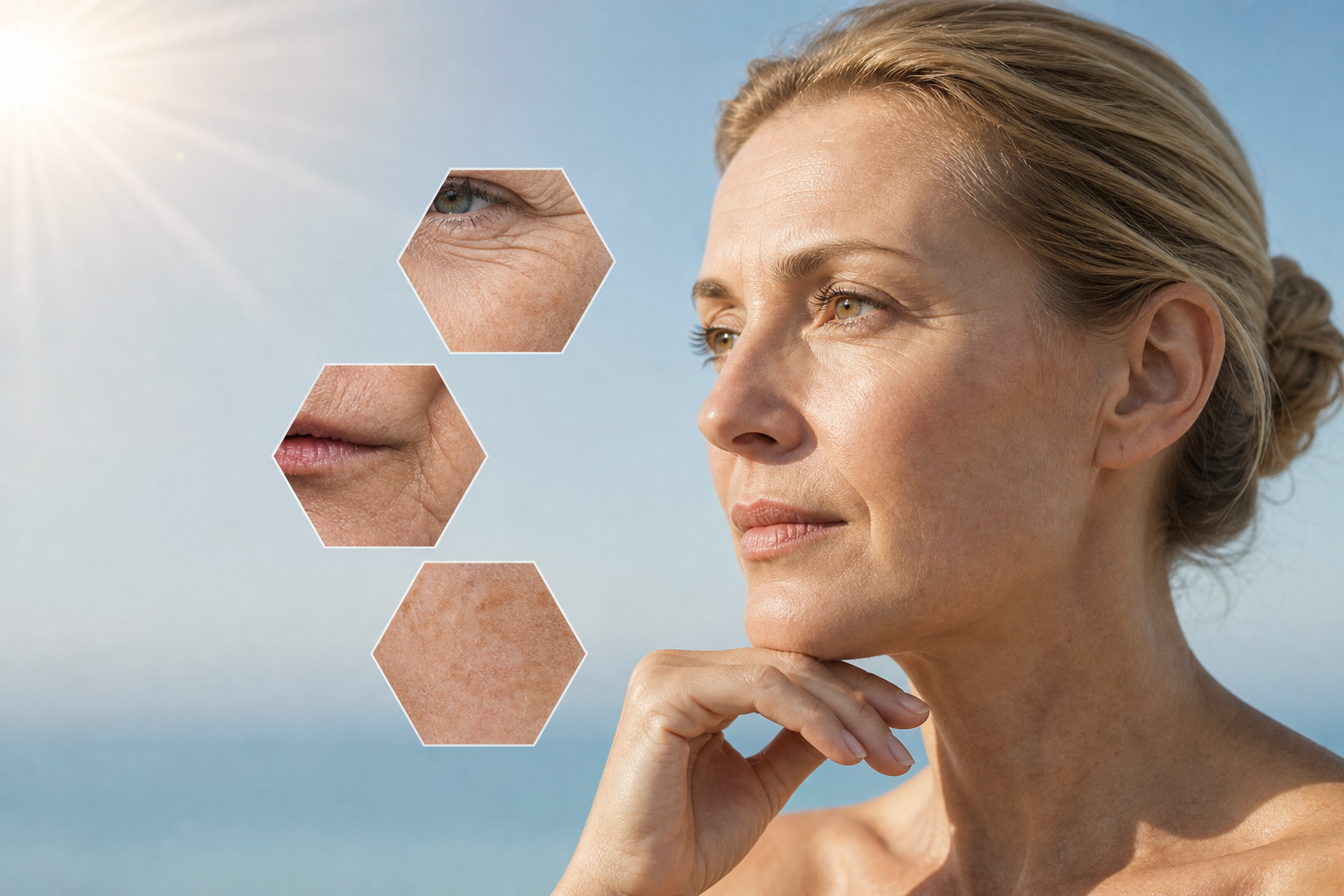
Sun exposure plays a pivotal role in skin health and aging, influencing the development and severity of wrinkles in profound ways. For those seeking to preserve a youthful appearance or explore aesthetic treatments such as Botox, understanding the impact of ultraviolet (UV) rays on the skin is essential. This article delves into how sun exposure accelerates wrinkle formation, clarifies the realistic capabilities and limitations of Botox in this context, and offers guidance for selecting appropriate treatments and protective measures. Our aim is to provide a detailed, expert insight for individuals contemplating Botox treatments and those committed to long-term skin preservation, emphasizing both aesthetic desires and health considerations.
Wrinkles are a natural element of aging, yet their onset and depth can be markedly influenced by external factors. Among these, sun exposure stands as the most significant contributor to premature skin aging, often referred to as photoaging. This distinct process, combined with intrinsic aging, shapes not only the skin’s appearance but also its structural integrity. By exploring the biological mechanisms underpinning sun-induced skin changes, we can better appreciate where Botox fits within the larger landscape of wrinkle management and facial rejuvenation.
The following sections provide a comprehensive exploration of sun-induced skin aging and wrinkle formation, the specific role of Botox in modulating dynamic facial lines exacerbated by UV damage, protective strategies to maximize treatment outcomes, and the critical importance of tailored treatment plans developed in consultation with knowledgeable specialists.
The Biological Processes Linking Sun Exposure to Wrinkle Formation
Sun exposure predominantly affects the skin through UVA and UVB radiation, each contributing distinct yet overlapping damage. Unlike chronological aging, governed by genetics and the passage of time, photoaging results from cumulative, external UV exposure. This type of aging significantly compromises the dermal extracellular matrix, particularly the collagen and elastin fibers responsible for skin firmness and elasticity.
UV rays instigate the generation of reactive oxygen species (ROS) within skin cells, setting off oxidative stress that damages cellular components, including DNA and cell membranes. This cascade impairs fibroblast function, the cells responsible for maintaining collagen synthesis, leading to deterioration of the collagen network. Consequently, the skin loses its structural support, appearing thinner, less elastic, and more prone to creases and wrinkles.
Additionally, UVA radiation penetrates deeply into the dermis, exacerbating the degradation of elastin fibers. These changes manifest clinically as rough, leathery skin texture and pronounced wrinkle formation. UVB radiation, while less penetrative, causes direct DNA damage and contributes to sunburn and inflammation, which also accelerates skin aging.
The combination of repeated UV insult and the skin’s diminished reparative capacity with age intensifies wrinkling. Dynamic wrinkles, primarily caused by repetitive facial muscle movements such as frowning and smiling, are compounded by the loss of skin resilience due to UV damage. Static wrinkles, visible even at rest, emerge from structural degradation and volume loss.
Botox’s Role in Addressing Wrinkles in Sun-Affected Skin
Botox (botulinum toxin) functions by temporarily inhibiting muscle contractions responsible for dynamic wrinkles, such as those on the forehead, between the eyebrows, and around the eyes. In the context of sun-damaged skin, Botox is particularly effective in softening these movement-related lines. However, it is critical to recognize that Botox does not reverse damage to collagen or restore skin volume; it specifically targets the muscular activity that causes the most superficial wrinkle formation.
For individuals with pronounced photoaging signs, including deepened static wrinkles and volume loss, Botox should be integrated into a broader, multi-modal treatment strategy. This may include dermal fillers to restore volume, resurfacing procedures like lasers or chemical peels to stimulate collagen production, and a rigorous sun protection regimen to prevent further damage.
Patients must maintain realistic expectations regarding Botox. While it improves the appearance of certain wrinkles and can delay the progression of others, it does not erase all signs of aging, particularly those rooted in structural skin changes caused by chronic UV exposure. Consultation with an experienced practitioner is essential to determine the suitability of Botox alone or in combination with complementary treatments.
Optimizing Sun Protection to Enhance and Prolong Botox Treatments
Sun protection is fundamental for both wrinkle prevention and the durability of Botox results. UV exposure post-treatment can accelerate skin aging and diminish the efficacy and longevity of Botox by inducing inflammation and altering muscle and skin physiology. It is advisable to avoid intense sun exposure, particularly in the days following injections when the skin may be more sensitive.
The implementation of broad-spectrum sunscreens with high SPF values, physical barriers such as wide-brimmed hats, and behavioral modifications like seeking shade during peak sunlight hours constitute the cornerstone of effective protection. Additionally, daily skin care routines enriched with antioxidants combat oxidative stress, supporting skin health and resilience.
Hydration also plays a vital role in maintaining skin integrity. Moisturized skin enhances the overall texture and helps to mitigate wrinkle appearance. In conjunction with Botox treatments, diligent sun protection enables longer-lasting, more satisfactory outcomes by safeguarding skin structure and function.
The Importance of Professional Evaluation and Customized Treatment Planning
Given the complex interplay between photoaging and wrinkle formation, individualized assessment is crucial. Specialists trained in aesthetic dermatology or cosmetic medicine assess wrinkle types—distinguishing dynamic from static lines—and evaluate the extent of sun-induced damage. This evaluation informs an optimized treatment protocol tailored to the patient’s skin condition, age, lifestyle, and aesthetic goals.
Such personalized plans may combine Botox with fillers, topical agents, or procedural interventions to address both muscle dynamics and dermal degradation. The professional guidance also ensures safe administration, proper dosing, and management of realistic treatment expectations, reducing the risk of dissatisfaction or adverse effects.
Moreover, clinicians provide critical education about ongoing sun protection, skin care, and lifestyle choices that underpin long-term skin health and treatment success. Patients empowered with this knowledge can actively participate in maintaining their results and in delaying further photodamage.
Emerging Technologies and Integrated Approaches in Managing Photoaging Wrinkles
Advancements in aesthetic medicine have expanded the armamentarium for combating wrinkles, especially those accentuated by sun damage. Beyond Botox and fillers, energy-based modalities such as fractional lasers, intense pulsed light (IPL), and radiofrequency devices stimulate neocollagenesis and improve skin texture and pigmentation irregularities caused by UV exposure.
Chemical peels and microneedling techniques also contribute to dermal remodeling and enhanced product penetration, supporting skin rejuvenation. When used judiciously in conjunction with Botox, these modalities can achieve synergistic benefits.
Topical formulations featuring potent antioxidants (e.g., vitamin C, niacinamide) and DNA repair enzymes have emerged as adjunctive therapies offering both preventative and reparative effects. Their incorporation into comprehensive treatment strategies enables addressal of both the intrinsic and extrinsic factors of skin aging.


