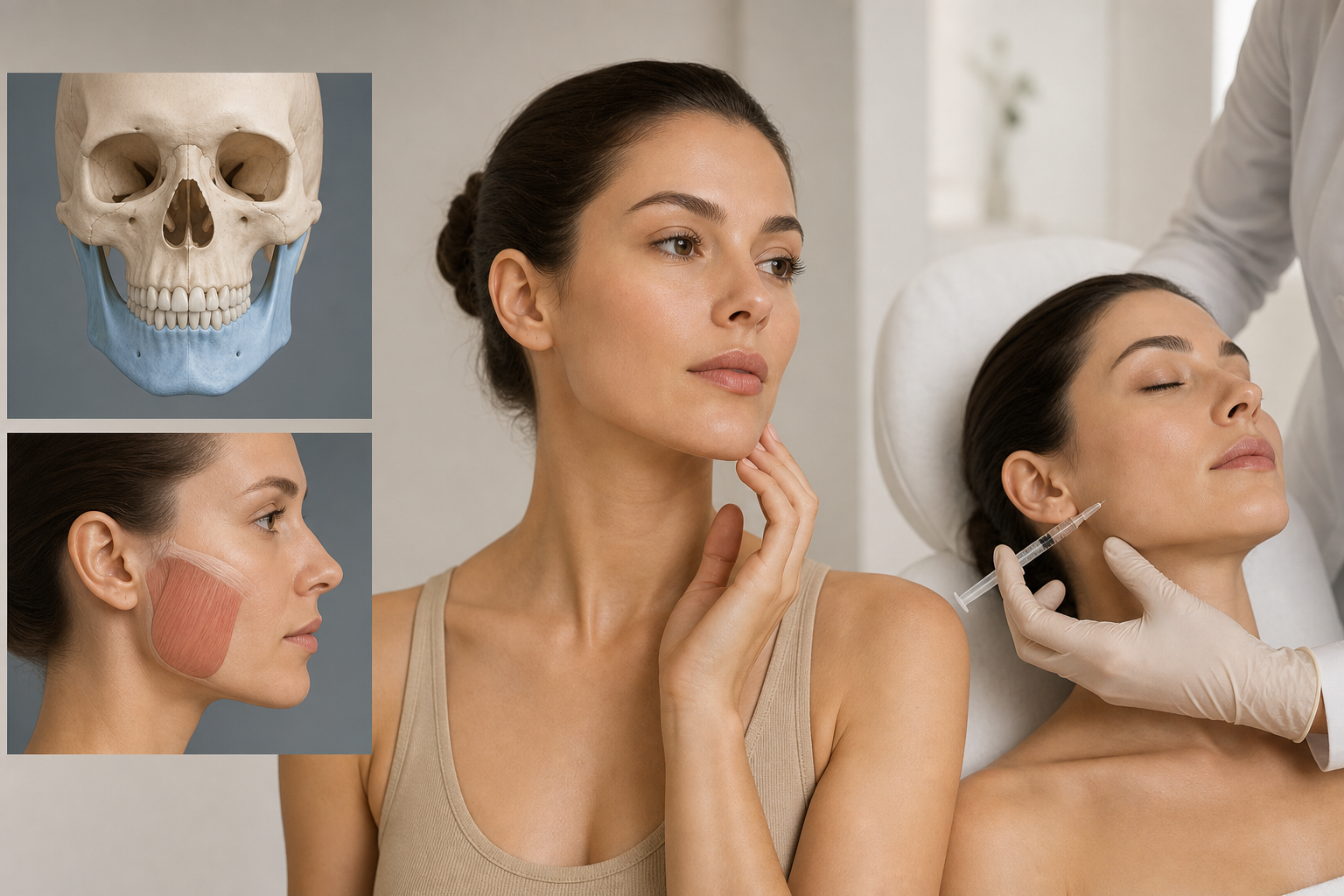
The phenomenon of a wide jawline often invites curiosity and concern, both from individuals contemplating aesthetic enhancements and professionals specializing in facial treatments. Determining whether the width of the jaw is primarily due to muscle hypertrophy or the bone structure plays a crucial role in deciding the best therapeutic approach, particularly when considering interventions like Botox for the lower face and neck. The distinction is not merely academic; it directly influences treatment efficacy, safety, and patient satisfaction.
This comprehensive editorial aims to elucidate the anatomical underpinnings of a wide jawline, give clear indications of when Botox treatment is suitable, and discuss realistic expectations alongside safety considerations. It is designed principally for those facing the dilemma of an overly broad jaw and for practitioners seeking to apply Botox with precision to the lower face and neck. Understanding these nuances empowers patients to make informed decisions and practitioners to tailor interventions that harmonize functionality with aesthetics.
Fundamental Anatomical Factors Behind a Wide Jawline
The mandible, or lower jawbone, forms the bony foundation of the lower face and largely determines its overall shape and width. In some individuals, the breadth of the mandible is a genetically inherited trait or can result from developmental influences leading to increased bone volume or distinctive mandibular angles. Such inherent bone structure contributes permanently to a wide jawline, resistant to non-surgical muscle-targeting treatments.
On the other hand, the musculature overlaying the jawbone, particularly the masseter muscles, can also impart width and bulk to the jawline. Unlike bone, muscle is malleable and responds to various stimuli including mechanical strain, habitual clenching, or bruxism. This can cause hypertrophy or enlargement of the masseter muscles, creating a square or broad jaw appearance that is functionally and aesthetically distinct from bony architecture.
Discerning between these two causative factors is paramount in facial contouring assessments. Radiographic imaging and physical examination help differentiate skeletal width from muscular hypertrophy, thereby streamlining the treatment plan and setting appropriate expectations.
Masseter Muscle Hypertrophy: Mechanisms and Impact on Facial Contours
The masseter muscle, located on the sides of the jaw, is a powerful masticatory muscle responsible for chewing and jaw elevation. Its prominence varies considerably among individuals, influenced by genetics, functional demands, and behavioral patterns such as excessive teeth grinding. Persistent muscular overactivity can lead to hypertrophy, which visually broadens the lower face in a symmetrical or sometimes asymmetric manner.
This form of muscular enlargement does not merely alter aesthetics but can lead to functional symptoms including jaw discomfort, temporomandibular joint tension, and headaches arising from chronic muscle strain. Therefore, treatments targeting the masseter muscle often relieve both cosmetic concerns and associated pain or dysfunction, underscoring a dual therapeutic benefit.
Since muscle tissue is dynamic and modifiable, therapeutic interventions aimed at reducing masseter volume are both feasible and effective. Among these, Botox injections have emerged as a preferred non-surgical modality offering precise muscle relaxation with minimal downtime.
Botox as a Targeted Therapeutic for Muscle-Related Jawline Width
Botulinum toxin, commonly known as Botox, operates by inhibiting acetylcholine release at the neuromuscular junction, effectively diminishing muscle contraction ability. When administered into the masseter muscles, Botox decreases muscle tone and volume over time, leading to a softened, more tapered jawline. This muscle relaxation not only improves facial aesthetics but also addresses functional issues linked to muscle overuse.
The administration of Botox in the lower face, particularly for masseter hypertrophy, requires thorough knowledge of facial muscle anatomy and injection techniques. The precision of injection placement and dosage governs the balance between achieving an aesthetically pleasing contour and maintaining sufficient muscle function for daily activities like chewing.
Patients typically observe gradual improvements in facial contours within several weeks post-treatment, with effects lasting on average four to six months. Maintenance treatments are necessary to sustain results, with dosages and frequency tailored to the individual's response and lifestyle factors.
Limitations and Realistic Expectations of Botox in Addressing Wide Jawlines
While Botox is a powerful tool for modifying muscle-induced jaw widening, it is not a panacea. It has no effect on the underlying bony structure and thus is ineffective for cases where skeletal width predominates. In such scenarios, patients may require surgical interventions like mandibular reduction osteotomies to achieve meaningful changes.
Moreover, the degree of muscle hypertrophy impacts treatment outcomes; significant hypertrophy or a long history of muscle overuse might necessitate several treatment sessions before noticeable contouring occurs. Patients must be counseled regarding the temporary nature of Botox effects and the commitment to repeated treatments for maintenance.
Potential side effects, although uncommon with qualified administration, can include mildly transient muscle weakness, asymmetry, or localized discomfort. These risks underscore the importance of specialist consultation and individualized treatment planning.
Clinical Assessment and the Importance of Specialist Consultation
An accurate assessment is the cornerstone of devising an effective treatment approach for a wide jawline. Expert professionals conduct comprehensive evaluations integrating patient history, physical examination, and diagnostic imaging to ascertain the predominant contributor—be it bone or muscle. Such assessments inform whether Botox, surgical intervention, or combined modalities offer the most effective and safest solution.
Specialist practitioners trained in aesthetic medicine and maxillofacial considerations bring invaluable expertise to treatment planning. They ensure the procedure aligns with the patient's goals, taking into account functional demands and aesthetic desires. Furthermore, they provide guidance on adjunctive treatments that might complement Botox for optimal results, including dermal fillers or skin tightening procedures.
Continuous monitoring and follow-up post-Botox treatment allow adjustments enhancing efficacy and managing any side effects promptly, thus fostering patient trust and satisfaction.
Integrating Botox into a Comprehensive Facial Rejuvenation Strategy
Botox for the masseter muscle is often one component of a broader aesthetic regimen designed to enhance facial harmony. Its use in the lower face complements other injectable treatments such as dermal fillers, which can restore lost volume or sculpt areas like the chin and jawline for a refined profile. Additionally, Botox addresses other concerns like drooping mouth corners or neck banding, contributing to a balanced youthful appearance.
Modern aesthetic practice emphasizes this integrated, individualized approach, leveraging the strengths of multiple modalities to achieve natural-looking outcomes. Such strategies consider the patient's unique facial structure, skin quality, and aging patterns, ensuring treatments are synergistic and sustainable.
Moreover, the therapeutic role of Botox extends beyond aesthetics, offering relief from functional problems like bruxism or temporomandibular joint discomfort related to masseter overactivity. This dual role enhances its value in managing wide jawline cases with muscular hypertrophy.
Future Perspectives in Non-Surgical Management of Wide Jawlines
Technological advances and expanding clinical insights are continuously refining the use of Botox and other minimally invasive techniques for facial contouring. Emerging methods aim to enhance precision, reduce risks, and extend treatment longevity. Personalized dosing algorithms and advanced imaging guidance are underway to elevate treatment outcomes further.
Research into understanding the interplay of muscular activity, bone remodeling, and soft tissue dynamics will foster innovations integrating Botox with complementary treatments in tailored protocols. Education of both clinicians and patients remains pivotal, enabling informed choices and realistic expectation setting.
Ultimately, holistic care that addresses anatomical, functional, and aesthetic dimensions of a wide jawline will prevail, diminishing the need for invasive surgery in many cases while optimizing patient well-being and confidence.


