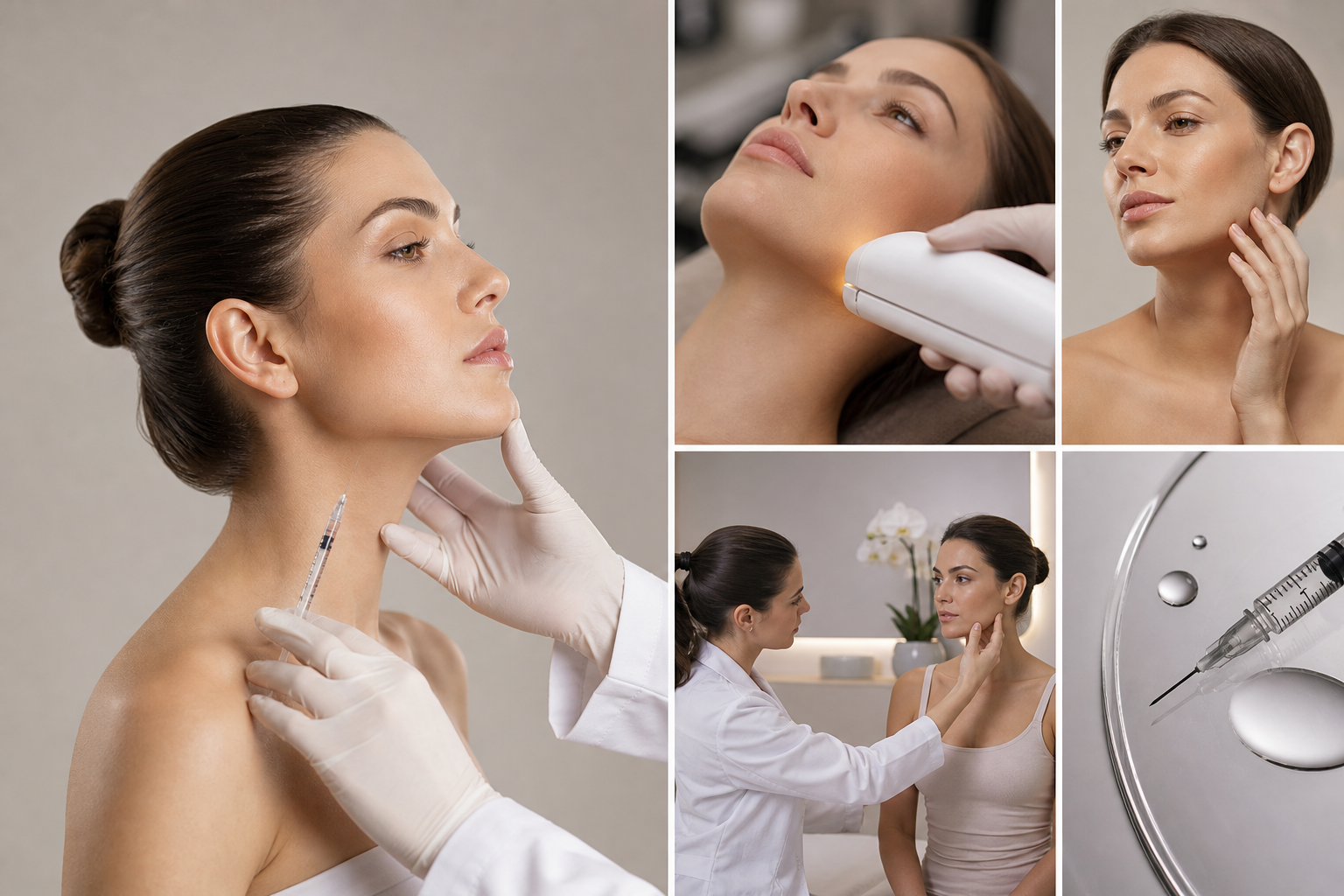
The contours of the jawline play a crucial role in defining the facial profile and overall expression, influencing perceptions of youthfulness, vitality, and balance. As we age, or due to genetic predispositions, changes in skin elasticity, muscle tone, and fat distribution may lead to a less defined jawline, prompting many to seek aesthetic treatments to restore or enhance this important feature. Among the array of available options, Botox has emerged as a popular minimally invasive choice for lower face reshaping, alongside various alternative procedures including dermal fillers, skin tightening technologies, and muscle modulation techniques.
Understanding the distinctions between Botox and these alternative treatments is essential for individuals considering jawline contouring. This editorial delves deeply into the mechanisms, benefits, limitations, and safety considerations associated with Botox for the lower face and neck, contrasted with other contemporary modalities designed to sculpt and rejuvenate the jawline. Whether you are exploring options to address muscle hypertrophy, skin laxity, or volume loss, gaining a well-informed perspective will empower you to align treatment choices with your aesthetic aspirations and personal circumstances.
This article is crafted for readers who are curious about non-surgical approaches to enhance their jawline, including those experiencing early signs of aging, individuals with specific muscular concerns such as masseter hypertrophy, or anyone looking to refine their lower face contours without the downtime or risks of surgery. Beauty professionals and aesthetic enthusiasts will also find value in this nuanced discussion of how Botox integrates into the broader landscape of jawline contouring therapies.
The Anatomical Foundations that Shape Jawline Appearance
A profound appreciation of jawline anatomy is indispensable when considering any contouring intervention. The lower face comprises complex layers including the skin, subcutaneous fat, facial muscles, and underlying bony structures, all contributing to facial harmony. Prominently, the masseter muscles—strong masticatory muscles attached to the mandible—significantly influence facial width and jaw definition. Hypertrophy or excessive tone in these muscles can broaden the lower face, leading to the characteristic square or bulky jaw appearance.
Alongside the masseters, the platysma muscle system in the neck, particularly via vertical bands known as platysmal bands, affects the smooth demarcation between neck and jaw. As skin and connective tissues lose elasticity with aging, platysmal band prominence can accentuate the jowl area, contributing to less defined mandibular contours. Additionally, the chin muscles and soft tissues impart subtle textures and movements that further define the lower facial silhouette.
With advancing age, intrinsic factors such as reduced collagen production and extrinsic factors including sun exposure coalesce to diminish skin firmness and volume, leading to sagging and blurring of the jawline's crisp edges. Moreover, certain behaviors, such as frequent jaw clenching or habitual chewing of gum, may exacerbate masseter hypertrophy, amplifying the need for targeted aesthetic adjustments.
Botox’s Role in Modulating Muscle Activity for Jawline Contouring
Botox, a purified neurotoxin known primarily for its wrinkle-relaxing properties, acts by inducing localized muscle paralysis through inhibition of acetylcholine release at neuromuscular junctions. When strategically injected into the masseter muscles, Botox attenuates excessive muscular contraction, prompting gradual muscle volume reduction over several weeks. This relaxation diminishes the bulkiness associated with hypertrophic masseters, resulting in a narrower, more tapered jawline.
Patients with a square or wide lower face due to muscle prominence often benefit most from this approach. The treatment also extends to addressing platysmal bands, where carefully deposited Botox relaxes these tight, vertical neck muscles, aiding in skin smoothing and improved jaw-neck transition. Furthermore, Botox application in the chin targets muscles responsible for dimpling and irregular skin texture, smoothing the area to harmonize with the rest of the lower face.
The minimally invasive nature of Botox injections, combined with their rapid procedure time and limited downtime, has contributed to their burgeoning popularity. Typically, results emerge progressively within one to two weeks post-injection, with effects persisting approximately four to six months before re-treatment is necessary.
Alternative Treatments Complementing or Substituting Botox for Jawline Refinement
While Botox excels at muscle relaxation, it inherently does not address other factors like volume depletion, skin laxity, or structural bone deficits. Thus, a diverse spectrum of alternative or complementary treatments exists to holistically enhance jawline contours.
Dermal fillers, predominantly hyaluronic acid-based, have revolutionized facial contouring by replenishing lost volume and sculpting precise areas such as the mandibular angle and chin. With adept injection techniques, fillers restore youthful fullness, enhance definition, and correct asymmetries with immediate visible outcomes. Their versatility allows practitioners to customize treatments for subtle enhancement or more pronounced shaping depending on patient goals.
Non-invasive energy-based modalities like ultrasound therapy and radiofrequency delivery stimulate dermal collagen and elastin production, promoting gradual skin tightening and rejuvenation. These therapies improve skin tone and reduce mild sagging in the jaw and neck area, beneficial for patients preferring needle-free options or those seeking maintenance treatments following Botox or fillers.
Other adjunctive procedures include thread lifting, which physically repositions soft tissues using biocompatible sutures, and microneedling combined with platelet-rich plasma to enhance skin quality. Each alternative offers distinct advantages and can be strategically integrated with Botox according to an individual's unique anatomy and aesthetic objectives.
Setting Realistic Expectations and Understanding the Constraints of Botox Treatments
Though Botox provides a transformative effect in the right clinical context, it is imperative to comprehend its limitations to avoid dissatisfaction. The degree of jawline refinement achievable is proportional to the underlying muscular component; hence individuals with primarily skeletal or fat-related contour issues may derive limited benefit from Botox alone.
Botox does not add volume nor does it lift significantly sagging skin. Those with pronounced jowls, substantial skin laxity, or marked tissue descent often require multi-modality treatments or surgical intervention to achieve comprehensive correction. Additionally, the temporary nature of Botox mandates ongoing treatments for maintenance, with the cumulative effect potentially resulting in subtle long-term muscle thinning.
Moreover, the precision of injection is critical; inappropriate dosing or placement can yield unwanted consequences such as asymmetry, weakness in mastication, or unnatural facial expressions. Therefore, only experienced, certified practitioners should administer Botox for jawline contouring.
Safety Protocols and the Importance of Expert Consultation prior to Botox Administration
When performed by qualified medical professionals, Botox injections are widely regarded as safe with a well-established risk profile. Common minor side effects include temporary bruising, redness, or mild swelling at the injection sites. Serious adverse events are exceedingly rare but warrant consideration.
Pre-procedural consultation serves multiple vital purposes: confirming the patient’s candidacy, identifying contraindications such as neuromuscular disorders or pregnancy, tailoring the treatment plan precisely to anatomical nuances, and managing expectations appropriately. This collaborative process enhances patient safety, satisfaction, and outcome predictability.
Furthermore, experts provide comprehensive guidance on post-procedure care and safe timelines for subsequent treatments. They can also advise on combining Botox with other modalities for synergistic effects, optimizing overall jawline aesthetics.
Integrating Botox and Complementary Procedures for a Comprehensive Jawline Enhancement Regimen
Modern facial aesthetics increasingly endorses an integrative approach, leveraging the strengths of Botox alongside dermal fillers, skin tightening technologies, and minor surgical techniques for naturalistic yet impactful jawline improvement. By addressing multiple etiologies—muscle hypertrophy, volume loss, skin laxity—simultaneously, patients achieve refined contours with greater longevity.
For example, combining masseter Botox with strategically placed hyaluronic acid fillers at the mandibular border can sculpt a slimmer jawline while restoring youthful structure. Concurrent radiofrequency treatments may enhance skin elasticity, further refining the jaw-neck junction. Such personalized protocols necessitate comprehensive assessment and expertise, grounded in a deep understanding of facial anatomy and aging dynamics.
In essence, Botox and its alternatives are not mutually exclusive but form a complementary toolkit to artfully enhance the lower face. Tailored to individual needs, these interventions can restore confidence and harmonize the jawline with overall facial aesthetics, reaffirming their indispensability in contemporary cosmetic medicine.


