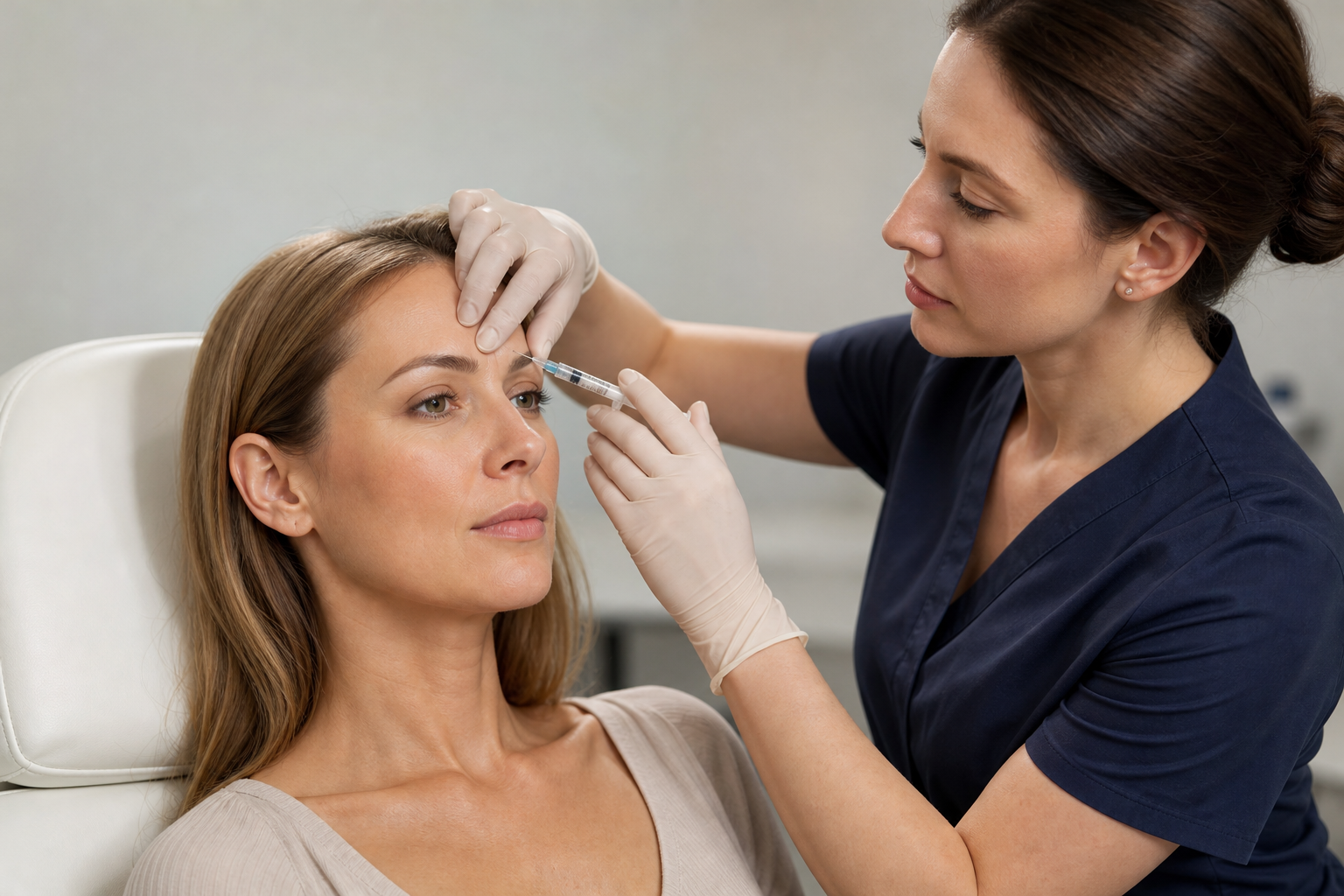
In the realm of modern aesthetic medicine, Botox has secured a prominent position as a minimally invasive treatment that effectively addresses the visible signs of aging on the face. Among its most common applications are treatments targeting the forehead and the area between the eyebrows—the glabellar region. These two adjoining zones are often evaluated and treated as a unified segment rather than as isolated areas. This approach stems from their intricate anatomical and functional relationships and is essential for delivering natural-looking, harmonious results. Understanding why the forehead and the space between the eyebrows are assessed together is crucial for anyone considering Botox injections in these regions, as it directly impacts treatment planning, efficacy, and patient satisfaction.
This article serves as an expert, practical guide focusing specifically on Botox treatment in the forehead and glabellar areas. It is intended for individuals curious about or seeking these Botox solutions, as well as for practitioners who desire a deeper comprehension of the interplay between these facial regions. By delineating how Botox acts on the muscles governing expressions in these areas, elucidating the rationale for combined evaluation, detailing realistic expectations and limitations, and highlighting safety considerations, this discussion offers a comprehensive foundation for optimized treatment outcomes.
The forehead and the area between the eyebrows are essential zones of facial expression, conveying emotions such as surprise, worry, or concentration. Wrinkles that develop here, especially the vertical “frown lines” or glabellar lines, are among the earliest signs of aging and frequently cause concern for many patients. Because of their high visibility, these wrinkles often become the focal point for aesthetic correction. However, treating them effectively demands a thorough understanding of their underlying anatomy and muscle dynamics, which explains why clinicians typically consider these two regions together during diagnosis and intervention.
The Anatomical and Functional Connectivity of the Forehead and Glabellar Muscles
The primary reason for the integrated evaluation of the forehead and the area between the eyebrows lies in the complex anatomy of the muscles in these regions. The frontalis muscle dominates the forehead, responsible for lifting the eyebrows and forming horizontal forehead lines. In contrast, the corrugator supercilii and procerus muscles reside primarily within the glabellar region, creating vertical furrows between the eyebrows when they contract. These muscles do not operate in isolation; rather, they act in synergy to produce a broad range of facial expressions.
For example, when a person furrows their brow, the corrugator supercilii and procerus muscles contract to draw the eyebrows together, generating the characteristic vertical glabellar lines, while the frontalis may simultaneously respond to aid in the expression. Because of this interplay, viewing the forehead and glabellar areas as separate entities overlooks their functional partnership. Such an oversight can lead to ineffective or unnatural cosmetic outcomes when treatments fail to address the entirety of muscle interactions.
Mechanism of Botox Action in the Forehead and Between the Eyebrows
Botox works by interfering with the transmission of nerve impulses to muscles, specifically blocking the release of acetylcholine at neuromuscular junctions. This action leads to a temporary weakening or paralysis of targeted muscles, reducing their ability to contract. Applied to the forehead and glabellar muscles, Botox diminishes the intensity of muscle movement, softening the appearance of both horizontal lines across the forehead and vertical frown lines between the eyebrows.
Crucially, due to the interconnectedness of these muscles, treating only one of these regions may result in muscle activity imbalance. For instance, if the glabellar muscles are relaxed with Botox but the frontalis remains untreated, the frontalis might compensate, potentially creating new lines or altering the natural facial expressions. Therefore, simultaneous consideration and treatment of both areas ensure muscular balance, prevent compensatory wrinkles, and produce a harmonious and natural look.
Establishing Realistic Expectations: The Role of Individualized Treatment
Botox, while highly effective, should not be viewed as an all-encompassing solution that erases all wrinkles permanently. Instead, it serves as a controlled method to reduce muscle activity, diminishing wrinkle visibility and preventing their progression. Results often become visible within a few days following injection, with maximal effects appearing around two weeks post-treatment. Typically, these effects last between four to six months, necessitating repeat treatments to maintain the desired appearance.
Since each person's facial anatomy and skin elasticity differ, treatments must be tailored to individual needs. An experienced practitioner will assess factors such as the depth and pattern of wrinkles, the patient's mimetic muscle strength, facial shape, prior treatments, and overall health history. Such comprehensive evaluation enables precise dose allocation and injection site placement, reducing risks and optimizing aesthetic outcomes, while preserving natural expressions.
Safety Profile and Considerations in Botox Treatment of These Facial Zones
When administered by qualified and experienced professionals, Botox injections in the forehead and glabellar areas have an excellent safety record. Common side effects are generally minor and transient—these include localized redness, mild swelling or bruising at injection sites, and occasional headache. Infrequently, asymmetry might occur if the toxin affects nearby muscles unevenly or excessively.
Certain conditions contraindicate Botox use, such as pregnancy, neuromuscular disorders (e.g., myasthenia gravis), or allergy to formulation components. Therefore, a thorough consultation and medical history review are imperative before proceeding with treatment. Close adherence to recommended dosing and injection techniques dramatically reduces complications, illustrating the vital role of professional expertise.
Botox as a Multifaceted Asset in Addressing Forehead and Glabellar Wrinkles
The use of Botox in the forehead and glabellar region transcends simple wrinkle reduction, acting also as a prophylactic intervention. By diminishing repetitive muscle contractions, Botox limits the formation of new wrinkles and slows the advancement of existing lines, contributing to long-term preservation of youthful skin appearance. This dual function has made the combined treatment one of the most prevalent and valued in aesthetic practice.
Because the forehead and glabellar regions reflect emotional states and often reveal signs of stress and aging early, maintaining their smoothness positively affects overall facial harmony and self-confidence. When Botox treatments respect their anatomical and functional unity, they yield subtle, refined enhancements rather than dramatic or artificial looks, aligning with modern ideals of natural beauty.
The Importance of Expert Consultation for Tailored Botox Treatments in the Forehead and Between Eyebrows
Before undergoing Botox treatment targeting these areas, scheduling a professional consultation is essential. During this session, the specialist examines facial anatomy, evaluates muscle activity, discusses expectations, and explains treatment possibilities and limitations. This dialogue allows for personalized planning, ensuring patient comfort and safety while optimizing results.
An experienced clinician may also recommend adjunctive treatments such as dermal fillers or skin resurfacing to complement Botox effects, achieving more comprehensive rejuvenation. Through such integrated approaches, patients obtain well-rounded improvements that harmonize with their unique facial features and aesthetic goals.


