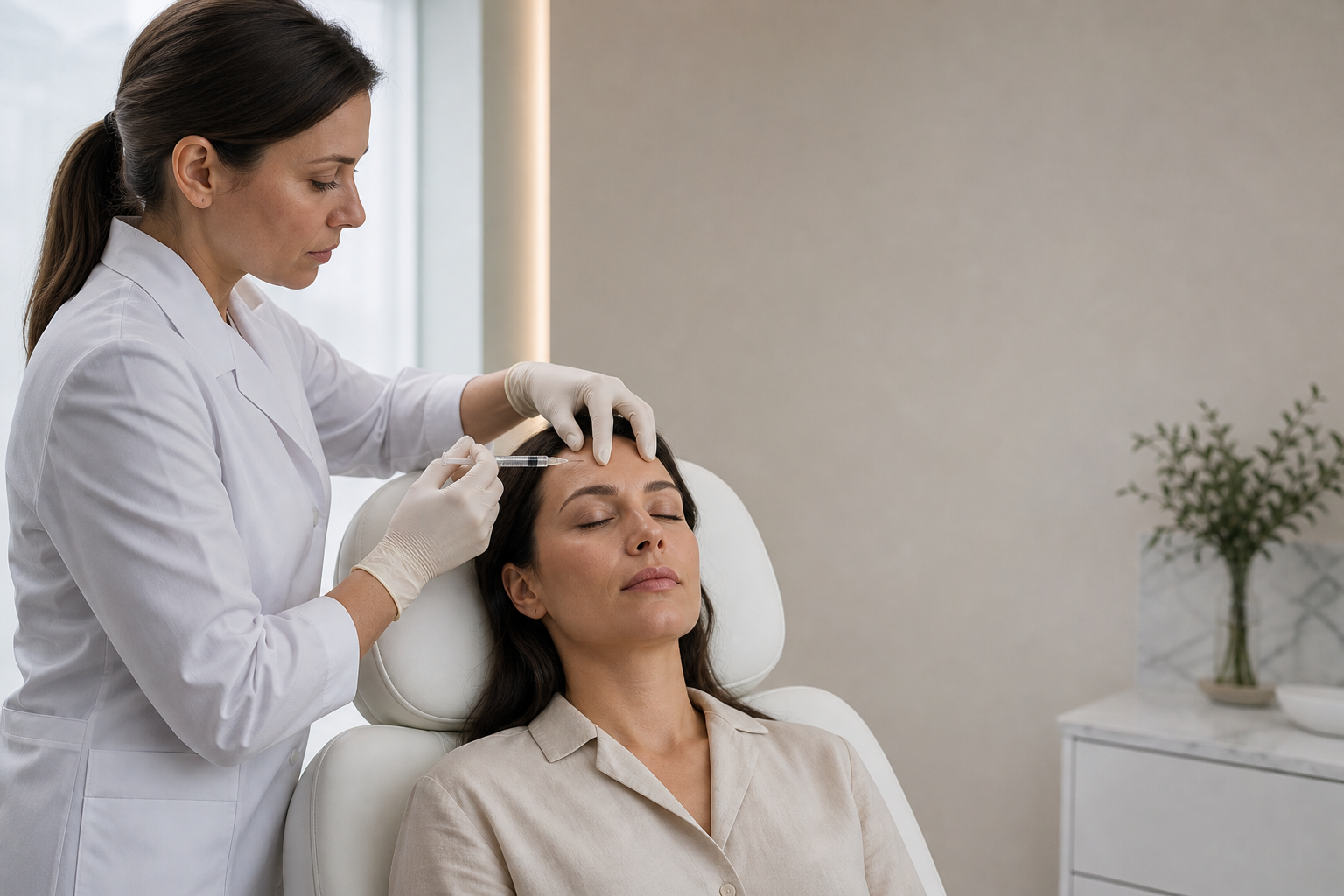
The pursuit of a youthful and refreshed appearance has driven countless advancements in aesthetic medicine, not least of which is the use of Botox for facial rejuvenation. Among the most popular and sought-after treatments is Botox for the forehead, a region that often reveals our earliest and most prominent signs of aging. This form of treatment is particularly aimed at individuals desiring to soften the dynamic wrinkles that form across the forehead and between the eyebrows, known as the glabellar region. These wrinkles, etched by years of facial expression and habitual muscle movement, can impart an unintended expression of fatigue, seriousness, or age, often misrepresenting our true vitality.
Understanding the mechanics, realistic outcomes, and inherent limitations of Botox in the forehead area is critical for those considering such a procedure. This article delves deeply into the science behind Botox treatment for the forehead and glabellar zones, evaluates its effectiveness, outlines the safety considerations, and clarifies the circumstances that necessitate professional consultation. Rather than viewing Botox as a magical remedy, it’s essential to approach it as a nuanced tool that requires expertise and tailored application for best results.
The significance of this topic is underscored by the popularity of Botox treatments worldwide, as well as the critical need to dispel misconceptions about its power and limits. Essential for anyone exploring options in non-surgical facial rejuvenation, this examination sets realistic expectations while highlighting the art and science behind effective forehead Botox application. It serves to educate potential recipients about how this neurotoxin works within the unique anatomy of the forehead and glabellar area, along with the importance of professional guidance in achieving natural, balanced, and safe outcomes.
The Mechanism Behind Botox in Forehead and Glabellar Treatments
Botox, or botulinum toxin type A, exerts its effects through a fascinating mechanism: it temporarily halts the communication between nerves and muscles. Specifically, when injected in small, precise amounts into target facial muscles such as the frontalis (responsible for elevating the eyebrows and creating forehead wrinkles) and the corrugator supercilii (which draws the eyebrows down and together, forming the glabellar lines), Botox blocks the release of acetylcholine at neuromuscular junctions. This results in reduced muscle contractions, which are the primary contributors to dynamic wrinkles.
The temporary paralysis induced leads to a smoothing of the overlying skin, as movement-induced creases become less pronounced or disappear entirely during the period of efficacy. This effect typically lasts between 3 to 6 months, varying based on individual metabolism, muscle strength, and dosage applied. Importantly, Botox does not affect the skin's texture or pigmentation; its impact is localized to muscle activity modulation.
The consideration of the forehead and glabellar region as a functional and anatomical unit is crucial for optimal results. These zones are interconnected by muscle groups that work synergistically during facial expressions. An injection plan that isolates only one area without considering this synergy can lead to unbalanced effects, such as asymmetry or unintended drooping of the brows or eyelids. Therefore, a nuanced understanding of facial musculature is essential to balance muscle relaxation with preservation of natural expression and emotional communication.
Setting Realistic Expectations for Forehead Botox
Many seekers of forehead Botox anticipate a dramatic erasure of all wrinkles, envisioning smooth, perpetually youthful skin. It's fundamental to understand that Botox is best suited for treating dynamic wrinkles — those formed by active muscle contractions during facial movements. Static wrinkles, which are present even at rest due to skin laxity, loss of collagen, or volume depletion, do not respond as effectively to Botox alone.
Patients should expect a noticeable softening and reduced depth of horizontal forehead lines and vertical glabellar creases, resulting in a refreshed, less fatigued appearance. The smoothing effect typically becomes visible within several days post-treatment, reaching its peak in one to two weeks. Additionally, Botox on the forehead frequently leads to a subtle elevation of the eyebrows, which enhances the overall youthful contour of the upper face.
However, Botox does not reshape the face, change skin tone, or correct color irregularities at the surface level. For comprehensive rejuvenation, Botox is often combined with other treatments such as dermal fillers, to restore lost volume, or skin procedures aimed at improving texture and pigmentation. This combination approach allows for a harmonious and natural-looking enhancement rather than a stark or artificial transformation.
Understanding the Limitations and Necessary Precautions
While Botox represents a powerful tool in aesthetic medicine, it has its constraints. People with certain neuromuscular disorders, those pregnant or nursing, or individuals allergic to Botox's constituents are generally advised against receiving treatment. Furthermore, deep static wrinkles due to prolonged aging and skin sagging may not respond sufficiently to Botox and might require additional interventions like fillers or surgical procedures.
Technical precision is paramount in delivering Botox to the forehead and glabellar zones. Over-treatment or inaccurate placement can yield undesirable effects, including brow ptosis (drooping), asymmetrical facial expressions, or a 'frozen' look devoid of normal emotive range. These complications stress the importance of treatment by qualified and experienced professionals who understand facial anatomy and individual muscle patterns.
Post-treatment care also contributes to the overall safety and success of Botox therapy. Patients are generally advised to avoid strenuous physical activity, direct sun exposure, and rubbing or massaging the injected area for at least 24 to 48 hours following injections. Such precautions minimize the risk of toxin migration or inflammatory reactions, ensuring the best possible cosmetic outcome.
Safety Considerations and the Vital Role of Specialist Consultation
The safety of Botox treatment hinges on the quality of the product used, correct application techniques, and a thorough understanding of patient history. Only FDA-approved or similarly regulated Botox formulations with validated purity and potency should be employed. Administration by a certified dermatologist, plastic surgeon, or trained aesthetic practitioner significantly reduces risks of adverse effects and enhances treatment success.
Consultation before undergoing forehead Botox is indispensable. This session provides a platform for medical evaluation, discussion of expectations, contraindications, and the development of a personalized treatment plan. The practitioner evaluates skin type, muscle dynamics, wrinkle severity, and facial symmetry to customize injection sites and dosages appropriately.
Immediate communication with the treating clinician is crucial if any unexpected post-treatment symptoms occur, such as swelling, pain, asymmetry, or difficulty in facial movements. Prompt management of these issues can mitigate complications and facilitate swift recovery, preserving both safety and aesthetic satisfaction.
Integrating Forehead Botox into Comprehensive Facial Rejuvenation
While Botox is an invaluable tool in softening forehead lines and glabellar creases, it forms just one component of holistic facial rejuvenation strategies. To sustain a youthful and vibrant appearance, Botox treatments are often combined with other modalities like dermal fillers, chemical peels, microneedling, or laser therapies. These approaches address volume loss, skin texture, and pigmentation concerns that Botox alone cannot correct.
Moreover, modern applications of Botox include preventive regimens, aiming to slow the formation of new wrinkles by relaxing muscles before deep creases develop. This early intervention coupled with lifestyle factors such as sun protection, skin hydration, and healthy nutrition creates a synergistic impact on maintaining youthful skin.
Each patient’s facial anatomy, aesthetic goals, and lifestyle factors are unique, emphasizing the need for personalized treatment plans designed and supervised by skilled practitioners. Such comprehensive care ensures the balance of natural facial expression, avoidance of overtreatment, and achievement of graceful aging results.
Nuances of Expert Application: Precision in Forehead and Glabellar Botox
Administering Botox in the forehead and glabellar area demands a refined understanding of individual facial musculature and wrinkle patterns. Differentiating between superficial fine lines and deep furrows guides dosage and injection depth. For instance, robust frontalis muscle activity causing prominent horizontal lines requires a distinct approach from the corrugator muscles responsible for vertical glabellar creases.
Facial expression analysis during consultation helps practitioners map muscle movements and tailor injections to the patient’s unique mimicry. Over-relaxation can suppress essential natural expressions of surprise or concern, leading to a mask-like appearance, which is undesirable both aesthetically and psychologically.
Importantly, Botox in this region also serves a therapeutic role in softening the so-called "angry" or "punishment" lines between the eyebrows. By relaxing these muscles, Botox can improve emotional appearance, resulting in increased self-confidence and often enhancing social interactions.
Ultimately, the artful use of Botox balances efficacy with subtlety, achieving rejuvenation that preserves communication and vitality—the hallmarks of expert facial aesthetic practice.


