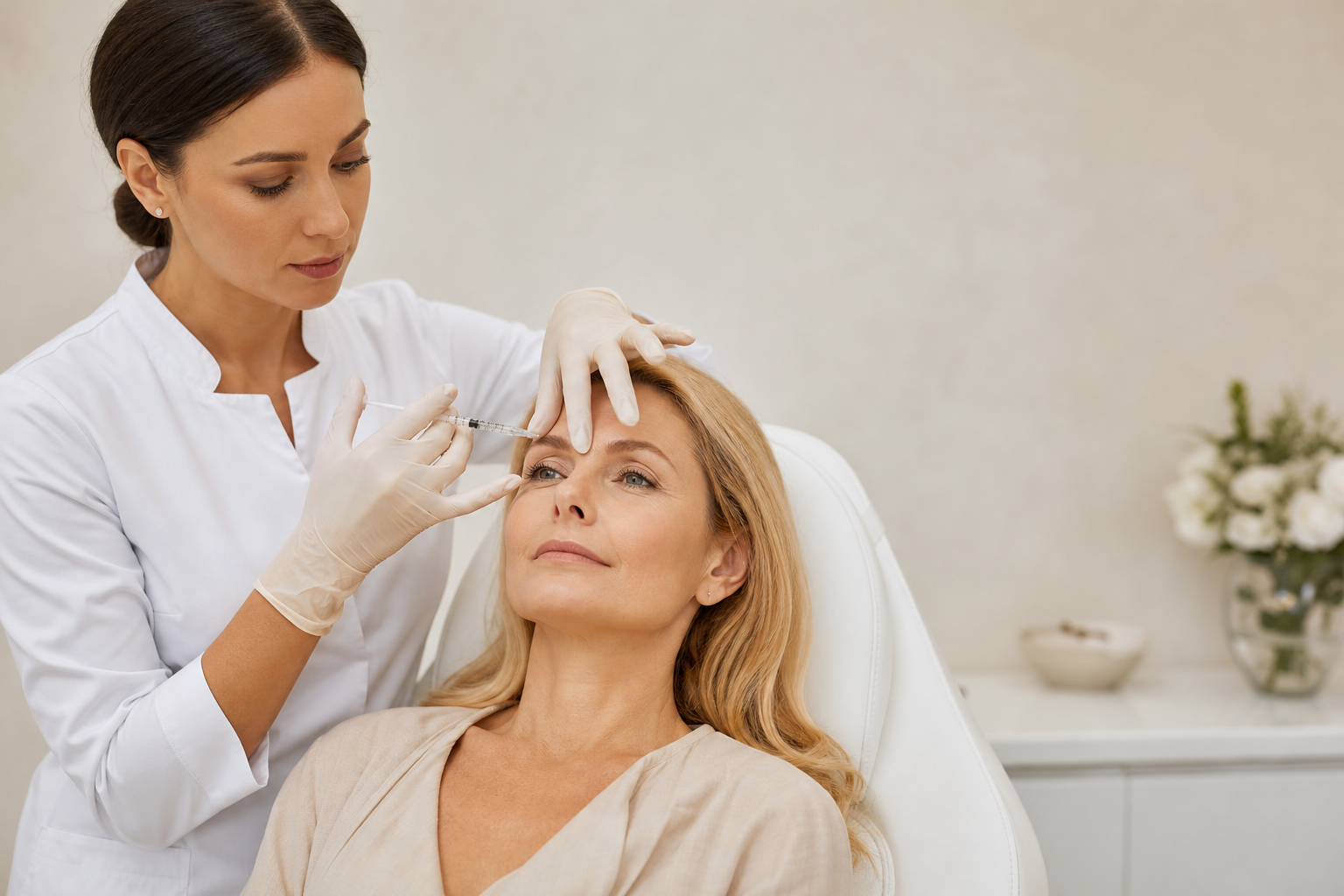
The aesthetic landscape of the face is profoundly influenced by the position and expression of the eyebrows. Among the various concerns considered by individuals seeking rejuvenation treatments, lowered eyebrows represent a distinct challenge in the realm of cosmetic interventions. This condition, characterized by the downward resting position of the eyebrows closer to the upper eyelids, can impart an unintended tired or somber expression and may contribute to a perception of heaviness or fatigue across the upper facial region.
Botox treatment, particularly targeting the forehead and glabellar region, has emerged as a popular non-surgical approach to address dynamic facial lines and muscle activity. However, when it comes to lowered eyebrows, the treatment requires a nuanced understanding and precise application to ensure both functional and aesthetic goals are met. This editorial is tailored for individuals contemplating Botox to lift or harmonize lowered eyebrows and for practitioners aiming to deepen their insight into therapeutic planning for this complex indication.
Understanding the interplay between muscle groups, anatomical positioning, and individual facial dynamics is essential before administering Botox in the eyebrow region. This discussion will delve deeply into the mechanism of Botox action, realistic expectations set forth by this intervention, safety profiles, and the imperative of expert consultation. The goal is to equip readers with a detailed and practical perspective that fosters safe, effective, and satisfactory outcomes in the context of eyebrow repositioning via Botox.
Anatomical Foundations of Lowered Eyebrow Position
The eyebrows serve a critical role in facial expression communication and overall aesthetic balance. Their vertical positioning influences how others perceive emotional states, alertness, and even age. Lowered eyebrows are typically described as an anatomical state where the inferior border of the brow lies near or overlapping with the upper eyelid, often reducing the apparent vertical space of the eye opening.
This positioning results from a complex interplay of skeletal structure, skin elasticity, and crucially, muscular dynamics. The frontalis muscle acts primarily as a brow elevator, while the corrugator supercilii and procerus muscles exert downward and inward pull forces. In individuals presenting with lowered eyebrows, either hyperactivity or predominance of these depressor muscles, diminished strength of the frontalis muscle, or age-related soft tissue descent may be contributing factors.
Clinicians must assess each patient's unique anatomical framework—including bone structure, muscle tone, eyebrow shape, and skin quality—before recommending Botox. An accurate evaluation ensures the treatment plan respects individual variations and avoids compromising natural facial kinetics or causing functional eyelid changes such as ptosis.
Mechanism of Botox in Sculpting Forehead and Glabellar Muscles
Botulinum toxin type A, commonly known as Botox, is a neurotoxic protein that inhibits acetylcholine release at neuromuscular junctions, producing muscle relaxation. When targeted selectively, it reduces the activity of muscles responsible for dynamic wrinkles and can modulate the position of adjacent anatomical structures by altering muscle tone balance.
In the context of lowered eyebrows, Botox administration aims to selectively weaken the brow-depressor muscles—specifically the corrugator supercilii and procerus—thereby reducing their downward pull. When combined judiciously with preservation or mild activation of the frontalis muscle, this can achieve a subtle elevation or restoration of the eyebrow's vertical posture.
It is critical to recognize that Botox's effect is muscular and temporary; it does not alter static anatomical features such as bone structure or skin laxity. Typically, the effects last between three to six months, after which muscle activity gradually returns. Patients must be informed that repeated treatments are necessary to maintain results and that conclusions about final outcomes should consider this temporal limitation.
Comprehensive Safety Evaluation and Contraindications for Botox Treatment
Patient safety is paramount when administering Botox, especially in the sensitive forehead and brow region. Before treatment, an exhaustive medical history and physical examination are crucial to detect contraindications. Conditions such as neuromuscular disorders (e.g., myasthenia gravis), pregnancy, breastfeeding, skin infections near the injection site, or known allergies to botulinum toxin components warrant caution or contraindicate the treatment altogether.
Moreover, prior interventions, including surgeries, trauma, or filler treatments in the eyebrow area, must be thoroughly reviewed. These may influence anatomical planes or muscle function, potentially affecting Botox diffusion and efficacy. A skilled practitioner should also anticipate and counsel regarding possible adverse effects such as asymmetry, eyebrow or eyelid drooping (ptosis), or over-relaxation leading to unnatural facial expressions.
Essential to safety is the practitioner's expertise in precise dosing and delivery technique, minimizing diffusion to unintended muscles. Post-procedure follow-up facilitates early identification and management of side effects, reinforcing overall treatment safety.
Realistic Outcomes and Preserving Natural Facial Expression
One of the most significant desires among patients is achieving a rejuvenated, refreshed appearance without sacrificing expressiveness. Treatments that overly flatten or freeze muscle activity may lead to an unnatural, mask-like face, detracting from the patient's identity and spontaneous emotional communication.
With respect to lowered eyebrows, Botox administration must strike a delicate balance—reducing the bulk and pull of depressor muscles sufficiently to elevate the brow subtly, while retaining enough frontalis muscle function to preserve natural movement. This balance allows patients to continue expressing a full range of emotions post-treatment.
Educating patients about what Botox can and cannot accomplish is essential. While it may improve the resting position of the eyebrows and soften dynamic furrows, it will not erase static skin excess or reposition brows permanently. For comprehensive aesthetic enhancement, Botox may need to be combined thoughtfully with other modalities such as dermal fillers or surgical interventions.
Consultation With Experienced Specialists as a Cornerstone of Effective Treatment
Given the anatomical complexity and functional importance of the brow and forehead region, consultation with a qualified and experienced specialist is indispensable. Dermatologists, plastic surgeons, or facial aesthetic practitioners trained in cosmetic neuromodulator applications bring critical knowledge to patient assessment, treatment planning, and complication management.
A thorough consultation includes evaluation of facial symmetry, muscle activity, skin condition, and patient expectations. It also provides a platform to discuss treatment goals realistically, explain procedural details, potential risks, and the necessity of maintenance sessions. Moreover, selecting a practitioner with a solid track record and access to post-treatment care ensures that any unplanned outcomes can be managed effectively.
Patients are encouraged to verify credentials and seek providers who prioritize individualized care over a one-size-fits-all approach, particularly for delicate concerns such as lowered eyebrows.


