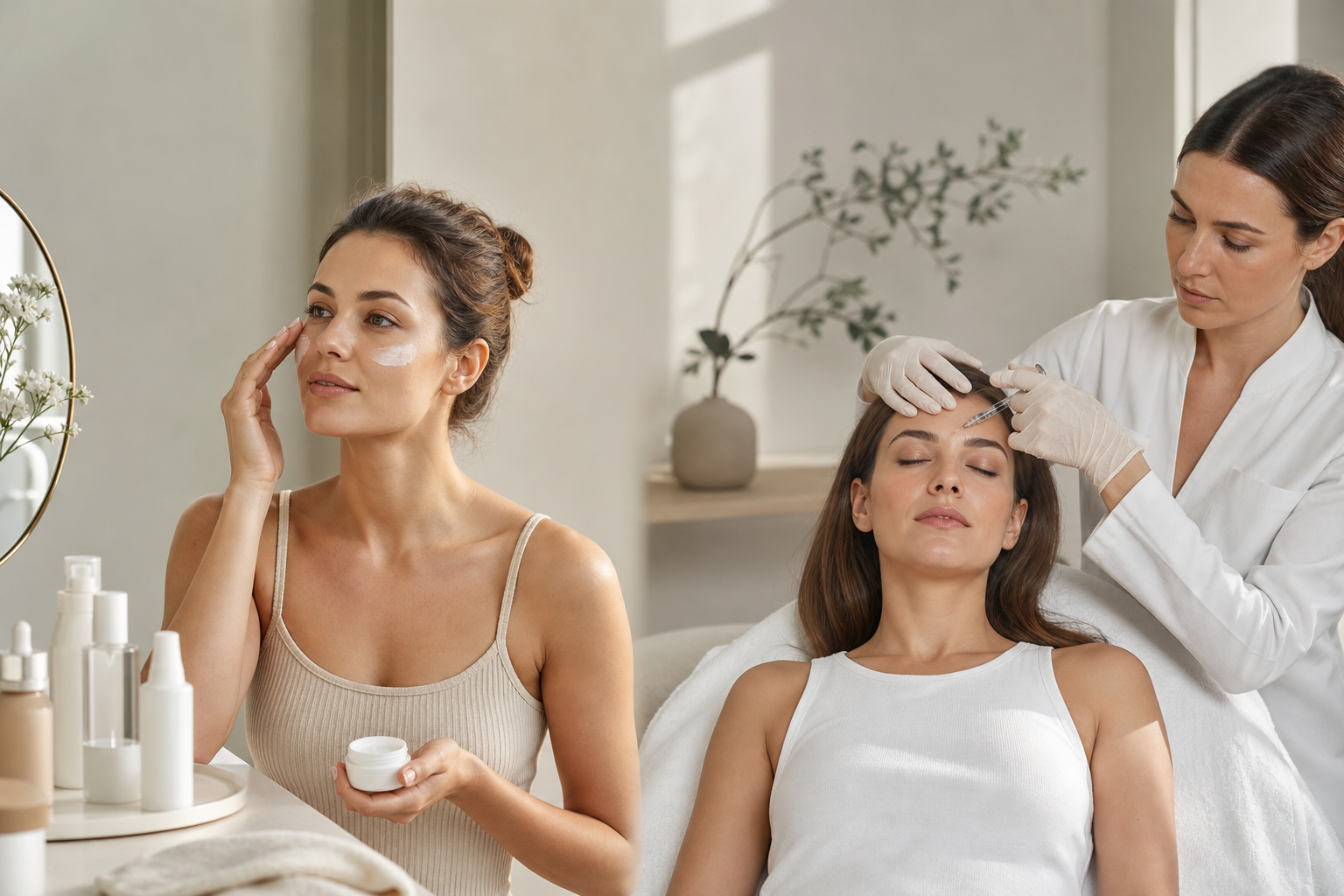
In the ever-evolving world of beauty and aging, the conversation often centers on finding the most effective path to a youthful visage. Among the plethora of options, the debate between diligent skincare routines and aesthetic interventions like Botox is particularly prominent. For individuals grappling with the early signs of aging or those seeking to reverse more established wrinkles, understanding when to prioritize skincare over injectable treatments — or vice versa — is paramount. This exploration is vital not only for cosmetic outcomes but also for ensuring safety, maintaining realistic expectations, and achieving sustainable skin health.
At the heart of this dialogue lies Botox, a revolutionary injectable that has transformed anti-aging care. Yet, despite its widespread popularity and proven efficacy in temporarily softening lines, Botox represents just one facet of a multifaceted approach to facial aging. Skincare, encompassing a myriad of topical and lifestyle measures, plays an indispensable role in maintaining skin vitality and preventing premature aging. For patients and practitioners alike, discerning the precise role Botox occupies amid comprehensive skin maintenance clarifies treatment goals and promotes informed decisions.
This detailed editorial delves into the nuanced relationship between skincare and Botox-based aesthetic treatments. Its aim is to demystify how these divergent yet complementary practices operate, highlight the biological realities of aging skin, and elucidate when each approach best serves patient needs. With a Botox-centric lens, the article underscores the indispensable value of skincare in the anti-aging regimen and guides on harmonizing clinical interventions with daily skin care for profound, lasting results.
Understanding the Biological Foundations of Facial Aging and Wrinkles
Aging is an intrinsic and intricate process marked by progressive changes at cellular, structural, and functional levels within the skin. Collagen and elastin fibers, essential for skin’s strength and elasticity, diminish over time, leading to thinning dermal layers and increased fragility. This degradation, combined with extrinsic factors such as ultraviolet radiation, pollution, and lifestyle habits, precipitates the visible hallmarks of aging: wrinkles, sagging, and uneven texture.
Wrinkles themselves categorize into two primary types: dynamic and static. Dynamic wrinkles arise from repeated facial muscle movements—expressions like frowning, squinting, or smiling cause the skin to fold repeatedly, generating creases particularly evident when the face is animated. Static wrinkles, on the other hand, are persistent lines visible even at rest and typically reflect long-term dermal collagen loss and skin laxity.
Botox is remarkable for its ability to target dynamic wrinkles by temporarily paralyzing the underlying muscles. In contrast, static wrinkles require interventions that restore volume or improve skin quality at a deeper level, including fillers, laser resurfacing, or topical treatments aimed at collagen synthesis. This fundamental distinction underscores why skincare and Botox perform complementary roles rather than interchangeable ones in addressing the broad spectrum of aging changes.
The Preventative Power of Consistent Skincare Routines
The pivotal role of skincare begins well before wrinkles become etched into the skin. A thoughtfully crafted regimen that emphasizes hydration, antioxidant protection, and sun defense constitutes the frontline strategy against premature aging. Ingredients such as retinoids, peptides, vitamin C, and hyaluronic acid foster collagen production, cell turnover, and epidermal health—key factors that fortify the skin’s resilience.
Daily application of broad-spectrum sunscreen remains arguably the most impactful measure to shield skin cells from ultraviolet-induced damage, which accelerates photoaging and pigment irregularities. Moreover, lifestyle determinants such as nutrition rich in antioxidants, adequate hydration, stress management, and avoidance of smoking synergize with topical care to uphold skin’s youthful characteristics.
Skincare’s greatest asset is its capacity to modulate both intrinsic and extrinsic aging processes, thereby delaying wrinkle formation and preserving skin integrity. This makes it particularly beneficial for younger individuals or those in early aging stages aiming to maintain skin tone and texture. Moreover, skincare sets a foundational baseline that enhances the efficacy of aesthetic treatments.
Botox as a Precise Tool for Targeting Dynamic Wrinkles
Botox (botulinum toxin type A) has gained acclaim as a highly effective modality for reducing dynamic wrinkles, especially horizontal forehead lines, glabellar furrows (between the eyebrows), and periocular crow’s feet. Its pharmacological action involves inhibiting acetylcholine release at neuromuscular junctions, leading to temporary muscle relaxation and smoothing of expression lines.
Because Botox acts selectively on specific muscles, treatment planning requires a comprehensive understanding of facial anatomy and muscle function. Customized dosing and injection sites optimize results by diminishing dynamic wrinkles while preserving natural expressions. This precision underscores Botox’s role as a medical procedure rather than a purely cosmetic fix.
However, Botox does not address static wrinkles nor directly improve skin texture or hydration. Its effects are transient, typically lasting four to six months, necessitating maintenance sessions for sustained outcomes. Importantly, Botox should be recognized as one element within a broader anti-aging strategy to address varying wrinkle types and skin conditions.
Safety Measures and Limitations in Botox Administration
When administered by qualified professionals, Botox boasts a robust safety profile with minimal adverse effects. Common, temporary side effects may include mild bruising, localized discomfort, or transient muscle weakness near injection sites. Serious complications remain exceedingly rare when correct techniques and sterile protocols are adhered to.
Nonetheless, Botox is not suitable for everyone. Individuals with neuromuscular disorders, pregnant or breastfeeding women, or those with known hypersensitivity to botulinum toxin components should avoid treatment. Moreover, excessive use or improper injection can yield unnatural facial appearances or functional concerns, such as ptosis (drooping eyelid).
A thorough pre-treatment consultation and medical history evaluation are vital to identifying contraindications, setting realistic expectations, and developing individualized treatment regimens aligned with patient goals and safety considerations.
Integrating Skincare and Botox for a Comprehensive Anti-Aging Approach
The synergistic benefits of combining consistent skincare routines with Botox treatments represent the future of personalized anti-aging care. While Botox effectively smooths dynamic wrinkles, ongoing skincare can maintain skin quality, enhance collagen networks, and protect against environmental aggressors. This dual approach maximizes aesthetic outcomes and skin health longevity.
For example, patients receiving Botox often complement injections with serums containing hyaluronic acid or retinoids to improve skin moisture and stimulate dermal renewal. Additionally, layering antioxidant-rich moisturizers and diligent sun protection further preserves the gains achieved through injectables.
This integration also enables more subtle and natural-looking results compared to relying solely on botulinum toxins or neglecting skin maintenance. Ultimately, a balanced, tailored combination and adherence to both daily care and professional treatments yield the most gratifying and enduring rejuvenation.
Guiding Factors for Choosing Between Skincare and Botox
Selecting the most suitable intervention hinges upon multiple variables including age, skin condition, wrinkle type, lifestyle, and personal preferences. Younger adults with minimal fine lines often realize substantial benefit from a high-quality skincare regimen emphasizing prevention and gradual correction. These protocols tend to be more cost-effective and carry lower procedural risks.
Conversely, individuals with well-defined dynamic wrinkles symptomatic of longstanding muscle activity may find Botox to be the fastest and most impactful means to reduce visible signs of aging. However, this choice entails commitment to repeat treatments and acceptance of temporary muscle modulation effects.
Ultimately, budgeting considerations, tolerance for medical procedures, and willingness to adhere to skincare regimens inform the decision-making process. Engaging a knowledgeable specialist to assess the skin comprehensively ensures that the chosen approach aligns with realistic goals and safety.
The Imperative of Personalized Consultation and Assessment
No anti-aging strategy is universally applicable. Facial muscle anatomy varies widely among individuals, influencing both wrinkle patterns and the appropriate Botox injection sites. Similarly, skin type, sensitivity, and condition dictate which skincare ingredients and modalities will be most efficacious and safe.
A multidisciplinary consultation encompassing dermatological evaluation, discussion of aesthetic aspirations, and review of medical history underpins an individualized plan that navigates between skincare priorities and Botox applicability. This process mitigates risks of dissatisfaction or adverse outcomes and fosters a therapeutic alliance based on education and trust.
Professionals in aesthetic medicine increasingly employ digital imaging and muscle mapping to refine treatment precision and track progress objectively, thereby elevating standards of care in wrinkle management.
Realistic Expectations and Ongoing Care for Sustainable Facial Rejuvenation
Understanding the temporal nature and limitations of Botox effects, alongside the cumulative benefits of skincare, forms the cornerstone of patient satisfaction. Botox results, while impressive for dynamic wrinkle diminution, are temporary and dependent on repeated sessions. In contrast, skincare results accumulate over time and require persistence for maintenance.
Patients should anticipate a harmonious interplay where skincare nurtures skin integrity and Botox provides targeted dynamic wrinkle control. Neither approach, in isolation, offers a panacea for facial aging. Therefore, defining achievable goals informed by biological realities prevents disappointment and empowers individuals to make proactive choices.
Continuous dialogue with aesthetic experts enables monitoring of skin changes, modification of regimens, and incorporation of adjunct therapies such as dermal fillers or laser treatment as aging advances. Such a comprehensive lifecycle approach ultimately secures the most graceful aging trajectory.
When Skincare Takes Precedence Over Botox in Anti-Aging Strategies
While Botox occupies a vital position in wrinkle management, there are clear circumstances where skincare should be prioritized. In individuals with minimal dynamic wrinkles, early intervention focusing on strengthening skin defenses through hydration, antioxidants, and sun protection can preclude or diminish the need for invasive procedures. Such frontline care is particularly recommended for younger adults or those with sensitive skin precluding toxin injections.
Moreover, given Botox’s inability to address skin texture, pigmentation irregularities, and static wrinkles, comprehensive skincare regimens that emphasize exfoliation, collagen induction, and pigmentation control hold primacy. Advances in topical formulations and non-invasive devices offer robust alternatives and adjuncts to injectables.
Empowering patients with knowledge about their skin type, sun exposure risks, and the biological underpinnings of aging underscores why consistent skincare is the foundation upon which aesthetic enhancements should build. Neglecting this aspect risks suboptimal outcomes and increased procedural frequency.
In conclusion, the balance between diligent skincare and the targeted efficacy of Botox is nuanced and patient-specific. Recognizing skincare as an essential, non-negotiable pillar in facial rejuvenation reframes Botox not as a standalone luxury but as a precise tool to modify select dynamic wrinkles within a holistic anti-aging paradigm. This perspective fosters prudent choices, optimizes results, and champions long-term skin health excellence.


